Artwork
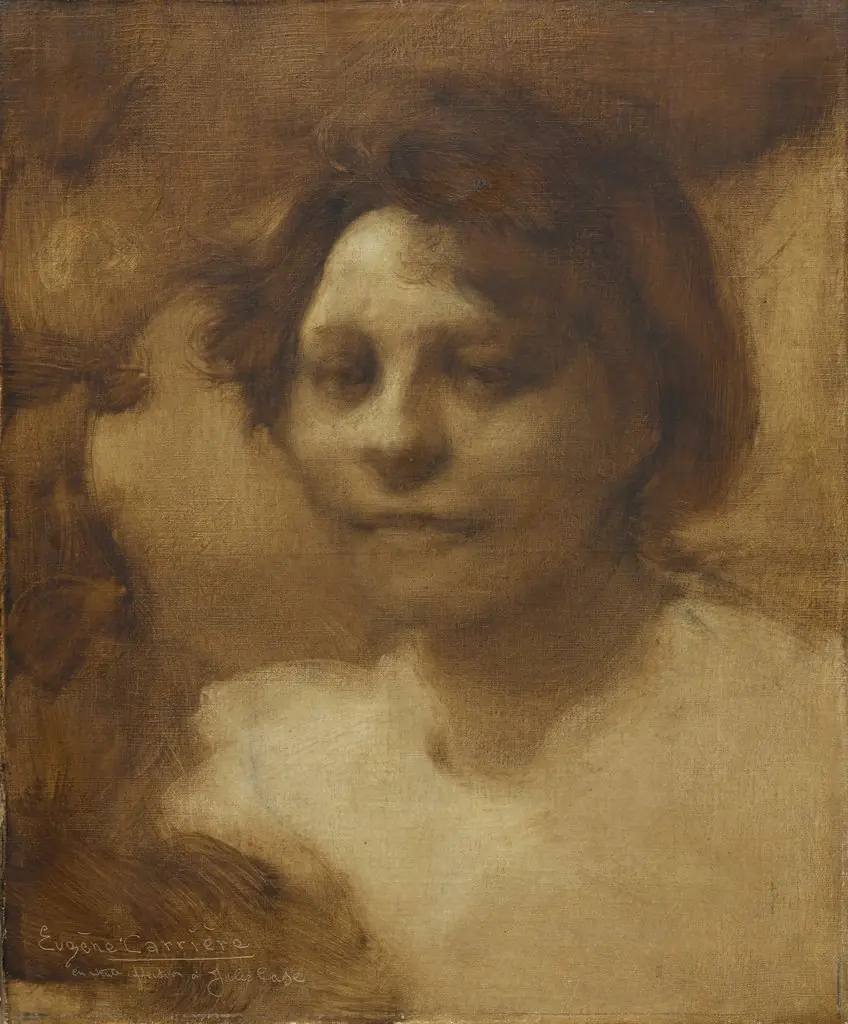
Portrait of his daughter, Lisbeth
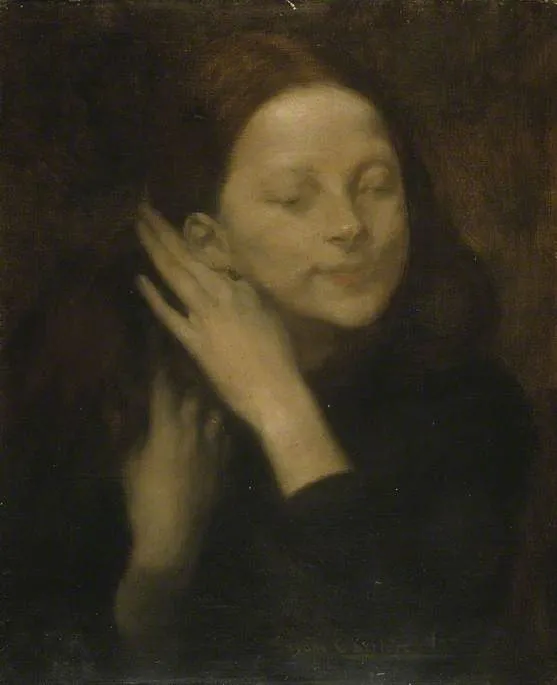
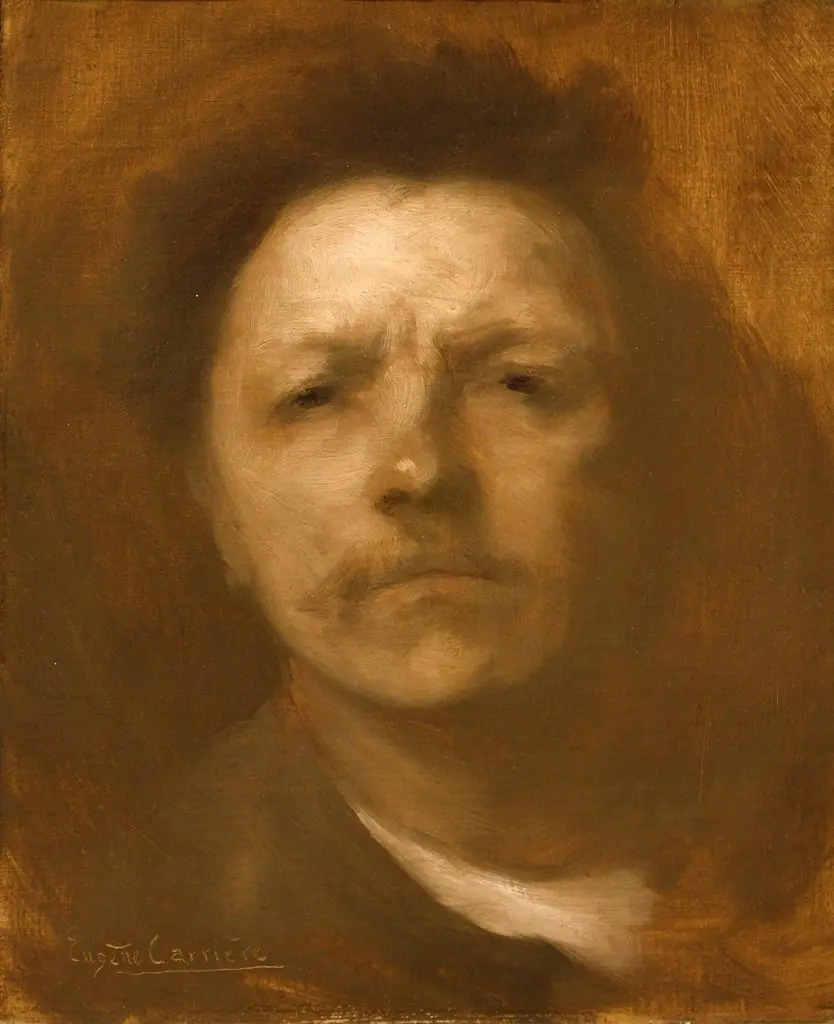
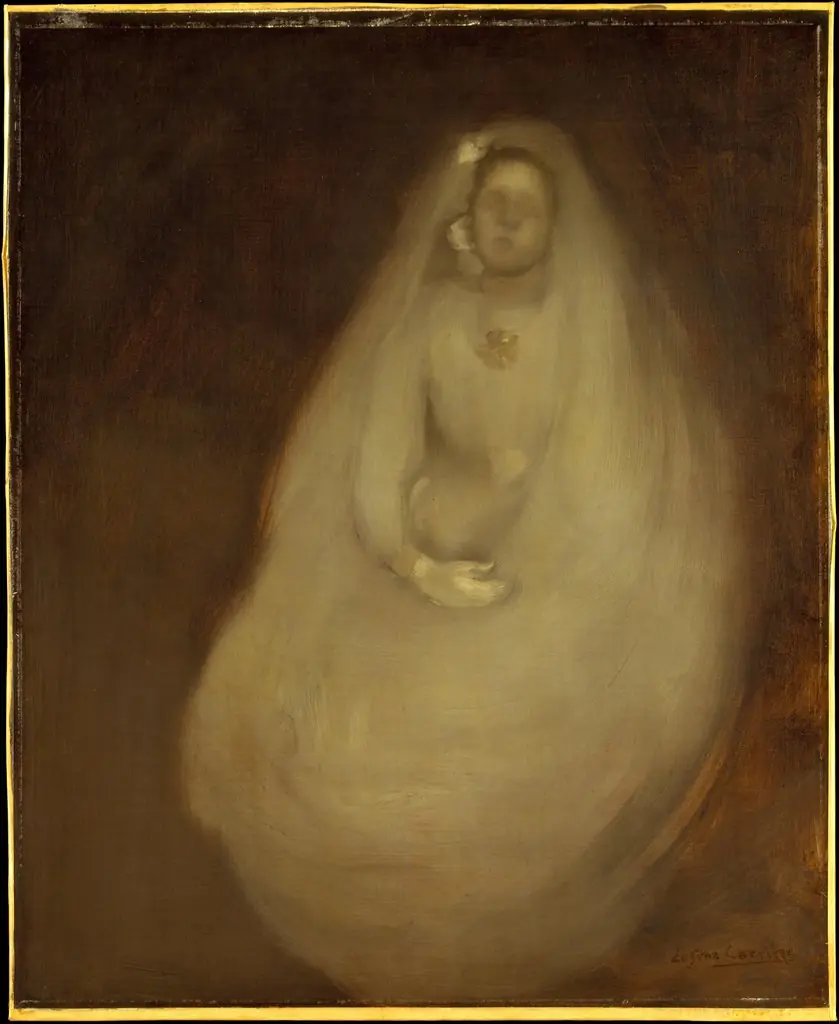
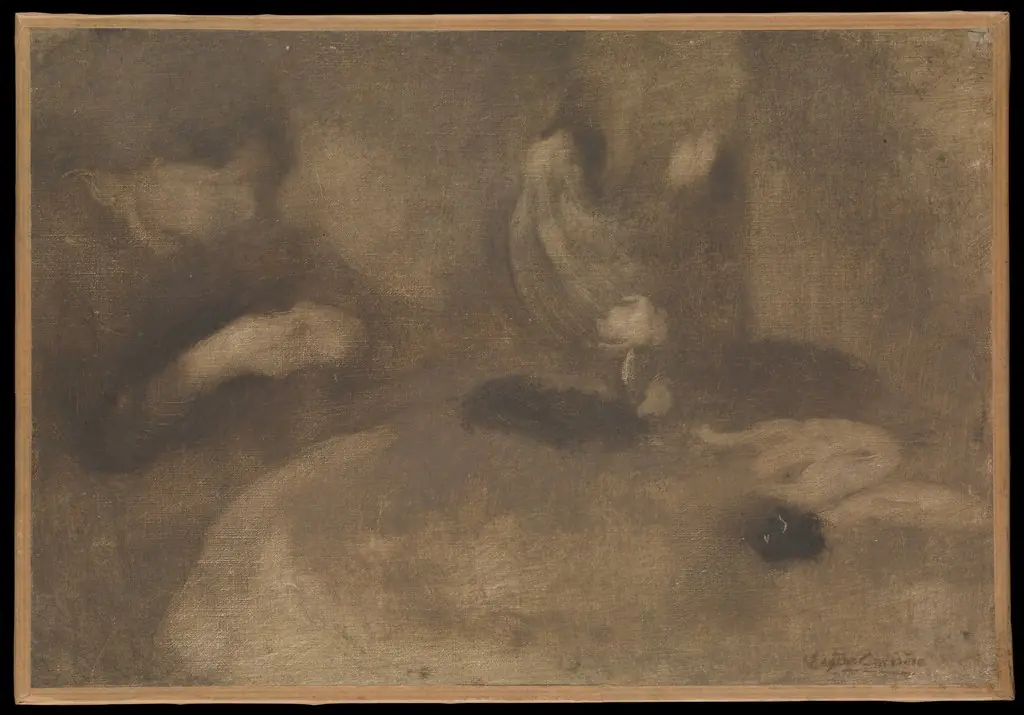
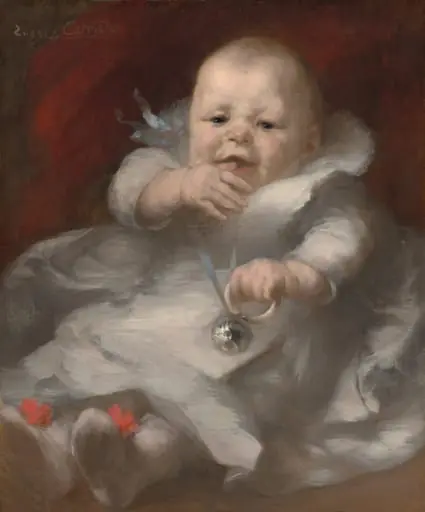
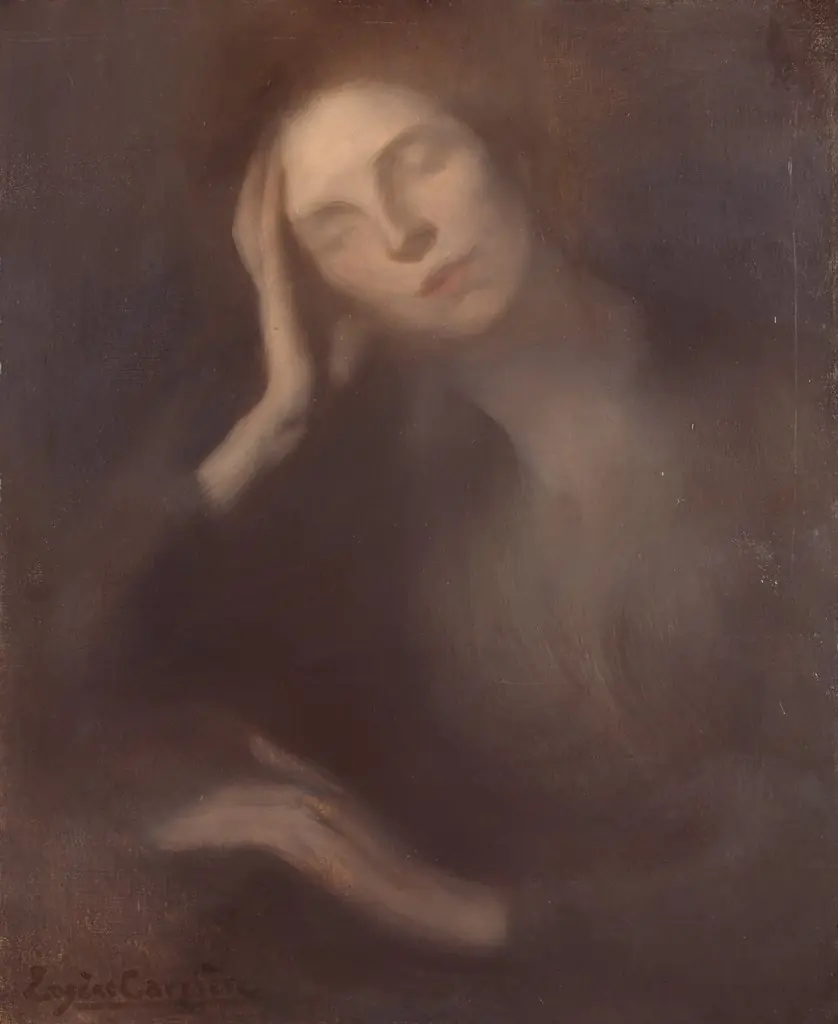
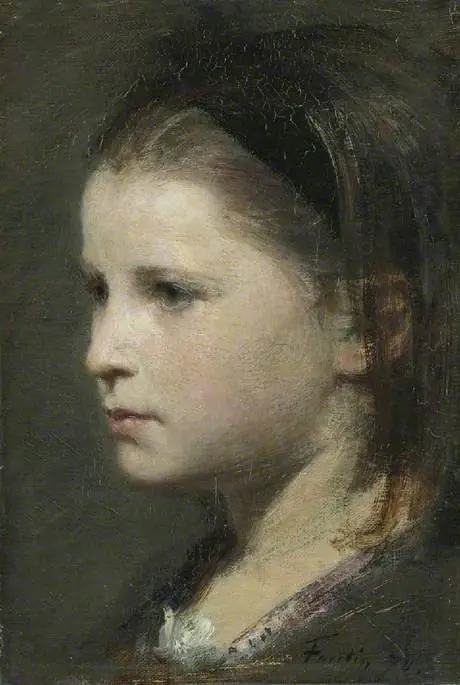
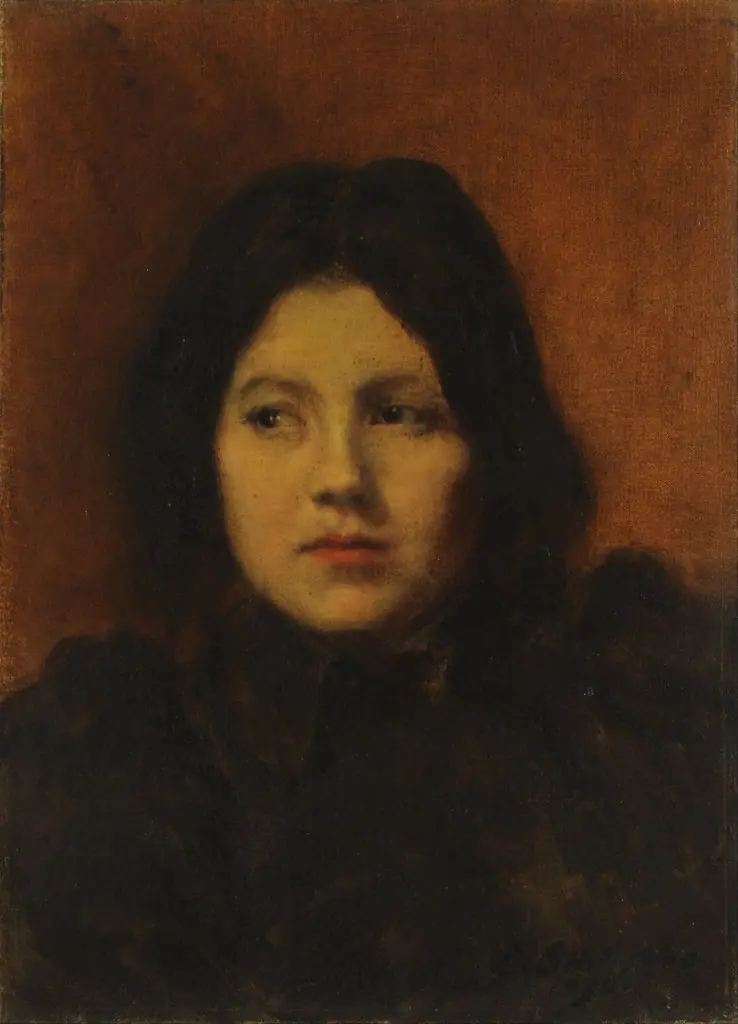
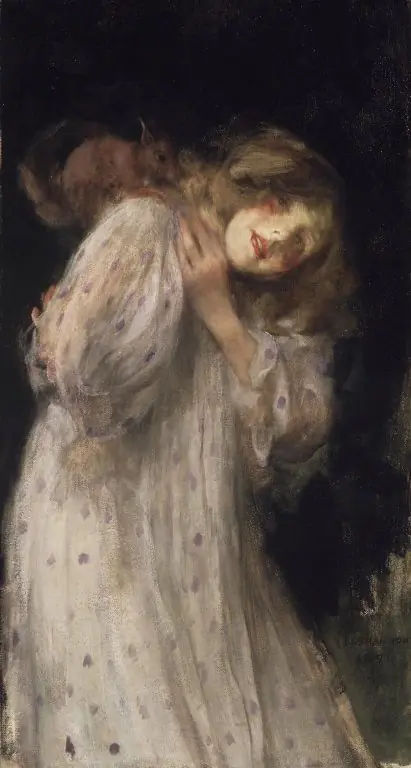
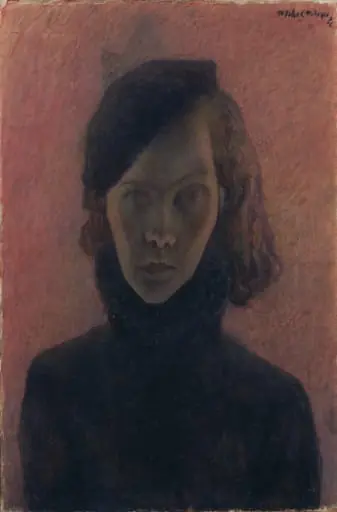
Portrait of his daughter, Lisbeth is an oil painting by Eugène Carrière. It dates from 1894 and is held in the collection of the Fitzwilliam Museum.
About this work
Overview
The work is part of the Fitzwilliam Museum’s collection and exemplifies Carrière’s signature approach to intimate domestic scenes.
Painted in 1894, this oil portrait by Eugène Carrière depicts his daughter, Lisbeth, in a moment of stillness. The work is part of the Fitzwilliam Museum’s collection and exemplifies Carrière’s signature approach to intimate domestic scenes. Rendered in muted tones and soft focus, the painting avoids theatricality, favoring a quiet, introspective mood that aligns with the Symbolist currents of the era.
Subject & Meaning
Lisbeth is shown with closed eyes and her hand gently curled near her ear, suggesting inward reflection rather than outward engagement. Her stillness and the absence of a defined setting imply a psychological interiority, as if she is listening to something beyond the viewer’s perception. The pose conveys vulnerability and solitude, reinforcing Carrière’s interest in the quiet emotional lives of his subjects.
Technique & Style
Carrière employed a limited palette of browns and grays, using subtle gradations of tone to model form. The background dissolves into shadow, isolating the figure and enhancing the sense of intimacy. His brushwork is loose yet deliberate, avoiding sharp outlines in favor of atmospheric transitions. This technique, rooted in chiaroscuro, emphasizes volume through light and shadow rather than line.
History & Provenance
The portrait was painted during a period when Carrière frequently depicted family members, often in contemplative poses. It entered the Fitzwilliam Museum’s collection in the early 20th century, likely through a private acquisition or donation. Its preservation has allowed continued study of Carrière’s domestic portraiture and his departure from academic conventions of the time.
Context
In the 1890s, French art was shifting away from realism toward more subjective, emotional expression. Carrière’s work resonated with Symbolist ideals, rejecting narrative clarity in favor of mood and psychological depth. His portraits of women and children, often shrouded in dim light, contrasted with the bright, detailed styles favored by Impressionists and academic painters.
Legacy
Carrière’s Portrait of his daughter, Lisbeth remains a quiet example of late 19th-century introspective portraiture. While not widely exhibited, it has influenced later artists interested in emotional subtlety over physical detail. Its enduring presence in the Fitzwilliam Museum underscores its role as a representative work of a painter who prioritized inner life over external spectacle.
Artist & collection

Artist
Eugène Anatole Carrière was a French Symbolist artist of the fin-de-siècle period.