Artwork
Falstaff and Simple (from 'The Merry Wives of Windsor' by William Shakespeare)
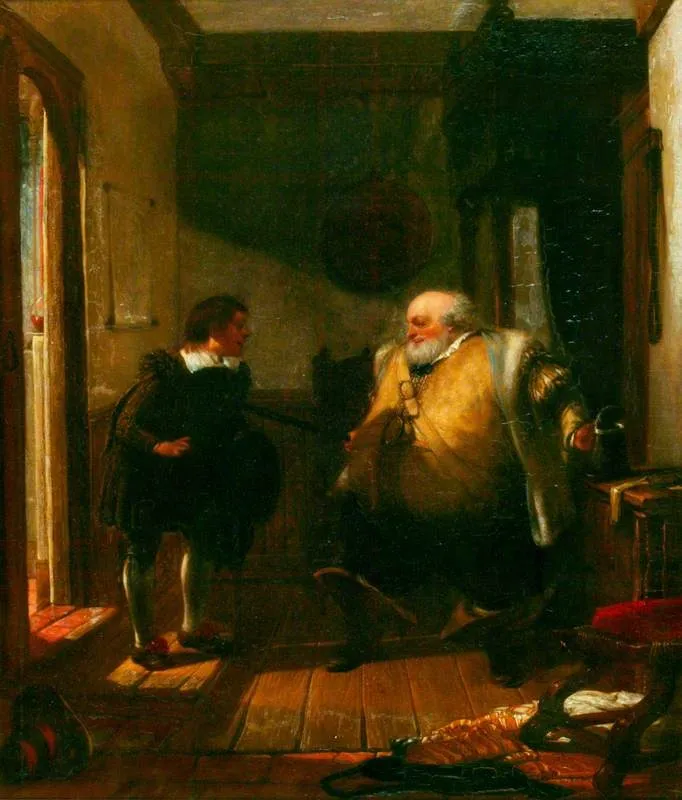
Falstaff and Simple (from 'The Merry Wives of Windsor' by William Shakespeare) is an unspecified painting by Augustus Wall Callcott. It dates from 1835 and is held in the collection of the Victoria and Albert Museum.
About this work
Overview
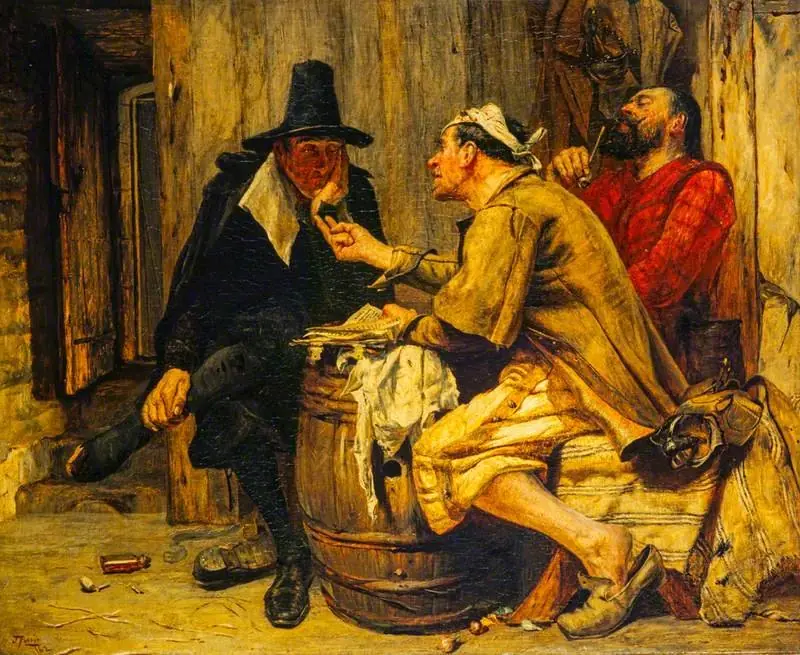
Augustus Wall Callcott’s 1835 oil painting, titled “Falstaff and Simple (from ‘The Merry Wives of Windsor’ by William Shakespeare),” is part of the Victoria and Albert Museum’s collection. The work captures a quiet interior scene in which two figures from Shakespeare’s comedy are depicted in a modestly lit room, their interaction suggesting a moment of informal storytelling.
Subject & Meaning
The composition draws on a scene from Shakespeare’s play, pairing the corpulent Sir John Falstaff with the simple‑minded Simple. Falstaff, seated and gesturing with a large jug, appears to be recounting an anecdote, while Simple, standing with a small bag, listens attentively. The painting emphasizes the camaraderie and humor inherent in the characters’ relationship.
Technique & Style
Callcott employs a restrained palette of earth tones, using chiaroscuro to model the figures against the dimly illuminated interior. The brushwork is smooth, rendering the textures of clothing—a yellow shirt, brown vest, black jacket, and white breeches—with careful detail. The modest furnishings, such as a red cushion and a coiled rope, add depth without distracting from the central interaction.
History & Provenance
Created in 1835, the painting entered the Victoria and Albert Museum’s holdings in the early 20th century, where it has remained on display as an example of 19th‑century literary illustration. Its provenance prior to acquisition is documented through museum records, confirming its attribution to Callcott and its consistent identification as a depiction of Shakespeare’s characters.
Context
During the Victorian era, visual interpretations of Shakespeare’s works were popular, reflecting a broader cultural fascination with the Bard’s drama.
During the Victorian era, visual interpretations of Shakespeare’s works were popular, reflecting a broader cultural fascination with the Bard’s drama. Callcott, known primarily for landscape painting, applied his compositional skill to a narrative genre, aligning his work with contemporary trends that merged literary subjects with fine art, thereby appealing to both scholarly and general audiences.
Artist & collection

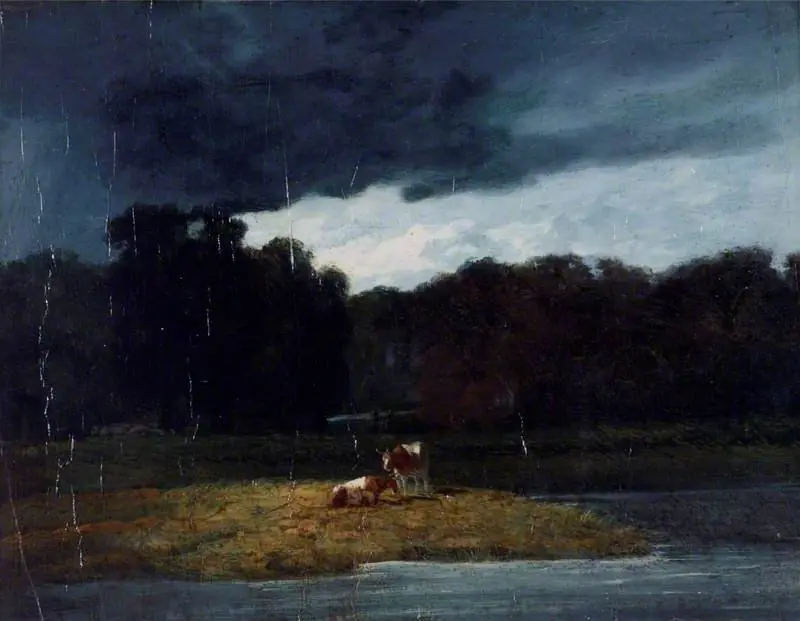 Landscape: A Wood and Cattle under a Stormy Sky
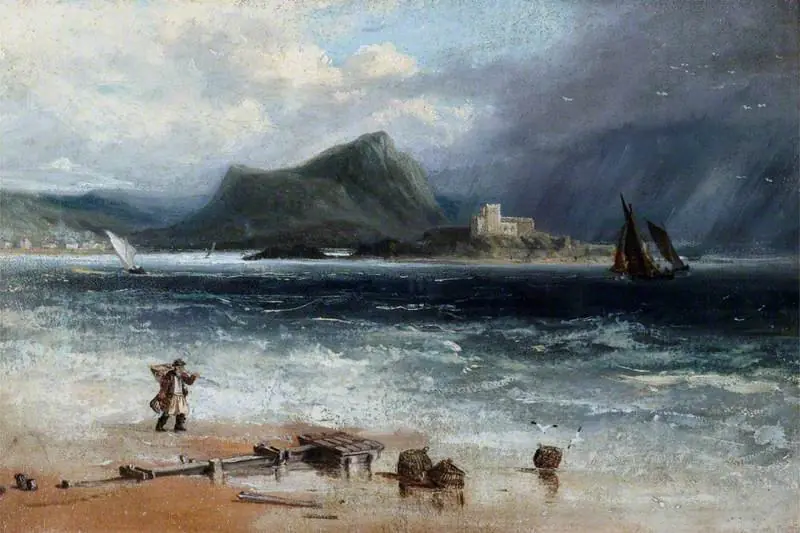 Coast Scene with a Shrimper
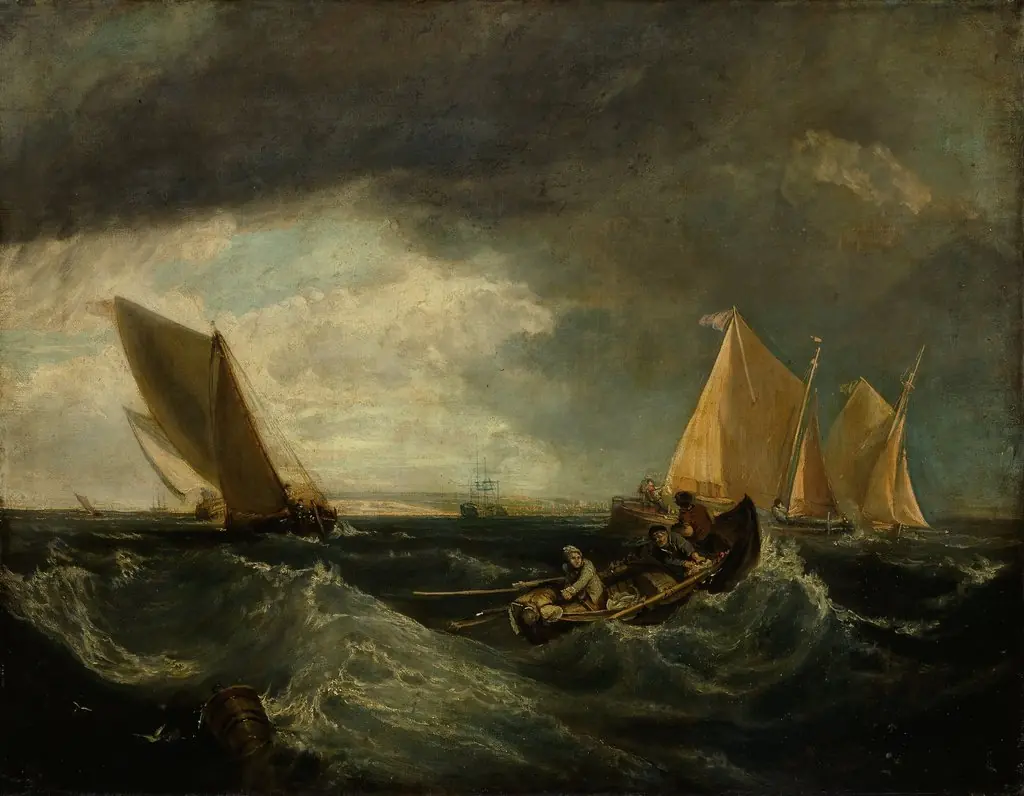 Sheerness and the Isle of Sheppey (after J.M.W. Turner)
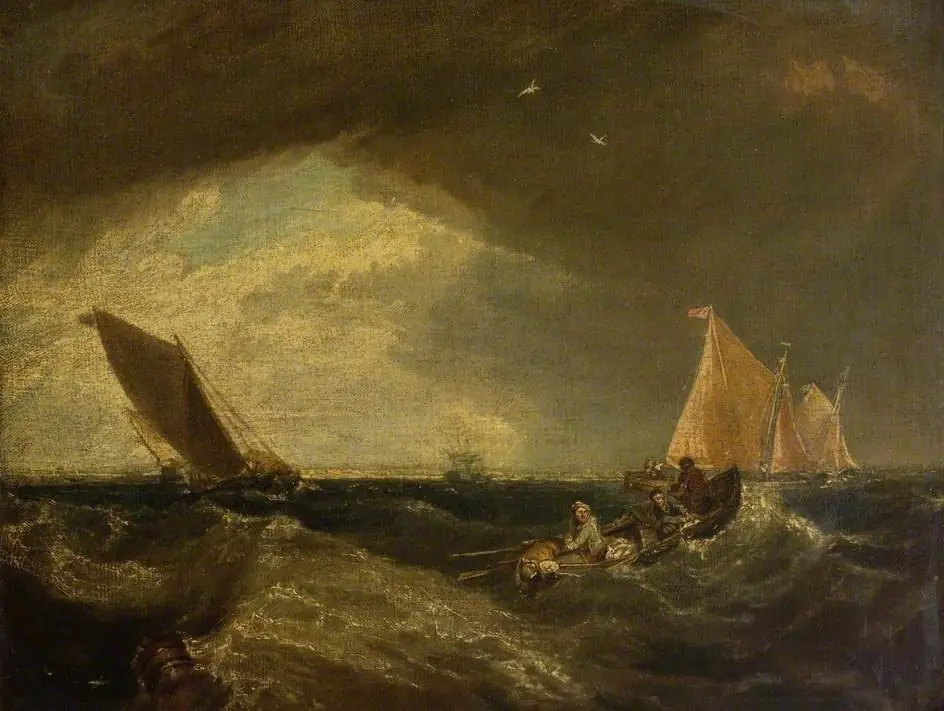 The Junction of the Thames and the Medway
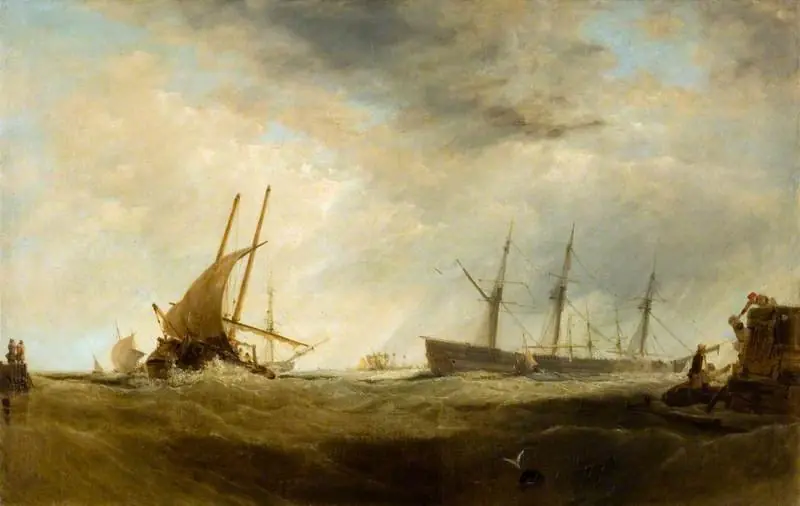 A Brisk Gale: A Dutch East-Indiaman Landing Passengers
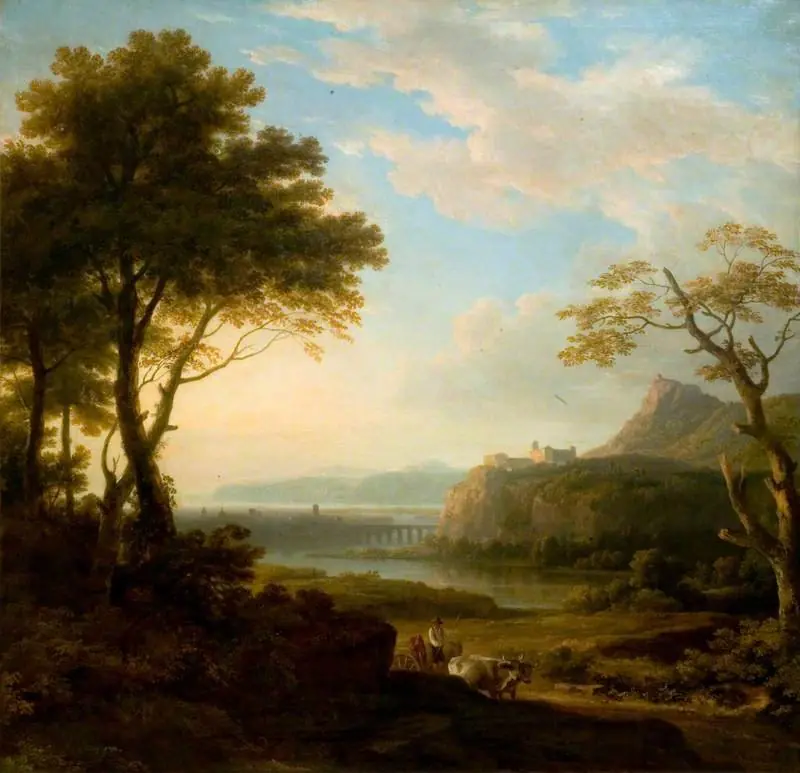 Classical Landscape
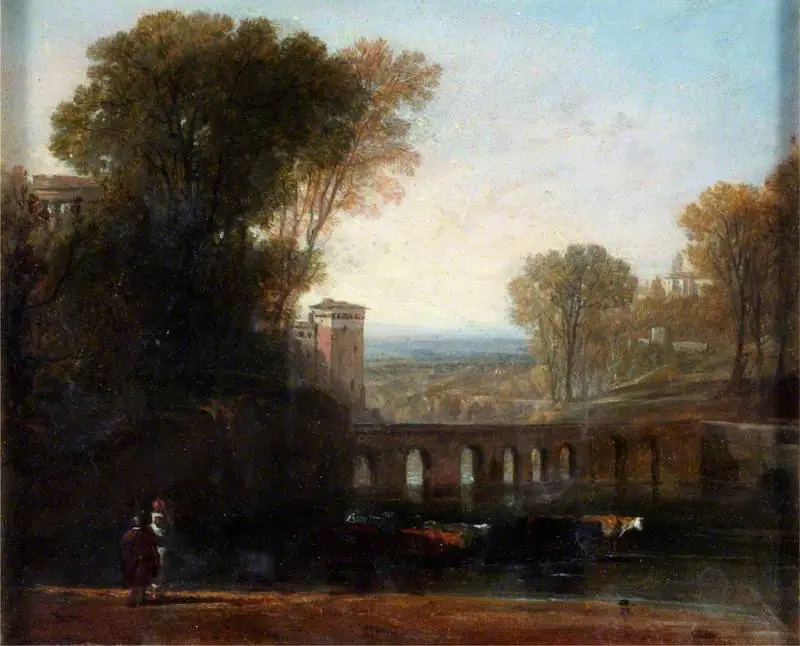 Italian Landscape with Cows Watering
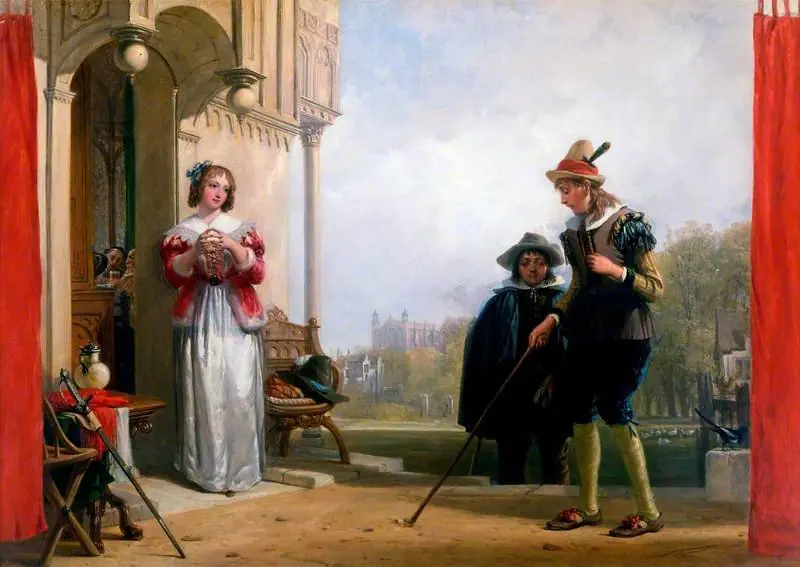 Slender and Anne Page (from 'The Merry Wives of Windsor' by William Shakespeare)