Artwork
Cromwell's Saints
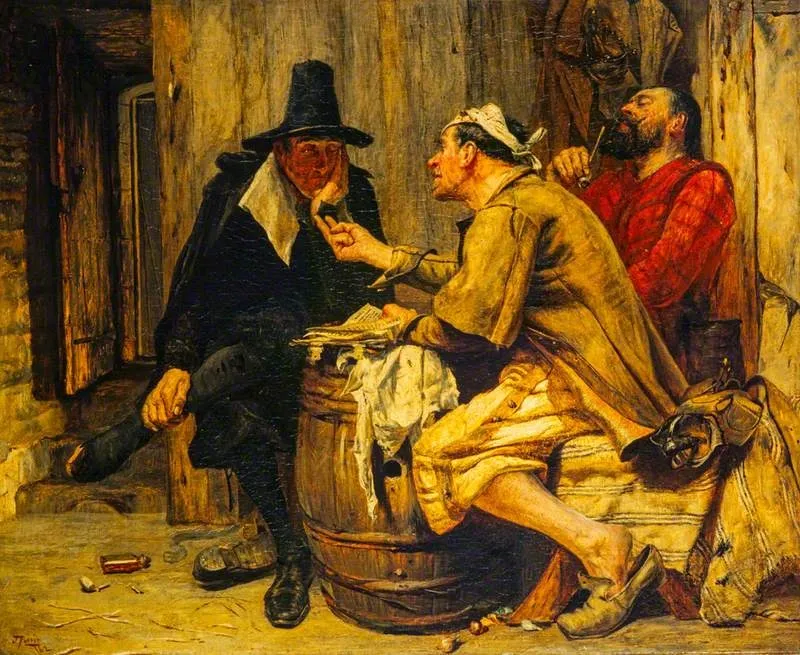
Cromwell's Saints is an oil painting by the British Romanticist artist John Pettie. It dates from 1862 and is held in the collection of the National Galleries Scotland.
About this work
Overview
It is part of the permanent collection of the Scottish National Gallery, reflecting Pettie’s growing reputation during the mid-Victorian period.
John Pettie, a Scottish artist trained in Edinburgh and active in London, completed *Cromwell's Saints* in 1862 using oil on canvas. The work belongs to the broader current of British Romanticism, emphasizing emotional intensity and historical narrative. It is part of the permanent collection of the Scottish National Gallery, reflecting Pettie’s growing reputation during the mid-Victorian period. He would later be recognized by the Royal Academy, becoming a full academician in 1874.
Subject & Meaning
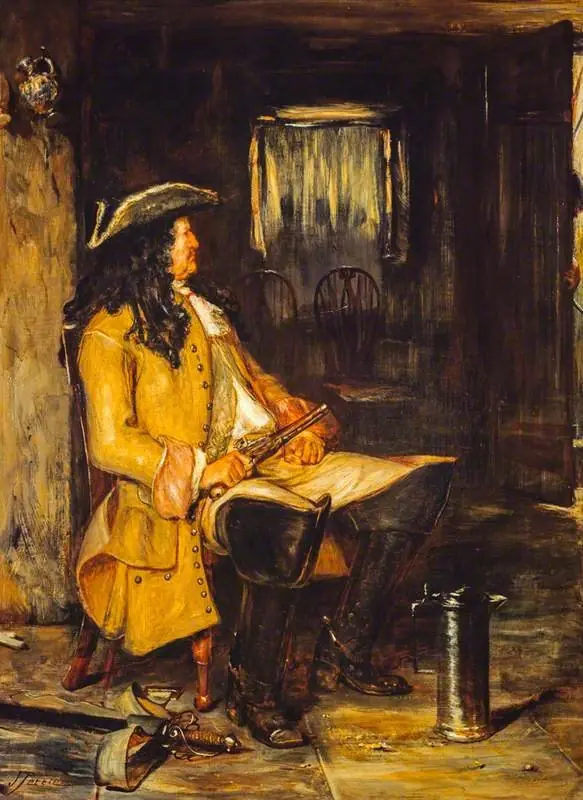
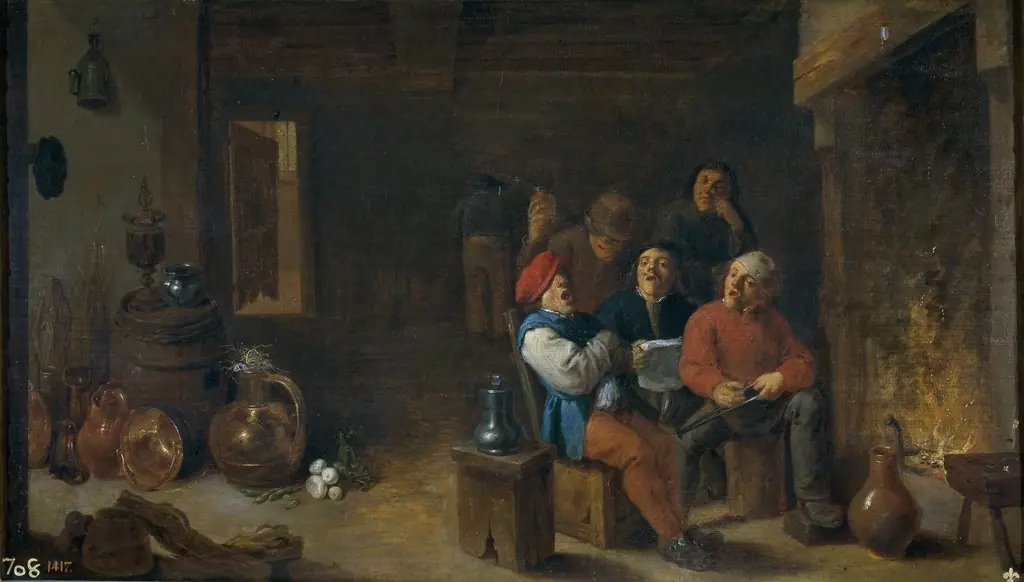
The painting depicts three Puritan figures in a modest interior, likely representing Oliver Cromwell’s followers during the English Civil War era. Their postures and attire suggest a moment of quiet reflection or planning. The central figure holds a document, possibly a religious or political text, while the others observe in silence. The scene conveys solemnity and resolve, evoking the disciplined piety associated with the Roundhead movement without overt dramatization.
Technique & Style
Pettie employed oil paint to build subtle tonal variations, using warm browns and ochres to unify the dimly lit interior. Light enters from the left window, casting soft shadows that define the figures’ forms and the scattered objects on the floor. The brushwork is controlled yet expressive, with attention to texture in fabric and skin. The composition is tightly framed, drawing focus to the men’s interactions and the weight of their shared purpose.
History & Provenance
Completed in 1862, the painting entered the collection of the Scottish National Gallery shortly after its creation. Pettie’s rising status in London’s art world during the 1860s and 1870s contributed to its institutional recognition. Though not widely exhibited outside Scotland, it remained a key example of his historical genre work. Its provenance is unbroken, with no documented changes in ownership since its acquisition by the gallery.
Context
In the mid-19th century, British artists frequently revisited the Civil War and Puritan era as a means of exploring themes of conscience, authority, and national identity. Pettie’s depiction aligns with this trend, avoiding glorification in favor of quiet dignity. The painting reflects Victorian interest in moral seriousness and historical realism, even as it diverges from overt political commentary.
Legacy
While not among Pettie’s most frequently reproduced works, *Cromwell's Saints* remains a significant example of his early historical painting. It illustrates his ability to convey psychological depth through restrained gesture and lighting. The work continues to be studied for its nuanced portrayal of religious conviction and its place within the development of British narrative art in the Victorian era.
Artist & collection
Artist
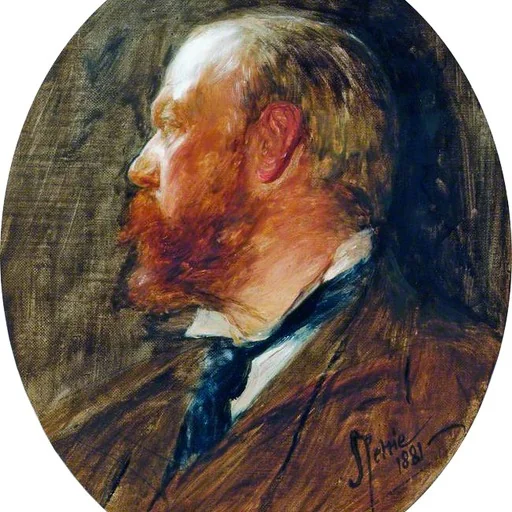
John Pettie (17 March 1839 – 21 February 1893) was a Scottish painter from Edinburgh who spent most of his career in London.