Artwork
The Church and Harbour at Veere
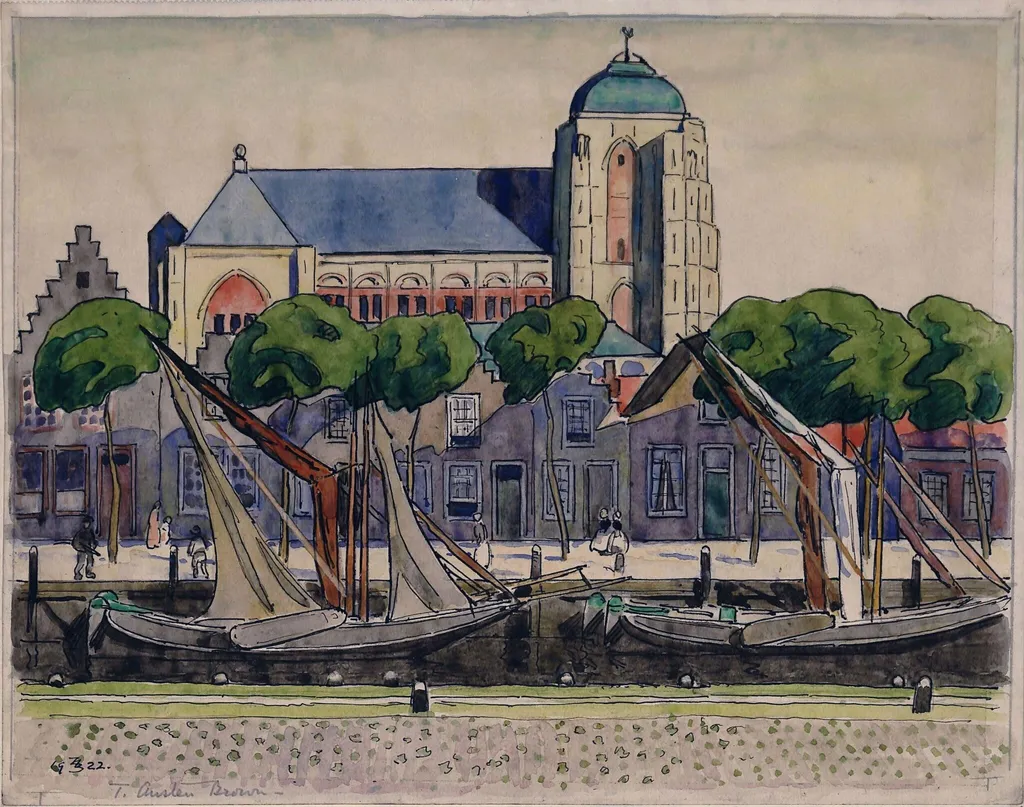
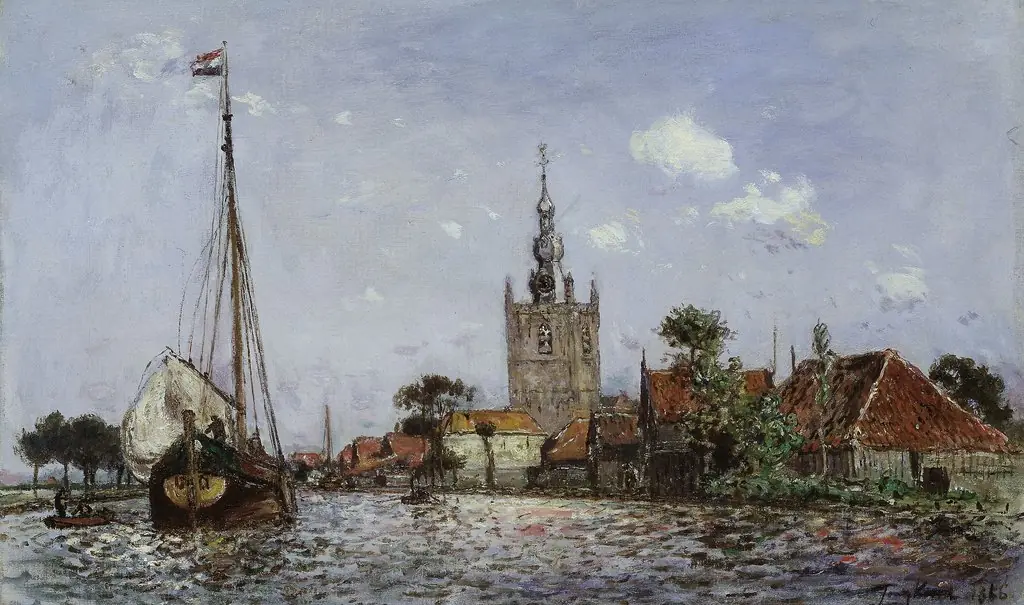
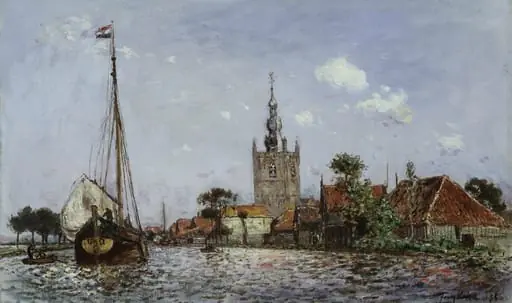
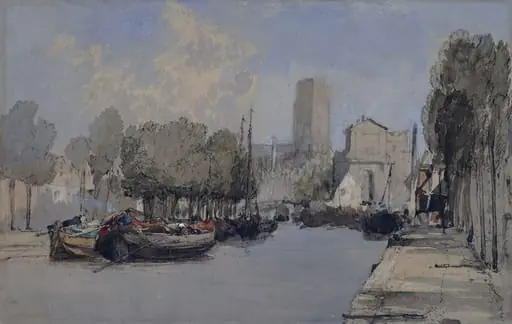
The Church and Harbour at Veere is a watercolor work on paper by the Impressionist artist Thomas RI Austen-Brown. It dates from 1922 and is held in the collection of the Victoria and Albert Museum. This watercolour, dated 1922, captures the quiet coastal town of Veere in the Netherlands.
About this work
Overview
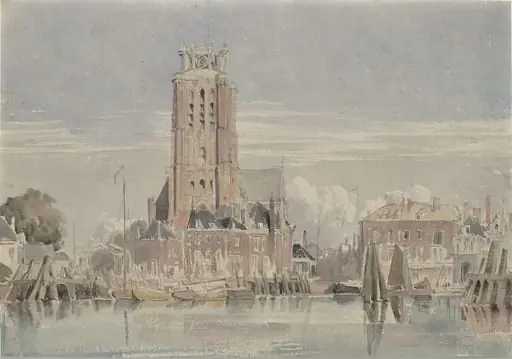
Rendered in delicate washes, the scene centers on a historic church rising behind a tranquil harbor.
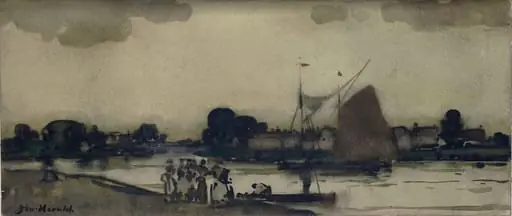
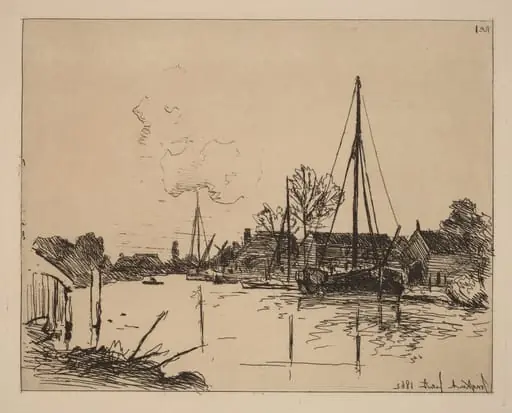
This watercolour, dated 1922, captures the quiet coastal town of Veere in the Netherlands. Rendered in delicate washes, the scene centers on a historic church rising behind a tranquil harbor. Two modest boats are moored near the shore, while figures move along the dock. The artist’s monogram appears on the work, confirming authorship and date. The composition balances architecture and nature with restrained detail.
Subject & Meaning
The painting presents a humble, everyday view of Veere’s harbor and its dominant religious structure. The church, with its brick facade and steep roof, anchors the scene as both a physical and symbolic landmark. Trees lean over the water, softening the built environment, while the presence of pedestrians suggests routine life. There is no dramatic narrative—only a quiet observation of place and time.
Technique & Style
The artist employed transparent watercolour washes to evoke atmosphere rather than define form. Soft gradients in the sky and water create a sense of light airiness, while muted greens and earth tones ground the composition. Details like windows and boat rigging are suggested with minimal strokes, avoiding heavy line work. The technique favors mood over precision, aligning with early 20th-century Dutch watercolour traditions.
History & Provenance
The work was completed in 1922, during a period when Dutch artists frequently turned to local landscapes for subject matter. Its survival with the artist’s signature suggests it was kept within private circles rather than exhibited widely. No public record of early ownership exists, and its current location reflects typical post-war dispersal patterns of modest watercolours from this era.
Context
Veere, once a significant port in the medieval Hanseatic League, had declined by the 20th century into a quiet fishing and leisure hub. The church, a remnant of its earlier prominence, remained a visual anchor. Artists of the time often depicted such towns as quiet counterpoints to industrialization, valuing their preserved architecture and subdued rhythms of daily life.
Legacy
This watercolour contributes to a broader body of Dutch landscape works from the interwar period that emphasize tranquility and local identity. Though not widely exhibited, it reflects a consistent artistic interest in vernacular scenes. Its preservation offers insight into how regional architecture and daily life were recorded through intimate, non-monumental media.
Artist & collection
Artist
Thomas RI Austen-Brown made quiet, luminous watercolors of European harbors and coastlines in the early 1900s.