Artwork
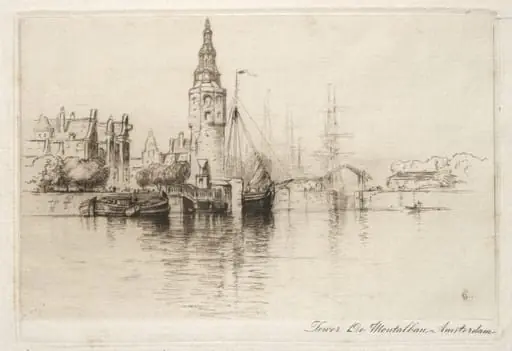
Tour de Montelban, Amsterdam
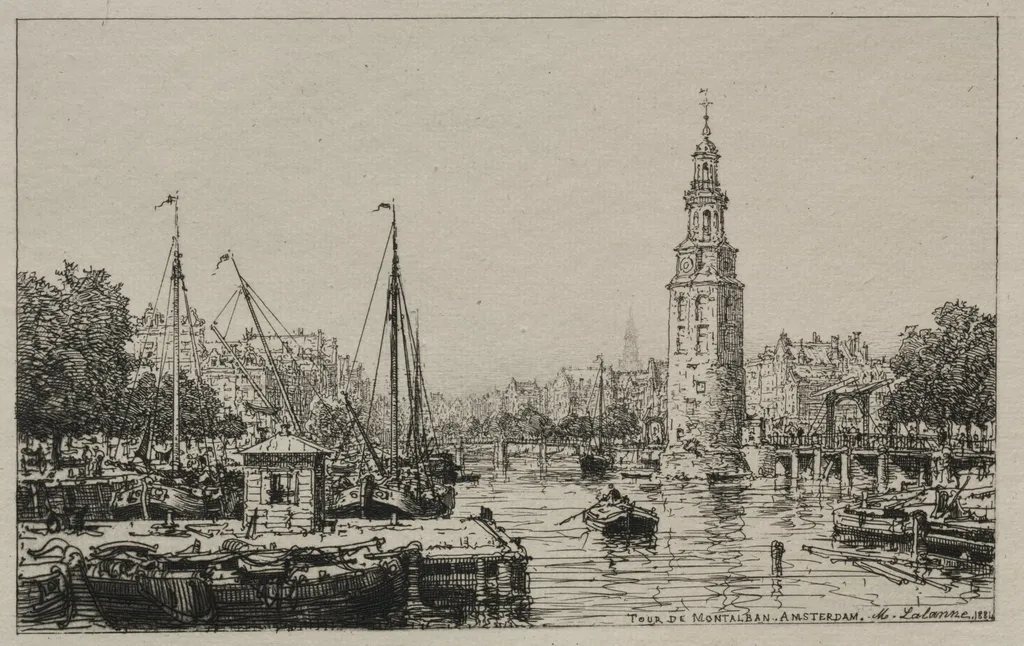
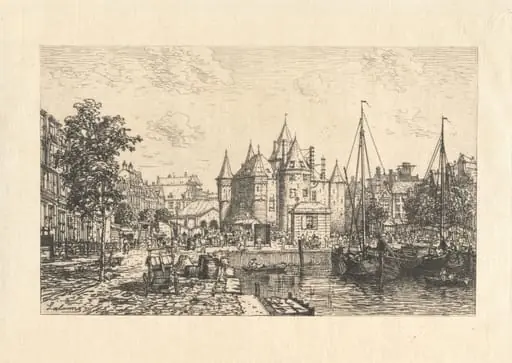
Tour de Montelban, Amsterdam is a print by the Impressionist artist Maxime Lalanne. It dates from 1884 and is held in the collection of the Cleveland Museum of Art.
About this work
Overview
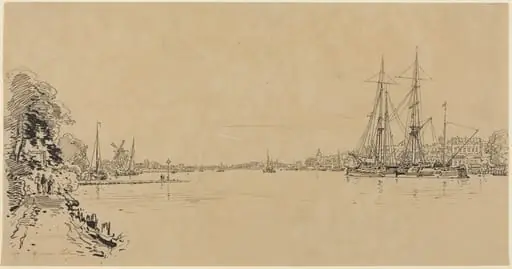
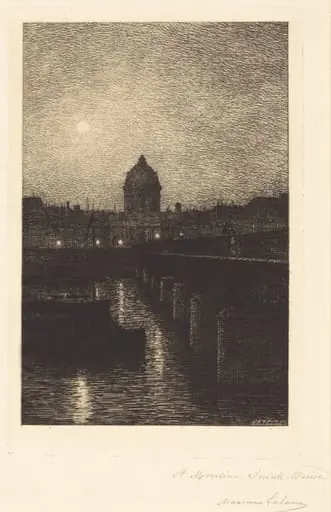
Created in 1884 by French artist Maxime Lalanne, *Tour de Montelban, Amsterdam* is an etching depicting a quiet Amsterdam canal scene. The work is held in the collection of the Cleveland Museum of Art. Lalanne, known for his mastery of printmaking, captured the city’s architectural presence with subtle tonal gradations rather than bold lines, emphasizing mood over detail.
Subject & Meaning
The tower, though prominent, is not identified as a specific landmark, allowing it to function as a symbolic anchor rather than a literal one.
The print centers on a tall, distant tower rising above a calm waterway, flanked by moored boats and a sparse shoreline. The absence of human activity and the stillness of the water suggest a moment of pause, perhaps reflecting the quiet rhythm of urban life in late 19th-century Amsterdam. The tower, though prominent, is not identified as a specific landmark, allowing it to function as a symbolic anchor rather than a literal one.
Technique & Style
Lalanne employed etching to achieve nuanced light and shadow, using fine, controlled lines to model form and texture. The water’s surface is suggested through delicate hatching, while the buildings and boats are rendered with precise yet restrained detail. The composition relies on atmospheric perspective, with the tower fading softly into the background, enhancing the sense of depth without dramatic contrast.
History & Provenance
The print was made during Lalanne’s period of active printmaking in the 1880s, a time when he focused on European urban scenes. It entered the Cleveland Museum of Art’s collection in the 20th century, likely through a broader acquisition of 19th-century European prints. No record of prior ownership or exhibition history prior to its museum acquisition is publicly documented.
Context
Lalanne worked during a period when etching experienced a revival among artists seeking alternatives to industrial reproduction. His focus on tranquil cityscapes aligned with broader European interests in everyday urban life, distinct from grand historical narratives. Amsterdam, with its canals and architecture, was a frequent subject for artists drawn to its quiet, reflective character.
Legacy
Though not widely known outside printmaking circles, Lalanne’s work contributed to the continued appreciation of etching as a medium for atmospheric expression. *Tour de Montelban, Amsterdam* exemplifies his ability to convey stillness and spatial depth with minimal means, influencing later generations of printmakers interested in subtle tonal effects over dramatic composition.
Artist & collection
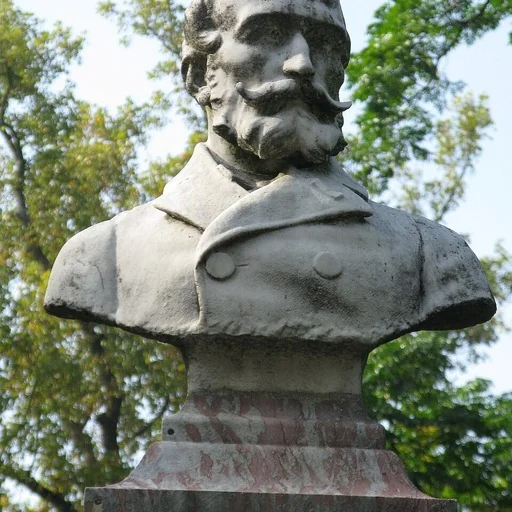
Artist
François Antoine Maxime Lalanne (November 27, 1827 – July 29, 1886) was a French artist known for his etchings and charcoal drawings (fusain).