Artwork
The Waterworks
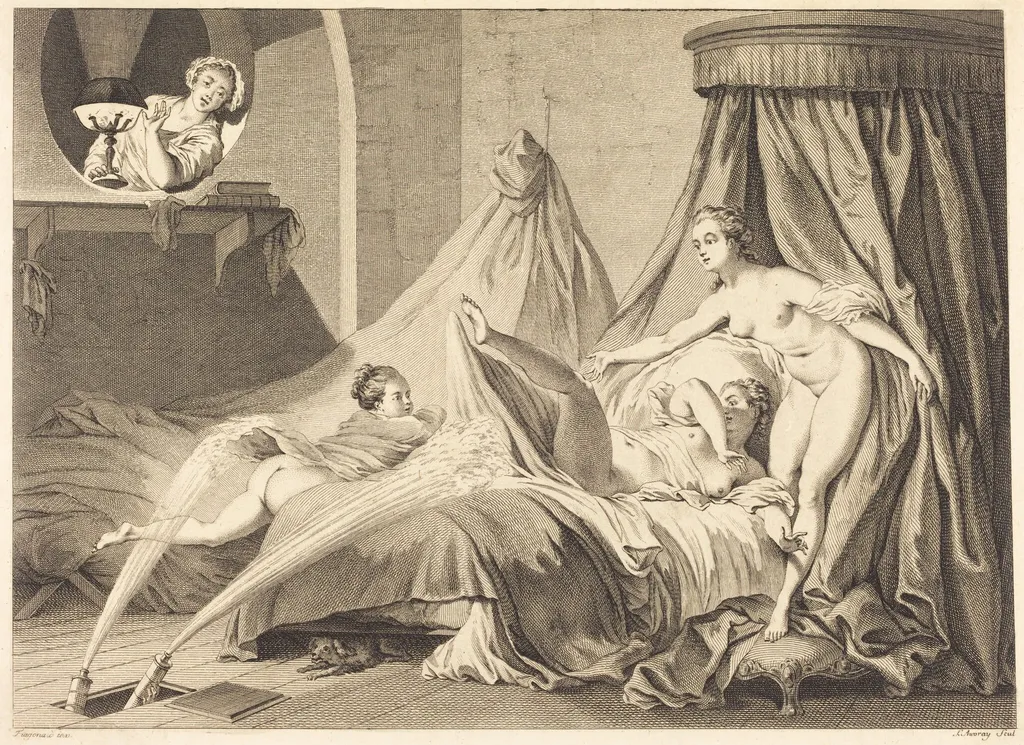
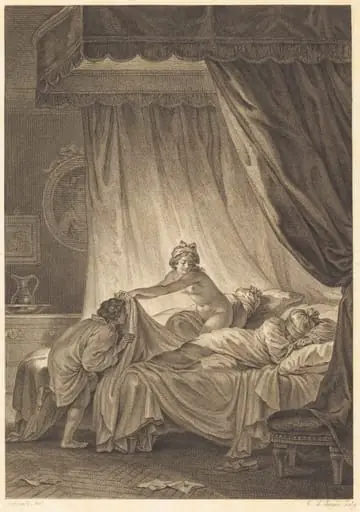
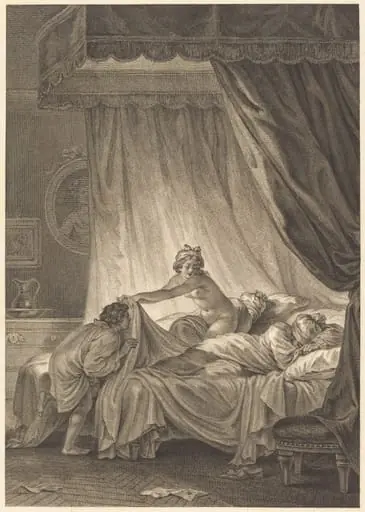
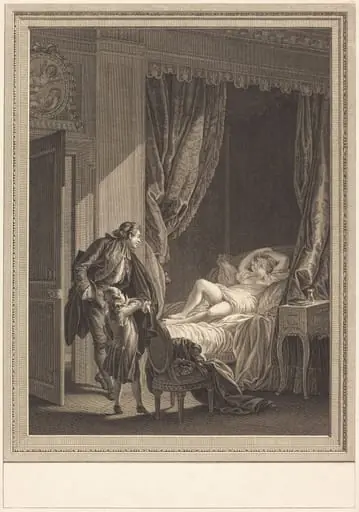
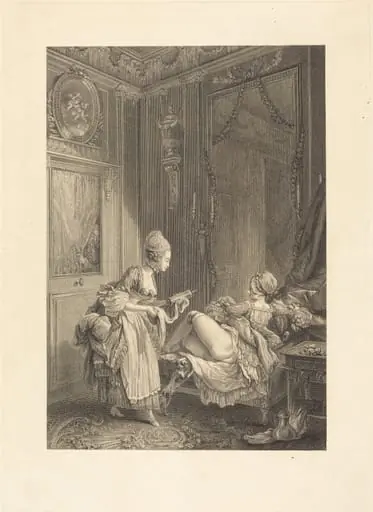
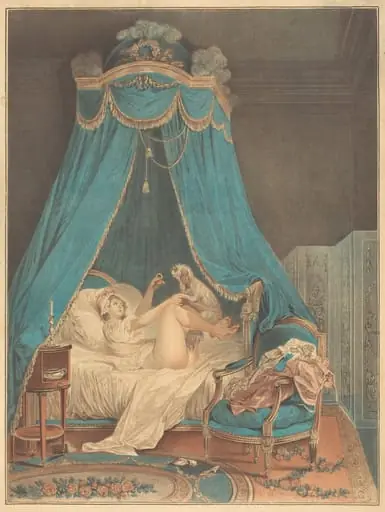
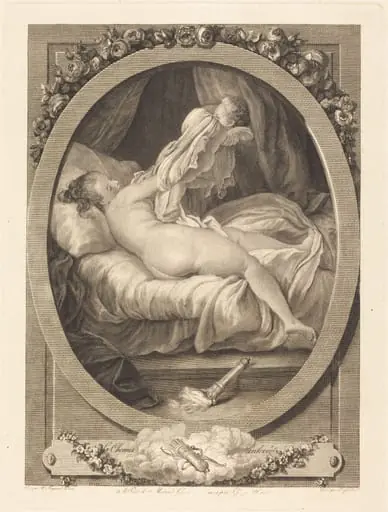
The Waterworks is an ink print by the Baroque artist Pierre-Laurent Auvray. It dates from 1776 and is held in the collection of the National Gallery of Art.
About this work
Overview
Created in 1776 by Pierre-Laurent Auvray, this engraving depicts an intimate domestic scene centered on motherhood and care.
Created in 1776 by Pierre-Laurent Auvray, this engraving depicts an intimate domestic scene centered on motherhood and care. Rendered in fine ink lines, the composition captures a quiet moment within a well-furnished interior. The work belongs to the tradition of 18th-century printmaking, where detailed engravings were used to reproduce scenes of daily life for a broad audience, often emphasizing emotional restraint and domestic harmony.
Subject & Meaning
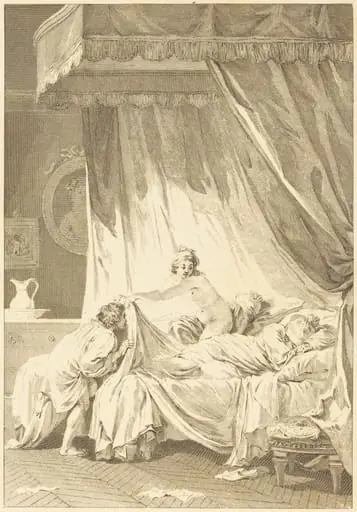
The image portrays two women attending to infants: one reclines, cradling a newborn beneath a draped sheet, while another leans over a table, holding a second child. The absence of overt narrative or dramatic gesture suggests a focus on routine tenderness. The setting—elegant furnishings, books, and a vase—implies a middle- or upper-class household, reinforcing ideals of refined domesticity prevalent in Enlightenment-era France.
Technique & Style
Auvray employed meticulous cross-hatching and fine linear gradation to model form and texture. The folds of fabric, the softness of hair, and the play of light across skin are rendered with precision, creating a sense of volume despite the medium’s limitations. Light enters from the left, casting subtle shadows that enhance spatial depth and draw attention to the central figures without theatricality.
History & Provenance
The engraving was produced during a period when reproductive prints were widely circulated among the educated middle class. Though Auvray’s original painting is unlocated, this print likely served as a commercial reproduction, possibly commissioned for private collections or as a decorative item. Its survival in museum archives reflects its value as a document of 18th-century visual culture and printmaking practice.
Context
In late 18th-century France, domestic scenes like this one aligned with shifting cultural values that elevated the private sphere, particularly the role of women as moral guardians of the home. Such imagery contrasted with grand historical or mythological subjects, offering instead a quiet celebration of everyday life—a trend encouraged by Enlightenment thinkers who valued reason, order, and familial virtue.
Legacy
The engraving remains a representative example of how printmakers translated painterly compositions into accessible formats. While Auvray is not widely known today, works like this contributed to the democratization of art, allowing broader audiences to engage with refined visual narratives. Its technical precision and restrained emotion continue to inform studies of 18th-century graphic arts and social history.
Artist & collection