Artwork
Le petit favori
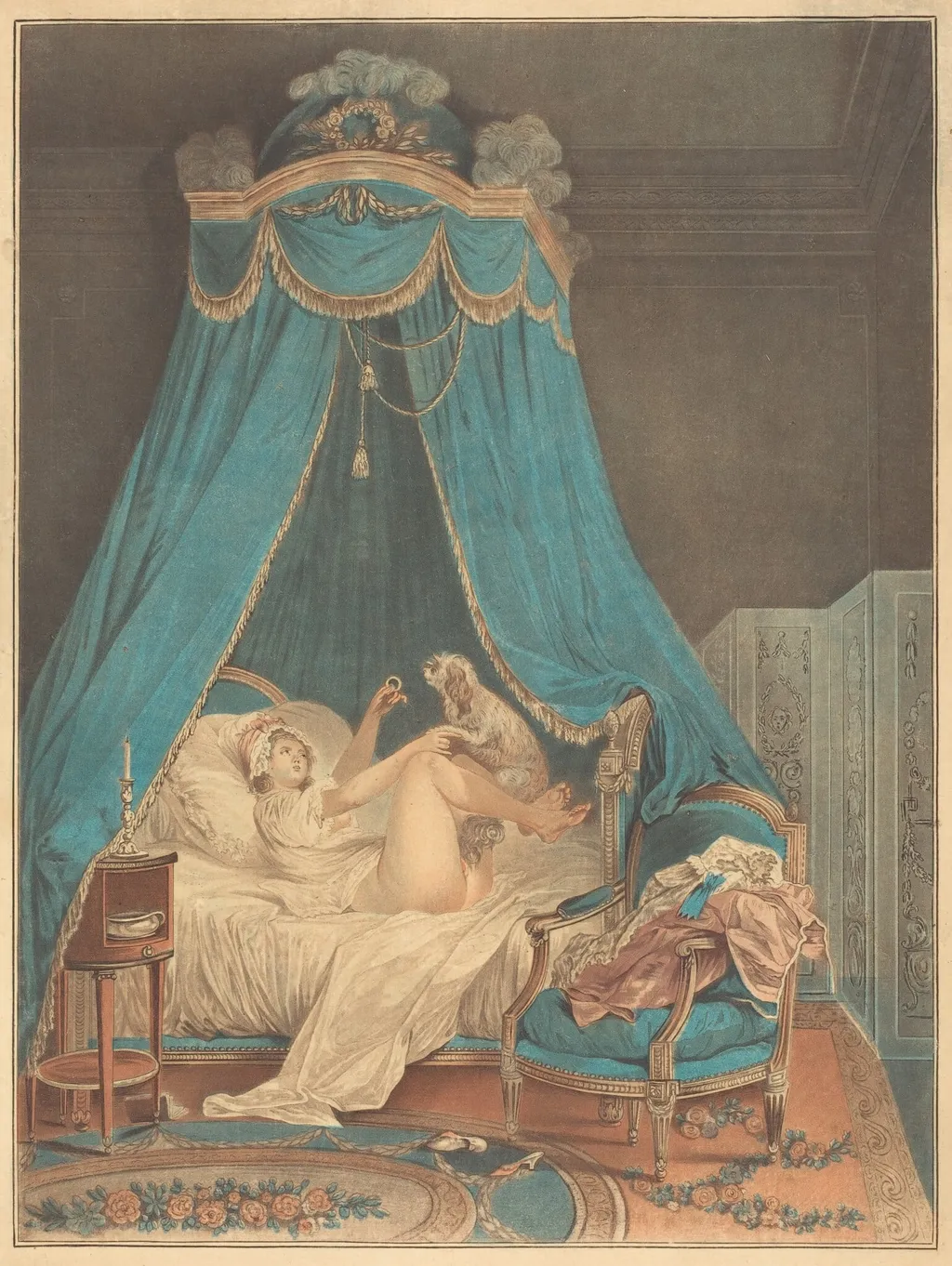
Le petit favori is an ink print by the Romanticist artist Jean-Baptiste Chapuy. It dates from 1781 and is held in the collection of the National Gallery of Art.
About this work
Overview
Using layered printing techniques, Chapuy achieved subtle gradations of color and light, characteristic of late 18th-century French printmaking.
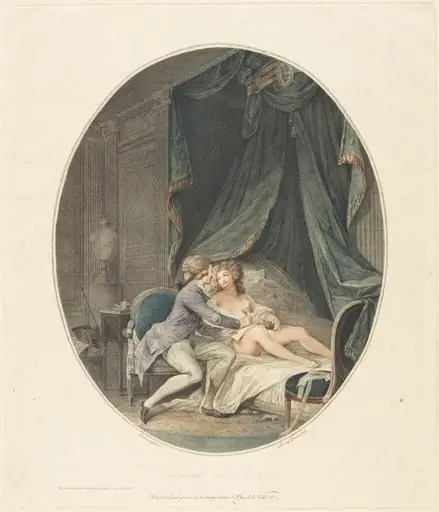
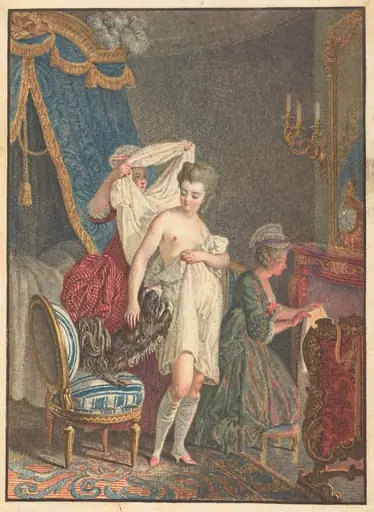
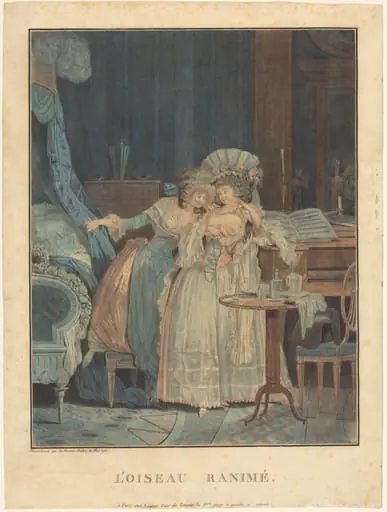
Le petit favori is a color aquatint and etching produced by Jean-Baptiste Chapuy in 1781. The print captures an intimate domestic moment with careful attention to texture and tone. Using layered printing techniques, Chapuy achieved subtle gradations of color and light, characteristic of late 18th-century French printmaking. The work belongs to a tradition of genre scenes that elevated private life through refined visual detail.
Subject & Meaning
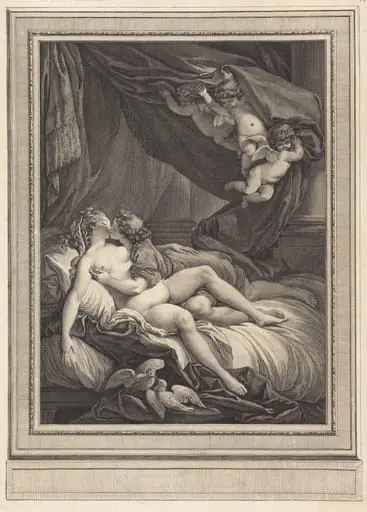
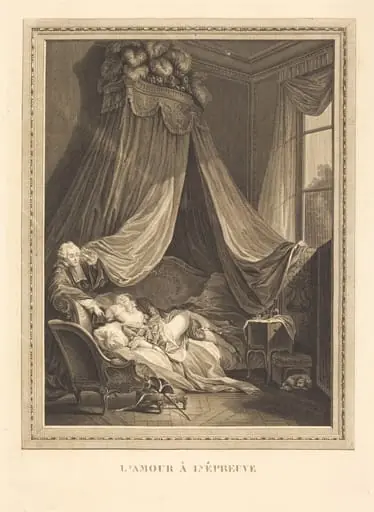
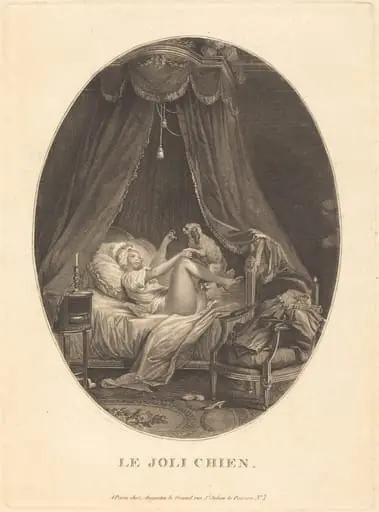
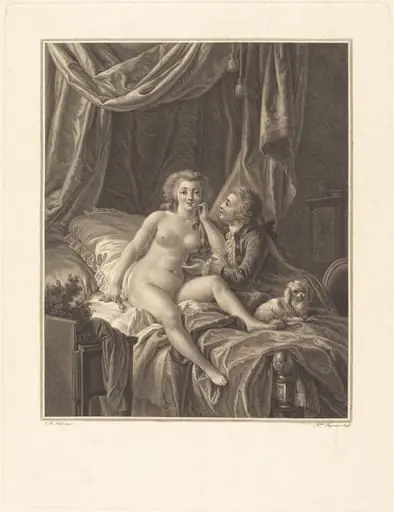
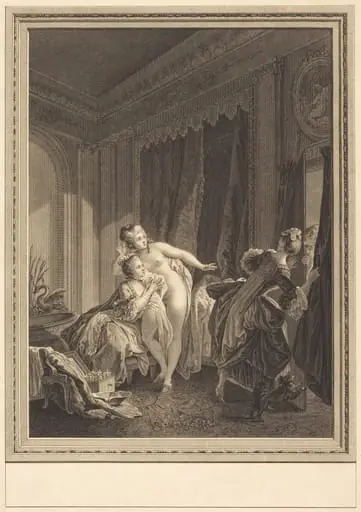
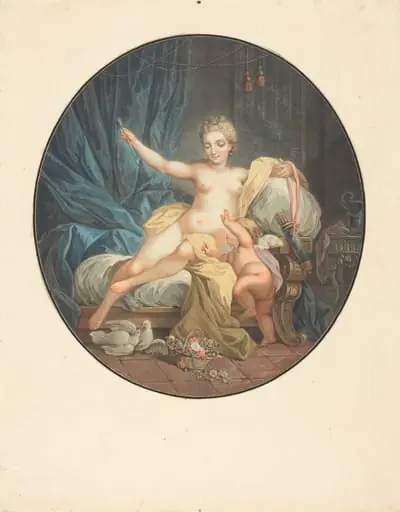
The scene depicts a woman leaning over a child in a white dress, her hand poised near the child’s face, while a man in a robe sits passively nearby. The figures are arranged to suggest tenderness and quiet vigilance, with the man’s slumped posture implying detachment or exhaustion. The setting—luxurious yet domestic—hints at aristocratic care, possibly alluding to the emotional dynamics of guardianship or familial duty in elite circles.
Technique & Style
Chapuy combined aquatint and etching to render soft atmospheric effects and fine linear detail. Aquatint created the muted gradients of the blue bedhangings and cream walls, while etching defined the intricate patterns of the rug and the carved fireplace. The use of multiple ink tones—gold, blue, and cream—was achieved through careful registration of separate plates, demonstrating technical precision in color printing.
History & Provenance
Created in 1781, Le petit favori emerged during a period when French printmakers increasingly focused on intimate, emotionally resonant scenes. Though its early ownership is undocumented, the work entered institutional collections in the 19th century, likely through private dealers or estate sales. Its survival in good condition reflects its appeal to collectors of refined graphic art during the Romantic era.
Context
In late 18th-century France, prints like this catered to a growing middle and aristocratic audience interested in domestic virtue and emotional nuance. Chapuy’s work aligns with contemporaries such as Greuze, who portrayed moralized family moments. The emphasis on tactile detail and subdued color reflects broader artistic trends moving away from grand historical narratives toward quieter, personal subjects.
Legacy
Le petit favori remains a representative example of French color printmaking at its most delicate. While Chapuy is not widely known today, this work illustrates the technical sophistication possible in print media before industrial reproduction. It continues to be studied for its nuanced portrayal of intimacy and its role in the evolution of domestic imagery in print culture.
Artist & collection