Artwork
Le reveil
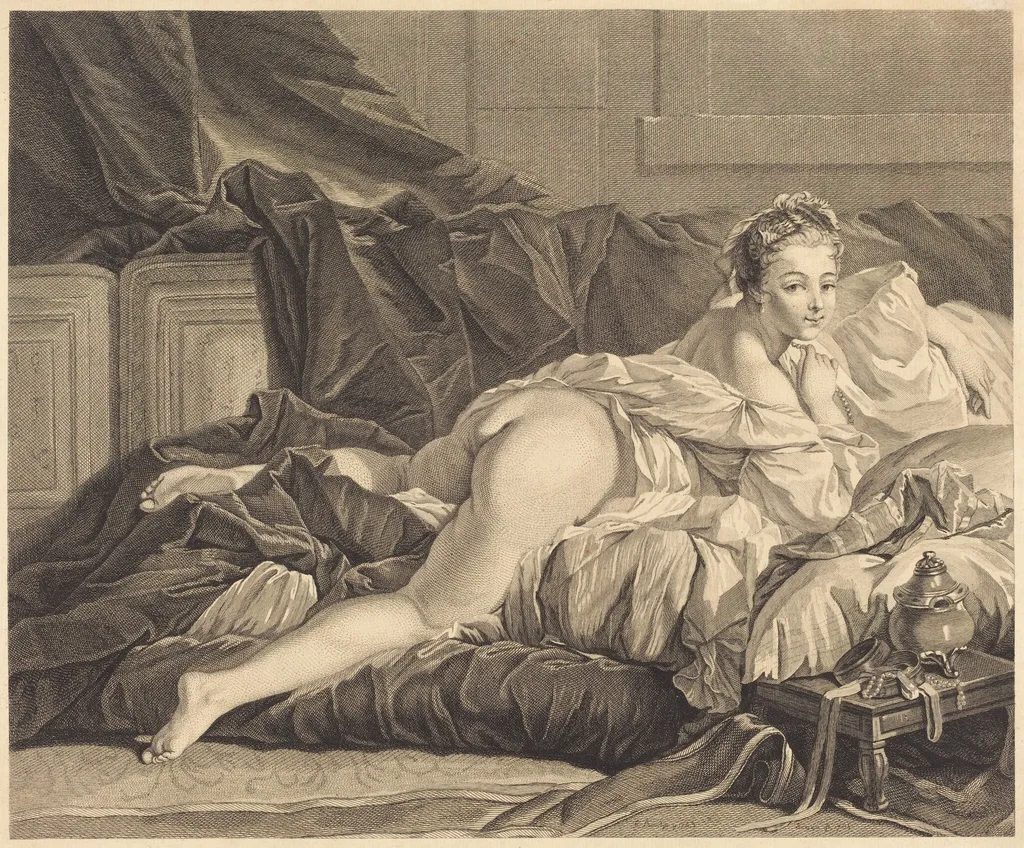
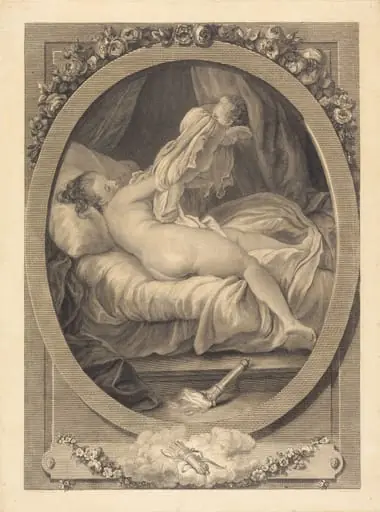
Le reveil is an ink print by the Romanticist artist Pierre Charles Levesque. It dates from 1765 and is held in the collection of the National Gallery of Art. Le Rêveil, executed in 1765, is a print that combines etching and engraving techniques.
About this work
He often paired etching with drypoint—scratching finer lines into the plate with a needle to give velvety shadows.
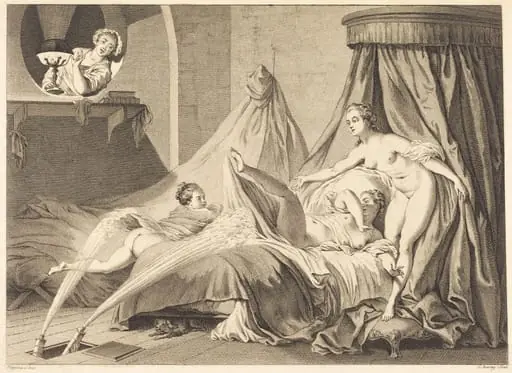
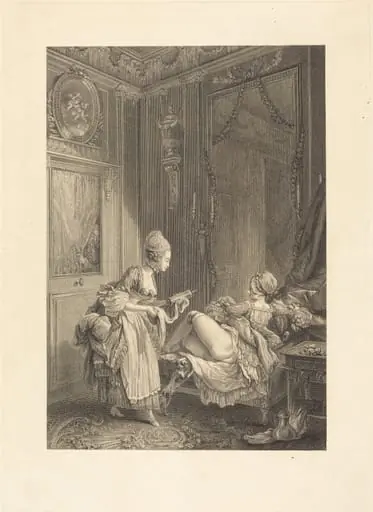
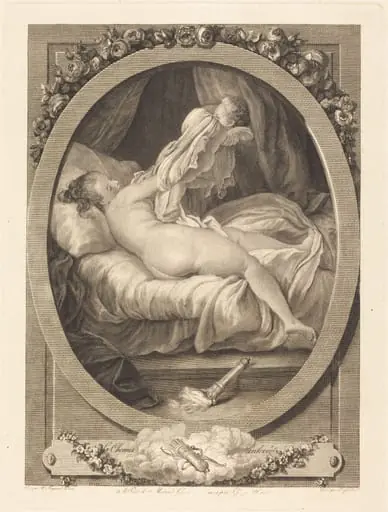
This etching shows a sleeping woman in a simple room, one arm dangling over the side of her bed. Morning light slips through a half-open curtain, hitting her face and the bedcover just right. The folds of her nightgown feel soft, even though it’s just lines on metal.
Levesque made this in 1765, early in his short career. He often paired etching with drypoint—scratching finer lines into the plate with a needle to give velvety shadows. The mix makes her skin glow like real skin.
Compare it to Levesque, Pierre Charles.
Overview
Le Rêveil, executed in 1765, is a print that combines etching and engraving techniques. The work presents a solitary woman asleep in a modest interior, her arm draped over the edge of the bed while morning light filters through a partially opened curtain, illuminating her face and the covering.
Subject & Meaning
The composition captures a quiet moment of transition between night and day, emphasizing the gentle intrusion of daylight into a private, intimate space. The woman's relaxed posture and the soft illumination suggest a contemplative pause, inviting viewers to consider themes of sleep, awakening, and the passage of time.
Technique & Style
Le Vesque employed both traditional engraving and the finer lines of drypoint on the same plate, a practice that allowed him to render delicate tonal gradations. The drypoint work produces velvety shadows that give the skin and fabric a subtle three‑dimensional quality, while the etched lines define the surrounding architecture.
History & Provenance
Created early in Le Vesque’s brief artistic career, Le Rêveil reflects his experimentation with mixed print methods. The piece has been documented in several 18th‑century collections of French prints, and it remains a representative example of his approach to combining etching with drypoint to achieve nuanced surface effects.
Artist & collection