Artwork
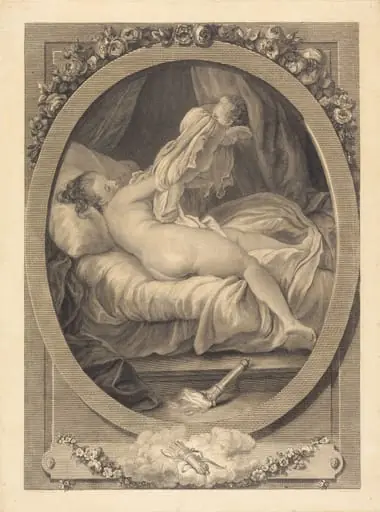
La Chemise enlevée
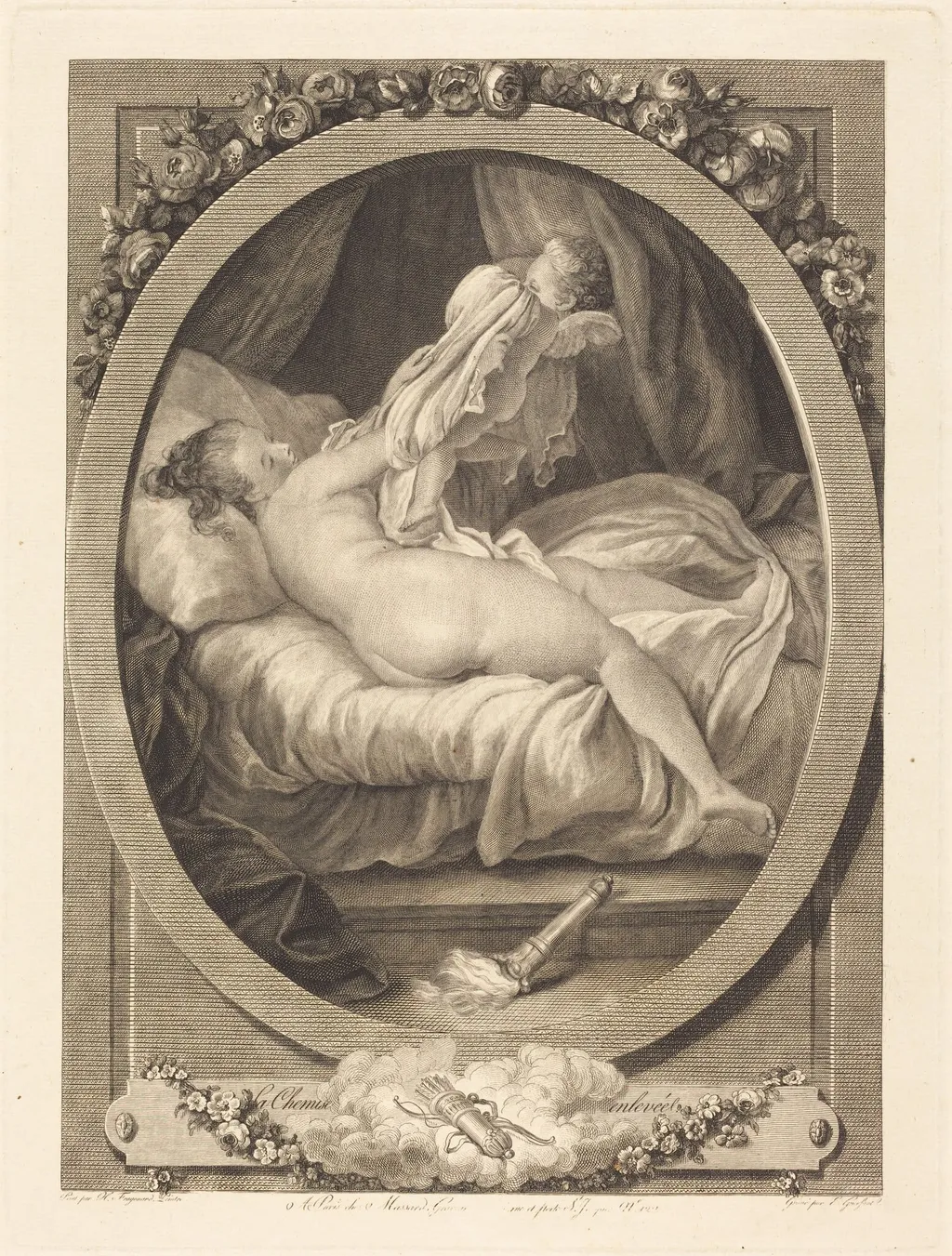
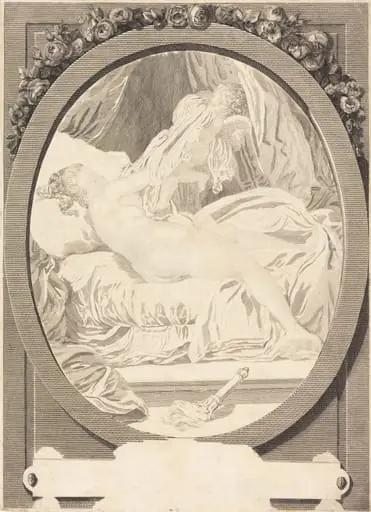
La Chemise enlevée is an ink print by the Romanticist artist E. Guersant. It dates from 1782 and is held in the collection of the National Gallery of Art.
About this work
Overview
Created in 1782, La Chemise enlevée is a print produced by the French engraver E. Guersant. Executed on laid paper, the work combines etching and engraving techniques to render a single, detailed image that was intended for multiple impressions.
Subject & Meaning
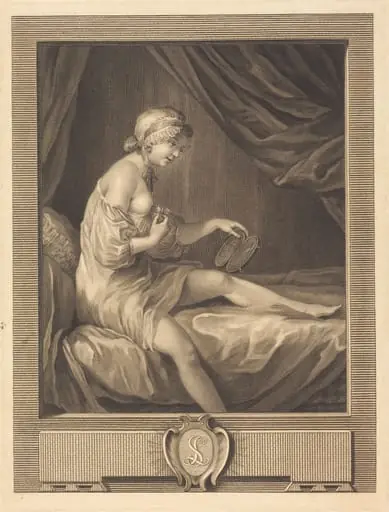
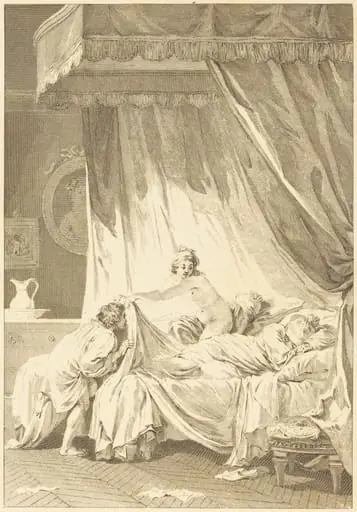
The composition presents a reclining nude woman whose loose shirt appears to have been discarded, suggested by the title’s reference to a removed chemise. A small child sits at her feet, gazing upward, adding a narrative element that hints at domestic intimacy or playful innocence within the otherwise sensual tableau.
Technique & Style
Guersant employed fine, closely spaced lines typical of etching to model the softness of skin and the subtle folds of fabric. Engraving tools were used to sharpen edges and deepen shadows, creating a contrast that emphasizes the figure’s three‑dimensionality against the decorative floral border.
History & Provenance
The print was issued in the late eighteenth century, a period when erotic and genre scenes were popular in French print markets. While specific ownership records are scarce, the work appears in several catalogues of Guersant’s oeuvre, confirming its attribution and dating.
Context
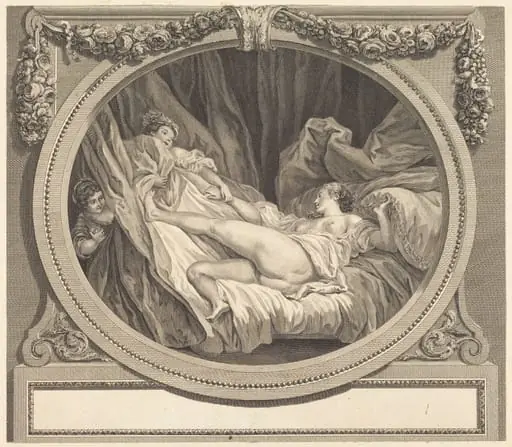
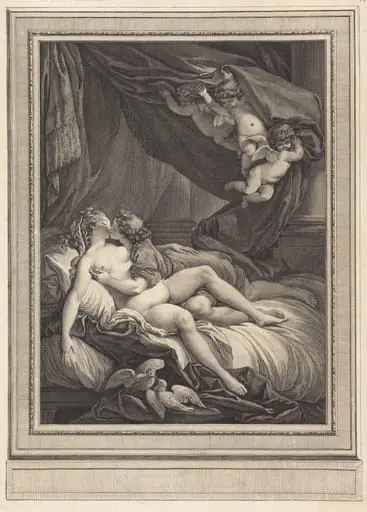
La Chemise enlevée reflects the Rococo fascination with eroticism and the private sphere, aligning with contemporary prints that combined sensual subjects with ornamental framing. Its decorative border of flowers and scrollwork mirrors the period’s taste for integrating natural motifs into graphic art.
Artist & collection