Artwork
Autoportretul lui Hrandt Avakian
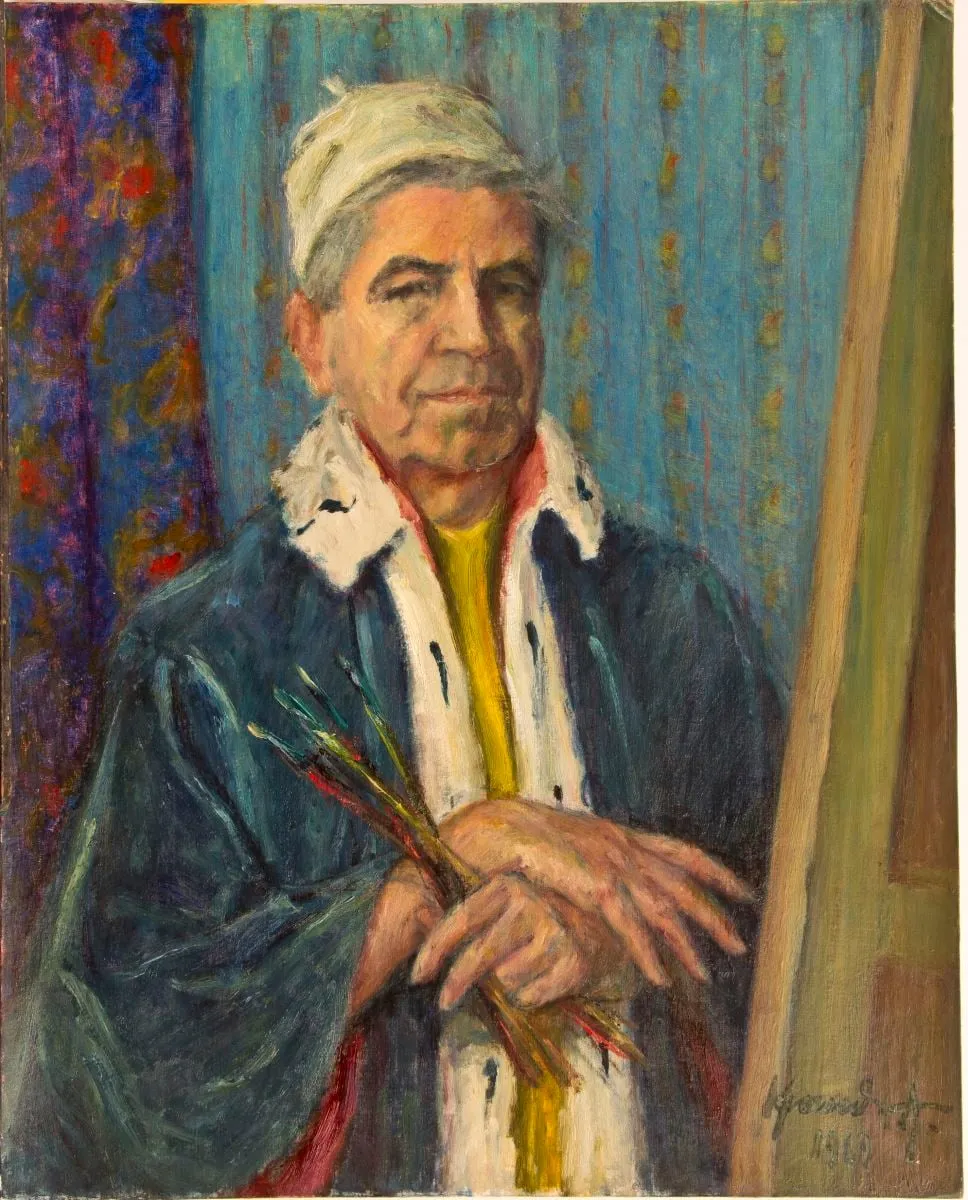
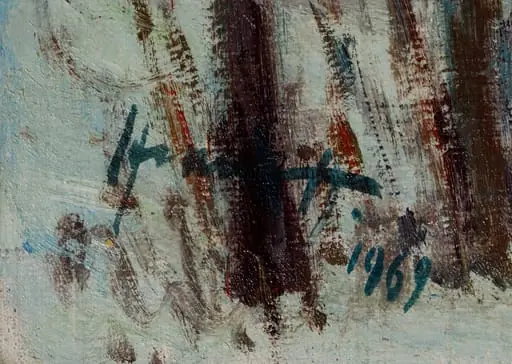
Autoportretul lui Hrandt Avakian is a print by Hrandt Avakian. It dates from 1969 and is held in the collection of the National Museum of Art of Romania.
About this work
Overview
The composition is intimate, with no extraneous elements, focusing attention on the figure and the texture of his attire and surroundings.
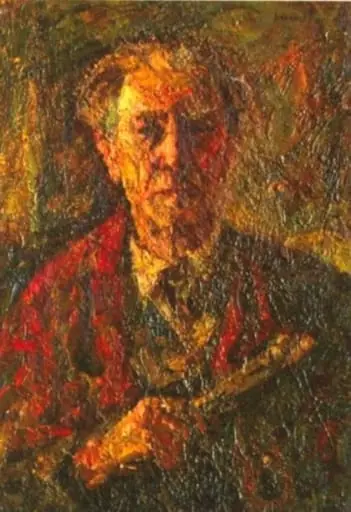
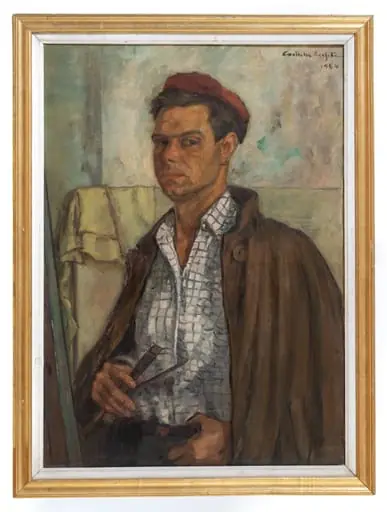
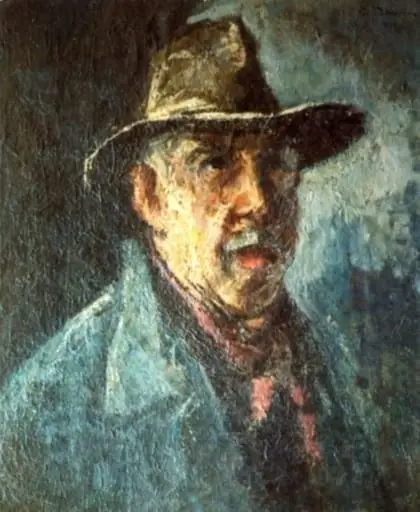
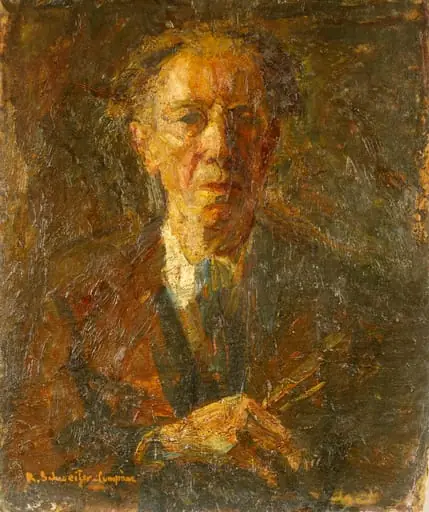
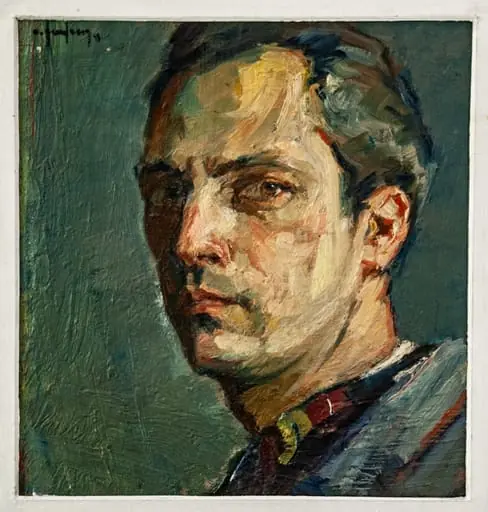
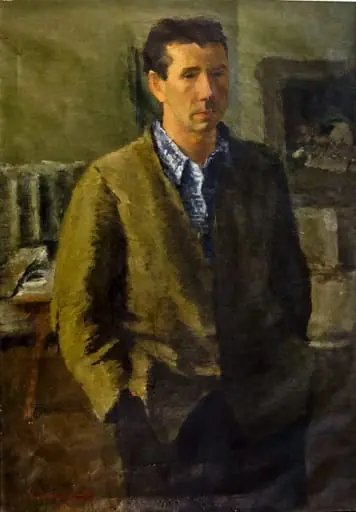
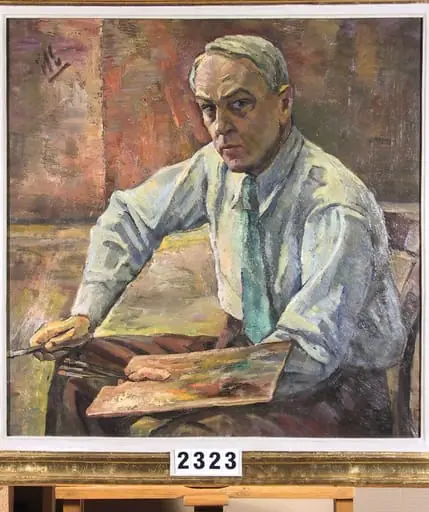
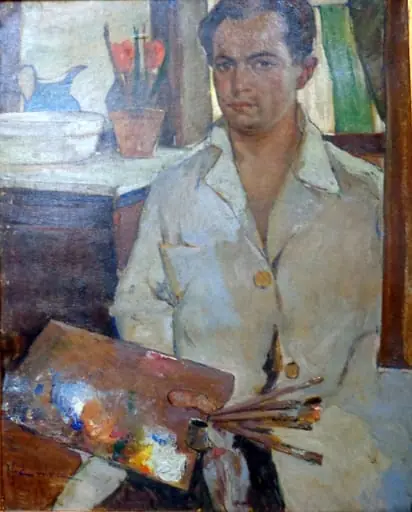
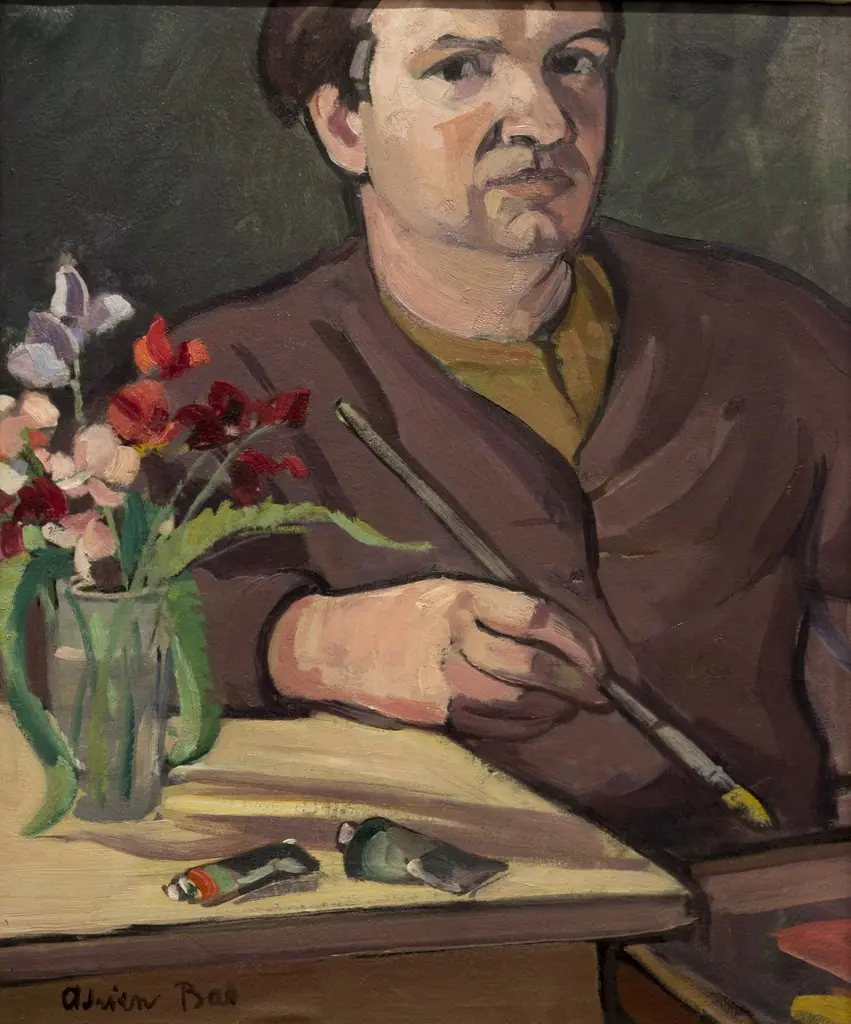
Painted in 1969, this self-portrait by Hrandt Avakian presents the artist in mid-life, capturing a moment of quiet reflection. He is depicted holding a cluster of brushes, a direct reference to his craft. The composition is intimate, with no extraneous elements, focusing attention on the figure and the texture of his attire and surroundings. The work conveys a sense of presence rather than narrative.
Subject & Meaning
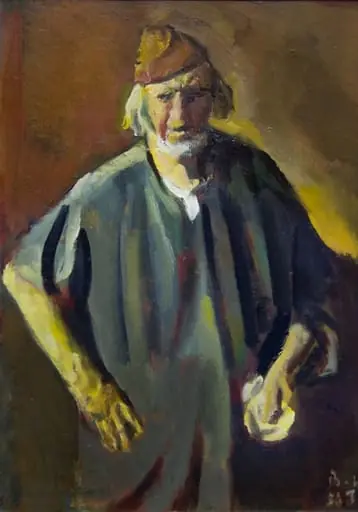
The subject is the artist himself, portrayed not as an idealized figure but as a working creator. The bundle of brushes in his hands serves as both tool and symbol—evidence of labor and identity. His attire, including a head covering and scarf, suggests cultural or personal tradition. The gaze is direct but unassuming, inviting contemplation of the artist’s role rather than his persona.
Technique & Style
Avakian employs loose, energetic brushwork across the face and clothing, creating a sense of immediacy. Thick applications of paint, particularly in the coat and scarf, produce a tactile surface. The background features vertical streaks of blue and green, applied with minimal detail, suggesting a studio wall without defining it. The overall approach favors expression over precision, aligning with a modernist sensibility.
History & Provenance
Created in 1969, the painting remains within the artist’s known body of work from his later years. It was likely made in his studio, reflecting a period of sustained artistic practice. No public record of early exhibitions or ownership changes exists, and the work has primarily been studied in relation to his personal oeuvre rather than broader art movements.
Context
Avakian worked during a time when figurative painting persisted alongside emerging abstraction. His self-portrait reflects a personal, introspective approach common among artists who valued the act of making over public acclaim. The painting’s informal style and domestic setting align with a broader trend in mid-20th-century portraiture that emphasized authenticity over grandeur.
Legacy
Though not widely exhibited outside Armenian artistic circles, the self-portrait endures as a personal testament to Avakian’s dedication to his craft. It offers insight into the quiet rituals of an artist’s daily life. Its unadorned honesty and physicality of paint continue to resonate with viewers interested in the relationship between artist and medium.
Artist & collection