Artwork
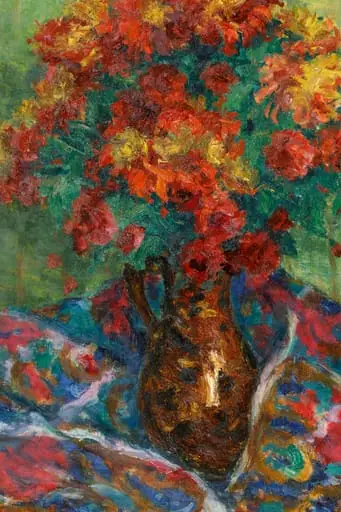
Bujori roșii pe fond violet
Bujori roșii pe fond violet is an unspecified painting by Hrandt Avakian. It dates from 1850 and is held in the collection of the National Museum of Art of Romania.
About this work
Overview
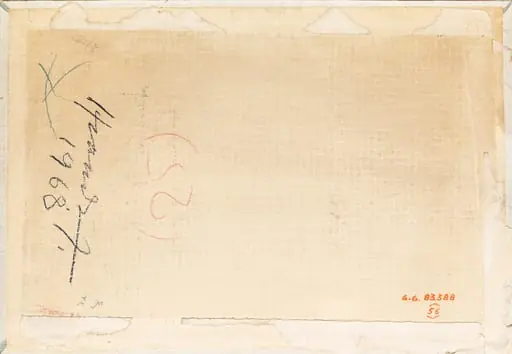
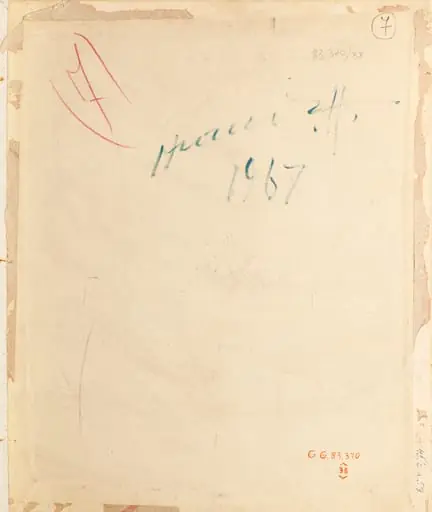
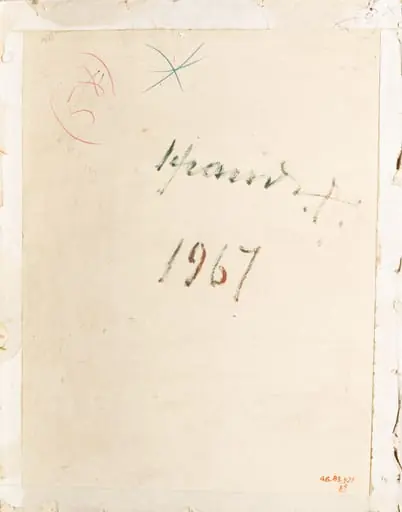
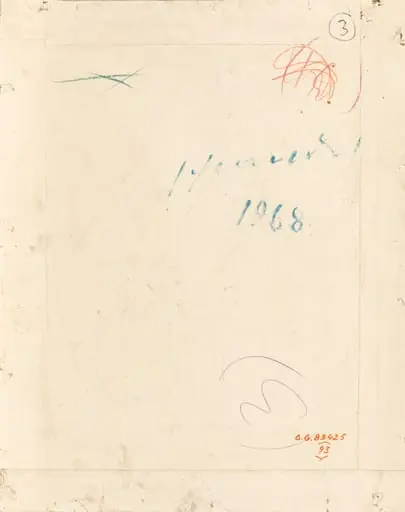
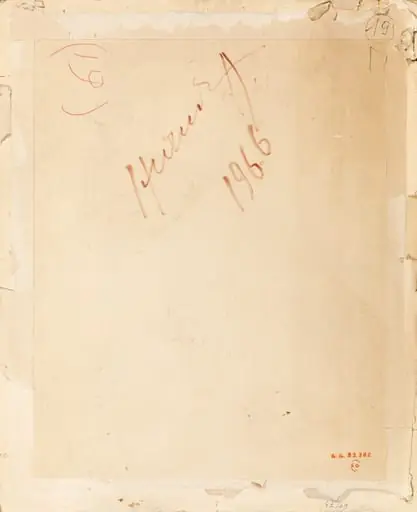
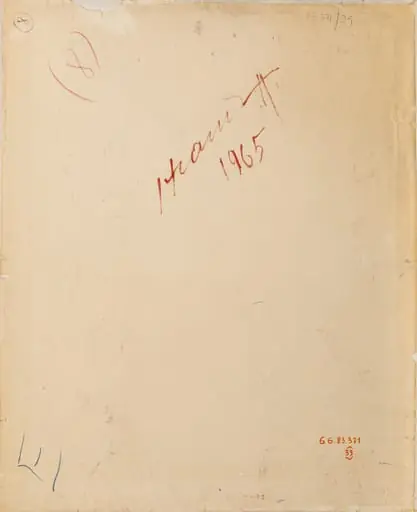
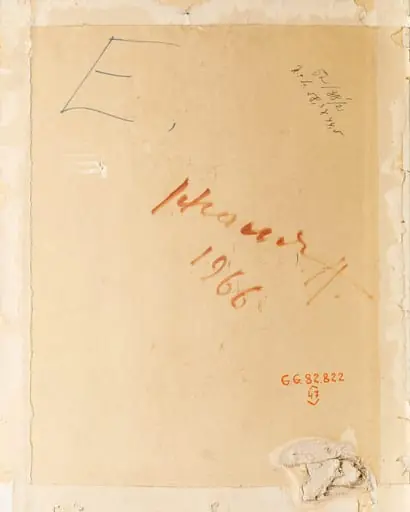
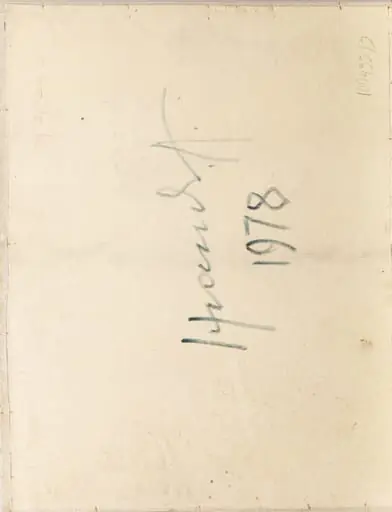
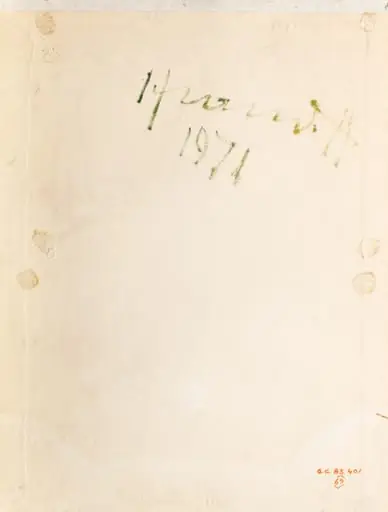
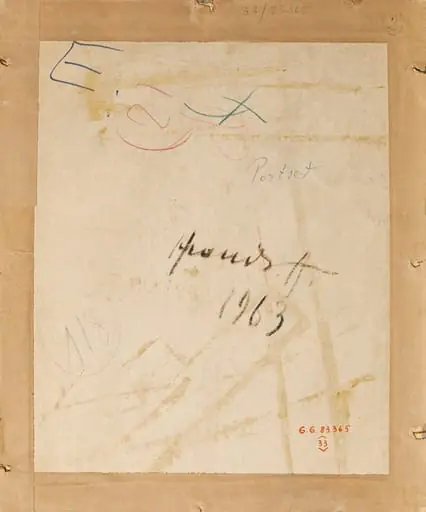
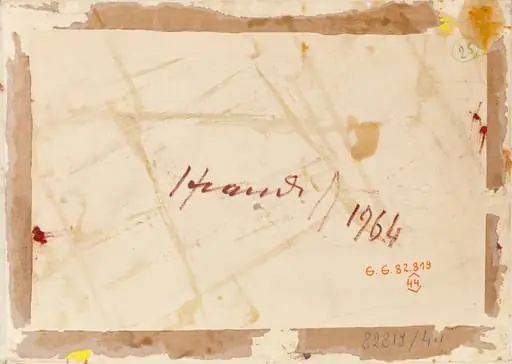
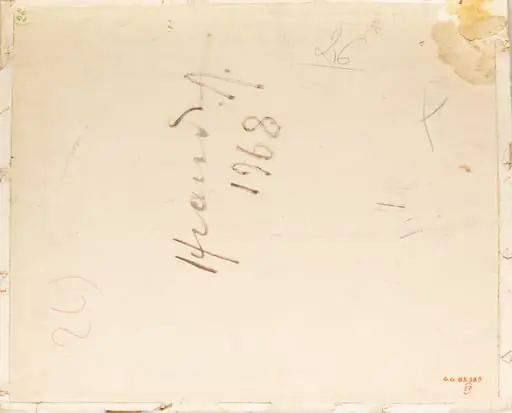
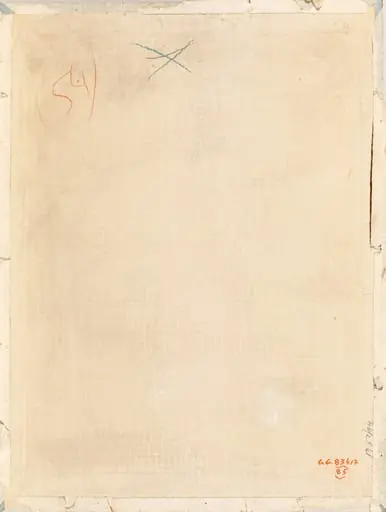
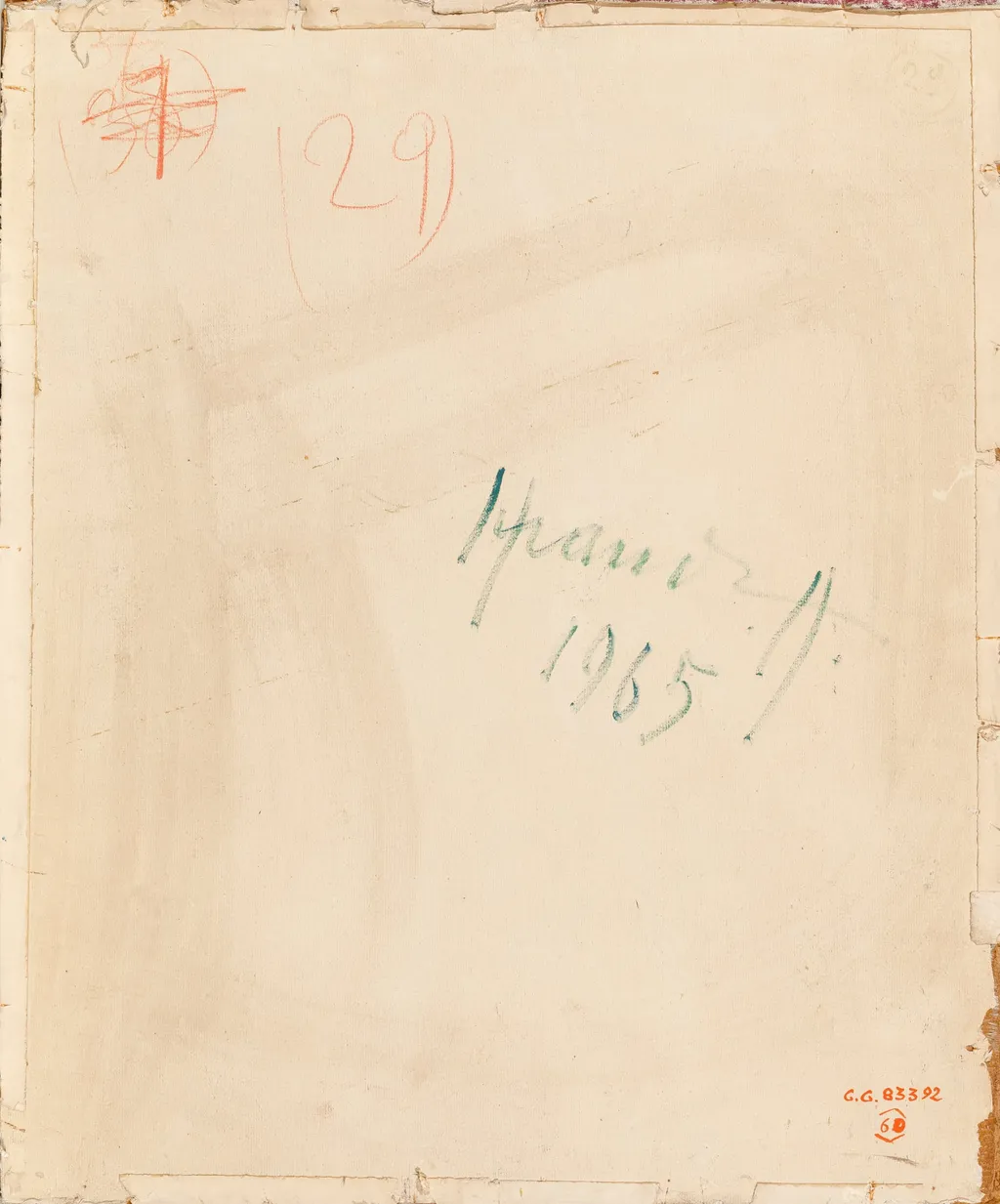
This work, titled Bujori roșii pe fond violet and attributed to Hrandt Avakian around 1850, presents an empty canvas with a faded off-white surface.
This work, titled Bujori roșii pe fond violet and attributed to Hrandt Avakian around 1850, presents an empty canvas with a faded off-white surface. The edges exhibit signs of age and handling, while a narrow strip of darker pigment traces the top margin. Faint red and green ink markings in the upper corners suggest archival or inventory annotations, implying the piece was once part of a documented collection or exhibition.
Subject & Meaning
The title references red roses on a violet ground, yet no floral imagery appears. The absence of depicted subjects transforms the work into a silent artifact of expectation—perhaps a placeholder, a failed attempt, or a deliberate void. The discrepancy between title and surface invites questions about artistic intent, institutional labeling, or the loss of original content over time.
Technique & Style
The surface reveals no brushwork typical of floral still-life painting. Instead, the canvas bears minimal intervention: a thin, uneven border of darker pigment along the top and no visible texture or layering. The lack of impasto or pigment application suggests either an unfinished state or a deliberate reduction, contrasting sharply with the ornate conventions of 19th-century floral subjects.
History & Provenance
The faint ink markings in the upper corners resemble catalog numbers or exhibition labels, indicating the canvas was once registered within a collection or institutional archive. No documentation survives to confirm its original context or subsequent movements. Its survival as a bare support, rather than a lost painting, raises questions about preservation practices of the era.
Context
In mid-19th-century Eastern Europe, floral still lifes were common in academic and domestic settings, often symbolizing transience or beauty. This work’s deviation from the genre—its emptiness—stands in contrast to prevailing trends. Whether intentional or accidental, its existence challenges assumptions about artistic completion and the role of the canvas as a carrier of meaning.
Legacy
As an object stripped of its presumed imagery, the work now functions as a relic of absence. It invites reflection on how art is cataloged, remembered, or forgotten. Its survival as a blank canvas, annotated yet unadorned, offers a quiet commentary on the fragility of artistic records and the gaps in historical preservation.
Artist & collection