Artwork
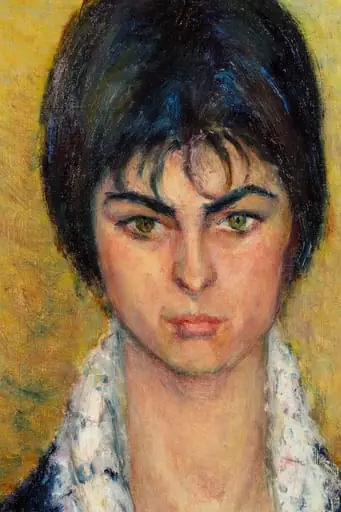
Portret de femeie pe fond galben
Portret de femeie pe fond galben is a print by Hrandt Avakian. It dates from 1850 and is held in the collection of the National Museum of Art of Romania.
About this work
This piece is reminiscent of the works of artists who experiment with unconventional materials and techniques, such as those who use impasto.
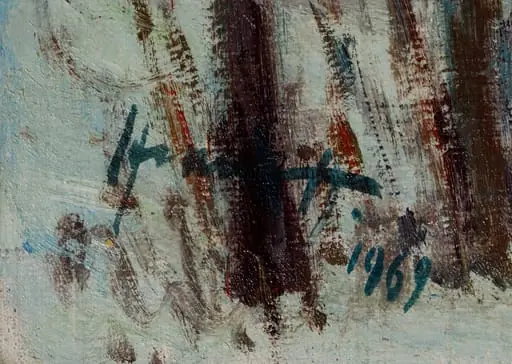
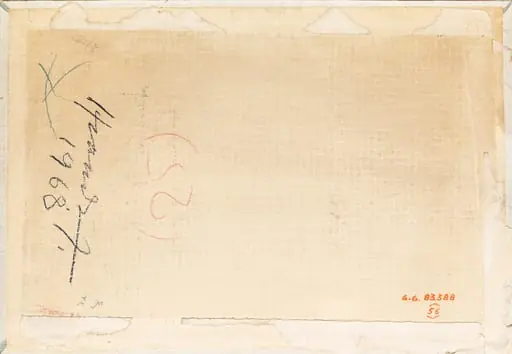
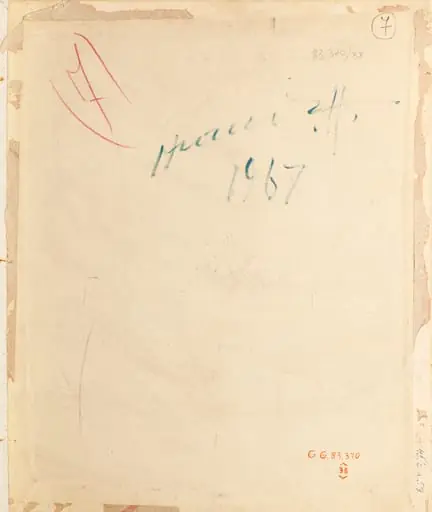
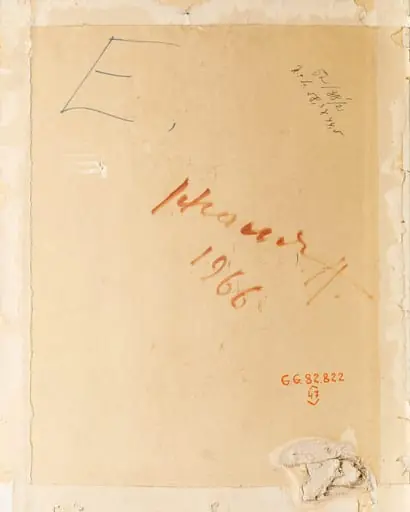
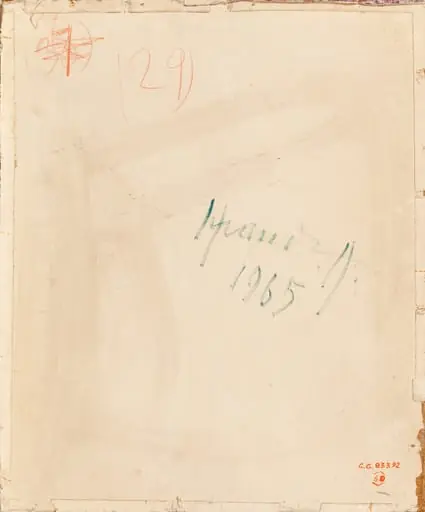
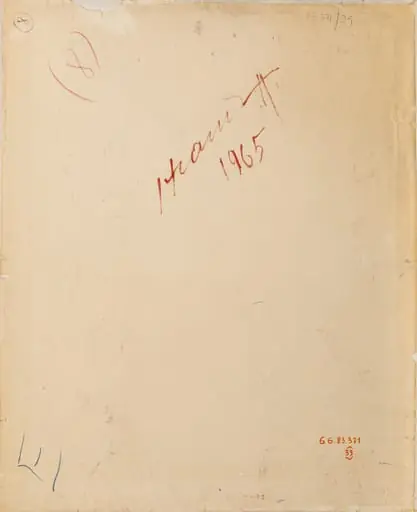
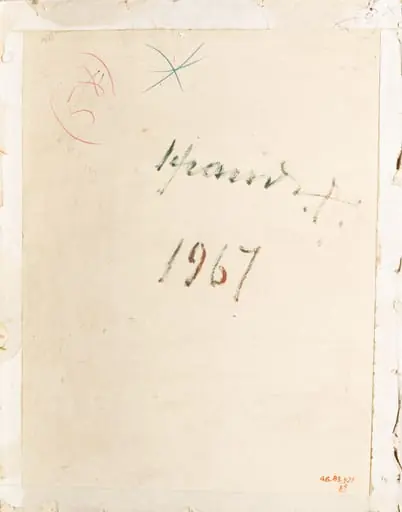
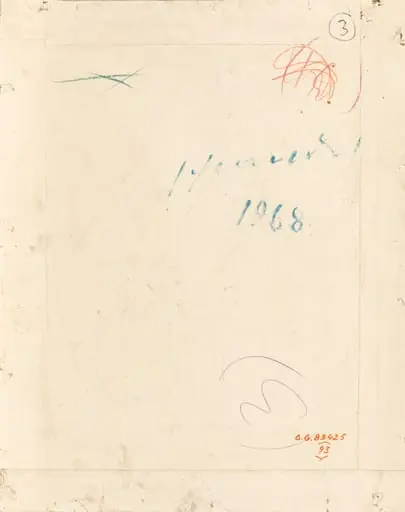
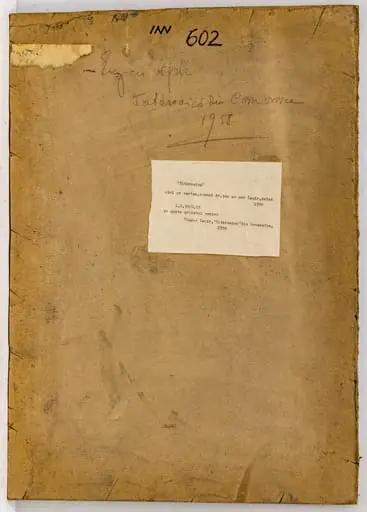
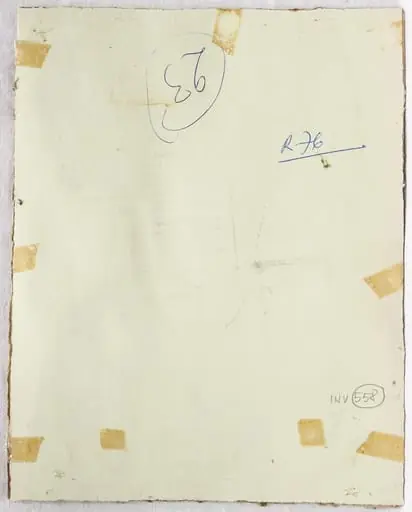
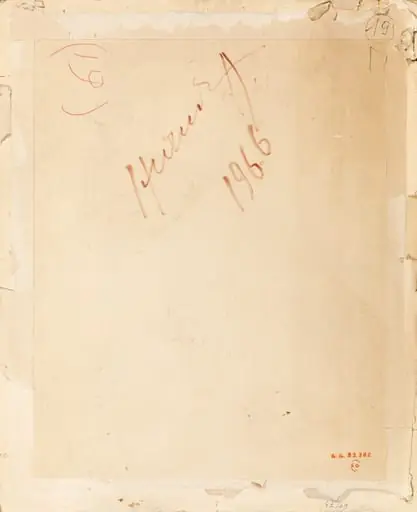
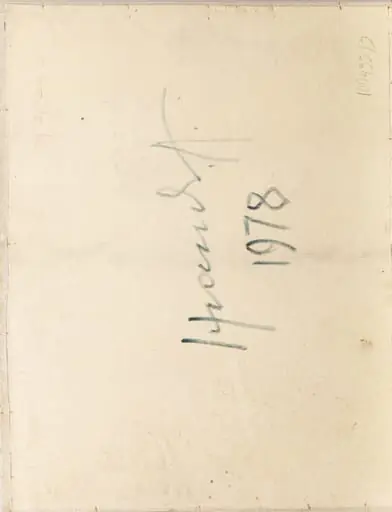
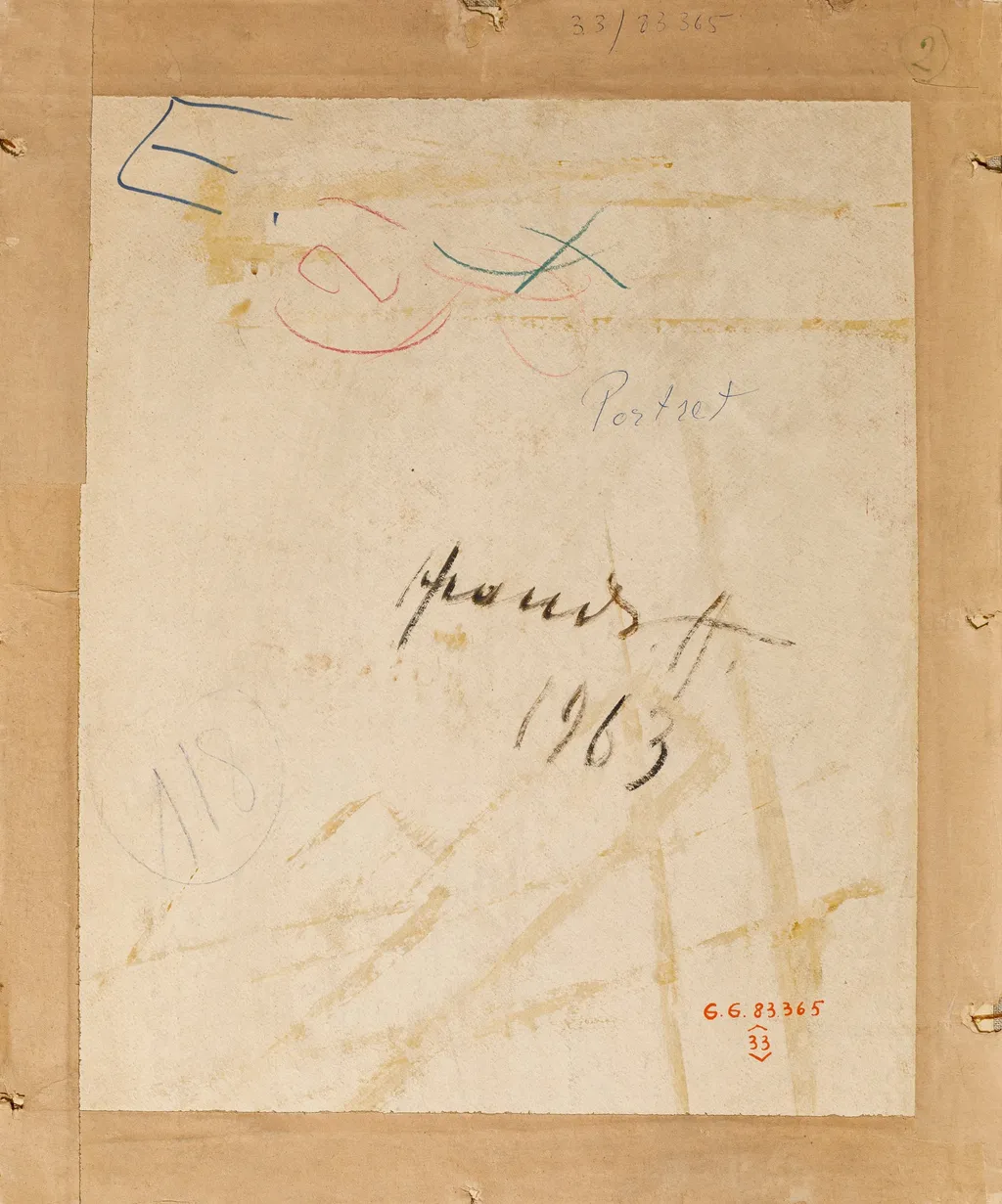
The image shows a piece of paper with a rough, beige surface. It has a few scribbled notes and marks on it, including some illegible writing and what appears to be a date, "1963". The paper is framed by a brown border, which is slightly torn in some places.
The paper itself has a rough texture, with visible fibers and a slight yellow tint. The scribbled notes and marks are scattered across the surface, giving the impression of a hasty or unfinished work.
This piece is reminiscent of the works of artists who experiment with unconventional materials and techniques, such as those who use impasto.
Overview
Portret de femeie pe fond galben is attributed to Hrandt Avakian and dated to around 1850. The work is presented as a two‑dimensional image, catalogued as an artwork rather than a traditional painting.
Subject & Meaning
The title suggests a portrait of a woman set against a yellow background, though the visual content consists of a sheet of paper rather than a rendered figure. The juxtaposition of title and material invites reflection on representation and the absence of a conventional likeness.
Technique & Style
The piece consists of a beige‑toned paper with a rough, fibrous surface. Across the sheet are loose, hurried scribbles, some illegible, and a faint inscription resembling a date, "1963". The border surrounding the paper is brown and shows minor tears, adding a tactile, unfinished quality reminiscent of impasto experiments with texture.
History & Provenance
The artwork is listed under the name Hrandt Avakian, an artist active in the mid‑nineteenth century. No further documentation of ownership or exhibition history is provided beyond the catalog entry.
Context
While the work diverges from conventional portraiture, its use of everyday material and spontaneous markings aligns it with later avant‑garde practices that explore the boundaries between drawing, collage, and painting.
Artist & collection