Artwork
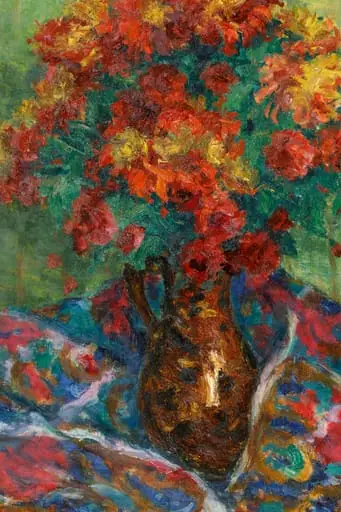
Imortele pe masă galbenă
Imortele pe masă galbenă is an unspecified painting by Hrandt Avakian. It dates from 1850 and is held in the collection of the National Museum of Art of Romania.
About this work
Overview
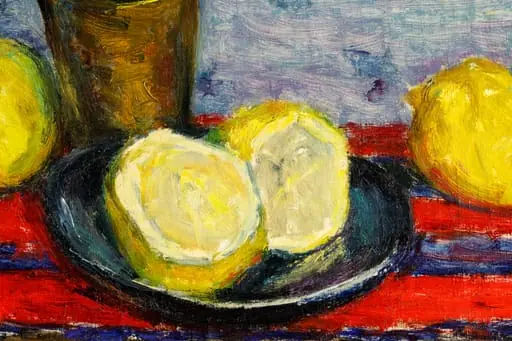
Hrandt Avakian painted Imortele pe masă galbenă around 1850, capturing a quiet domestic still life. The composition centers on a yellow tablecloth bearing a vase of flowers and indistinct objects, rendered with subdued detail. The work reflects a quiet interest in everyday surfaces and light, typical of 19th-century regional still-life traditions in Eastern Europe.
Subject & Meaning
The painting presents a modest arrangement of cut flowers on a yellow cloth, accompanied by ambiguous household items. No symbolic or narrative intent is overt; the focus lies in the arrangement of natural and domestic elements. The flowers, though colorful, are not idealized, suggesting an observation of transient beauty rather than allegory.
Technique & Style
Avakian employed a restrained palette and soft brushwork to convey texture and light. The yellow tablecloth anchors the composition, while the flowers and objects are rendered with loose, suggestive strokes. Details are minimized, emphasizing atmosphere over precision, aligning with a quiet realism common in provincial painting of the period.
History & Provenance
The painting’s early history is undocumented, and its ownership prior to modern collections remains unclear. It is known only through limited archival references and museum records from the late 20th century. No exhibition history or contemporary critical reception from the 1850s has been preserved.
Context
Created during a period of growing interest in domestic still life across the Balkans and Eastern Europe, the work reflects local artistic practices distinct from Western academic traditions. Avakian’s output, though limited in surviving pieces, contributes to a broader regional trend of intimate, unadorned domestic scenes.
Legacy
Imortele pe masă galbenă remains one of the few documented works by Hrandt Avakian. It is occasionally referenced in studies of 19th-century Romanian and Armenian diaspora art, but Avakian’s broader influence is not well established. The painting endures as a quiet example of understated observation in a period rich with more prominent artistic movements.
Artist & collection