Artwork
Flori
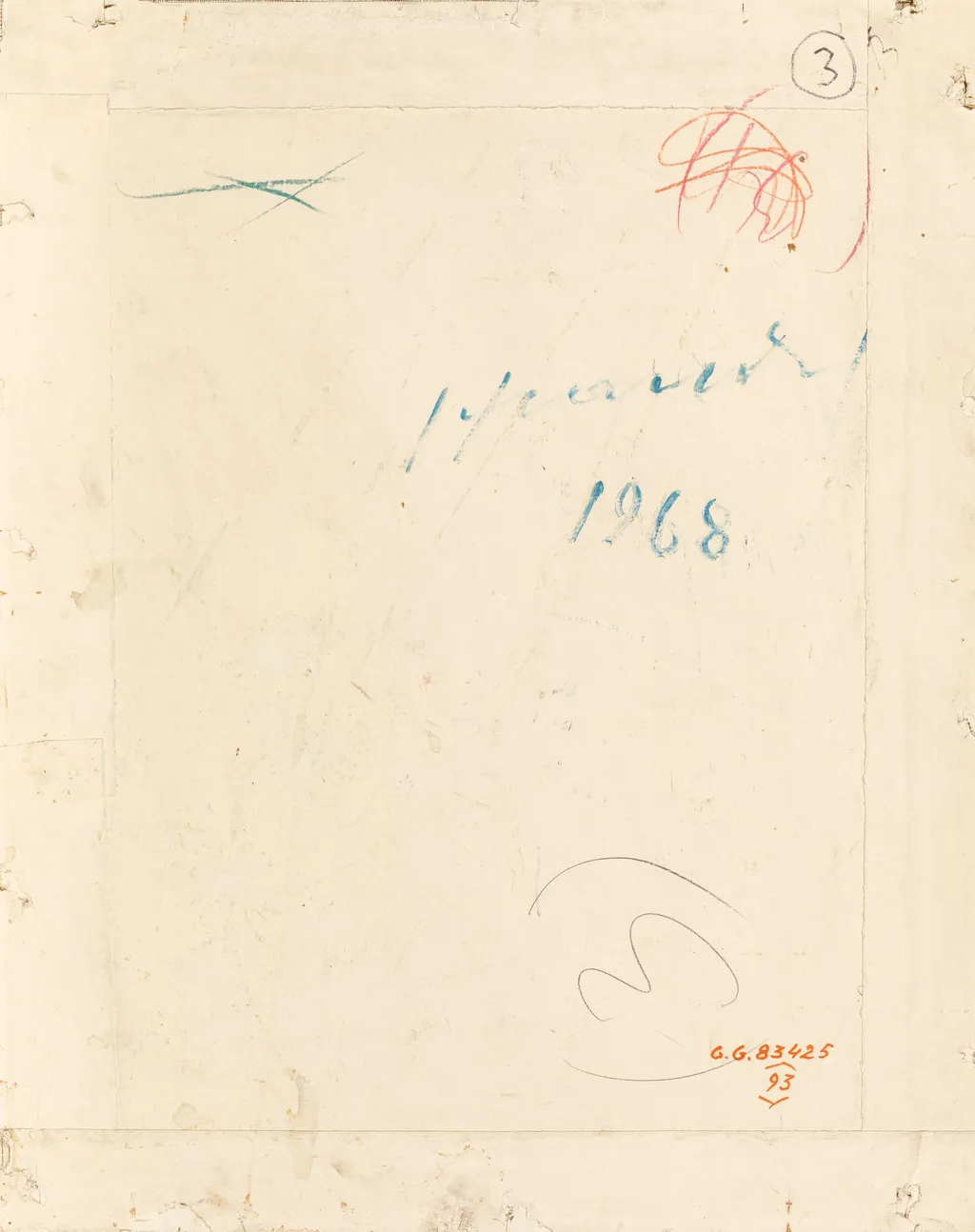
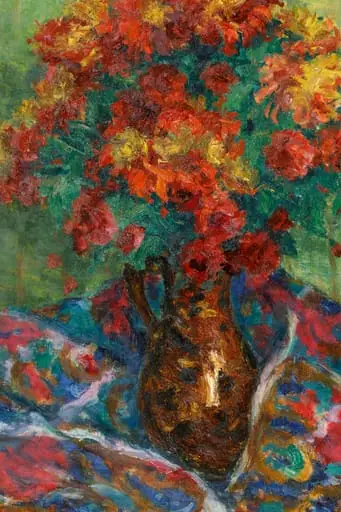
Flori is an unspecified painting by Hrandt Avakian. It dates from 1850 and is held in the collection of the National Museum of Art of Romania.
About this work
The painting is mostly empty, but the date hints at a moment in time.
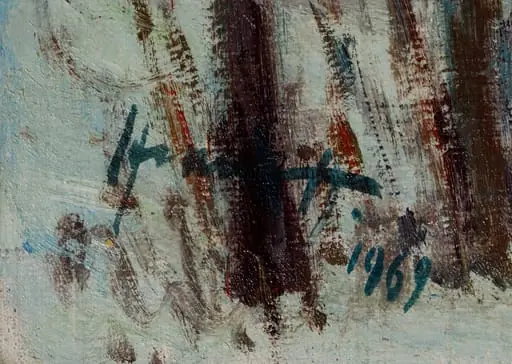
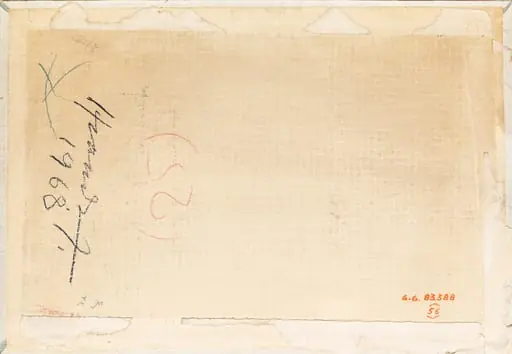
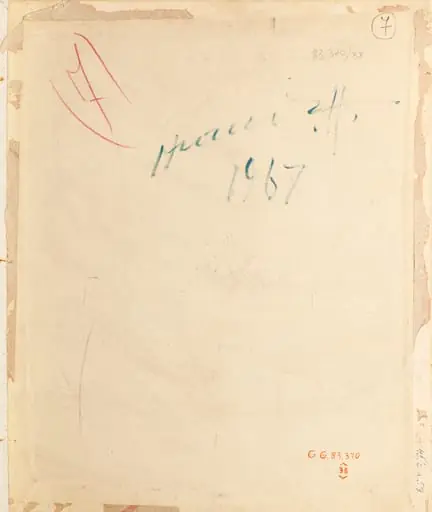
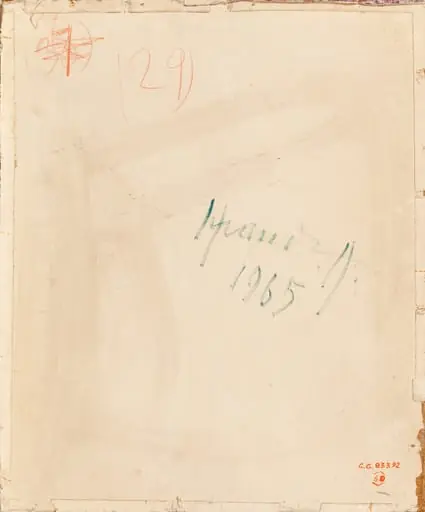
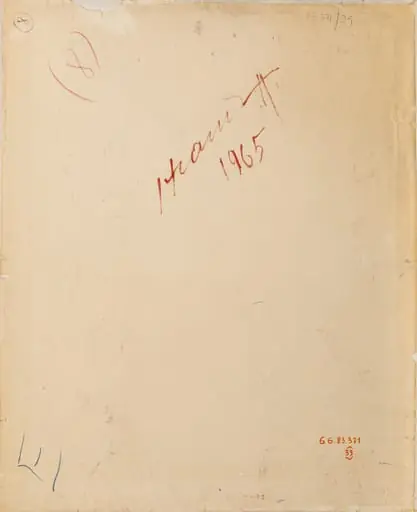
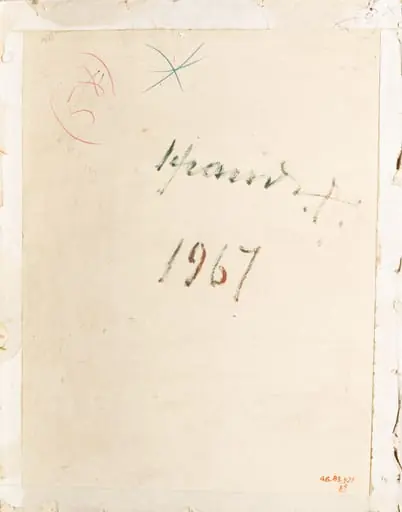
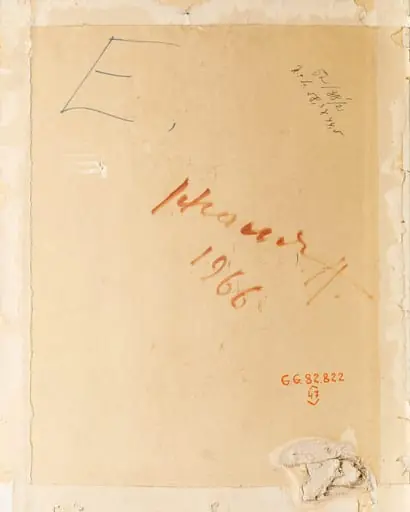
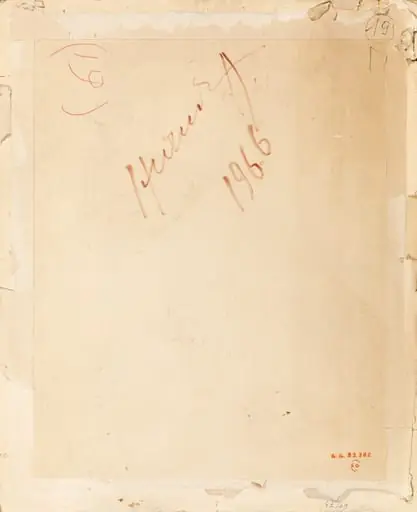
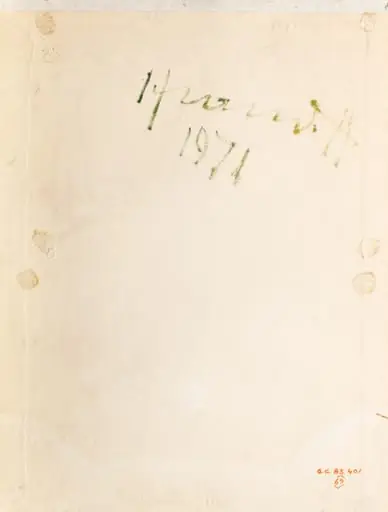
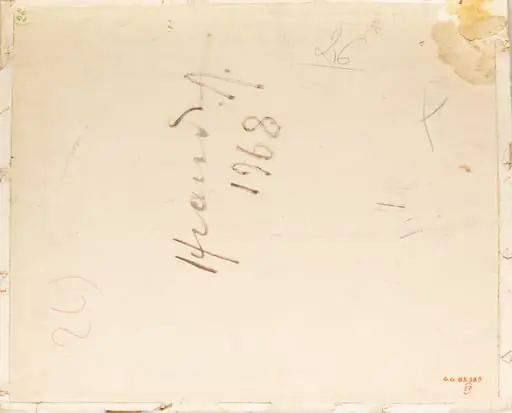
This is a blank canvas with faint marks. Up top, a small blue scribble looks like a bird or a wave. In the corner, someone wrote "1968" in blue paint. A red squiggle in the top right could be a flower or a doodle.
The painting is mostly empty, but the date hints at a moment in time. The marks feel like quick sketches—maybe notes or ideas.
If you like this kind of minimal work, check out Avakian, Hrandt.
Overview
Flori, attributed to Hrandt Avakian and dated approximately 1850, consists of an almost entirely blank surface punctuated by a handful of faint, gestural marks. A small blue element near the top suggests a bird or a wave, while a red, loosely rendered shape in the upper right resembles a flower or a spontaneous doodle. In the lower corner, the numerals “1968” appear in blue pigment, introducing an anachronistic reference within the otherwise minimal composition.
Subject & Meaning
The work offers no explicit narrative; instead, it invites contemplation of the tension between emptiness and suggestion. The isolated blue and red gestures act as fleeting visual cues, hinting at natural forms without fully defining them. The inscription of a later year may function as a temporal marker, prompting viewers to consider the passage of time or the layering of personal memory onto a seemingly timeless field.
Technique & Style
Avakian employs a restrained palette of blue and red applied in thin, translucent strokes that barely disturb the canvas surface. The marks are executed with a quick, almost improvisational hand, emphasizing gesture over detail. This minimalist approach aligns with a broader 19th‑century interest in reduction and the exploration of the canvas as an object in itself, rather than a mere vehicle for representation.
History & Provenance
The piece is catalogued as originating around 1850, though the presence of the 1968 inscription suggests later intervention or re‑dating by a subsequent owner. Documentation of the work’s ownership chain is limited, and no exhibition history has been recorded, leaving its journey from creation to present largely undocumented.
Context
Created during a period when European art was increasingly experimenting with abstraction and the reduction of form, Flori reflects an early, personal engagement with minimalism. The ambiguous marks resonate with contemporary sketches and studies that artists used to capture fleeting ideas, positioning the work within a tradition of exploratory, process‑oriented practice.
Artist & collection