Artwork
Cepe
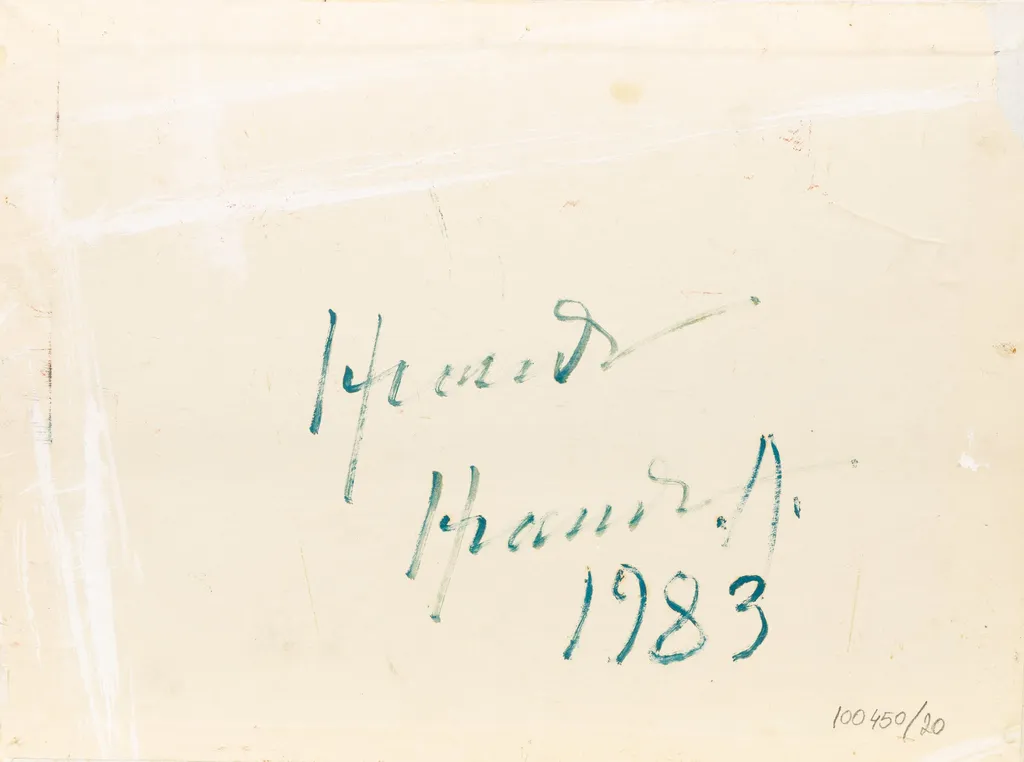
Cepe is an unspecified painting by Hrandt Avakian. It dates from 1850 and is held in the collection of the National Museum of Art of Romania.
About this work
Overview
Its fragile condition suggests prolonged handling or storage, with visible wear along the edges and signs of aging in the material itself.
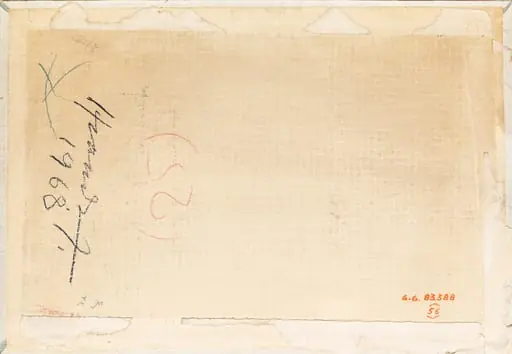
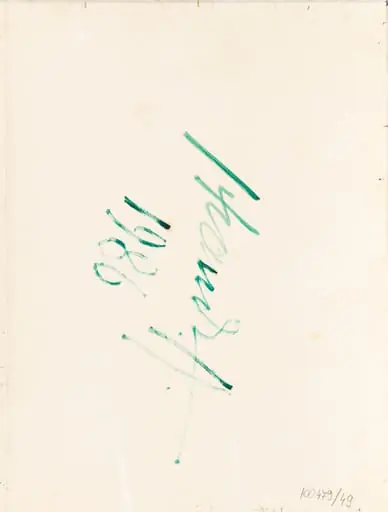
Cepe is a small, unframed work on paper attributed to Hrandt Avakian, dated around 1850. It presents a pale, uneven surface with minimal pigment applied in sparse, erratic strokes. The composition occupies only a fraction of the support, leaving much of the paper exposed. Its fragile condition suggests prolonged handling or storage, with visible wear along the edges and signs of aging in the material itself.
Subject & Meaning
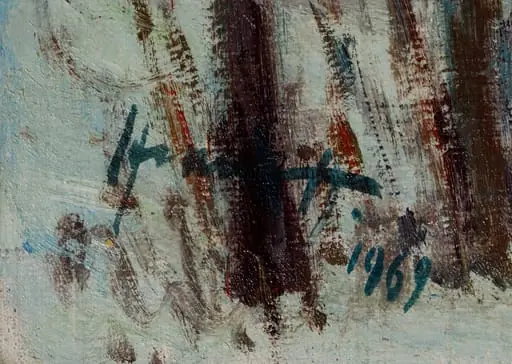
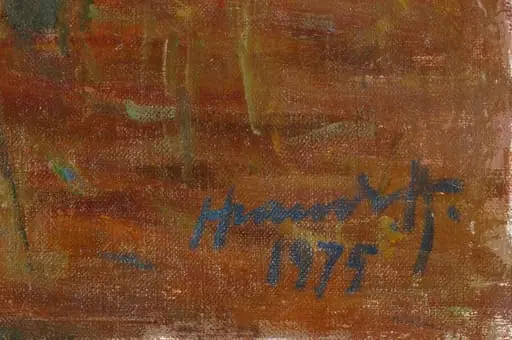
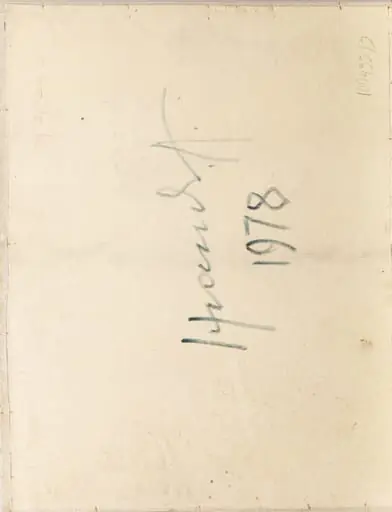
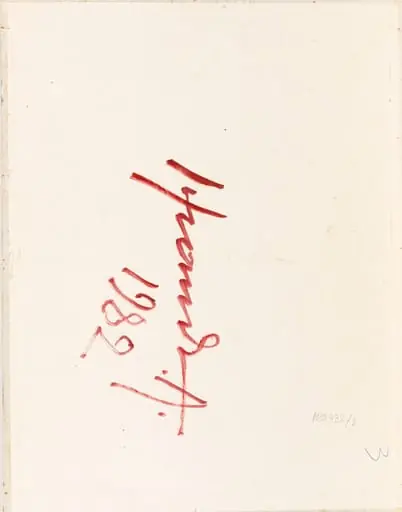
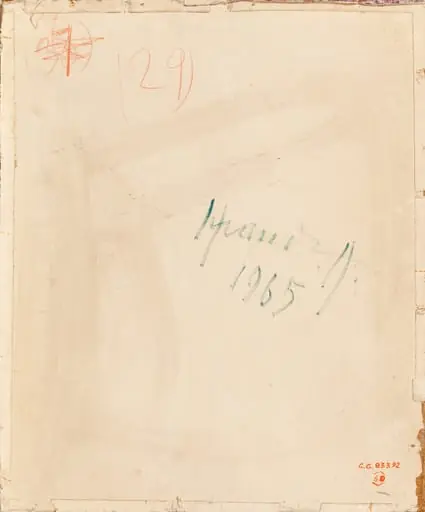
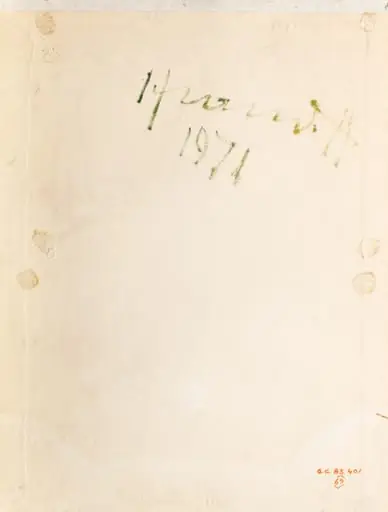
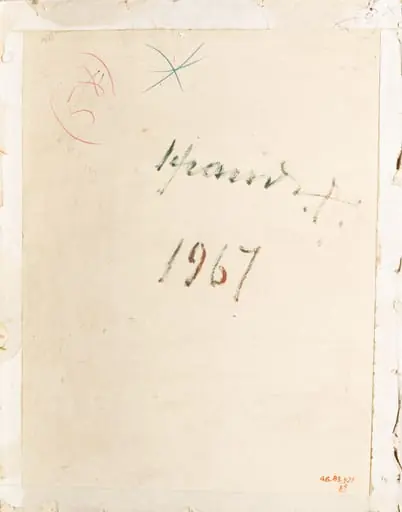
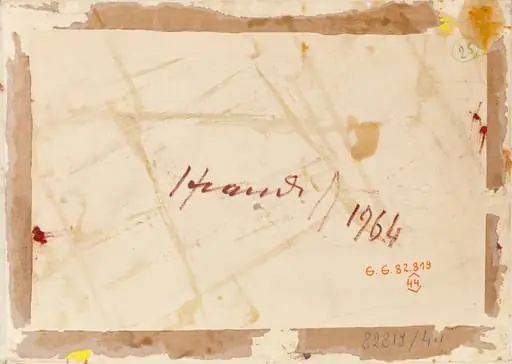
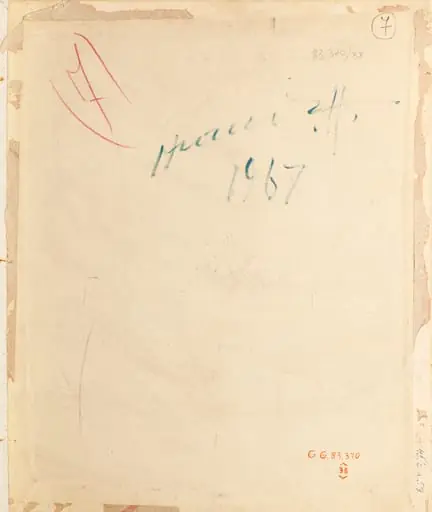
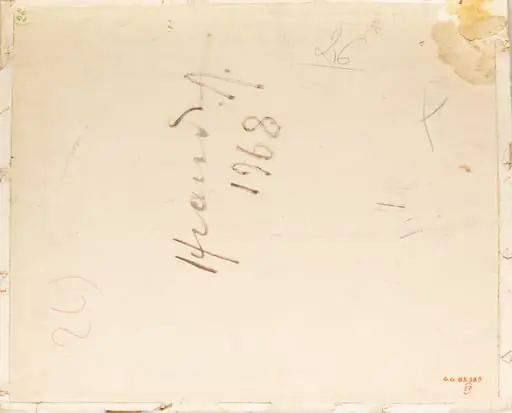
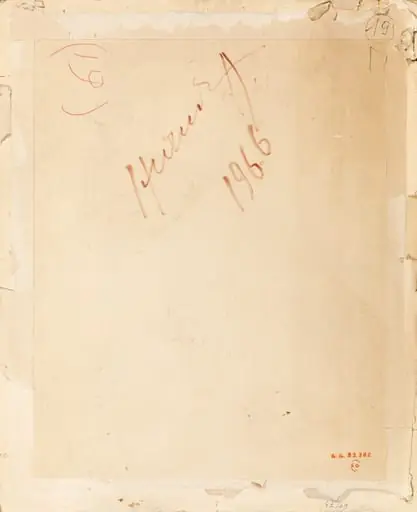
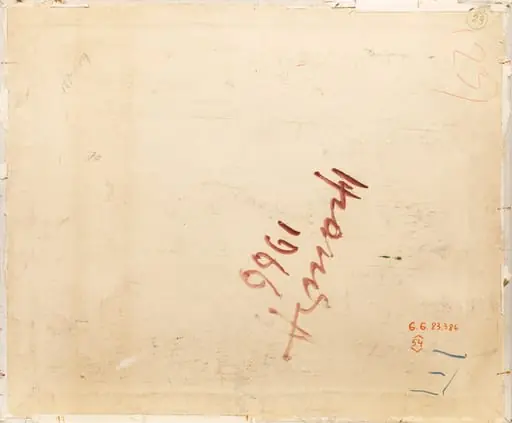
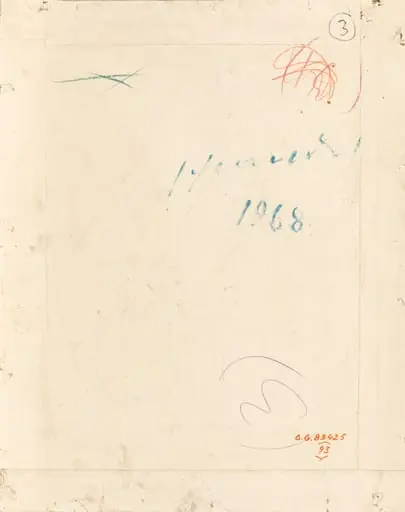
The work contains faint, hurried marks that may read as a name and a date, though they are illegible with certainty. These inscriptions appear incidental, as if added in passing rather than as a central theme. The absence of defined imagery and the emphasis on ephemeral gestures suggest a personal or private act—perhaps a note, a signature, or a momentary impulse—rather than a deliberate artistic statement.
Technique & Style
Avakian applied thin washes of blue-green pigment with loose, rapid brushwork, avoiding detail or refinement. The strokes lack structure, appearing spontaneous and uncorrected. The paper’s texture shows through in places, and the pigment sits unevenly, pooling slightly in some areas. The overall effect is one of immediacy, resembling a draft or marginalia rather than a finished composition.
History & Provenance
Cepe’s early history is undocumented. It entered institutional care in the late 20th century, with no clear record of its creation context or prior ownership. Its survival is likely due to its inclusion in a private collection of minor works by Armenian artists of the 19th century. No exhibition history or contemporary references to the piece exist prior to its modern cataloging.
Context
Created during a period of cultural transition in the Ottoman Empire, Avakian’s work reflects the informal practices of amateur artists who often worked on paper with limited materials. While professional painting emphasized narrative and detail, this piece aligns with a quieter tradition of personal notation—akin to diary entries or sketches made in solitude, outside formal artistic conventions.
Legacy
Cepe is not representative of Avakian’s broader output, which remains poorly documented. Its significance lies in its rarity as a surviving example of intimate, non-commercial work from a marginalized artistic community. It invites reflection on the boundaries between art and ephemera, and how fragments of personal expression can endure beyond their original intent.
Artist & collection