Artwork
Anul 1821
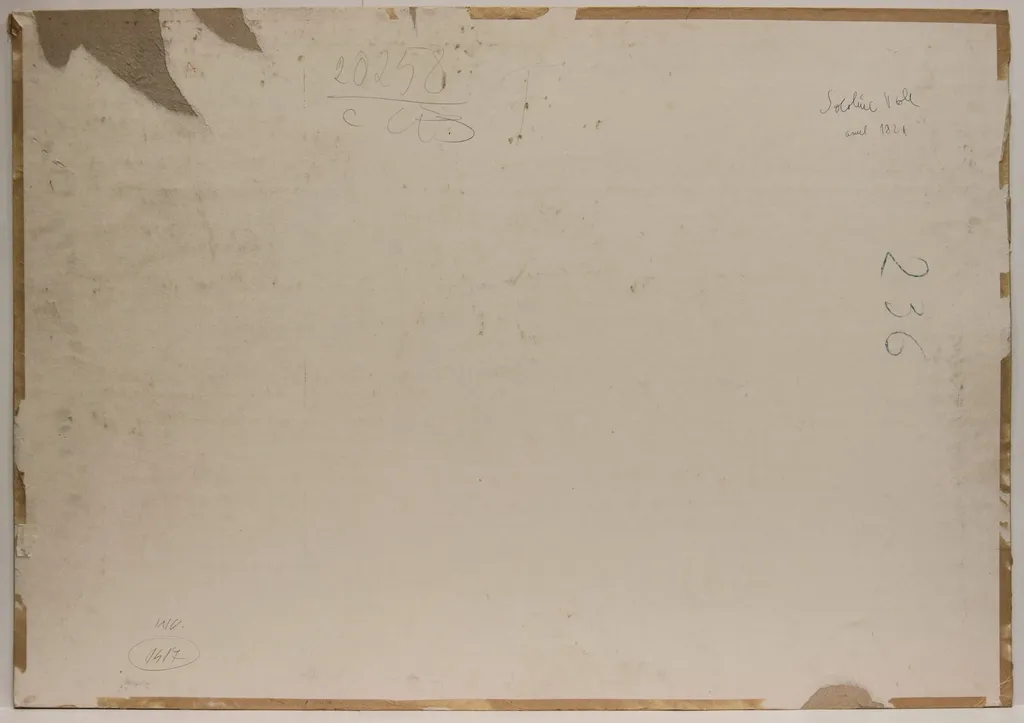
Anul 1821 is a drawing by Vasile Socoliuc. It dates from 1950 and is held in the collection of the Gavrila Simion Eco-Museum Research Institute Tulcea.
About this work
Handwritten notes in pencil mark numbers, dates like "1821," and the word "Socoliuc.
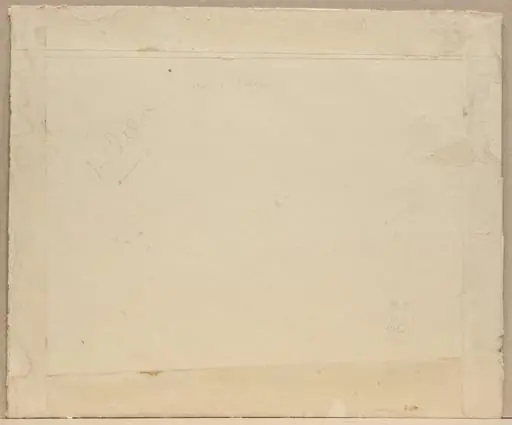
This is a blank white sheet of paper framed in dark wood. The edges show wear, with some brown stains and torn corners. Handwritten notes in pencil mark numbers, dates like "1821," and the word "Socoliuc."
The drawing itself is empty—no lines or shapes remain, just faint smudges. The notes suggest it might have been part of a larger collection or project.
If you’re curious about lost or erased drawings, check out stippling.
Overview
Anul 1821 is an artwork attributed to Romanian artist Vasile Socoliuc, dated approximately to 1950. The piece consists of a single white sheet of paper mounted in a dark wooden frame. Its surface bears signs of age, including frayed edges, brownish stains, and torn corners, while faint pencil markings indicate numbers, dates and the artist’s name.
Subject & Meaning
The work contains no visible drawing; instead, only faint smudges remain where lines may once have existed. Handwritten annotations such as "1821" and numeric codes suggest a cataloguing function, possibly linking the sheet to a broader series or archival project rather than presenting a conventional visual subject.
Technique & Style
Socoliuc’s approach here is minimalist, relying on the materiality of paper and the subtle traces of pencil rather than explicit imagery. The absence of deliberate line work emphasizes the object's status as a document, while the worn edges and stains contribute to an aesthetic of decay and the passage of time.
History & Provenance
Created around the mid‑20th century, the piece entered the collection of the Museum of Ethnography, where it is currently conserved. Its provenance is limited to this institutional holding, with no record of prior private ownership or exhibition history.
Context
The title "Anul 1821" references a year of historical significance in Romanian history, hinting that the work may engage with national memory or archival research. Within Socoliuc’s broader output, which includes more figurative and decorative works, this piece stands out for its documentary character.
Artist & collection
Artist
Vasile Socoliuc left behind stark black-and-white drawings that feel like windows into 19th-century village life.
Museum
Gavrila Simion Eco-Museum Research Institute Tulcea
Continue through works from the same source collection.