Artwork
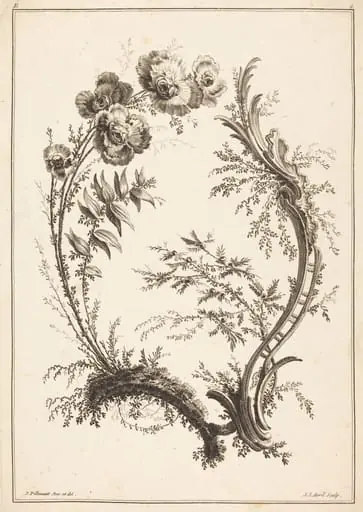
Ornament with a Strut and a Railing
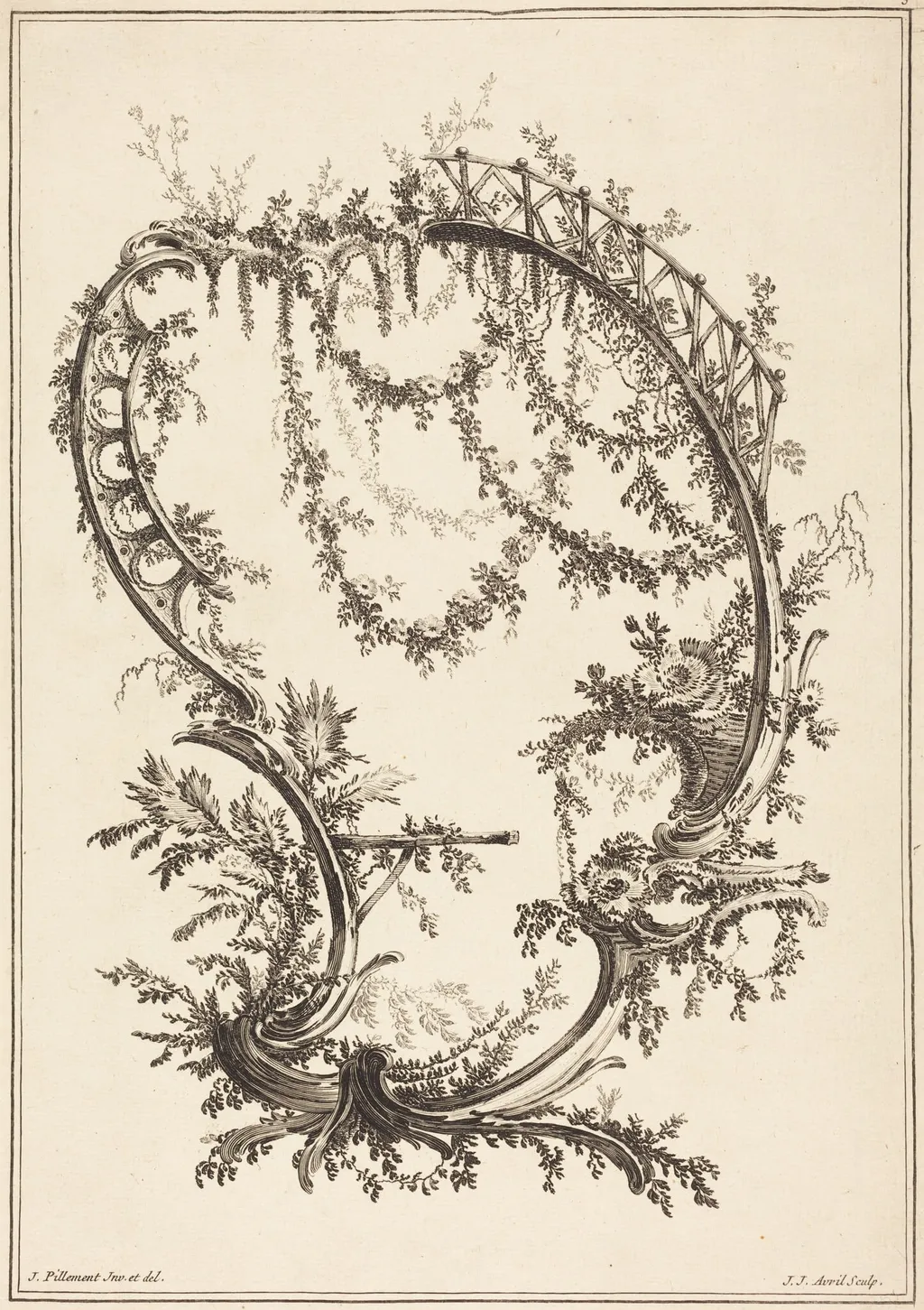
Ornament with a Strut and a Railing is an ink print by the Baroque artist Jean-Jacques Avril I. It dates from 1788 and is held in the collection of the National Gallery of Art.
About this work
Overview
Created in 1788 by Jean-Jacques Avril I, this print combines etching and engraving to depict a slender fluted column paired with a minimalist metal railing.
Created in 1788 by Jean-Jacques Avril I, this print combines etching and engraving to depict a slender fluted column paired with a minimalist metal railing. The work belongs to a category of decorative studies, likely intended as a reference for artisans or architects. Its precision suggests it was made not for broad display but for technical use, capturing architectural details with clinical clarity.
Subject & Meaning
The subject is purely formal: a column and railing, stripped of context or ornamentation. No human presence or architectural setting is implied. The focus lies in the relationship between vertical structure and horizontal barrier, emphasizing proportion and material contrast. The work functions as a study in form, isolating elements often overlooked in larger compositions.
Technique & Style
Avril employed fine etched lines and engraved contours to render the column’s fluting with threadlike delicacy, evoking the texture of lace. Drypoint was used to deepen shadows along the railing’s edge, creating subtle tonal variation. A faint, almost imperceptible shadow cast by the railing onto the column demonstrates the artist’s attention to light’s interaction with form, requiring close, angled viewing to fully perceive.
History & Provenance
The print was produced during a period when architectural drawings and decorative motifs were systematically documented for craftsmen. Avril, known for his technical prints, likely created this as part of a series for workshops or academies. Its survival suggests it was preserved in collections focused on design rather than fine art, possibly within institutional archives or private collections of builders.
Context
In late 18th-century France, detailed studies of architectural elements were essential for training artisans and standardizing design. This print reflects a broader movement toward codifying ornament, influenced by Enlightenment ideals of order and observation. Unlike decorative engravings meant for interiors, this piece serves as a functional record, prioritizing accuracy over aesthetic flourish.
Legacy
The print endures as an example of precision draftsmanship in the service of craft rather than fine art. Its subtle effects—particularly the drypoint shadow—reveal how technical prints could convey spatial relationships with minimal means. Today, it is studied for its methodological rigor, offering insight into how architectural details were transmitted before photographic reproduction.
Artist & collection


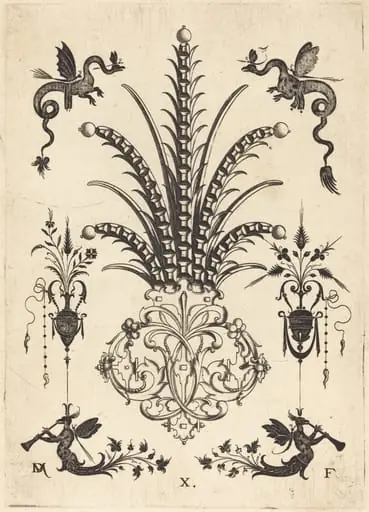 Brooch with Table-Stones, Dragons at Top, andWinged Monsters Blowing Horns at Bottom
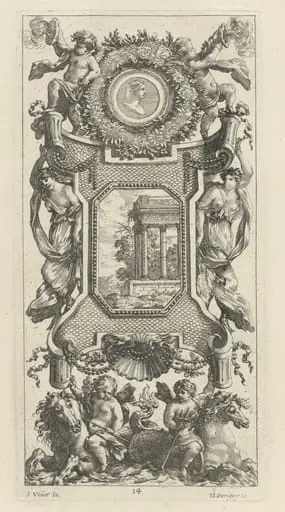 Ornamental Panel Surmounted by a Bust of a Woman and Two Putti with Flaming Trumpets
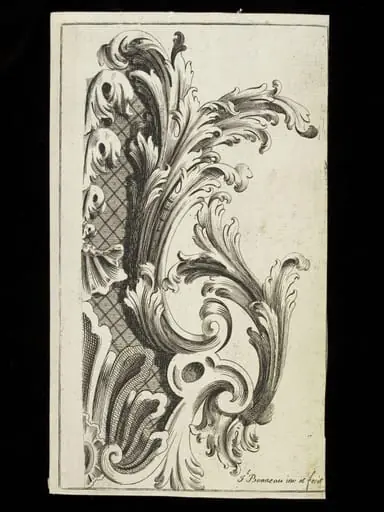 Ornament print by Jacob Bonneau
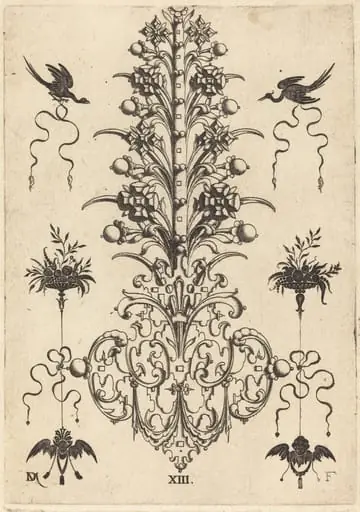 Hyacinth-Shaped Brooch with Birds at Top and Devil's- and Angel's-Head at Bottom
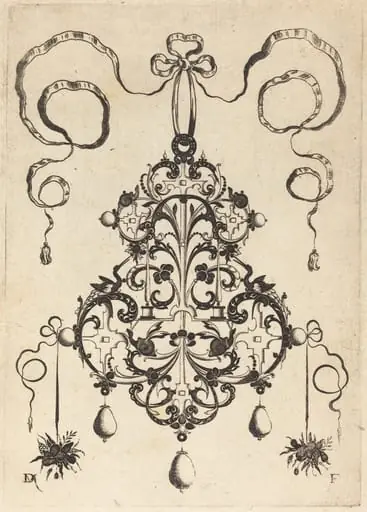 Large Pendant, Lower Left and Right Two Bunches of Grass and Fruit
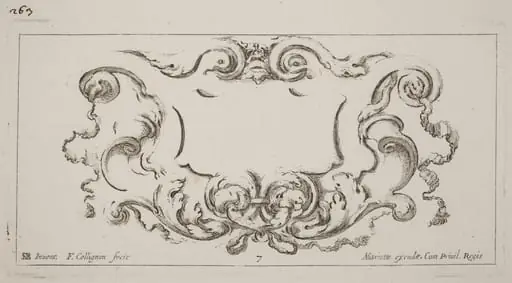 Cartouche
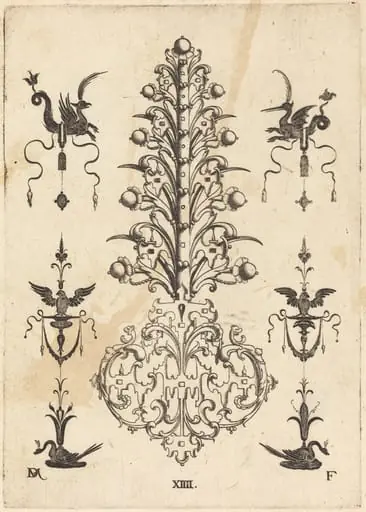 Hyacinth-Shaped Brooch with Winged Animals at Top and Crouching Swans at Bottom