Artwork
Brooch with Table-Stones, Dragons at Top, andWinged Monsters Blowing Horns at Bottom
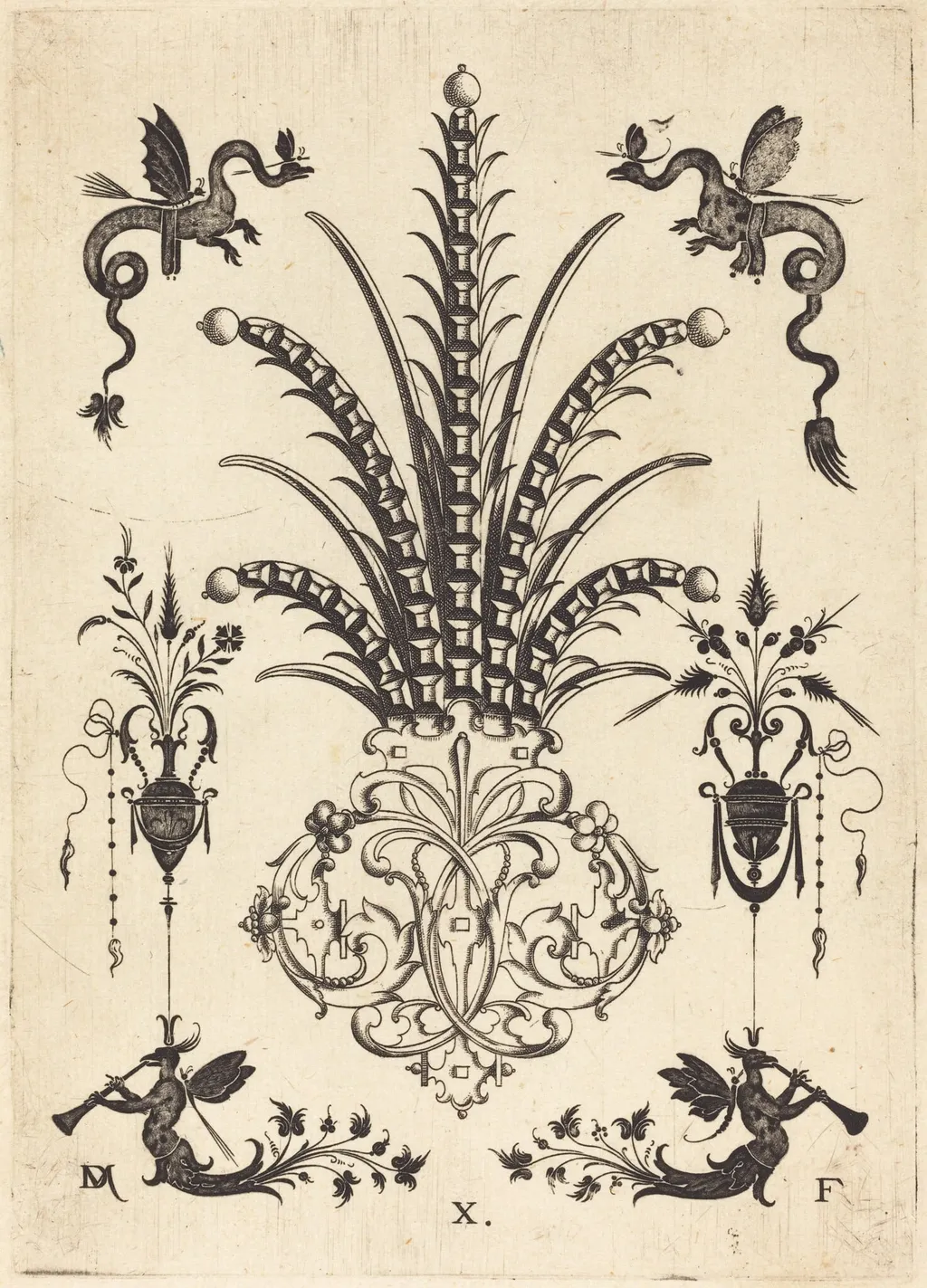
Brooch with Table-Stones, Dragons at Top, andWinged Monsters Blowing Horns at Bottom is an ink print by the Renaissance artist Daniel Mignot. It dates from 1596 and is held in the collection of the National Gallery of Art.
About this work
Overview
The design blends botanical elements with fantastical creatures, suggesting a decorative intent rather than narrative storytelling.
This 1596 engraving by Daniel Mignot presents a highly stylized, symmetrical composition in monochrome. Centered is a tall, spiky vegetal form topped with an open basket, flanked by hanging vases of flowers suspended from chains. Above, two dragons coil symmetrically; below, winged hybrid creatures blow horns. The design blends botanical elements with fantastical creatures, suggesting a decorative intent rather than narrative storytelling.
Subject & Meaning
The imagery combines natural motifs—plants, flowers—with mythical beings, creating a symbolic rather than literal scene. The empty basket may imply potential or absence, while the horn-blowing monsters and dragons could signify protection, alarm, or ceremonial presence. The lack of clear narrative invites interpretation as an emblem or heraldic device, possibly linked to Renaissance allegory or ornamental tradition.
Technique & Style
Executed as a fine-line engraving, the work relies on precise incisions to render texture and form. Delicate cross-hatching defines the dragons’ scales and the monsters’ feathered wings, while the plant’s spines are rendered with sharp, linear precision. The symmetrical layout and intricate detail reflect the precision expected in decorative prints of the period, prioritizing visual rhythm over spatial depth.
History & Provenance
Created in 1596 by Daniel Mignot, a French engraver active in the late 16th century, the piece likely served as a design for metalwork or jewelry, given its brooch-like format. Few of Mignot’s prints survive, and this one is known primarily through museum collections. Its function as a pattern for adornment suggests it circulated among artisans rather than as a standalone artwork.
Context
In late Renaissance Europe, ornamental engravings like this were widely used by goldsmiths and craftsmen as templates for decorative objects. The fusion of flora and fantasy aligns with Mannerist tastes, which favored elaborate, unnatural forms. Such designs often appeared in pattern books, influencing jewelry, furniture, and architectural details across France and beyond.
Legacy
Though not widely reproduced or studied today, this engraving exemplifies the niche but influential world of decorative printmaking in the 1500s. It preserves the visual language of artisanal workshops where fantasy and nature intertwined in functional art. Its survival offers insight into how imagery was adapted across media, bridging print culture and material craft.
Artist & collection


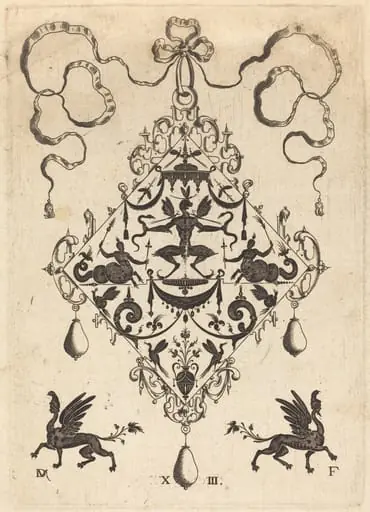 Large Pendant, Winged Fantasy Creature Holding Two Snakes
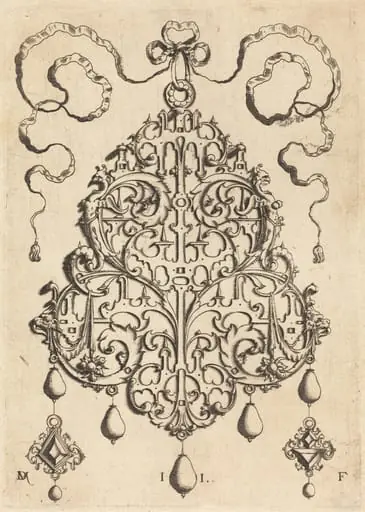 Large Strapwork Pendant with Two Hangers as Earrings at Left and Right
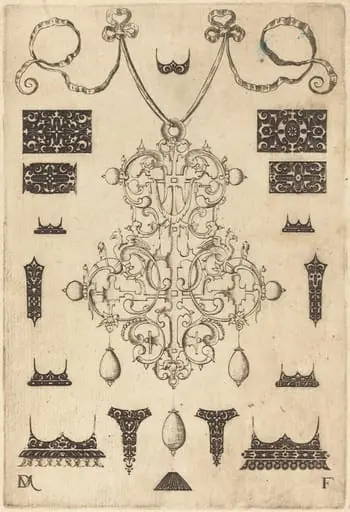 Large Pendant with Three Drops Below, Surrounded by Fifteen Different Studs
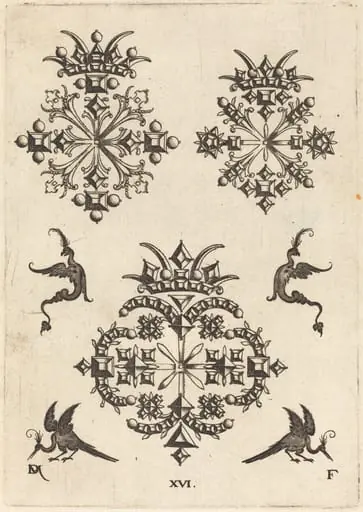 Three Brooches with Fantasy Birds at Left, Right, and Bottom
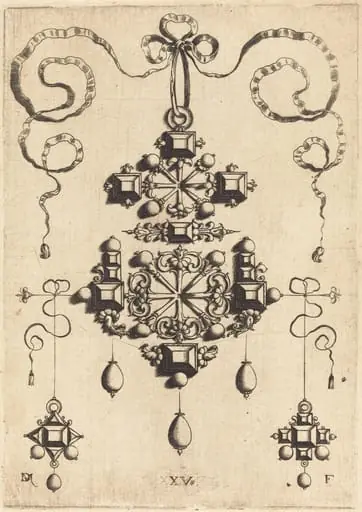 Pendant with Two Double Crosses, Surrounded by Four Diamond-Shaped Stones, Five Table-Stones, and Thirteen Pearls
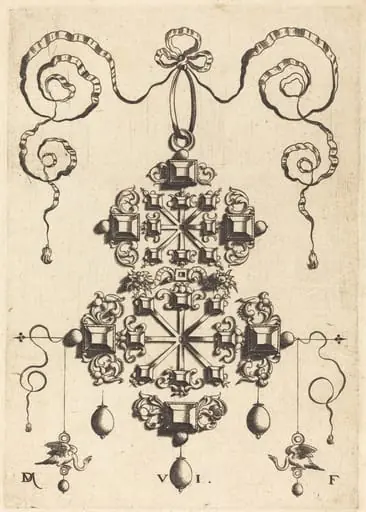 Large Pendant with Two Double Crosses, Surrounded by Six Large and Sixteen Small Table-Stones
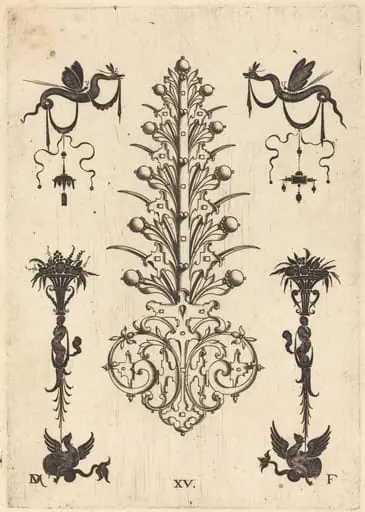 Hyacinth-Shaped Brooch with Winged Snakes at Top and Winged Animals at Bottom
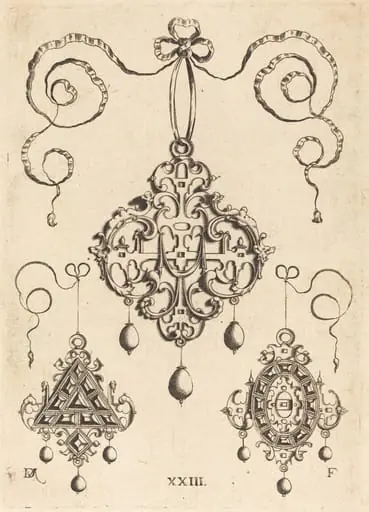 Three Strapwork Pendants, The Lower Ones Triangular and Oval
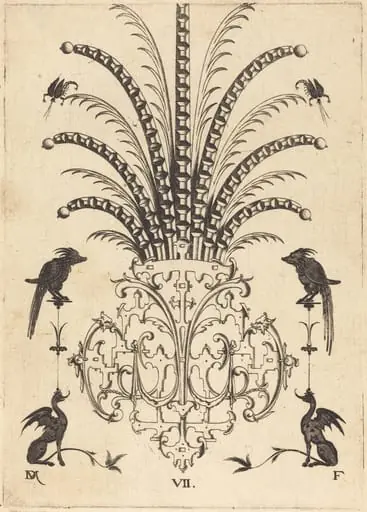 Brooch with Table-Stones, Flying Scorpions at Top, and Dogs at Bottom
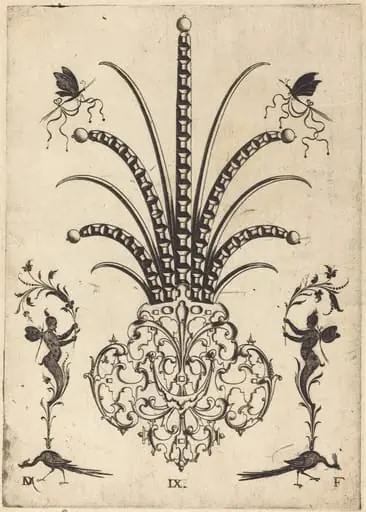 Brooch with Table-Stones, Butterflies at Top, and Peacocks and Hermes at Bottom
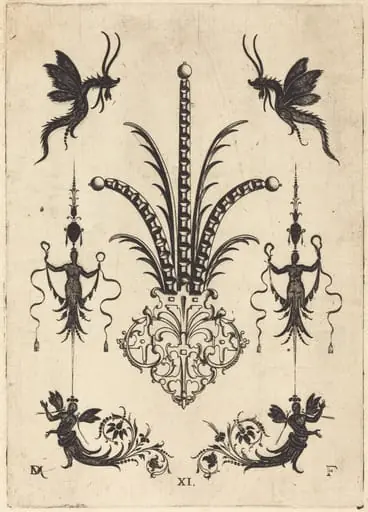 Brooch with Table-Stones, Winged Animals at Top, and Winged Human Beings at Bottom
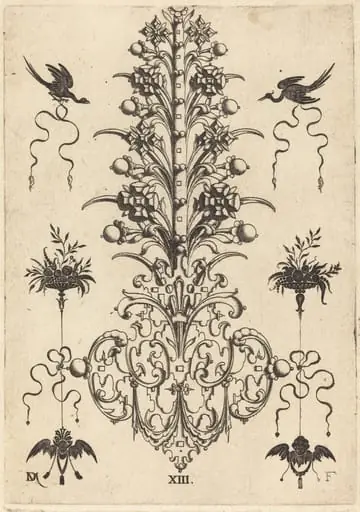 Hyacinth-Shaped Brooch with Birds at Top and Devil's- and Angel's-Head at Bottom
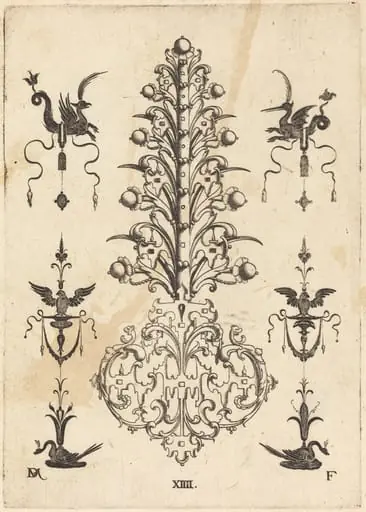 Hyacinth-Shaped Brooch with Winged Animals at Top and Crouching Swans at Bottom
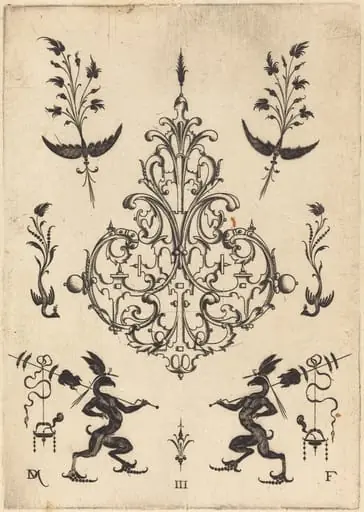 Brooch with Sprigs at Top and Griffins with Trophies at Bottom
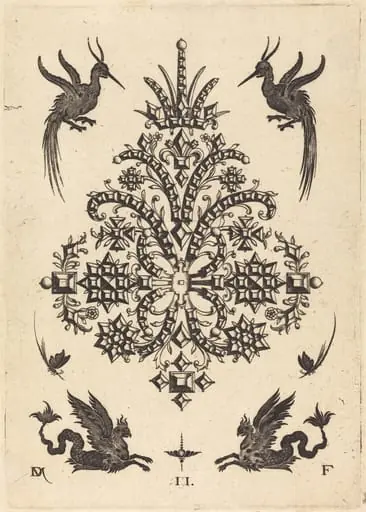 Brooch with Tablestones and Winged Griffins Above and at Bottom
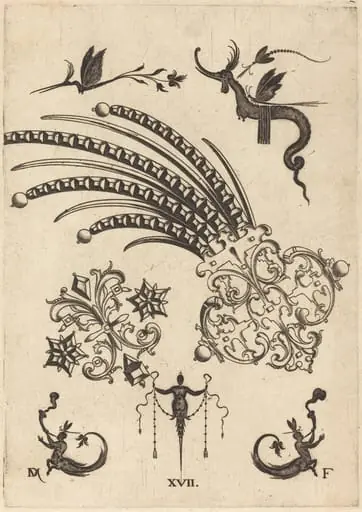 Two Brooches with Dragon and Insects at Top and Human Beings with Snake-like Tails atBottom
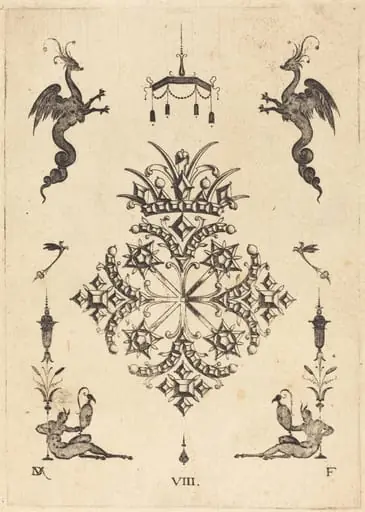 Brooch with Fantasy Animals at Top and Fauns with Vases at Bottom
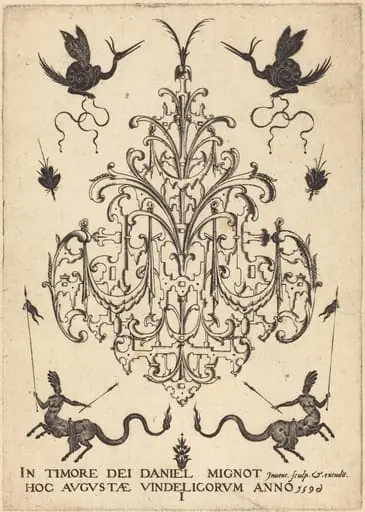 Title-Page: Brooch, Snail-like Animals Above, Centaurs with Banners at Bottom