Artwork
Ornament with a Peacock
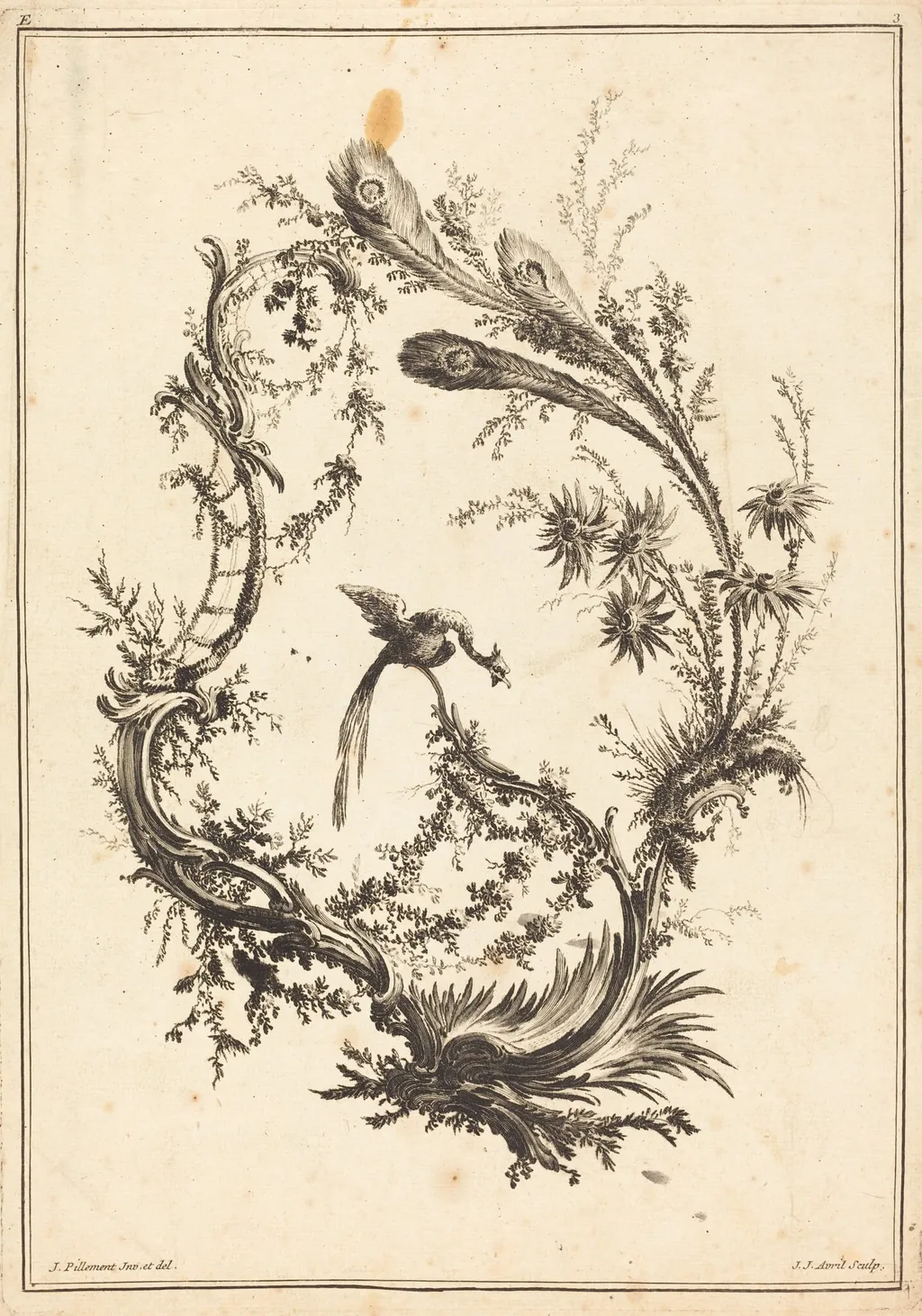
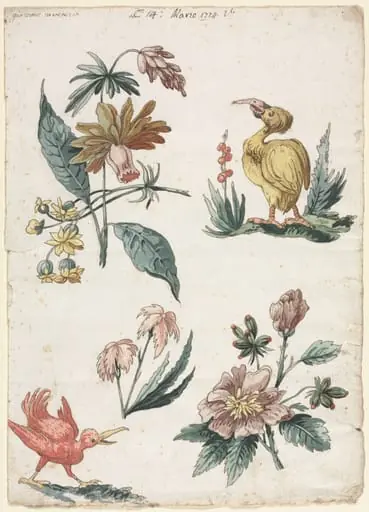
Ornament with a Peacock is an ink print by the Baroque artist Jean-Jacques Avril I. It dates from 1788 and is held in the collection of the National Gallery of Art.
About this work
Overview
Created in 1788 by Jean-Jacques Avril I, this print combines etching and engraving techniques to produce a highly detailed ornamental design.
Created in 1788 by Jean-Jacques Avril I, this print combines etching and engraving techniques to produce a highly detailed ornamental design. The composition centers on a peacock with its tail fanned outward, surrounded by dense floral and vine motifs that fill the entire field. The work exemplifies late 18th-century decorative printmaking, intended for use in design manuals or as a model for artisans.
Subject & Meaning
The peacock, perched on a sinuous branch, is rendered with meticulous attention to its plumage, symbolizing elegance and natural beauty. Its placement amid intertwining leaves and blossoms suggests harmony between animal and plant forms. The design lacks narrative or religious content, instead emphasizing aesthetic refinement and the ornamental potential of nature, typical of decorative arts of the period.
Technique & Style
Avril employed fine etched lines and engraved contours to achieve intricate texture and depth. The peacock’s tail feathers are rendered with tiny, precise dots and curved strokes to suggest iridescence and volume. Shading on leaves and petals enhances their three-dimensionality, while the dense, rhythmic patterning of vines creates a sense of continuous motion. The technique reflects the precision valued in decorative printmaking of the era.
History & Provenance
The print was produced in 1788 during Avril’s active period as a designer and engraver for French decorative arts publishers. It likely appeared in a series of ornamental plates used by craftsmen in textiles, ceramics, or architecture. No specific early ownership records are documented, but similar works circulated widely in artistic circles across Europe as reference material.
Context
In the late 18th century, detailed naturalistic ornamentation was in high demand among designers and manufacturers. Avril’s work aligns with the broader trend of translating botanical and avian forms into repeatable patterns for applied arts. This print reflects the influence of Enlightenment-era interest in natural history, where accurate depiction served both aesthetic and educational purposes.
Legacy
Though not widely exhibited today, Avril’s prints like this one contributed to the visual vocabulary of European decorative arts. Their precision and compositional balance influenced subsequent generations of designers and engravers. Surviving examples remain valuable as historical documents of how natural forms were adapted for industrial and artisanal use in the pre-industrial age.
Artist & collection


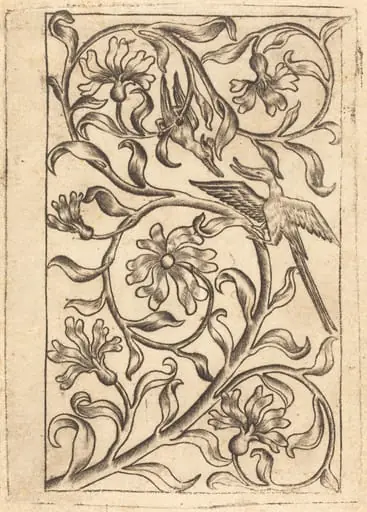 Vine Ornament with Two Birds
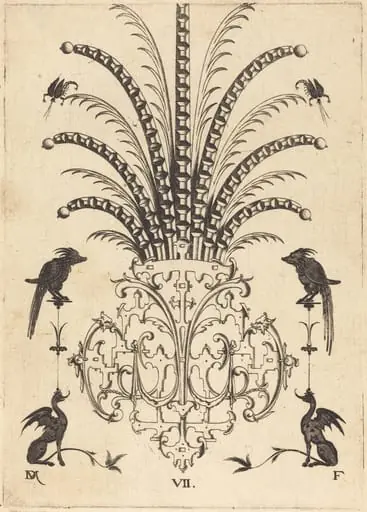 Brooch with Table-Stones, Flying Scorpions at Top, and Dogs at Bottom
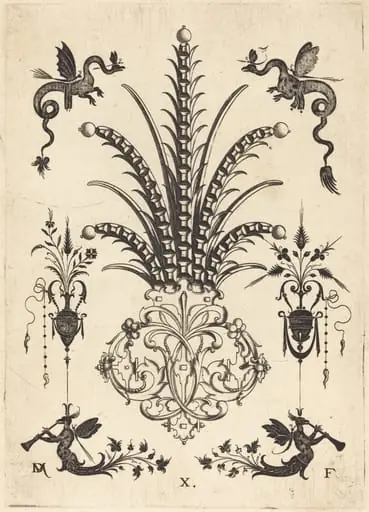 Brooch with Table-Stones, Dragons at Top, andWinged Monsters Blowing Horns at Bottom
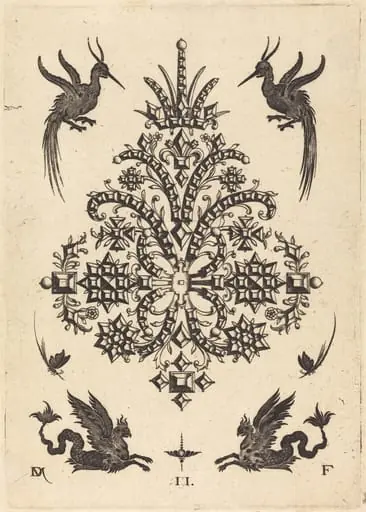 Brooch with Tablestones and Winged Griffins Above and at Bottom
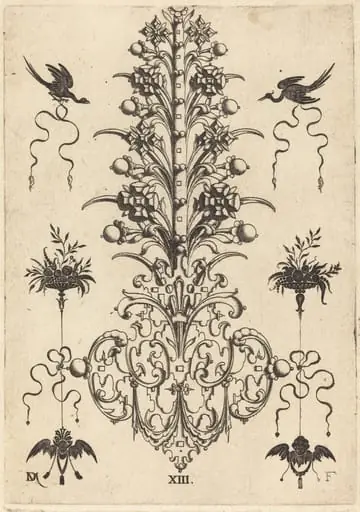 Hyacinth-Shaped Brooch with Birds at Top and Devil's- and Angel's-Head at Bottom
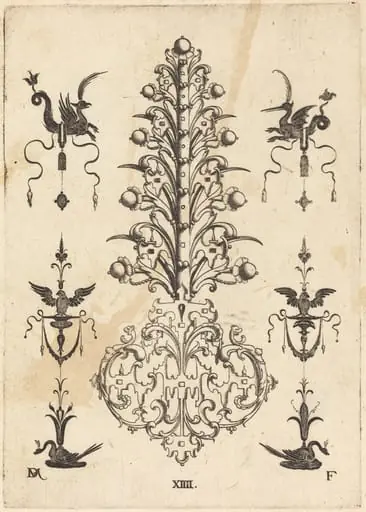 Hyacinth-Shaped Brooch with Winged Animals at Top and Crouching Swans at Bottom
 Floral Designs with Two Birds