Artwork
Title Page
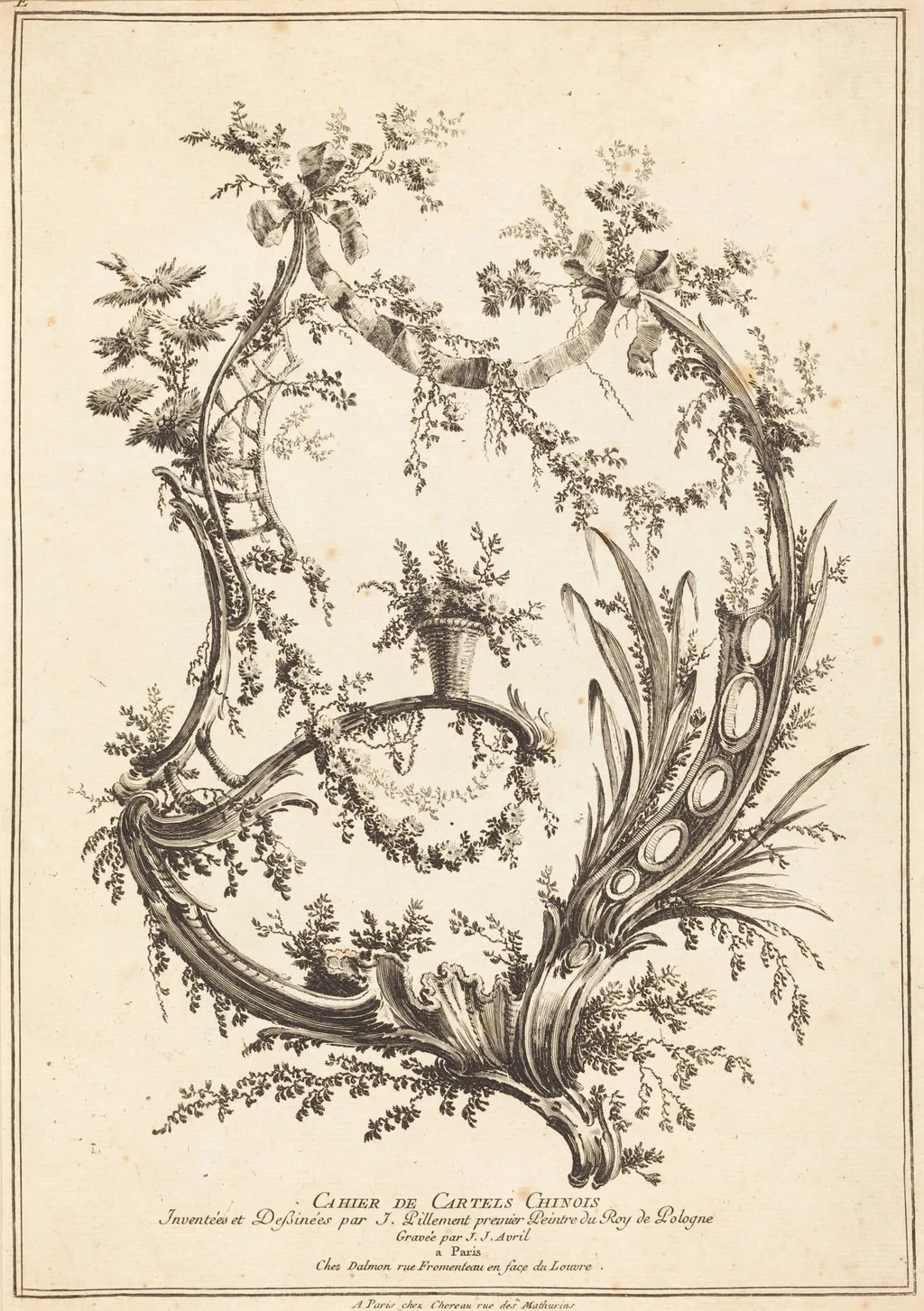
Title Page is an ink print by the Baroque artist Jean-Jacques Avril I. It dates from 1788 and is held in the collection of the National Gallery of Art.
About this work
Overview
Created in 1788 by Jean-Jacques Avril I, this small print presents a simulated title page using etching and drypoint techniques. The work mimics the appearance of a bound book’s front cover, with delicately curled edges suggesting worn leather. Its purpose is not to illustrate a specific text but to demonstrate the artist’s command over intaglio methods, blending precision with tactile texture.
Subject & Meaning
The subject is a fictionalized title page, devoid of actual text or authorial attribution. It functions as a meta-commentary on book culture, evoking the materiality of 18th-century volumes. The curled edges and ornamental framing reference the physicality of real bindings, inviting contemplation of the book as object rather than vessel of content.
Technique & Style
Avril combined etching, which uses acid to bite lines into a metal plate, with drypoint, where a needle directly scratches the surface to raise a burr. This dual approach produced rich, velvety blacks and subtle tonal gradations. The fine, irregular lines of drypoint add warmth and depth, distinguishing the print from purely mechanical reproductions.
History & Provenance
The print emerged during a period when printmakers increasingly explored the boundaries between illustration and craft. Avril, active in Paris, was known for his technical precision in reproductive prints. This work likely served as a study or demonstration piece, circulated among artisans and collectors interested in the aesthetics of book design.
Context
In late 18th-century France, printmaking was valued both as an art form and a commercial craft. Artists like Avril often blurred lines between documentation and decoration, responding to a market that prized fidelity to material objects. The simulated title page reflects broader cultural fascination with the book as a physical artifact, not merely a carrier of ideas.
Legacy
Avril’s use of mixed intaglio techniques influenced later printmakers interested in texture and surface realism. While not widely reproduced, this work remains a quiet example of how technical mastery could elevate a simple form into a meditation on material culture, preserving the tactile qualities of books in an age of mechanical reproduction.
Artist & collection


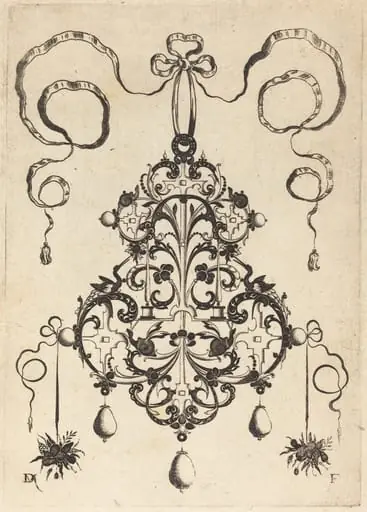 Large Pendant, Lower Left and Right Two Bunches of Grass and Fruit
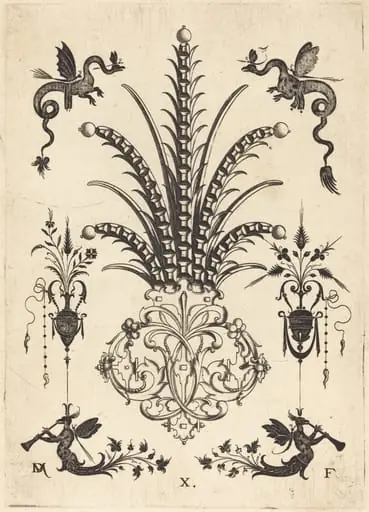 Brooch with Table-Stones, Dragons at Top, andWinged Monsters Blowing Horns at Bottom
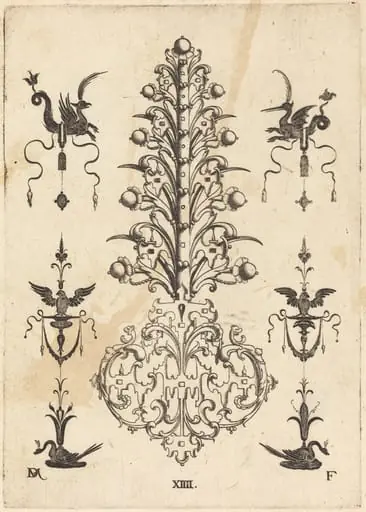 Hyacinth-Shaped Brooch with Winged Animals at Top and Crouching Swans at Bottom
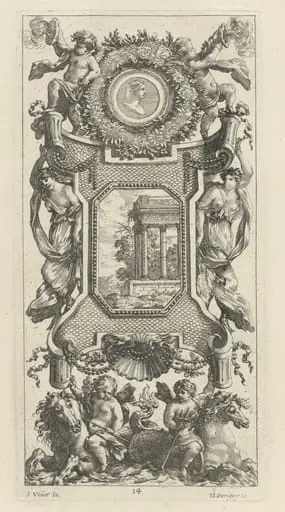 Ornamental Panel Surmounted by a Bust of a Woman and Two Putti with Flaming Trumpets
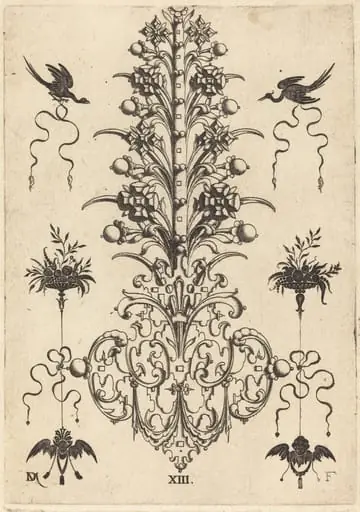 Hyacinth-Shaped Brooch with Birds at Top and Devil's- and Angel's-Head at Bottom
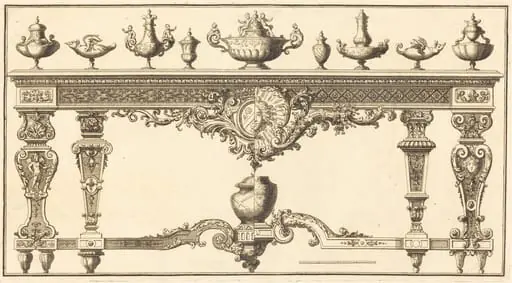 Livre de Tables