Artwork
Ciobănaș
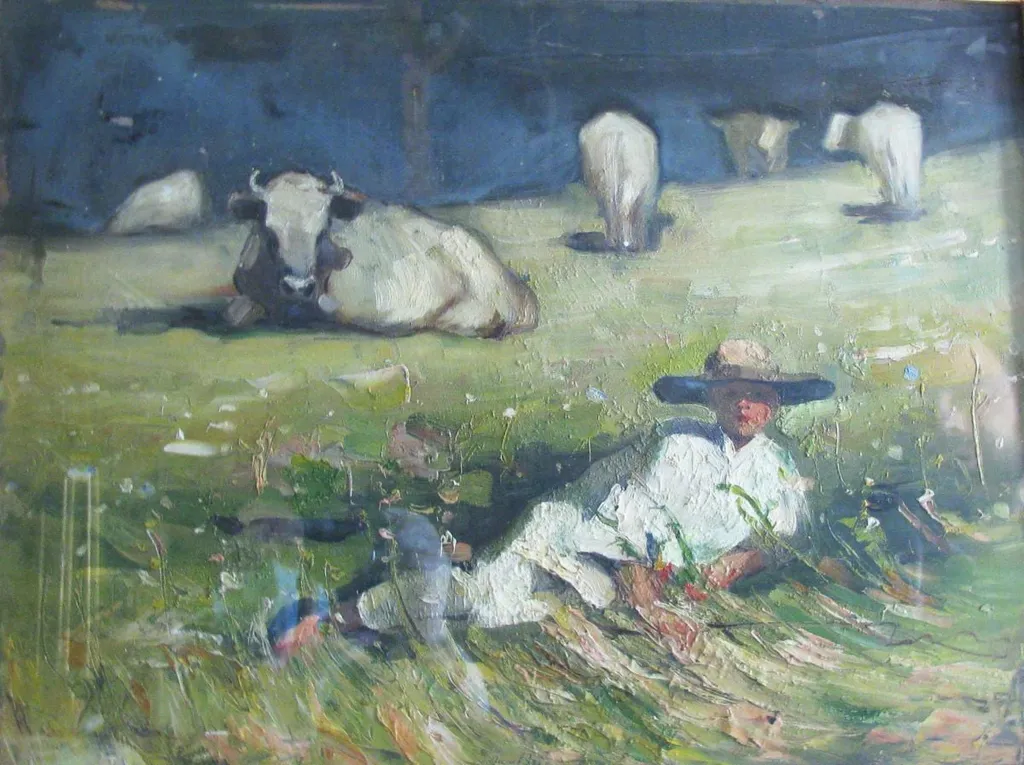
Ciobănaș is a print by Aurel Băeșu. It dates from 1922 and is held in the collection of the Ion Irimescu Art Museum.
About this work
Overview
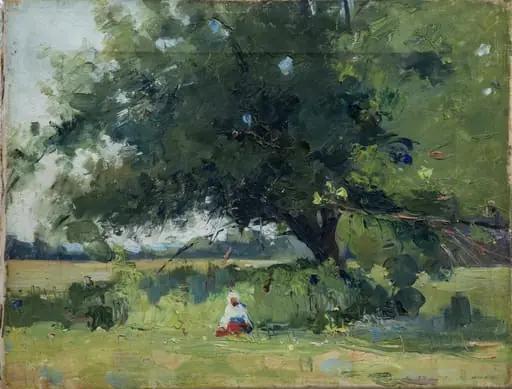
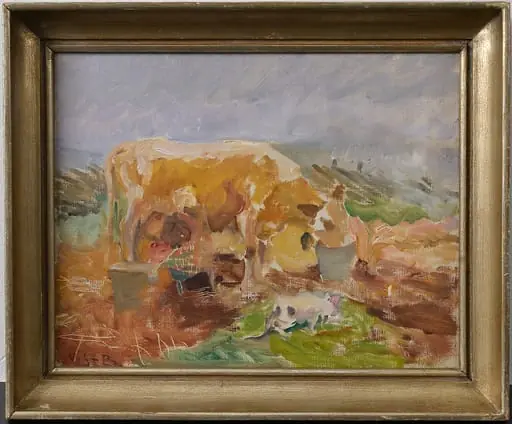
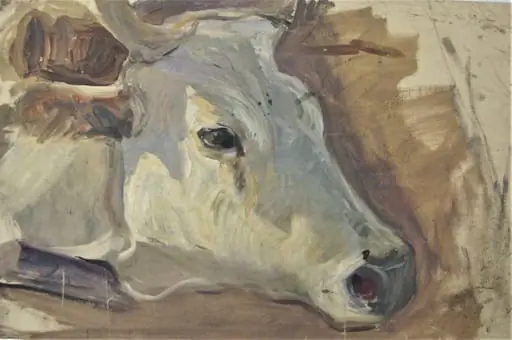
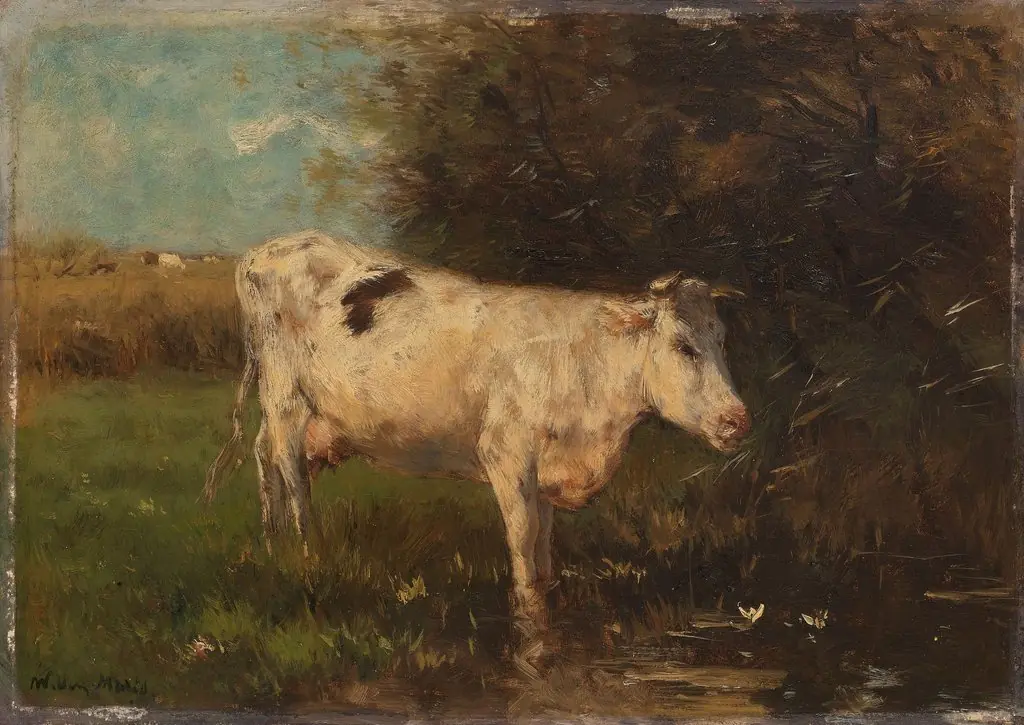
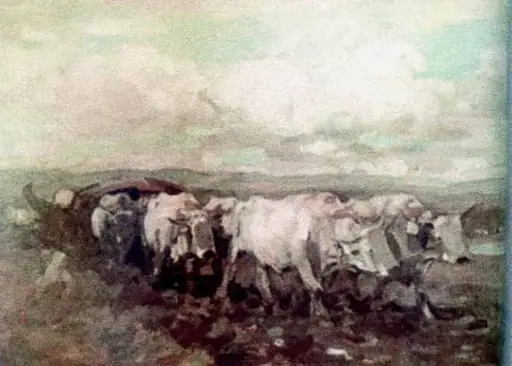
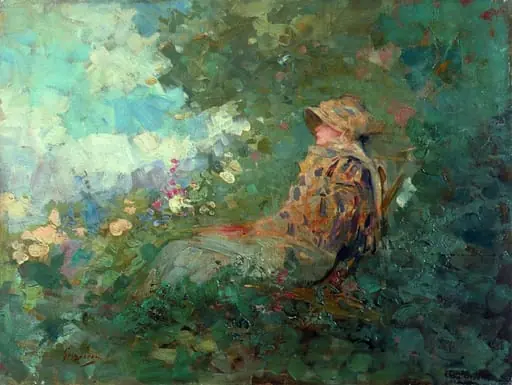
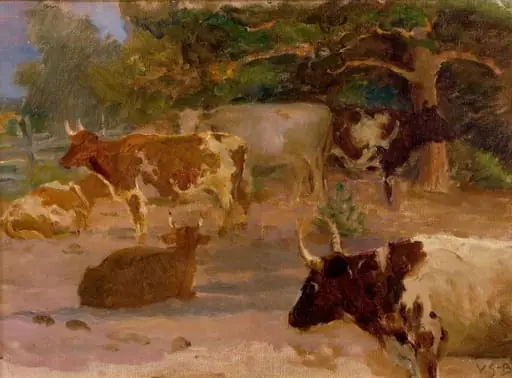
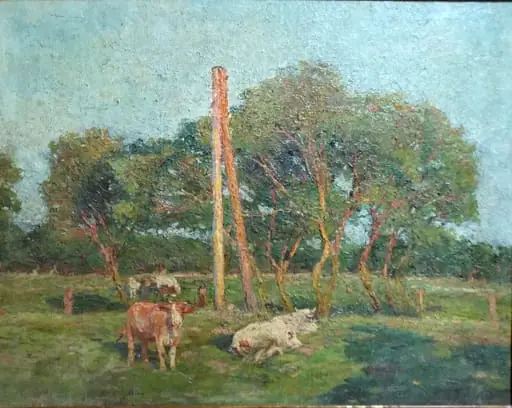
Ciobănaș, created circa 1922 by Romanian Impressionist Aurel Băeșu, is a painting that captures a serene rural moment, featuring a shepherd boy at rest amidst livestock in a natural setting.
Subject & Meaning
The subject, a relaxed shepherd boy lying in tall grass with a wide-brimmed hat and light shirt, emphasizes Băeșu's thematic focus on everyday rural life, drawing from the influence of Nicolae Grigorescu. Nearby cows, in varied postures, enhance the scene's tranquility.
Technique & Style
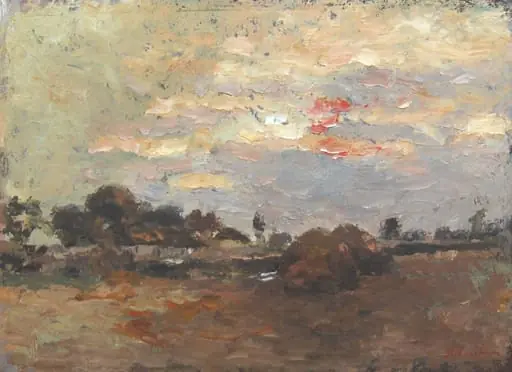
Characterized by loose, visible brushstrokes and a predominant color palette of greens, browns, and whites, the painting exemplifies Impressionist techniques. The use of impasto (thick paint application) adds texture, contributing to the work's fresh, outdoor ambiance.
History & Provenance
Ciobănaș is part of the collection at the Museum of Ethnography, reflecting its cultural and artistic significance within Romanian heritage.
Context
Created in the early 20th century, the piece reflects Băeșu's contribution to Romanian Impressionism, aligning with the era's artistic shift towards capturing modern life and natural beauty.
Legacy
While specific lasting impacts of *Ciobănaș* on broader art movements are not prominently documented, it remains a notable example of Băeșu's work and Romanian Impressionist painting, valued for its depiction of rural serenity.
Artist & collection
Artist
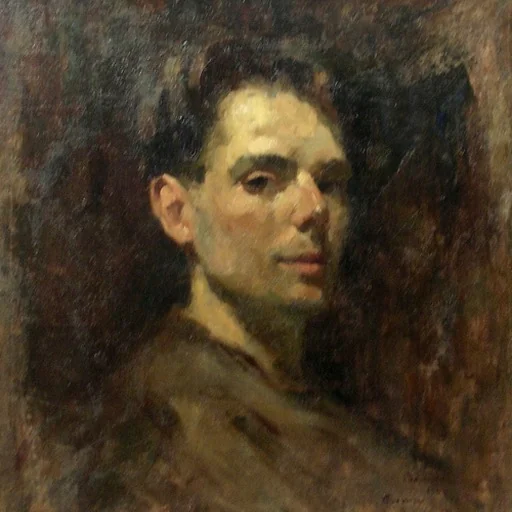
Aurel Băeșu (26 May 1896 – 24 August 1928) was a Romanian Impressionist landscape and portrait painter. Many of his works show the influence of Nicolae Grigorescu; an influence that was common among painters of his generation.