Artwork
Portret de femeie
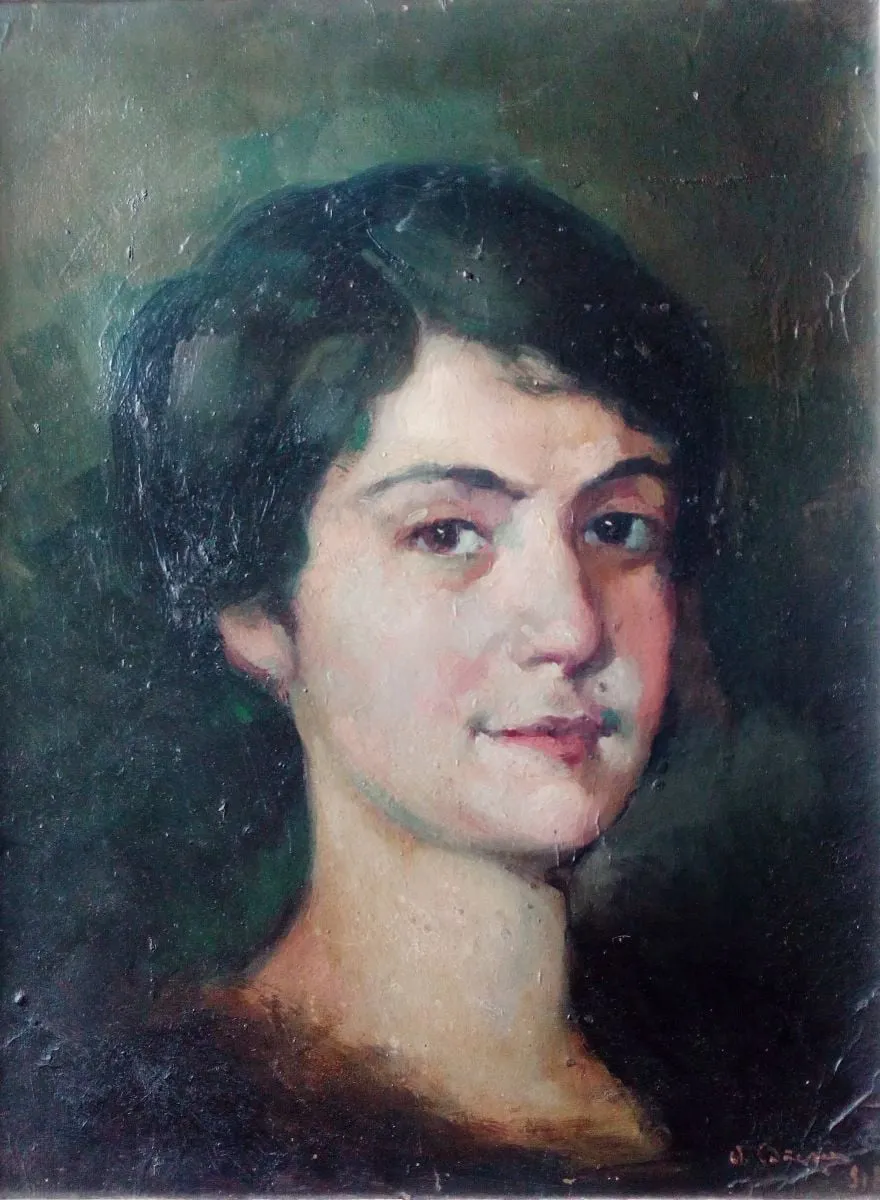
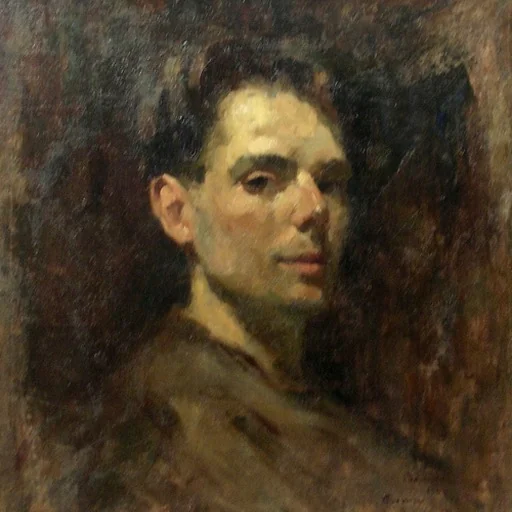
Portret de femeie is a print by Aurel Băeșu. It dates from 1922 and is held in the collection of the Ion Irimescu Art Museum.
About this work
Overview
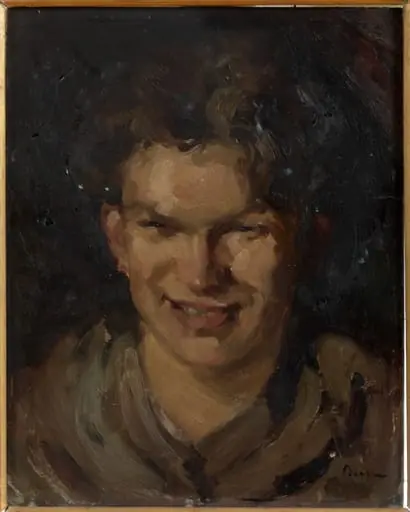
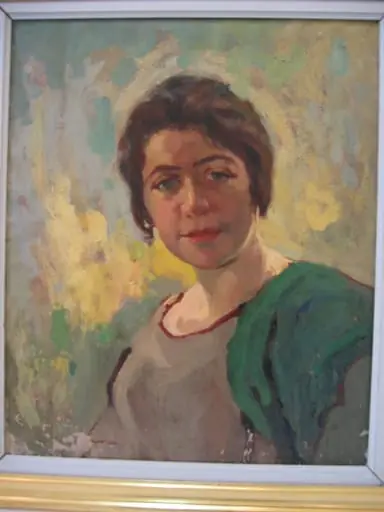
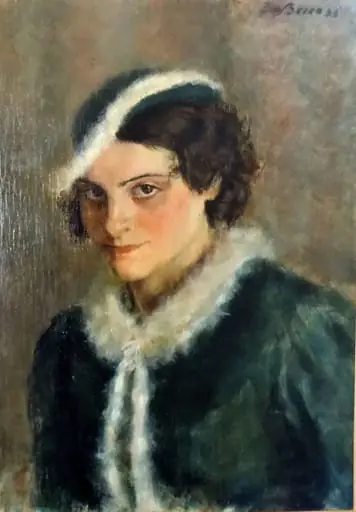
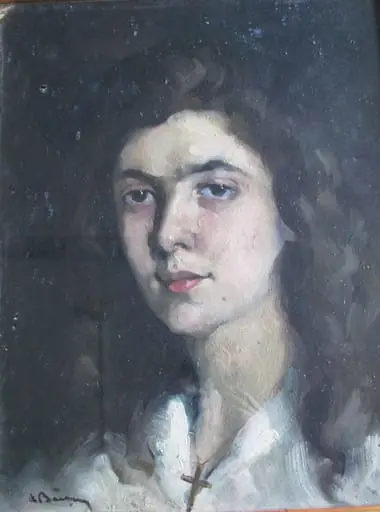
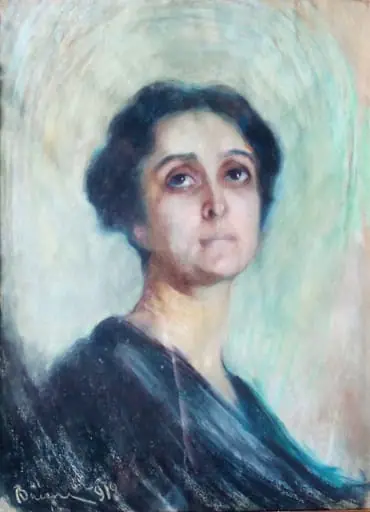
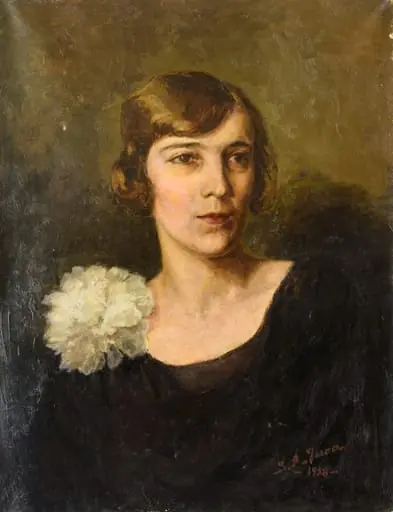
Painted around 1922, *Portret de femeie* is a modest yet intimate portrait by Romanian artist Aurel Băeșu. Working within the traditions of Romanian Impressionism, Băeșu captured a single figure with minimal contextual detail. The work reflects his broader interest in portraiture and the quiet observation of everyday subjects, executed with a sense of immediacy and restrained composition.
Subject & Meaning
The subject is a woman depicted from the shoulders up, her gaze directed slightly away, conveying quiet introspection. Her hair is neatly gathered, and her attire is plain—a dark collar suggesting modesty or rural dress. No accessories or identifiers are present, emphasizing anonymity and universality. The portrait avoids narrative, focusing instead on presence and stillness.
Technique & Style
Băeșu employed loose, visible brushwork, particularly around the hair and neck, suggesting rapid execution and a focus on light’s effect over detail. The background is a flat, muted green, allowing the face to emerge through subtle tonal shifts. While not overtly dramatic, the painting uses chiaroscuro to model the features, creating volume without heavy contrast or theatrical lighting.
History & Provenance
Though not widely exhibited, its inclusion suggests recognition of its representation of early 20th-century Romanian domestic life.
The painting resides in the collection of the Museum of Ethnography in Romania, a placement that reflects its cultural rather than purely aesthetic significance. Though not widely exhibited, its inclusion suggests recognition of its representation of early 20th-century Romanian domestic life. Its provenance remains unremarkable, consistent with many works by lesser-known regional artists of the period.
Context
Băeșu was part of a generation influenced by Nicolae Grigorescu, who championed naturalism and plein air painting in Romania. This portrait aligns with that legacy, favoring direct observation over idealization. While landscape remained Băeșu’s primary focus, his portraits like this one reveal a sensitivity to individual character within a broader cultural shift toward realism in interwar Romanian art.
Legacy
Though not among Băeșu’s most celebrated works, *Portret de femeie* exemplifies the quiet, unadorned approach to portraiture that characterized much of his output. It contributes to a broader understanding of Romanian Impressionism as a movement grounded in everyday life rather than grand historical themes. Its preservation in an ethnographic context underscores its value as a document of social and visual culture.
Artist & collection
Artist
Aurel Băeșu (26 May 1896 – 24 August 1928) was a Romanian Impressionist landscape and portrait painter. Many of his works show the influence of Nicolae Grigorescu; an influence that was common among painters of his generation.