Artwork
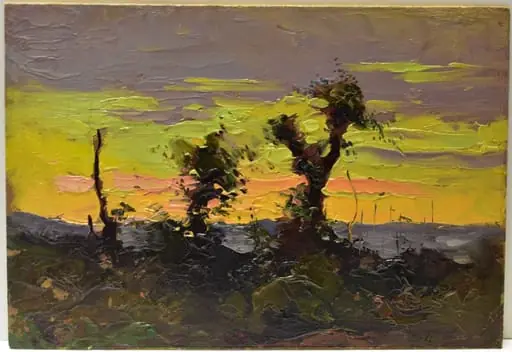
Peisaj cu casă de țară și un copac uscat
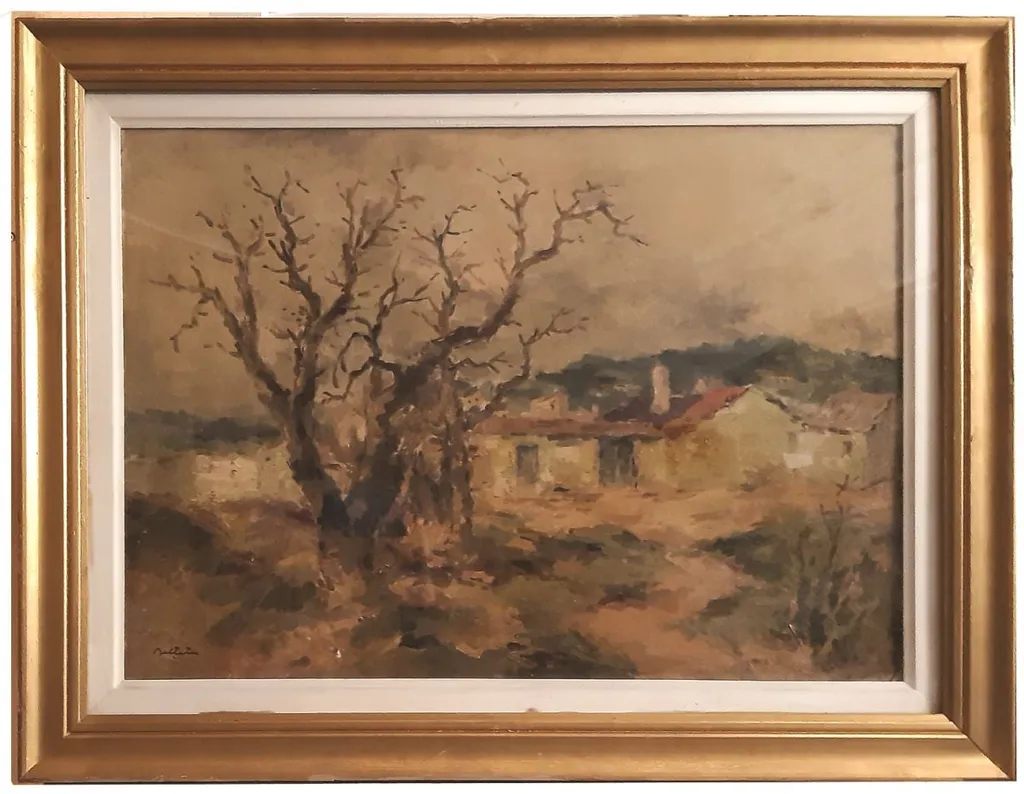
Peisaj cu casă de țară și un copac uscat is a print by Adam Bălțatu. It dates from 1949 and is held in the collection of the Cotroceni National Museum.
About this work
Overview
The work is part of the Museum of Ethnography’s collection, reflecting a quiet, observational approach to rural life during the postwar period.
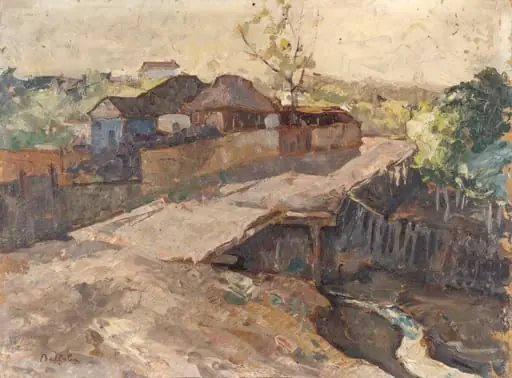
Painted around 1949 by Adam Bălțatu, this landscape depicts a rural Romanian scene with minimal detail and subdued tones. The work is part of the Museum of Ethnography’s collection, reflecting a quiet, observational approach to rural life during the postwar period. Its modest scale and unembellished subject matter align with regional artistic tendencies of the time, emphasizing atmosphere over narrative.
Subject & Meaning
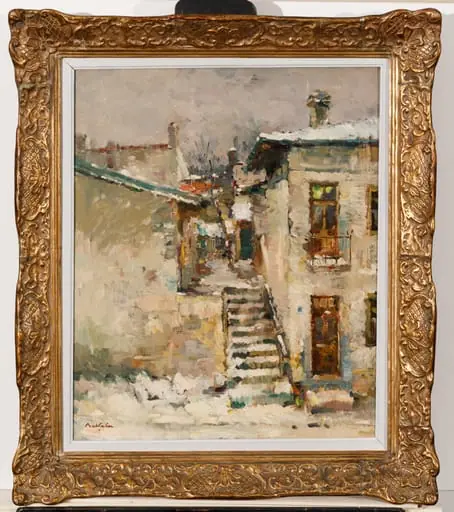
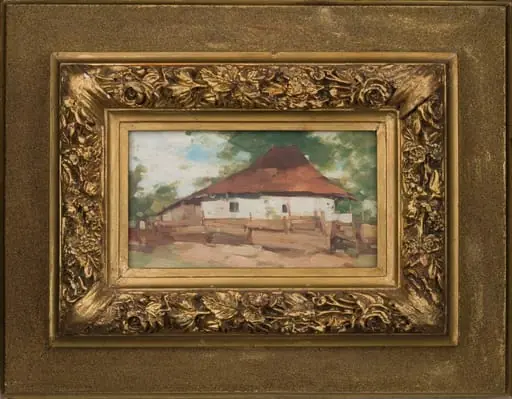
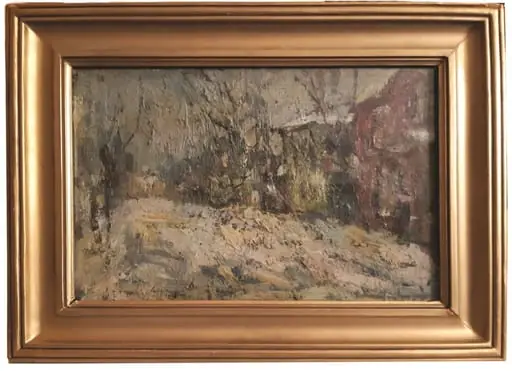
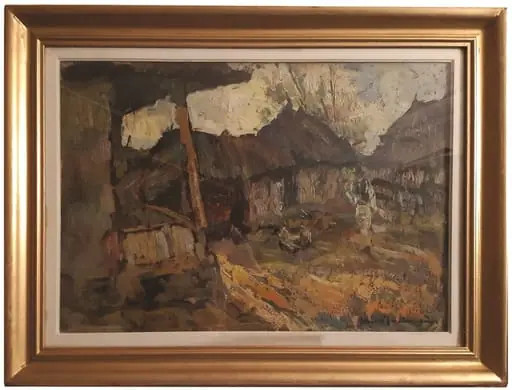
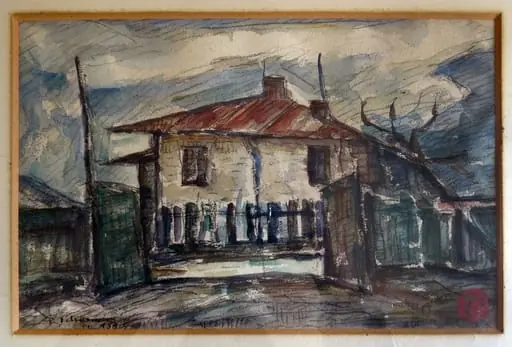
The composition centers on a gnarled, leafless tree in the foreground, its bare branches holding a few small birds. Behind it, a simple country house with a red roof stands quietly amid rolling hills. The tree, often a symbol of endurance, contrasts with the domestic structure, suggesting resilience amid hardship. The absence of human figures reinforces a sense of solitude and stillness.
Technique & Style
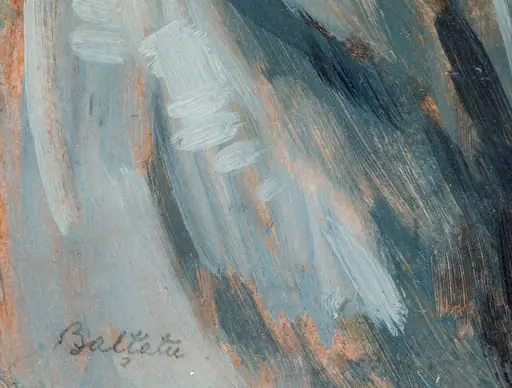
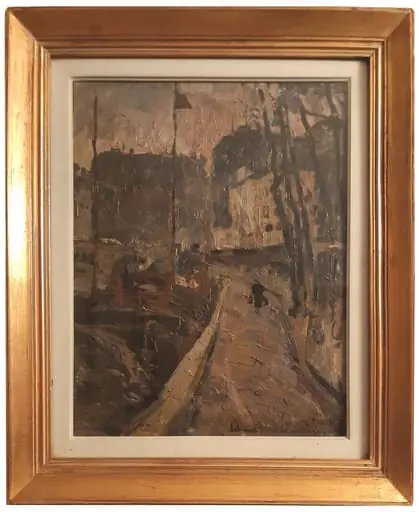
Bălțatu employed loose, rapid brushwork to suggest form rather than define it, creating a sense of immediacy. Colors are restrained—earthy browns, muted greens, and soft grays—giving the scene a weathered, faded quality. The dark silhouette of the tree emerges against a lighter, diffused background, enhancing its emotional weight without relying on dramatic contrast or chiaroscuro.
History & Provenance
The painting entered the Museum of Ethnography’s holdings after its creation, likely acquired as part of a broader effort to document vernacular Romanian life in the mid-20th century. Its preservation within an ethnographic context, rather than a fine arts institution, suggests its value was seen in its cultural representation rather than its formal innovation.
Context
Created shortly after World War II, the work reflects a period when rural Romania remained largely unchanged despite political upheaval. Artists like Bălțatu often turned to quiet landscapes as a form of subtle resistance to state-mandated socialist realism. The painting’s lack of ideological messaging allowed it to endure as a personal, unpoliticized record of place.
Legacy
Though not widely exhibited outside Romania, the painting remains a representative example of regional landscape painting from the late 1940s. Its understated aesthetic influenced later artists seeking to capture rural life without sentimentality. It continues to be studied for its quiet dignity and its role in preserving a vanishing visual culture.