Artwork
Sălișteanca
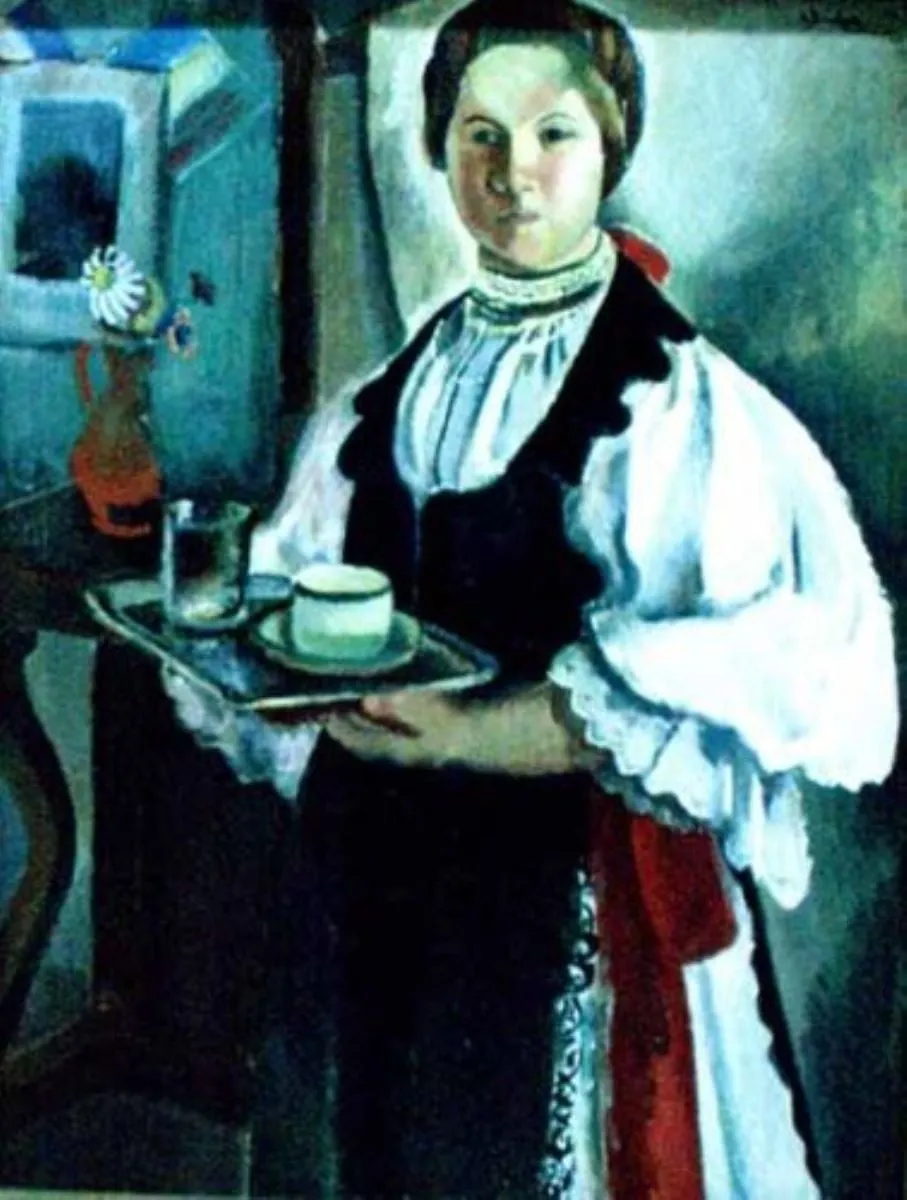
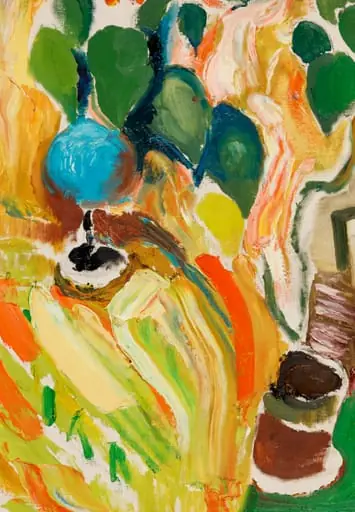
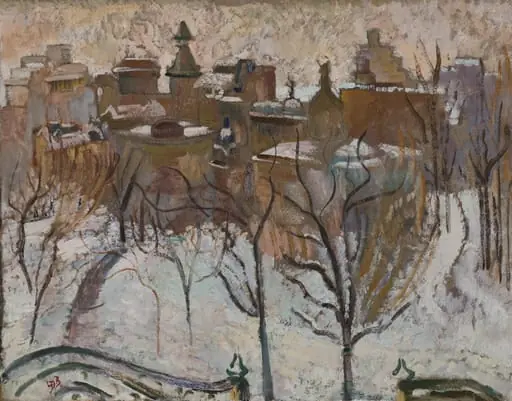
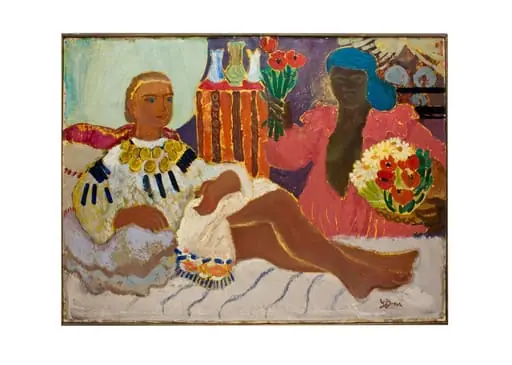
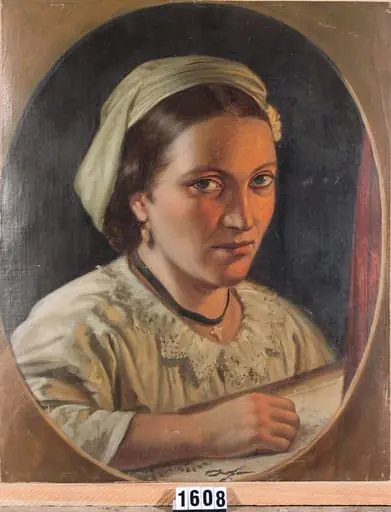
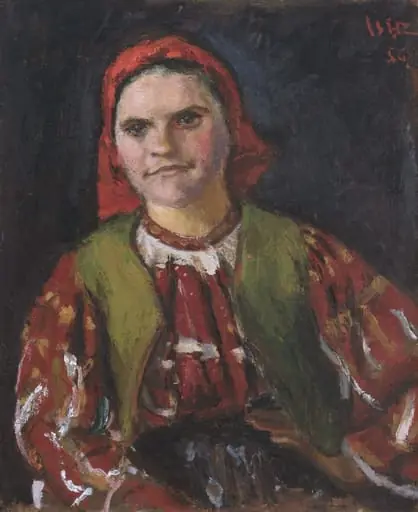
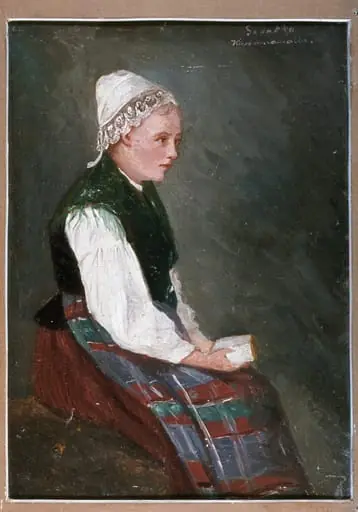
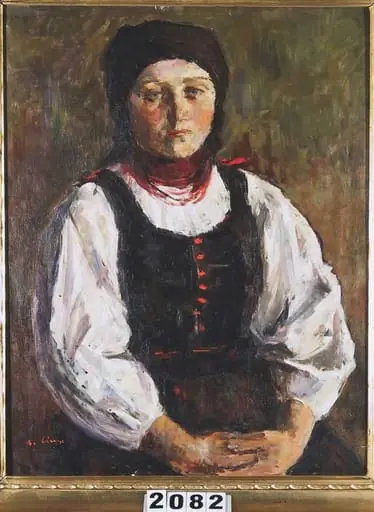
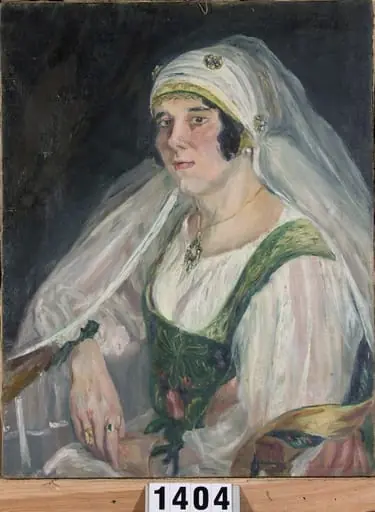
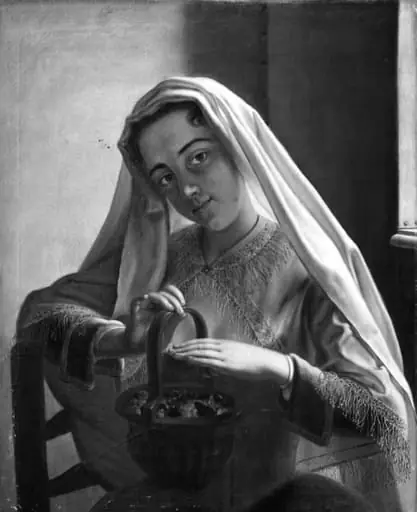
Sălișteanca is a print by Lucia Dem-Bălăcescu. It dates from 1934 and is held in the collection of the National Museum of Art of Romania.
About this work
Overview
Sălișteanca, painted around 1934 by Lucia Bălăcescu-Demetriade, is a portrait of a woman in traditional Romanian dress. The composition centers on her still presence, framed against a simple interior with a window and a vase. The subdued palette and deliberate stillness suggest a moment of quiet routine, neither ceremonial nor performative, but grounded in everyday life.
Subject & Meaning
The subject is a woman holding a tray with a cup and saucer, suggesting a domestic ritual—perhaps preparing or offering tea. Her neutral expression and direct gaze invite the viewer into a private, unspoken moment. The traditional clothing and setting imply cultural identity, but the painting avoids sentimentality, presenting her as an individual rather than a symbol.
Technique & Style
Bălăcescu-Demetriade employs restrained brushwork and a limited color scheme dominated by black, white, and a single accent of red in the shawl. The background is simplified—blue wall, window, and vase—drawing focus to the figure. Forms are defined with clarity, and lighting is even, avoiding dramatic contrast to sustain the painting’s calm tone.
History & Provenance
The painting’s early history is not widely documented, but it is known to have been created during Bălăcescu-Demetriade’s active period in Romania. It remained within private collections until entering institutional care. Its title, Sălișteanca, likely references a regional origin, tying the figure to a specific cultural context within the country.
Context
Created in the 1930s, the work reflects a broader interest in Romanian folk traditions among artists of the era, though Bălăcescu-Demetriade avoids romanticization. Unlike nationalist imagery of the time, this portrait emphasizes quiet dignity over spectacle. It aligns with a modernist tendency to find meaning in ordinary, unadorned moments.
Legacy
Sălișteanca remains a quiet example of interwar Romanian portraiture that prioritizes introspection over narrative. While not widely exhibited, it contributes to the understanding of how female artists engaged with cultural identity without overt political or folkloric embellishment. Its endurance lies in its restraint and unembellished humanity.
Artist & collection