Artwork
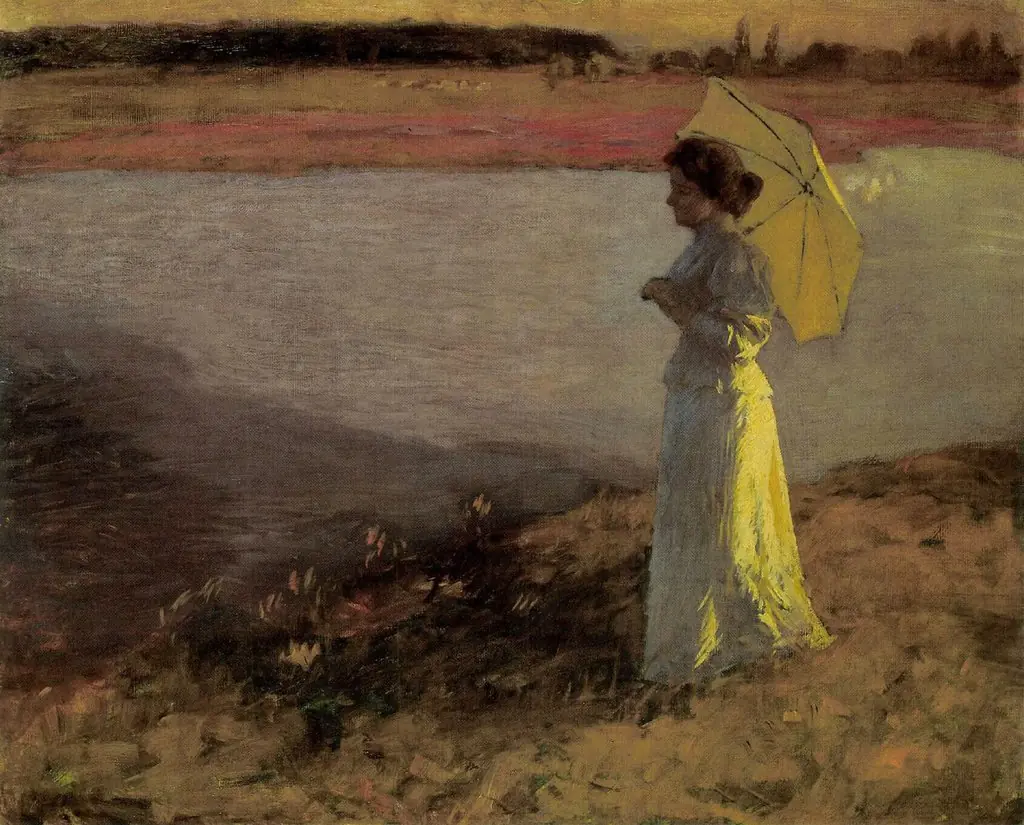
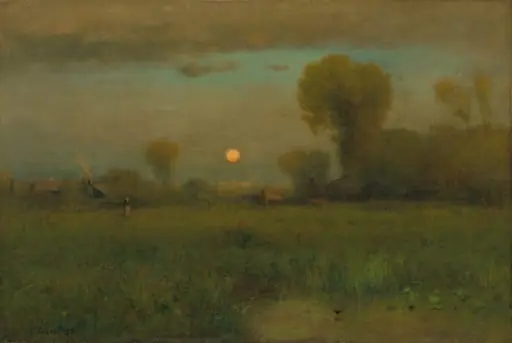
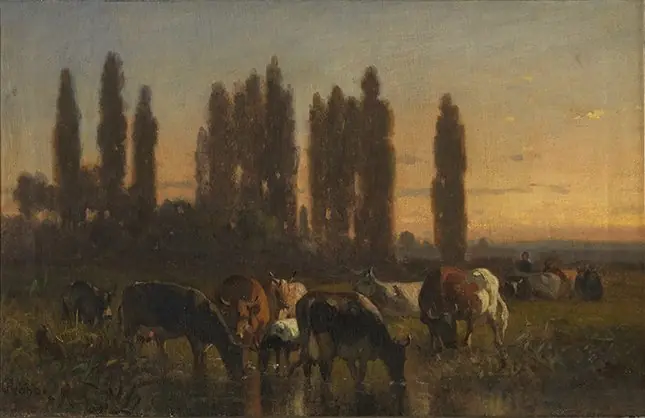
Moonrise (Evening at the Corrall)
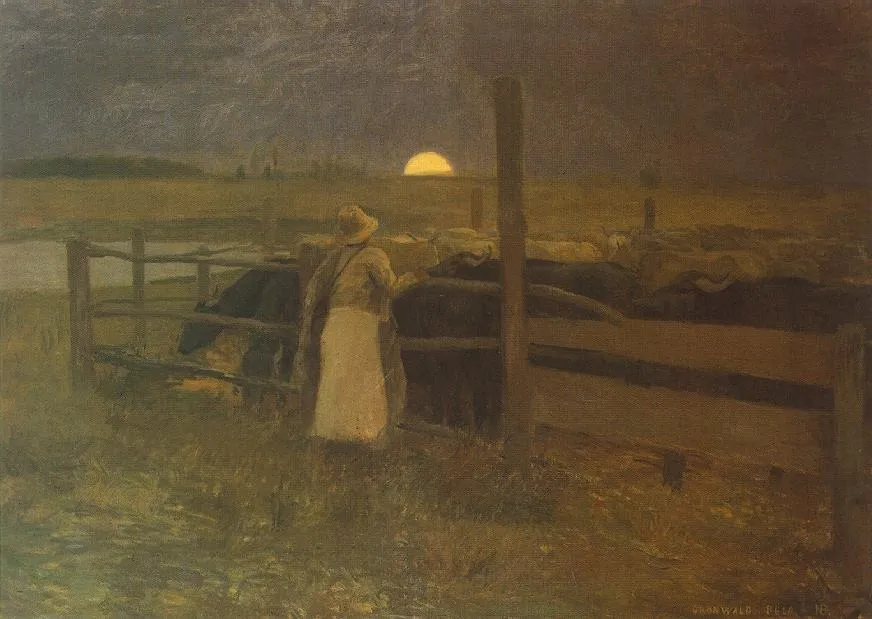
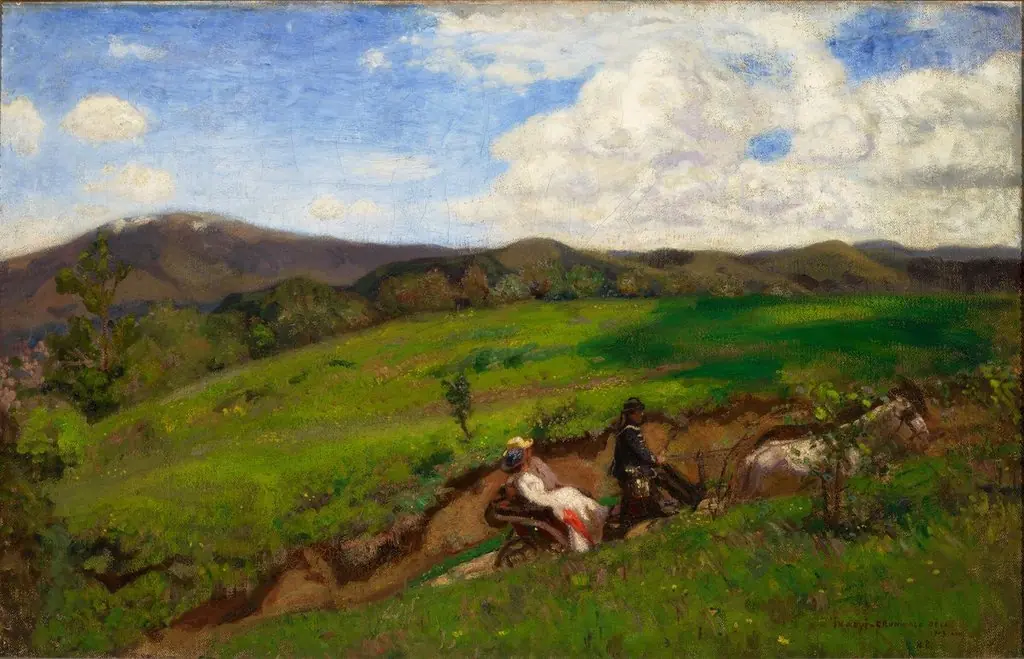
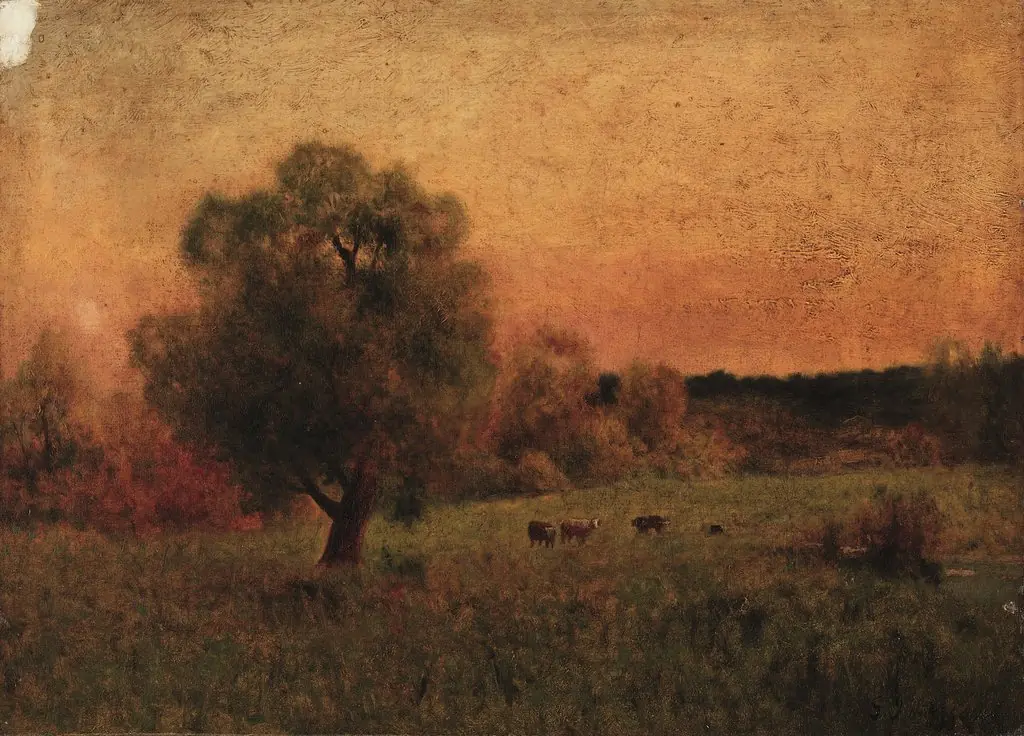
Moonrise (Evening at the Corrall) is an oil painting by the Post-Impressionist artist Béla Iványi-Grünwald. It dates from 1899 and is held in the collection of the Hungarian National Gallery.
About this work
Overview
Moonrise (Evening at the Corrall), created in 1899 by Béla Iványi-Grünwald, is an oil painting exemplifying post-impressionist tendencies. It is part of the Hungarian National Gallery's collection.
Subject & Meaning
The painting portrays a serene rural dusk scene, focusing on a woman in a dark coat and hat standing by a fence, observing a corralled herd of cattle. The atmosphere conveys calmness and tranquility.
Technique & Style
Iványi-Grünwald employed muted browns and grays, leveraging chiaroscuro to achieve depth. The composition balances a foreground figure with a expansive, serene landscape background.
History & Provenance
Painted in 1899, the work reflects Iványi-Grünwald's influence as a leader in the Nagybánya artists' colony and later founder of the Kecskemét colony. It is now held by the Hungarian National Gallery.
Context
Emerging from the post-impressionist movement, this piece situates Iványi-Grünwald within early 20th-century European artistic shifts, blending traditional themes with innovative stylistic approaches.
Legacy
As a key figure in Hungarian art colonies, Iványi-Grünwald's Moonrise contributes to the legacy of these collective artistic endeavors, though the painting's specific impact on broader art historical narratives is less defined.
Artist & collection
Artist
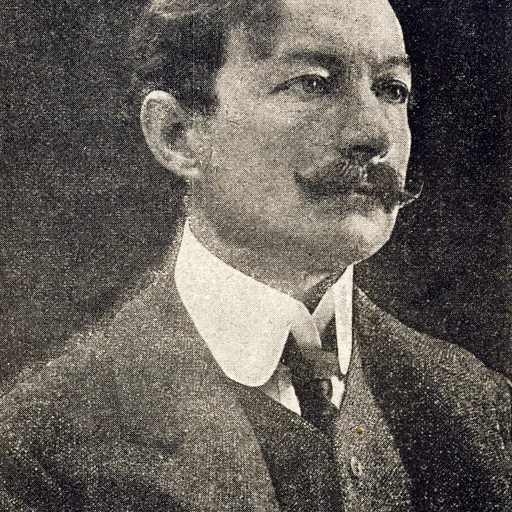
Béla Iványi-Grünwald (6 May 1867 – 24 September 1940) was a Hungarian painter, a leading member of the Nagybánya artists' colony and founder of the Kecskemét artists' colony.