Artwork
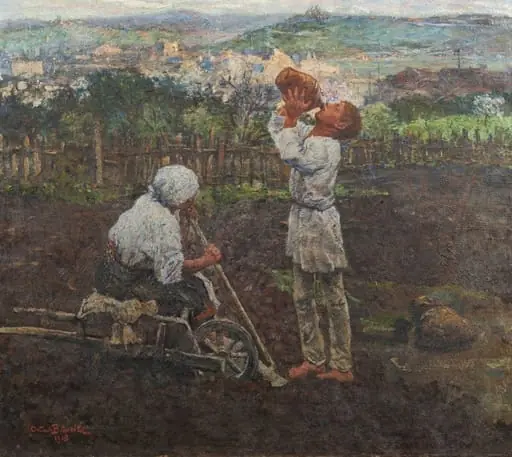
De la munca câmpului. Țăran cu roaba
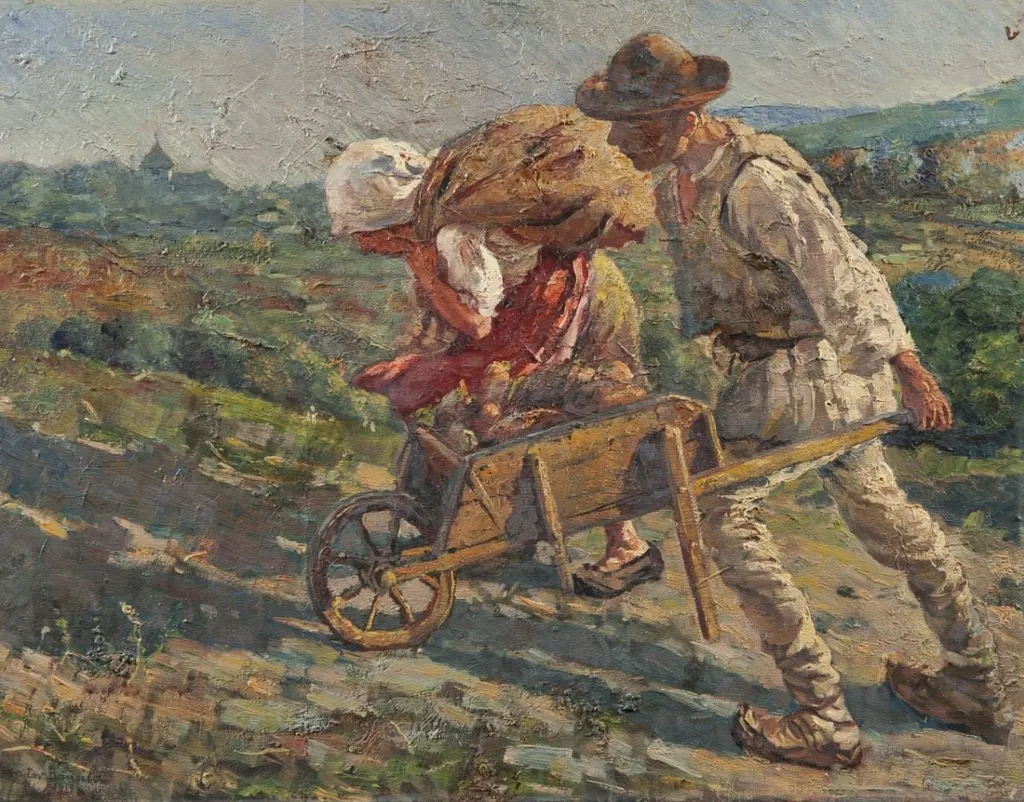
De la munca câmpului. Țăran cu roaba is a print by Octav Băncilă. It dates from 1913 and is held in the collection of the National Museum of Art of Romania.
About this work
Overview
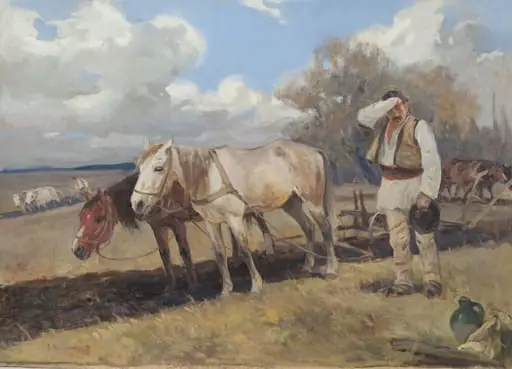
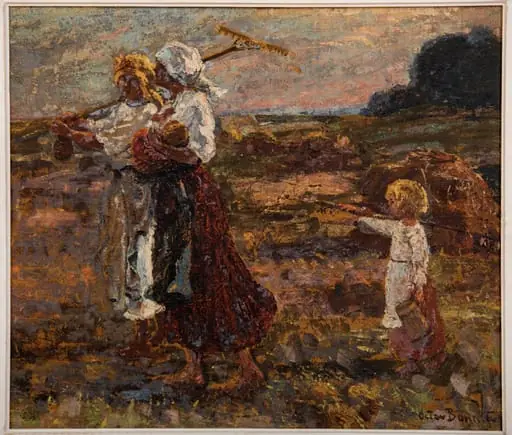
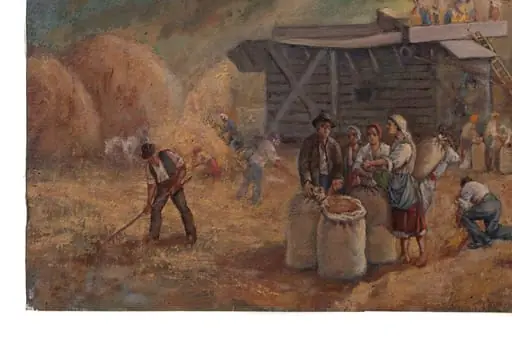
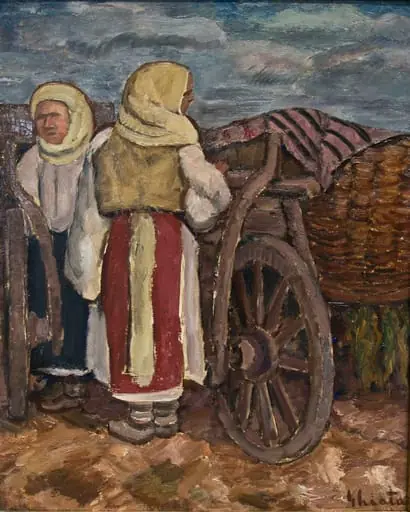
Octav Băncilă’s 1913 canvas De la munca câmpului. Țăran cu roaba portrays a solitary peasant pulling a wooden cart across a countryside. The composition centers on the laborer, whose modest attire and hat emphasize his humble status, while the cart’s simple wooden structure and single front wheel suggest a functional, everyday tool.
Subject & Meaning
The work captures a moment of agricultural toil, highlighting the steady rhythm of rural work in early‑twentieth‑century Romania. By focusing on the solitary figure and his task, the painting underscores the dignity of manual labor and the connection between the worker and the land he cultivates.
Technique & Style
Băncilă employs a restrained palette of earth tones, allowing the muted hues to convey the harshness of field work. Broad, textured brushstrokes give the surface a tactile quality, reinforcing the painting’s sense of ruggedness and the physical effort involved in pulling the cart.
Context
Created just before the First World War, the piece reflects a period when Romanian artists increasingly turned to peasant life as a subject, seeking to document and valorise the nation’s agrarian roots amid social and political change.
Legacy
While not as widely reproduced as some of Băncilă’s later social realist works, this early painting contributes to his reputation as an observer of everyday labor, offering a visual record of the rural landscape and its inhabitants at a pivotal historical moment.
Artist & collection

Artist
Octav Băncilă was a Romanian realist painter and left-wing activist. He was the brother of Sofia Nădejde, a feminist journalist, and the brother-in-law of Ioan Nădejde.