Artwork
Portret de bătrân evreu
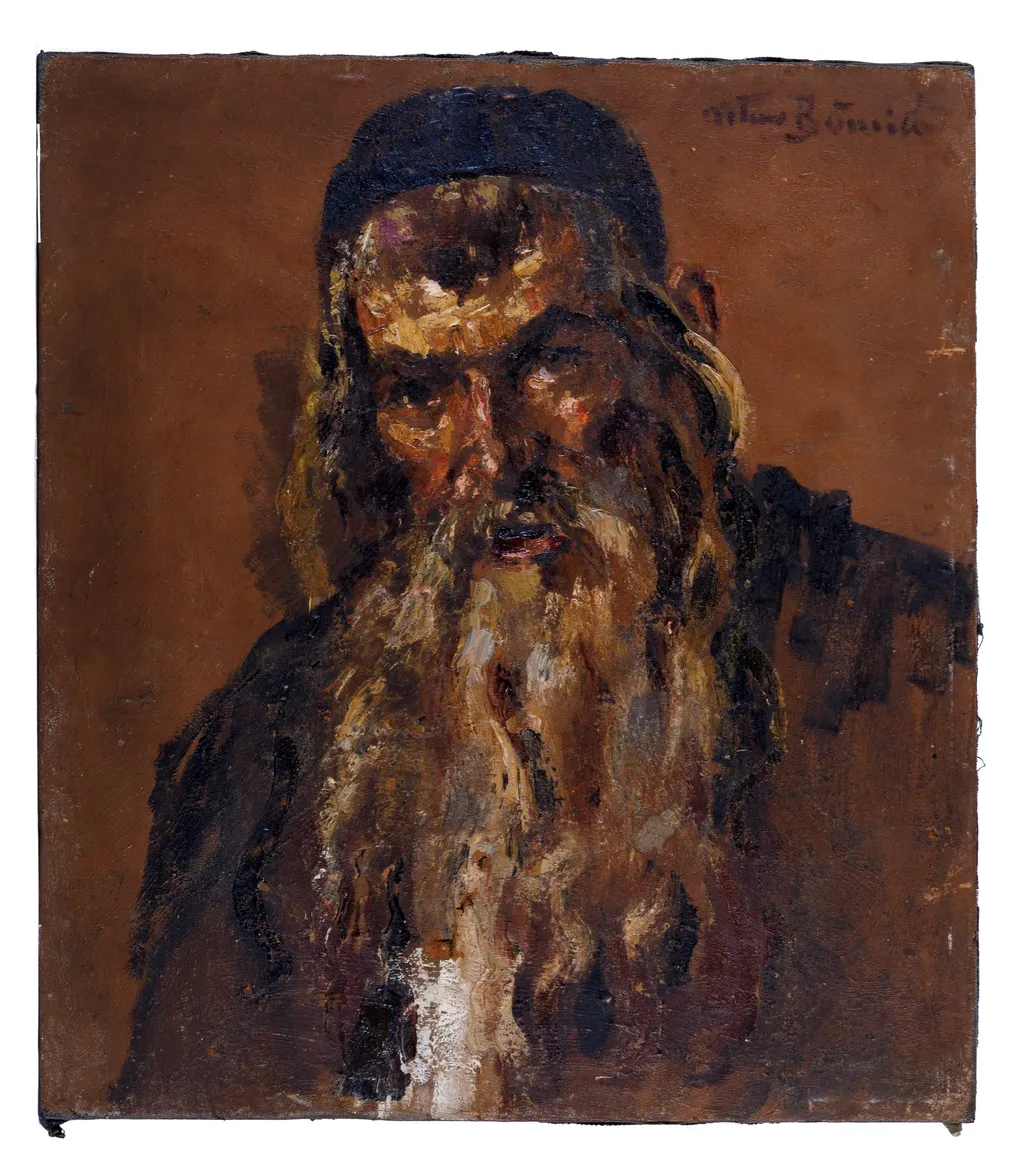
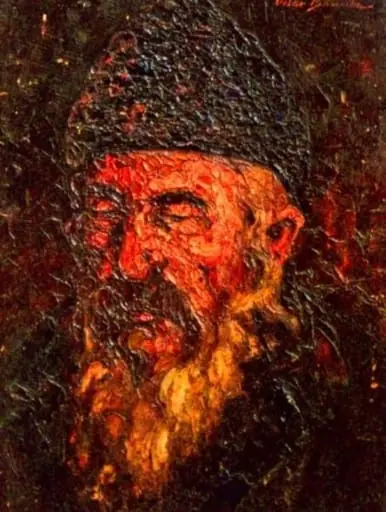
Portret de bătrân evreu is a print by Octav Băncilă. It dates from 1850 and is held in the collection of the Moldova National Museum Complex.
About this work
Overview
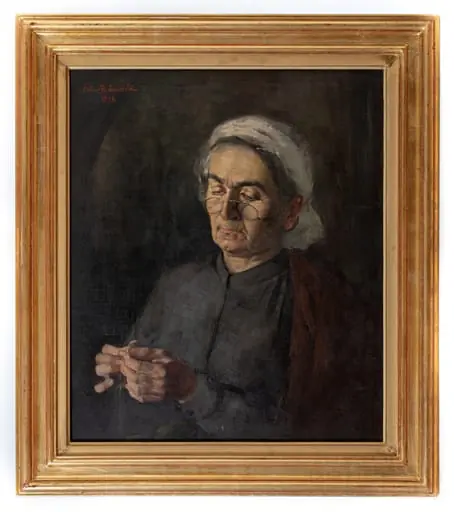
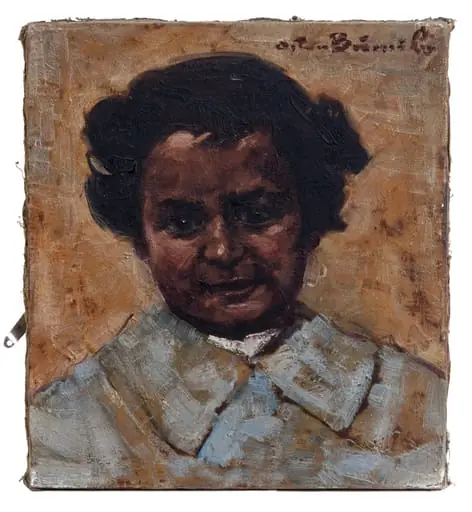
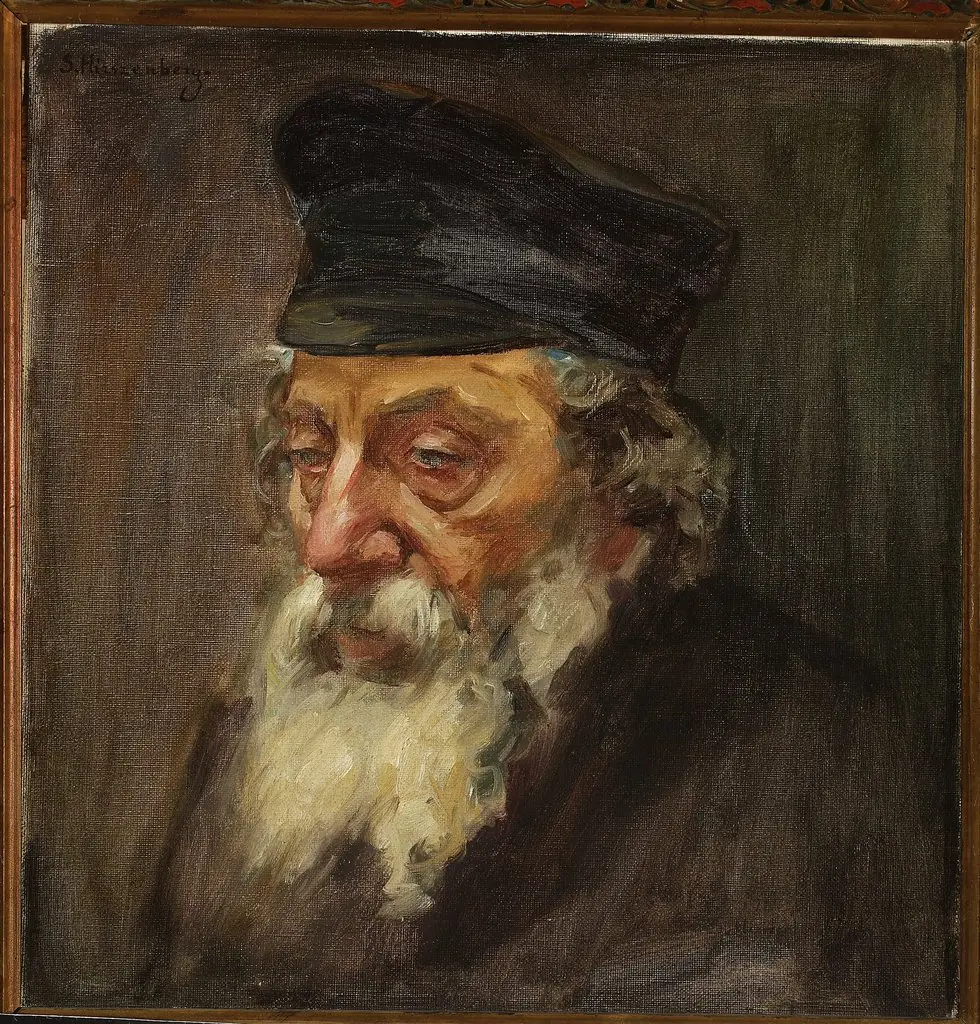
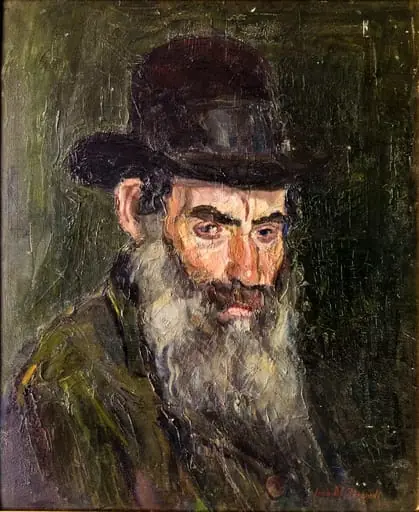
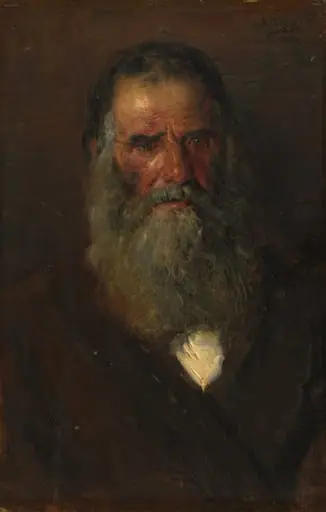
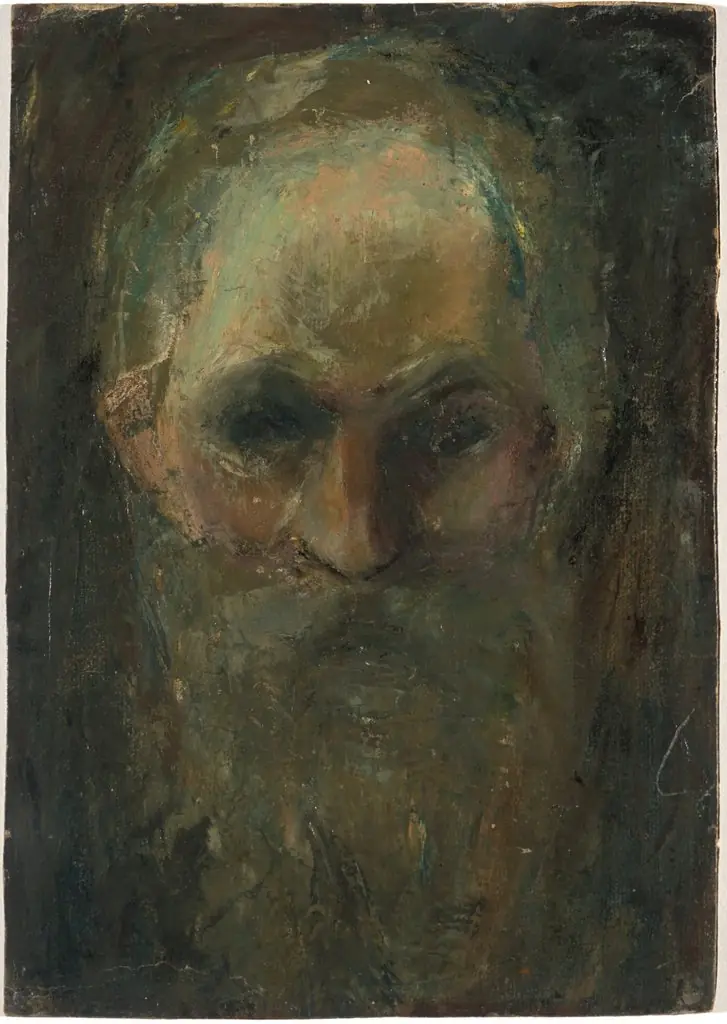
Painted around 1850 by Octav Băncilă, this portrait captures an elderly Jewish man in a quiet, intimate moment. Executed with loose brushwork and a restrained palette, the work functions more as a study than a formal commission. The subject’s face emerges from a muted brown background, emphasizing texture and expression over detail, suggesting an immediate, observational approach to the sitter.
Subject & Meaning
The man depicted, identifiable by his traditional dark cap and long white beard, appears lost in thought, his gaze lowered as if in private reflection.
The man depicted, identifiable by his traditional dark cap and long white beard, appears lost in thought, his gaze lowered as if in private reflection. His identity remains unrecorded, but his attire and features point to Jewish cultural context in 19th-century Romania. The absence of narrative or symbolic elements directs focus to the quiet dignity of aging and the psychological presence of the individual.
Technique & Style
Băncilă employed swift, visible brushstrokes to model the man’s face and beard, favoring tonal variation over precise definition. Warm ochres and browns dominate the skin and hair, contrasting subtly with the neutral background. The lack of fine detail and the soft edges suggest spontaneity, aligning the work with informal portraiture practices common among artists seeking to capture transient expressions rather than idealized likenesses.
History & Provenance
The painting’s early ownership is undocumented, but it has been associated with Romanian art collections since the late 19th century. Its survival as a small-scale work without formal commissioning suggests it may have been kept by the artist or a close associate. It entered institutional holdings in the 20th century, where it is now preserved as an example of Băncilă’s early, intimate portraiture.
Context
In mid-19th-century Romania, depictions of Jewish subjects were rare in academic art. Băncilă’s focus on an ordinary elder, without religious or ethnic stereotyping, reflects a growing interest in everyday people. This work aligns with broader European trends toward realism and psychological portraiture, even as it remains distinct in its cultural specificity and unembellished treatment.
Legacy
Though not widely exhibited, this portrait is recognized as an early example of Romanian realism in portraiture. Its emphasis on emotional presence over social status influenced later artists exploring marginalized communities. The work’s unpolished quality has been reevaluated as a strength, offering a candid glimpse into the lives of individuals often excluded from formal artistic narratives.
Own this work as a print
Artist & collection

Artist
Octav Băncilă was a Romanian realist painter and left-wing activist. He was the brother of Sofia Nădejde, a feminist journalist, and the brother-in-law of Ioan Nădejde.