Artwork
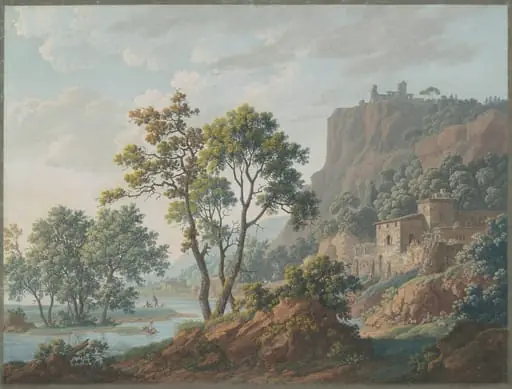
River Landscape with Castles and Travelers
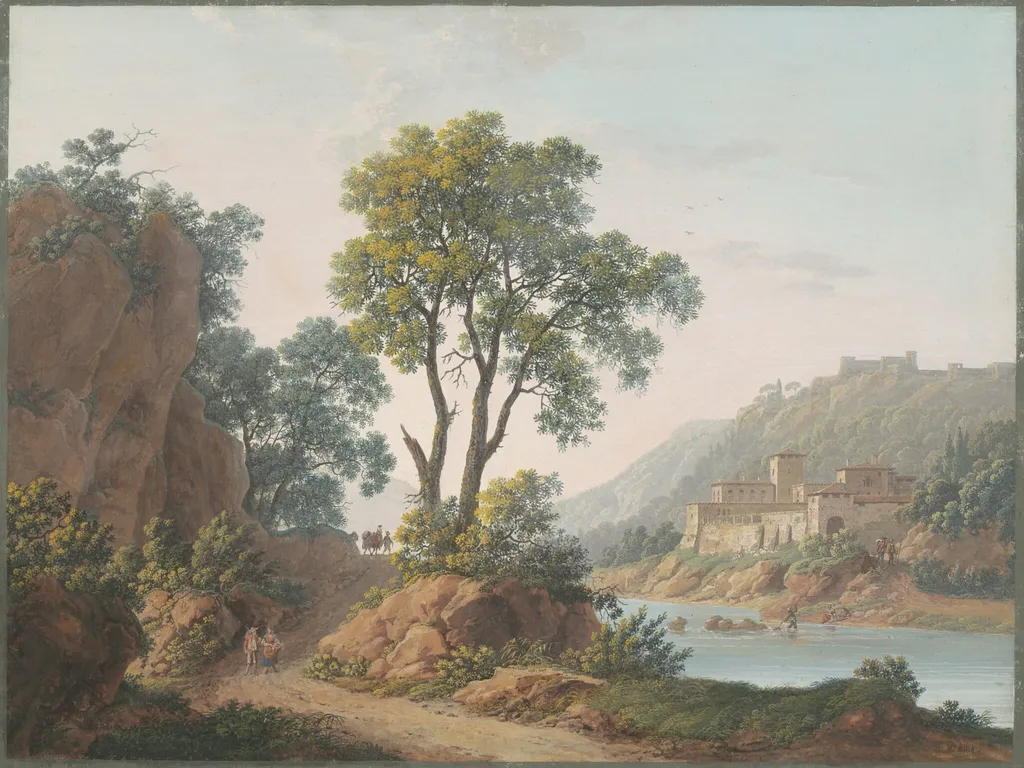
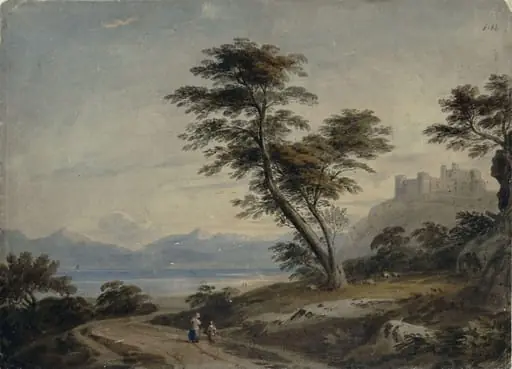
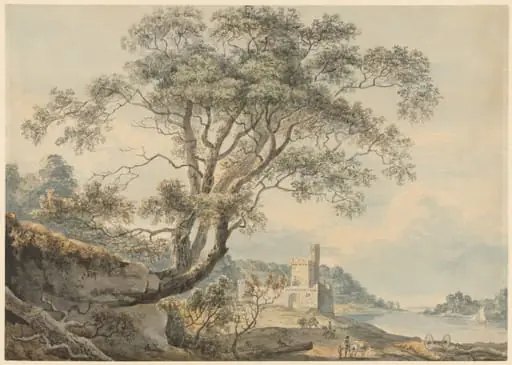
River Landscape with Castles and Travelers is a gouache drawing by the Romanticist artist Louis-Albert-Guillain Baron Bacler d'Albe. It dates from 1817 and is held in the collection of the National Gallery of Art. Created in 1817, this gouache on cardboard depicts a tranquil river winding through rugged terrain.
About this work
Overview
Created in 1817, this gouache on cardboard depicts a tranquil river winding through rugged terrain. The work is a small-scale landscape drawing by Louis-Albert-Guillain Baron Bacler d'Albe, notable for its delicate handling of light and atmosphere. The medium’s opaque water-based quality allows for subtle tonal transitions, contributing to the scene’s quiet, contemplative mood.
Subject & Meaning
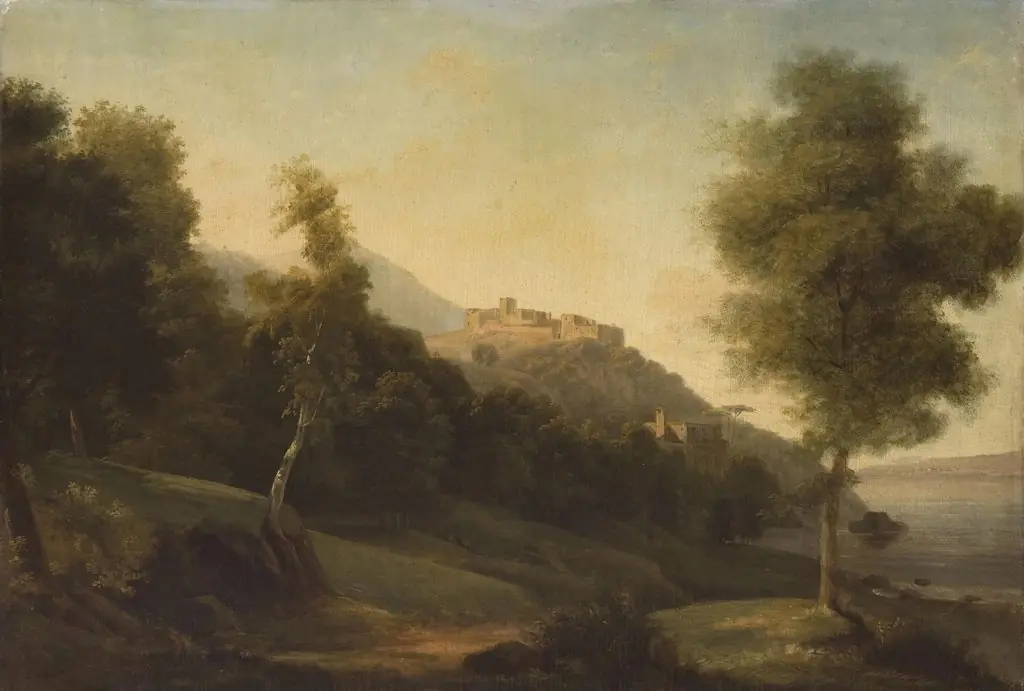
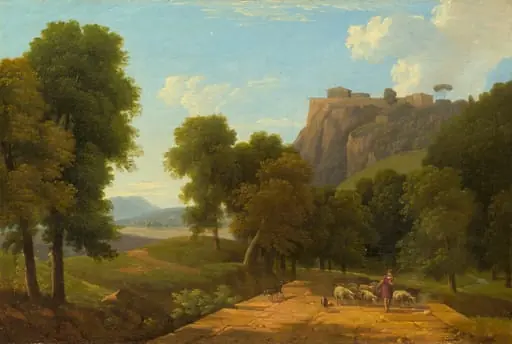
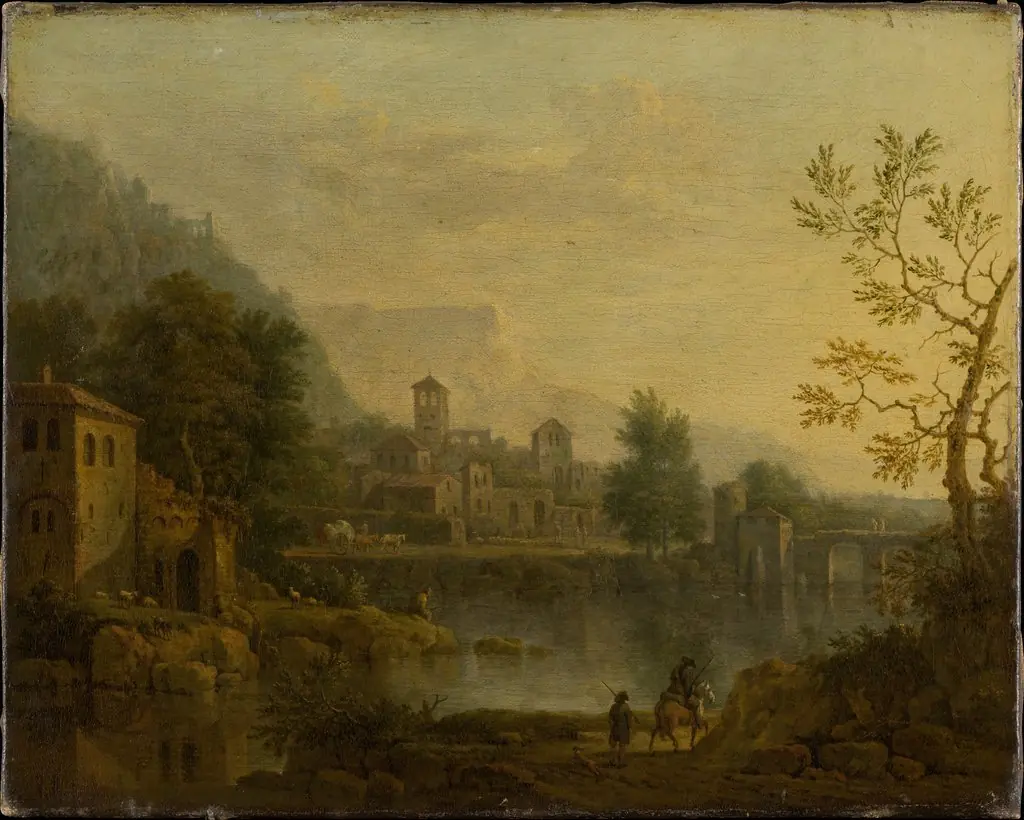
The composition centers on a meandering river flanked by steep cliffs and scattered trees. Two figures travel along a narrow path, their small scale emphasizing the vastness of nature. A distant castle perches on a hill, its weathered form suggesting history without narrative. The scene evokes solitude and passage, not as a specific place but as a generalized, poetic vision of rural travel.
Technique & Style
Bacler d'Albe employed gouache to achieve soft, luminous hues with minimal brushwork. The pale sky and muted greens of the foliage blend gently, avoiding sharp contrasts. Forms are suggested rather than detailed, with the castle rendered in loose washes and the river as a ribbon of pale blue. The technique favors atmosphere over precision, aligning with early 19th-century Romantic sensibilities.
History & Provenance
The work dates from Bacler d'Albe’s later years, when he focused on landscape studies after serving as a cartographer for Napoleon. Likely created as a personal exercise or preparatory sketch, it reflects his continued interest in topographical harmony. Its survival as a finished piece suggests it held personal value, though its early ownership remains undocumented.
Context
In early 19th-century France, landscape drawing gained renewed attention as artists moved beyond grand historical scenes. Bacler d'Albe’s work aligns with this shift, valuing quiet observation over dramatic narrative. His background in military mapping informed his precise yet lyrical rendering of terrain, bridging utility and aesthetic contemplation.
Legacy
Though not widely exhibited during his lifetime, Bacler d'Albe’s landscapes like this one contributed to a growing appreciation for intimate, non-heroic scenery in French art. His use of gouache influenced later artists seeking atmospheric effects without the permanence of oil. The work remains a quiet example of how topographical skill could serve poetic expression.
Own this work as a print
Artist & collection

Artist
Louis-Albert-Guillain Baron Bacler d'Albe
Louis-Albert-Guillain Baron Bacler d'Albe (1761–1824) was an artist.