Artwork
A fish
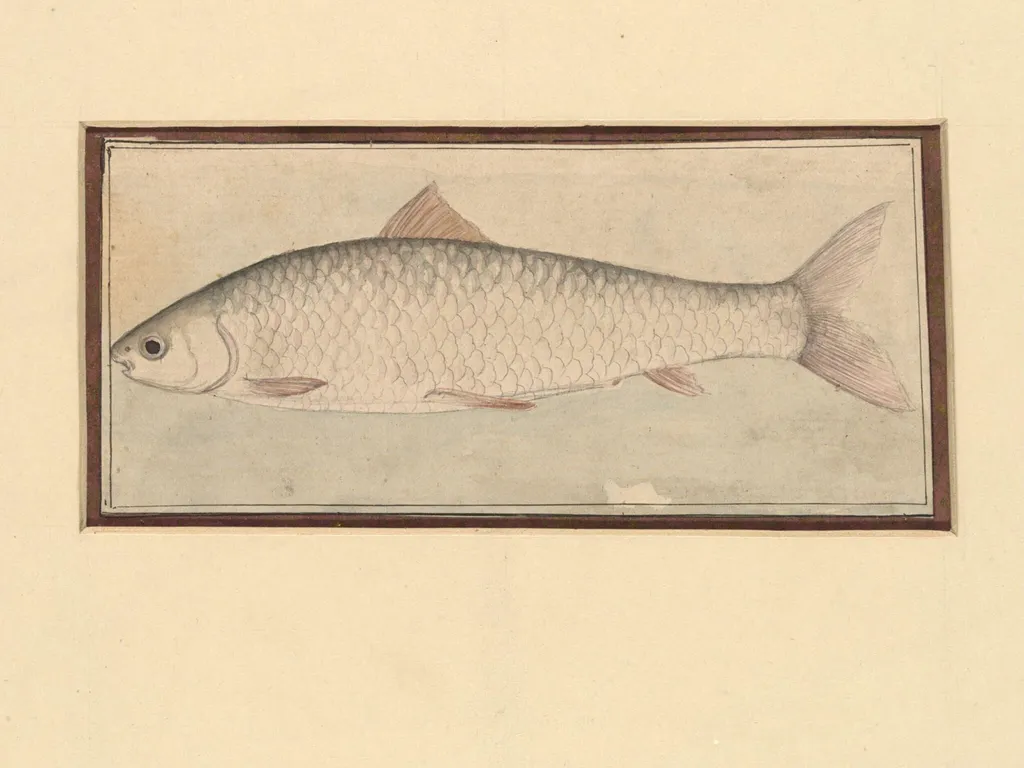
A fish is a paint painting by the Patna School of Painting artist Bahadur Lal II. It dates from 1880 and is held in the collection of the Victoria and Albert Museum.
About this work
Overview
Painted around 1880 by Bahadur Lal II, this work depicts a single fish rendered in watercolor on paper. It is part of the Victoria and Albert Museum’s collection and exemplifies a quiet, observational approach common in late 19th-century Indian naturalist art. The composition is minimal, focusing entirely on the subject without narrative or decorative elements.
Subject & Meaning
The subject is a common freshwater fish, shown lifeless and centered on a plain surface. Its stillness suggests a specimen studied for form rather than symbolic meaning. The absence of context or human presence shifts focus to the animal’s physical presence, reflecting a scientific or aesthetic interest in natural detail rather than myth or allegory.
Technique & Style
Bahadur Lal II employed delicate, soft brushwork to model the fish’s form, using subtle gradations of gray and white to suggest volume and texture. The light falls naturally across the body, enhancing its three-dimensionality without dramatic contrast. The plain background isolates the subject, emphasizing precision and quiet observation over embellishment.
History & Provenance
The painting entered the Victoria and Albert Museum’s collection in the late 19th or early 20th century, likely acquired during British colonial efforts to document Indian artistic practices. Its provenance traces to the artist’s circle in northern India, though specific commission details remain undocumented. It survives as a rare example of individual naturalist painting from the period.
Context
During the late 1800s, Indian artists increasingly engaged with Western naturalist traditions, often under colonial influence. Bahadur Lal II’s work reflects this shift, blending indigenous brush techniques with a focus on anatomical accuracy. Such studies were sometimes made for botanical or zoological records, though this piece retains an intimate, personal quality.
Legacy
Though not widely known outside specialist circles, the painting contributes to understanding the diversity of Indian artistic practice beyond grand narrative or courtly themes. It stands as a quiet testament to artists who documented the natural world with care, offering a counterpoint to more ornamental traditions of the time.
Artist & collection
Artist
Bahadur Lal II was a meticulous observer who kept a small studio near Chandni Chowk’s noisy spice markets, where he’d sketch birds between commissions.

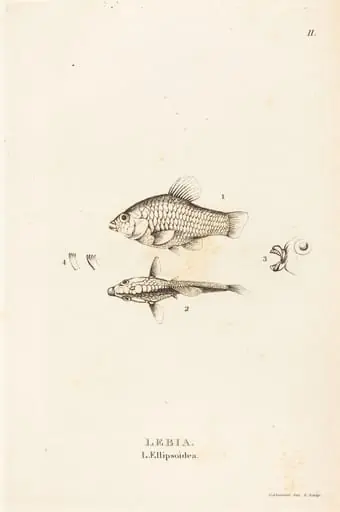 Lebia (L'Ellipsoidea)
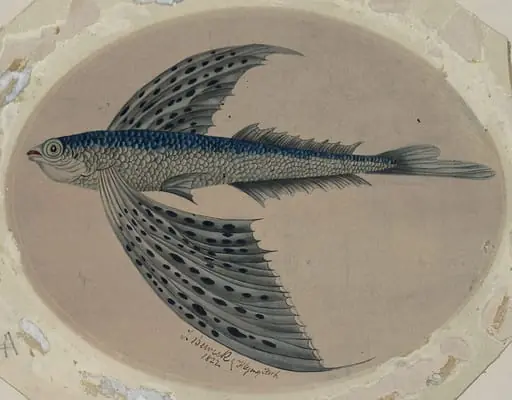 Flying fish
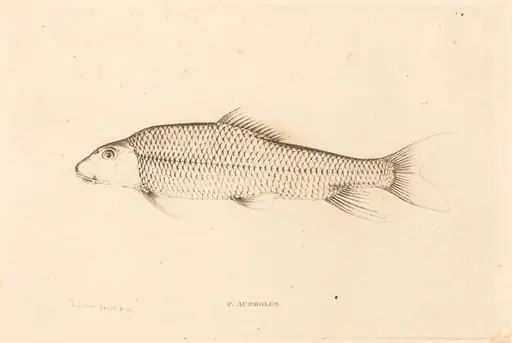 C. Aureolus
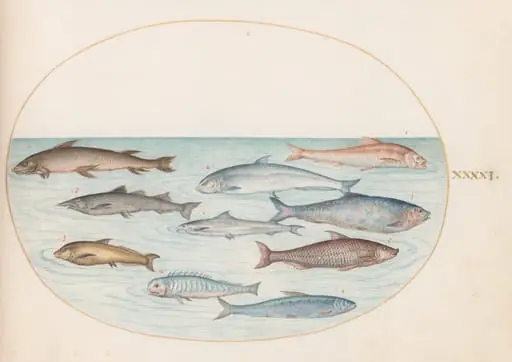 Plate 41: Whitefish(?) and Other Fish
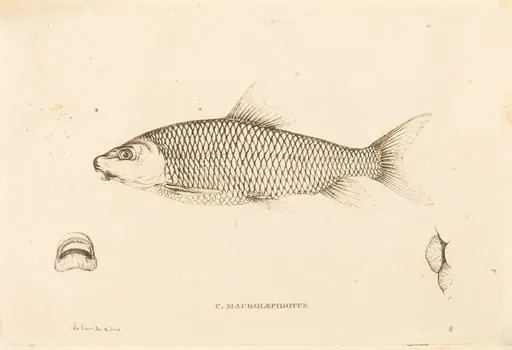 C. Macrolepidotus
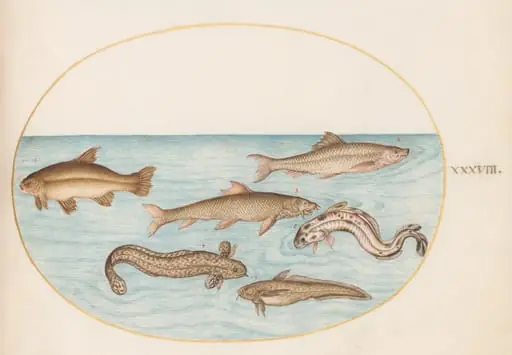 Plate 38: Burbot, Rockling, and Other Fish
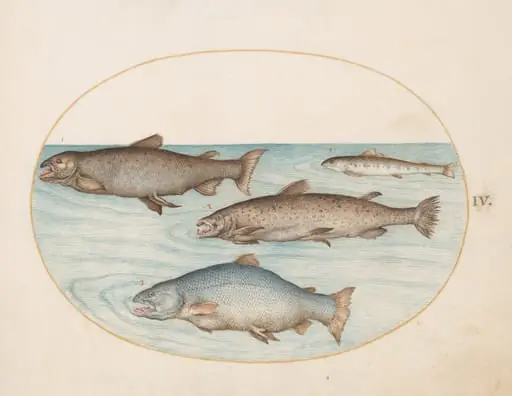 Plate 4: Four Salmon
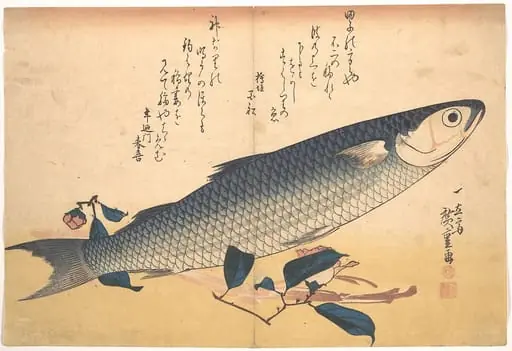 魚づくし ぼらにうど|Bora Fish with Camellia, from the series Uozukushi (Every Variety of Fish)
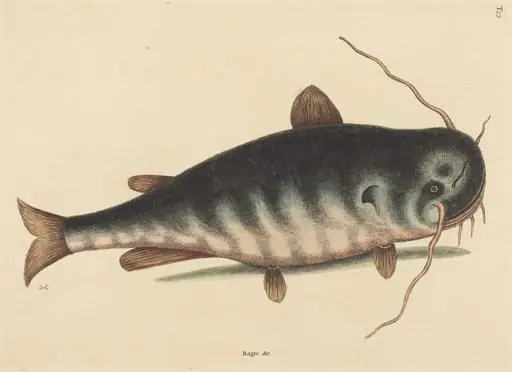 The Cat Fish (Silurus catus)
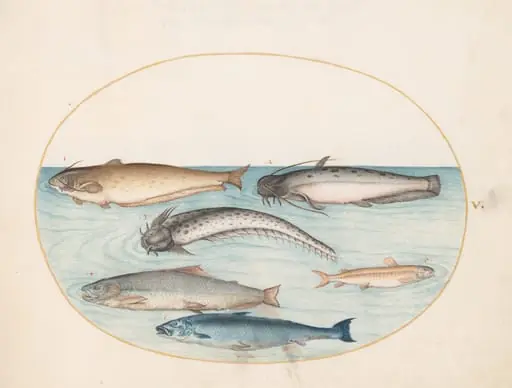 Plate 5: Three Catfish, a Salmon, and Two Other Fish