Artwork
Lebia (L'Ellipsoidea)
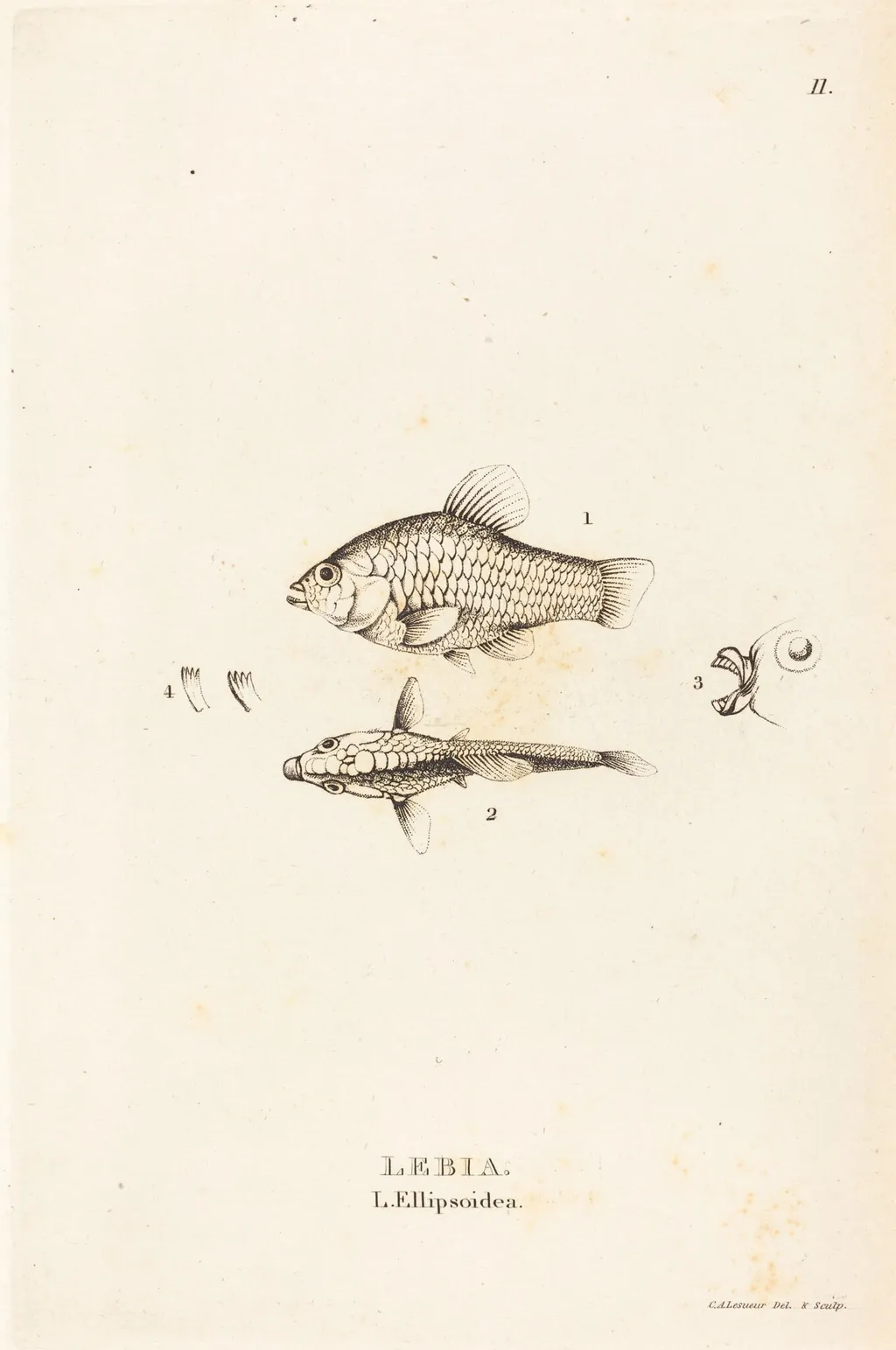
Lebia (L'Ellipsoidea) is an ink print by the Romanticist artist Charles Alexandre Lesueur. It dates from 1819 and is held in the collection of the National Gallery of Art.
About this work
Overview
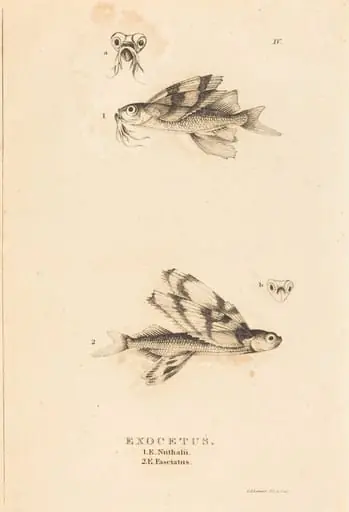
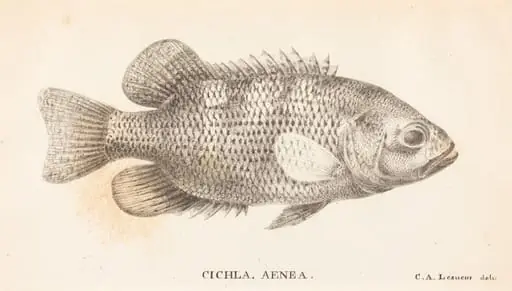
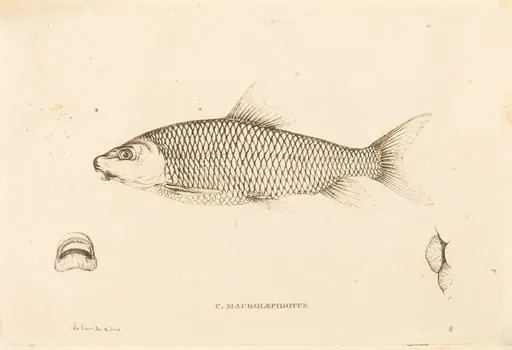
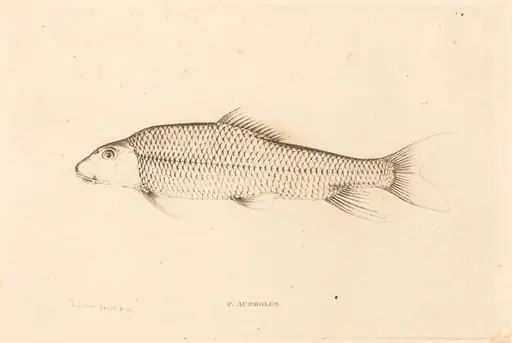
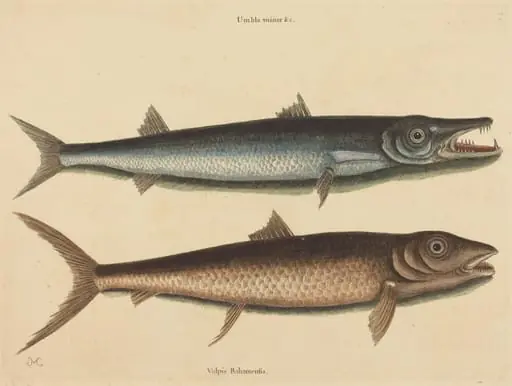
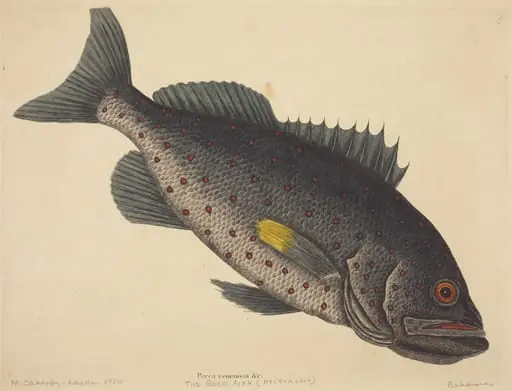
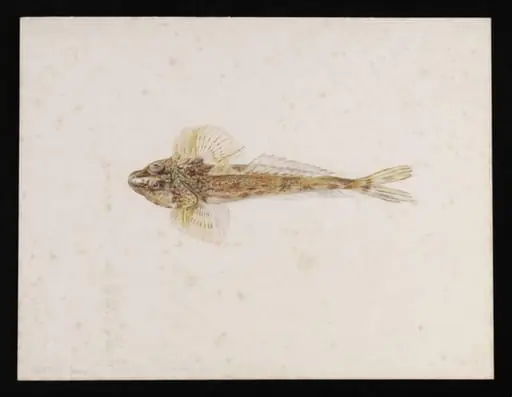
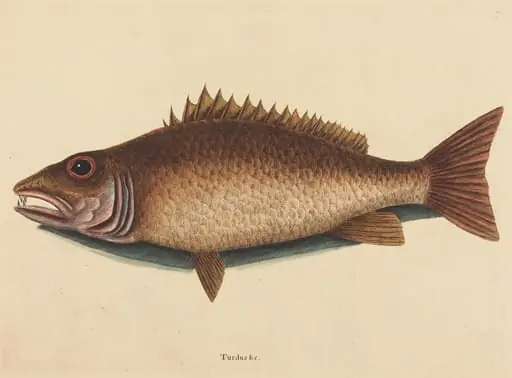
The print depicts four aquatic specimens, rendered with precision typical of naturalist illustration.
Lebia (L'Ellipsoidea) is an 1819 etching by Charles Alexandre Lesueur, part of his scientific documentation of marine life collected during the Baudin expedition. The print depicts four aquatic specimens, rendered with precision typical of naturalist illustration. Two fish, labeled one and two, face opposite directions; a third specimen, labeled three, resembles a shrimp; a fourth, smaller form is faintly sketched and annotated. The work reflects the era’s empirical approach to biological recording.
Subject & Meaning
The subjects are marine organisms identified by number, suggesting a taxonomic purpose rather than aesthetic intent. The fish and crustacean are rendered without context—no water, no background—emphasizing form and structure over environment. This clinical presentation aligns with early 19th-century scientific priorities: classification, comparison, and accurate representation of anatomical detail for scholarly use.
Technique & Style
Lesueur employed fine-line etching to capture intricate textures, using controlled ink buildup to suggest scale patterns and surface variation. The lines are deliberate and thin, avoiding flourish or ornamentation. Shading is achieved through cross-hatching and stippling, enhancing three-dimensionality without romanticism. The style is methodical, mirroring the precision expected in natural history illustration of the period.
History & Provenance
Created during Lesueur’s participation in the French Baudin expedition (1800–1804), the etching stems from specimens collected in Australian and southern ocean waters. The plate was likely produced after the voyage, during his time in Philadelphia, where he continued to illustrate and classify specimens. It was never widely published, remaining within scientific circles as part of his unpublished manuscripts.
Context
In the early 1800s, naturalists relied on detailed drawings to document species before photography. Lesueur’s work was part of a broader effort to catalog biodiversity from newly explored regions. His illustrations served as primary references for taxonomists, bridging field observation and academic study. The absence of color and contextual detail reflects the limitations and priorities of scientific publishing at the time.
Legacy
Though never widely disseminated, Lesueur’s etchings contributed to the foundational records of marine biology. His meticulous technique influenced later naturalist illustrators and remains valued for its accuracy. Today, these works are studied as historical documents of scientific practice, offering insight into how knowledge of marine life was constructed before modern imaging technologies.
Artist & collection