Artwork
Flying fish
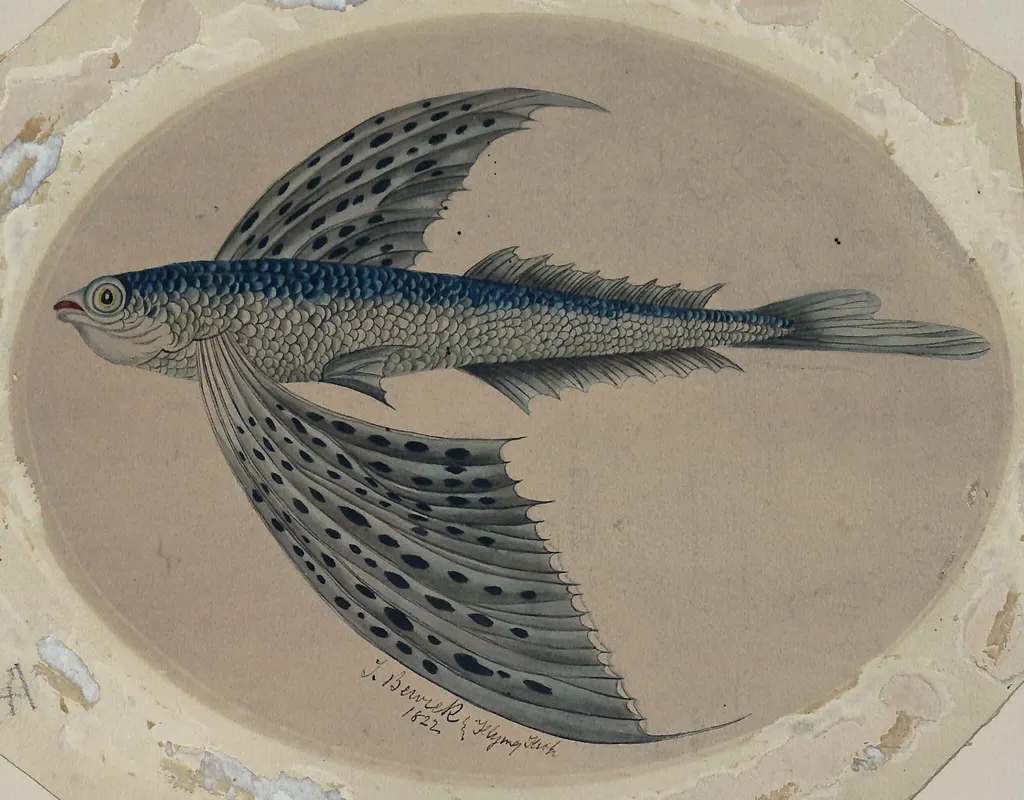
Flying fish is a watercolor work on paper by Bewick. It dates from 1750 and is held in the collection of the Victoria and Albert Museum.
About this work
Overview
Created around 1750, this watercolor depicts a flying fish in mid-glide, rendered with careful attention to anatomical detail. The work is attributed to Thomas Bewick, known primarily for wood engraving, and is held in the Victoria and Albert Museum’s collection. Its simple composition isolates the subject against an unadorned background, emphasizing observation over decoration.
Subject & Meaning
The fish’s physical traits—spotted skin, large eyes, elongated snout—are rendered with precision, indicating close study of live or freshly caught specimens.
The painting captures a flying fish in motion, its body angled left with fins fully extended, suggesting a momentary leap above the water’s surface. The depiction reflects an interest in natural history, likely intended as a scientific record rather than a symbolic image. The fish’s physical traits—spotted skin, large eyes, elongated snout—are rendered with precision, indicating close study of live or freshly caught specimens.
Technique & Style
Bewick employed transparent watercolor washes to model the fish’s form, using cool blues for the dorsal surface and pale tones for the underside to suggest light and volume. Fine brushwork defines the texture of scales and the delicate edges of fins. The absence of a background or contextual elements directs focus entirely to the creature, aligning with the observational rigor of 18th-century naturalist illustration.
History & Provenance
The painting entered the Victoria and Albert Museum’s collection as part of a broader acquisition of natural history artworks. While Bewick’s engravings are well-documented, this watercolor remains one of few surviving examples of his direct study of marine life. Its provenance traces to private collections in northern England, possibly linked to Bewick’s early scientific circles in Newcastle.
Context
In the mid-18th century, naturalists increasingly turned to visual documentation to classify species, especially as global exploration expanded knowledge of marine life. Bewick’s work aligns with this trend, though he is better known for terrestrial subjects. This painting reflects a moment when art and science converged in the study of nature, before the dominance of photography or printed illustrations.
Legacy
Though not widely exhibited, the watercolor contributes to understanding Bewick’s range beyond engraving. It stands as a quiet example of pre-industrial natural history art, valued for its accuracy and restraint. Its preservation underscores the importance of hand-drawn studies in an era before standardized scientific imaging, offering insight into how species were visually recorded before modern taxonomy.
Artist & collection

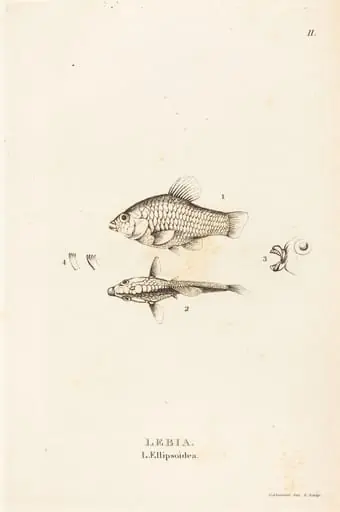 Lebia (L'Ellipsoidea)
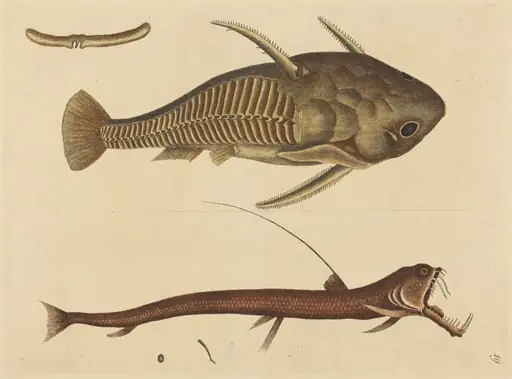 The Viper-mouth (Silurus cataphractus)
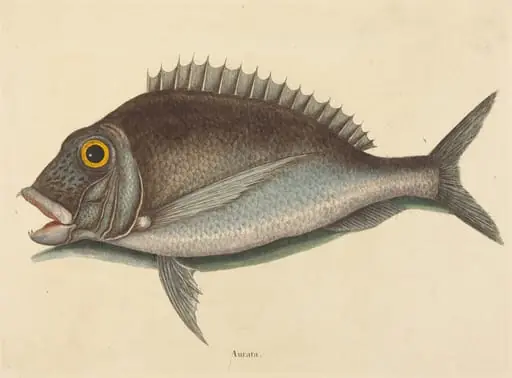 The Porgy (Sparus chrysops)
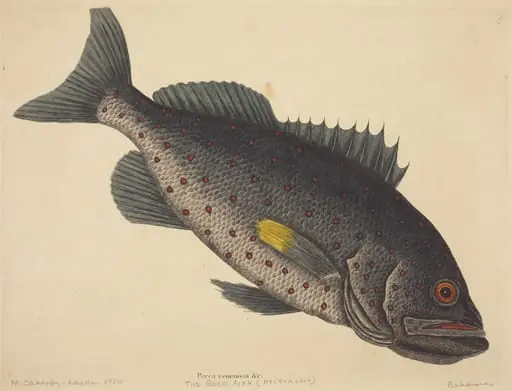 The Rock Fish (Perca venenosa)
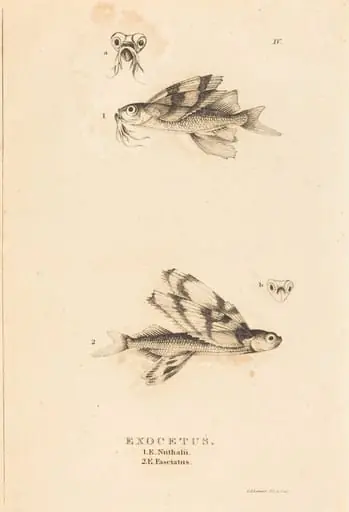 Exocetus
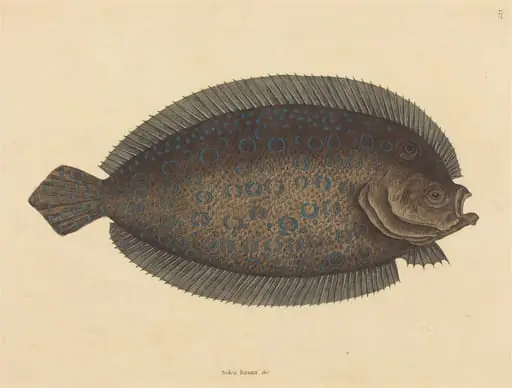 The Sole (Pleuronectes lunatus)
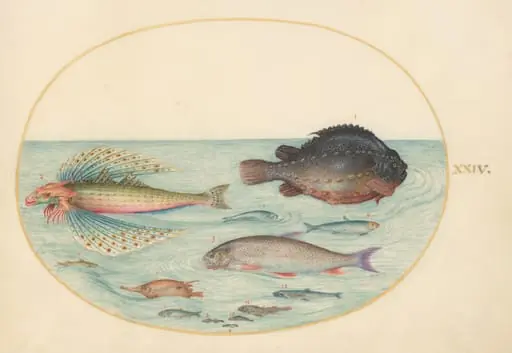 Plate 24: Flying Swallow Gurnard, Male Lumpsucker, Longspine Snipefish, and Other Fish
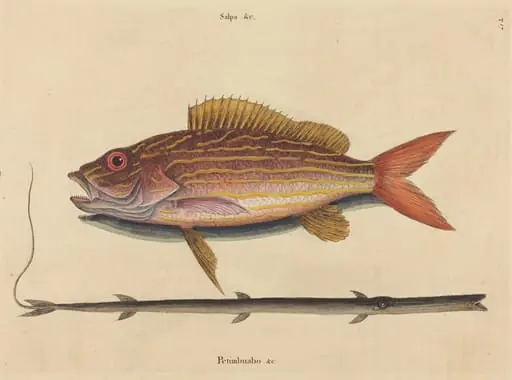 The Lane-snapper (Sparus synagris)
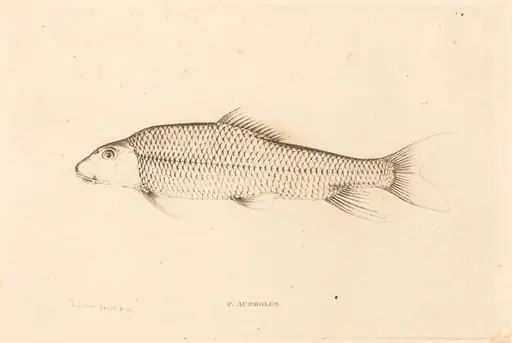 C. Aureolus
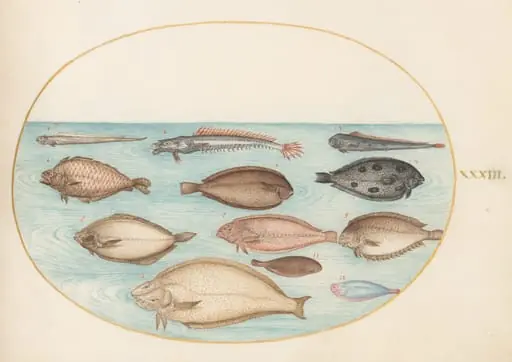 Plate 33: Sole and Other Flatfish with Bandfish(?)
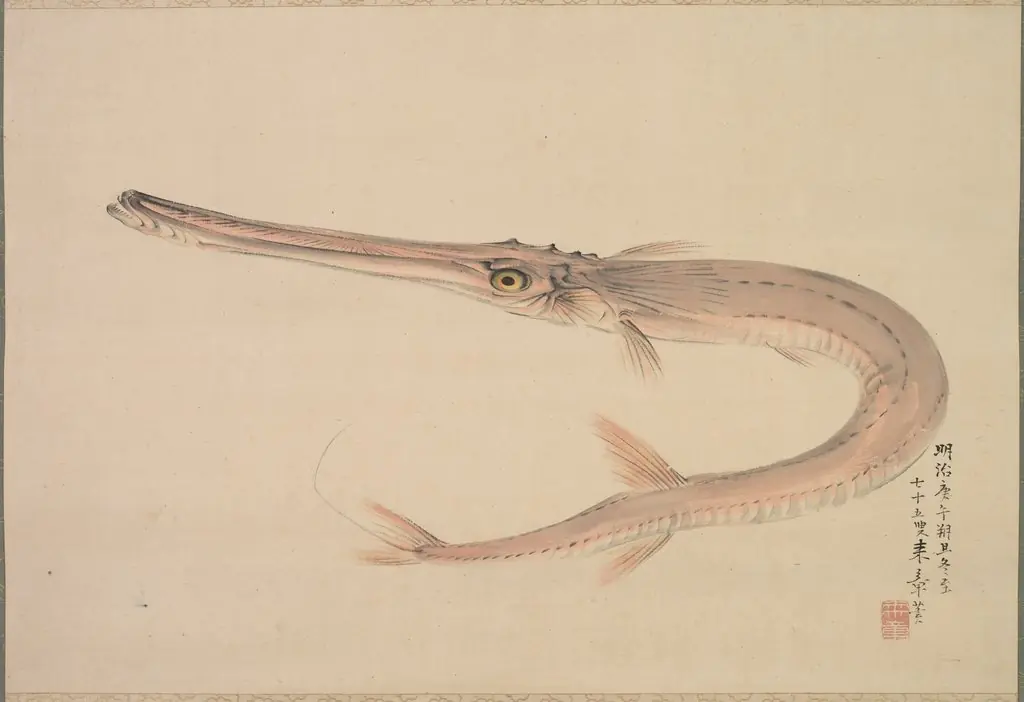 Needlefish (Yagara)
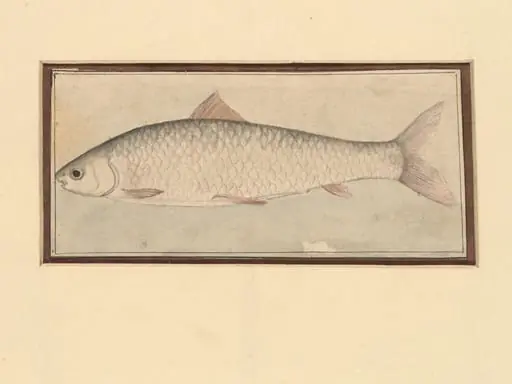 A fish