Artwork
Standing Courtesan
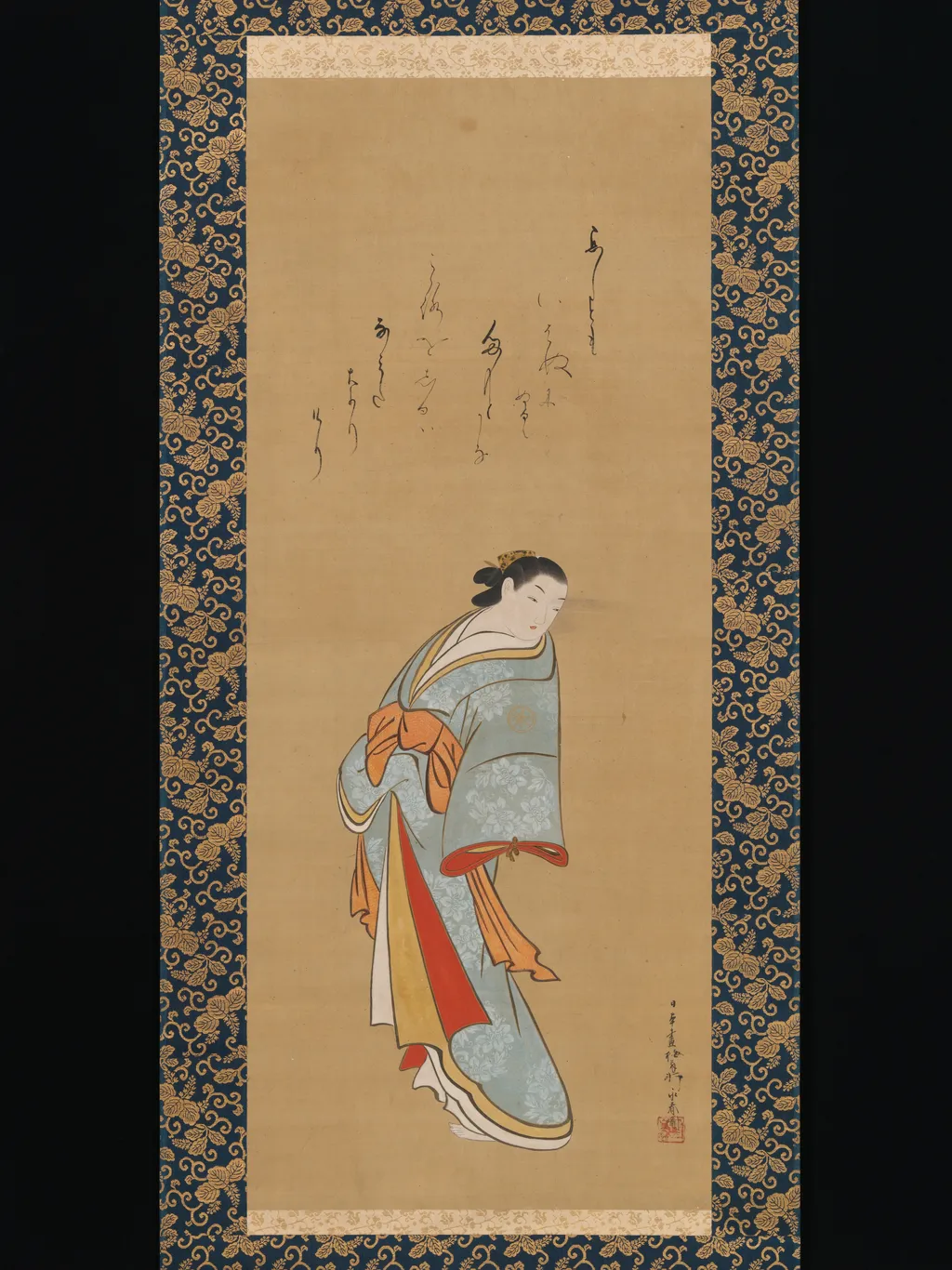
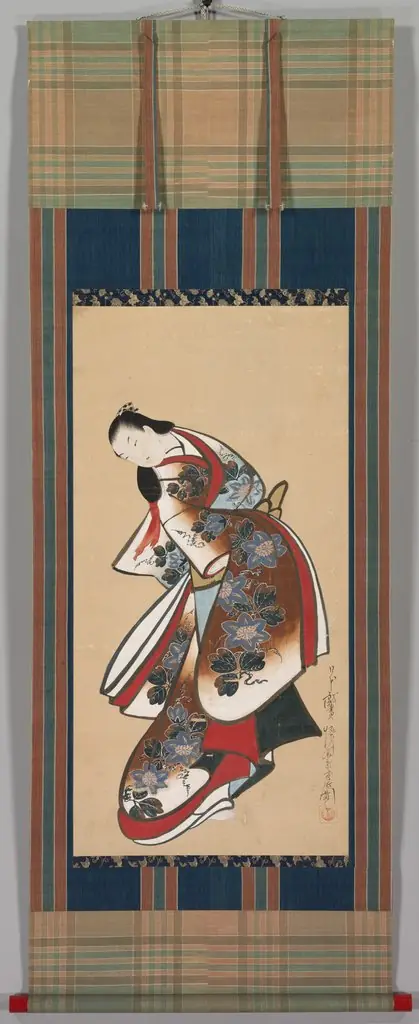
Standing Courtesan is an unspecified painting by Baiōken Eishun. It dates from 1724 and is held in the collection of the Metropolitan Museum of Art.
About this work
Overview
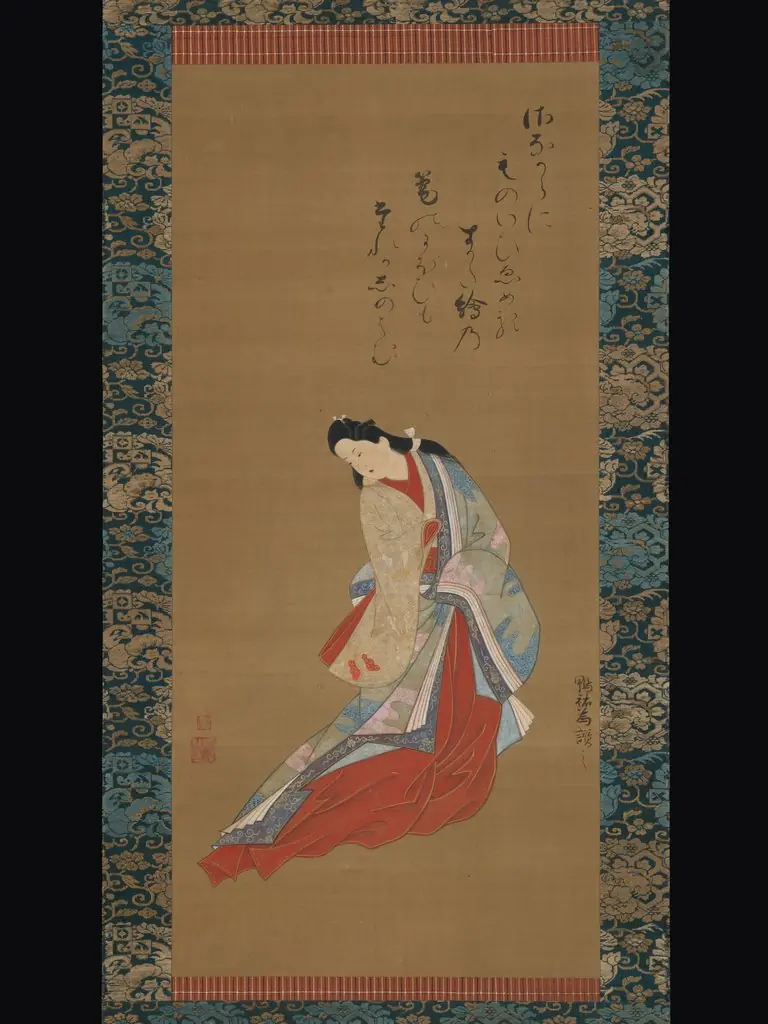
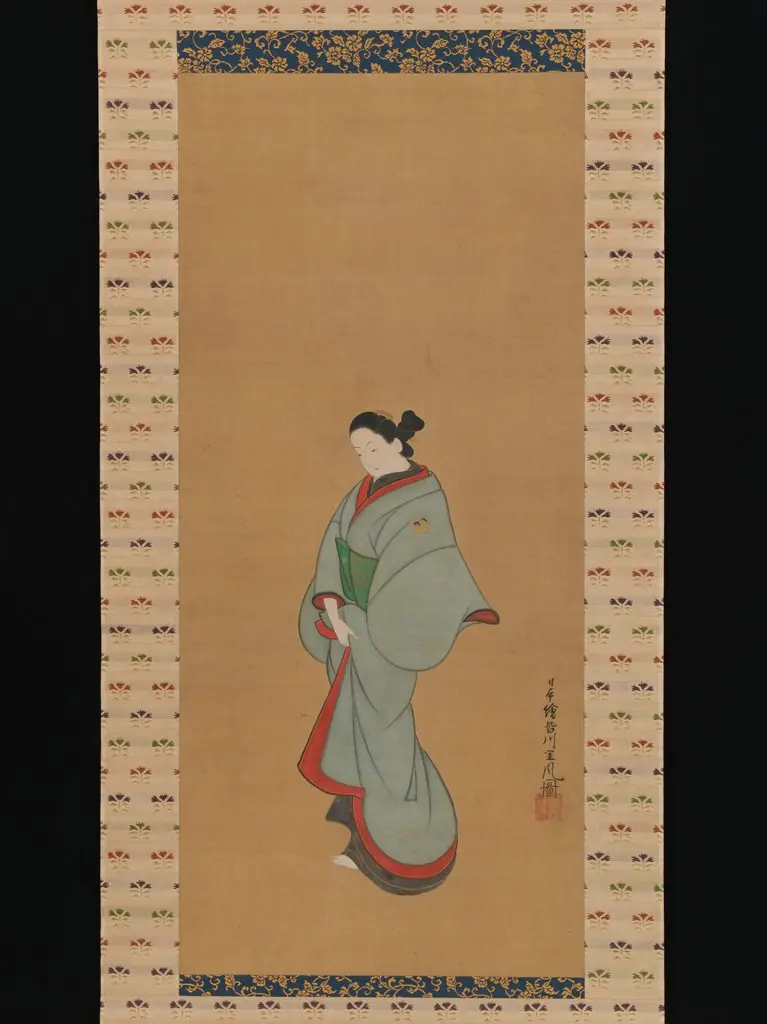
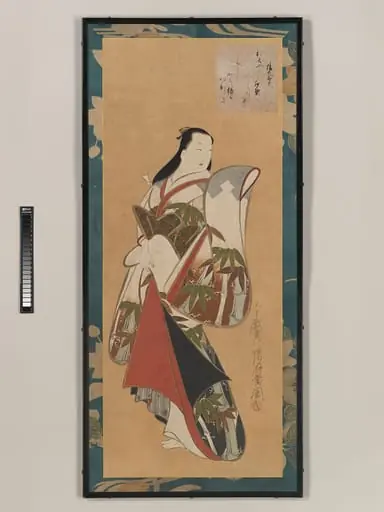
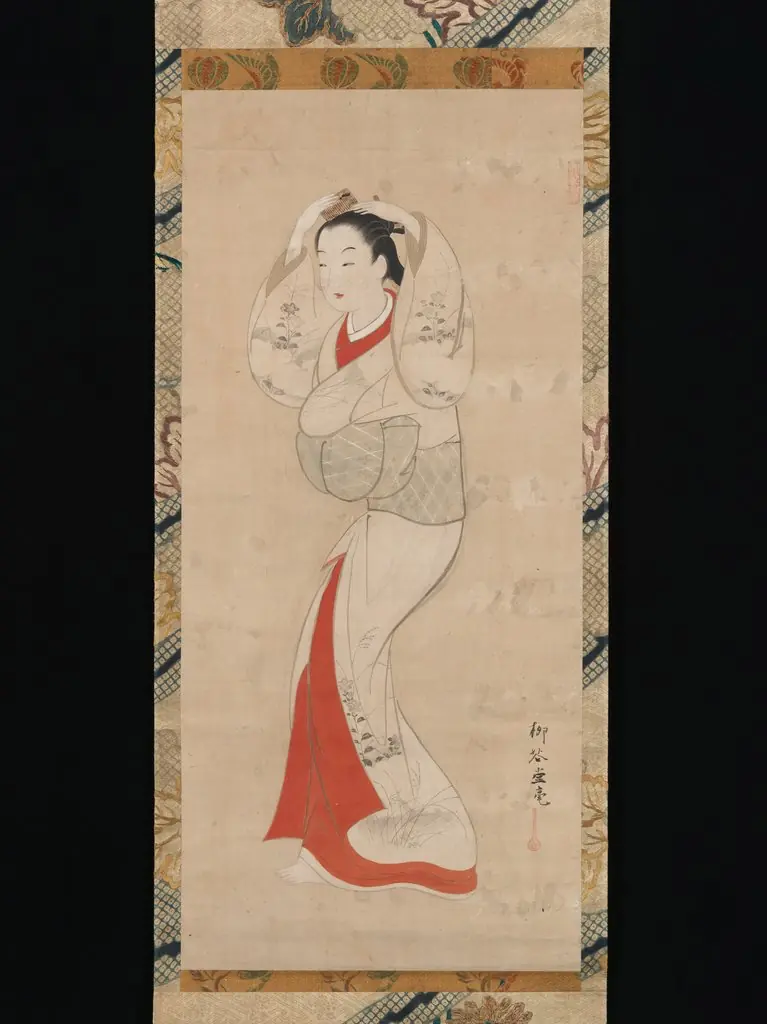
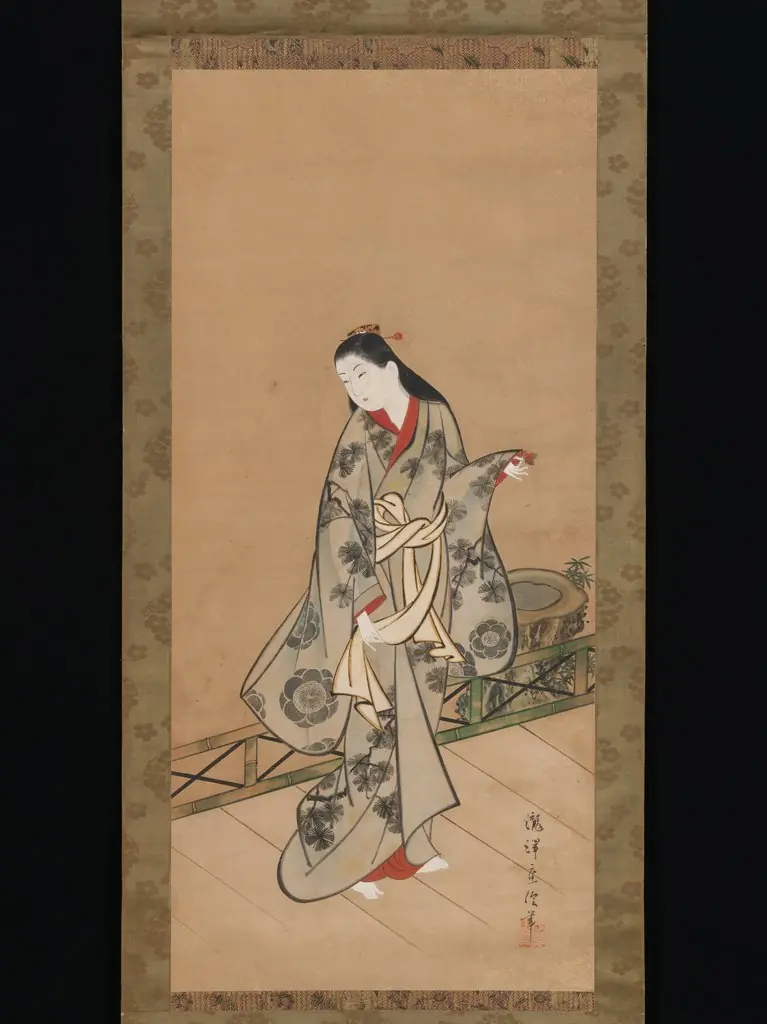
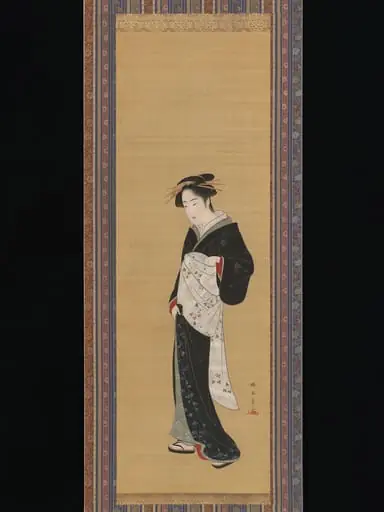
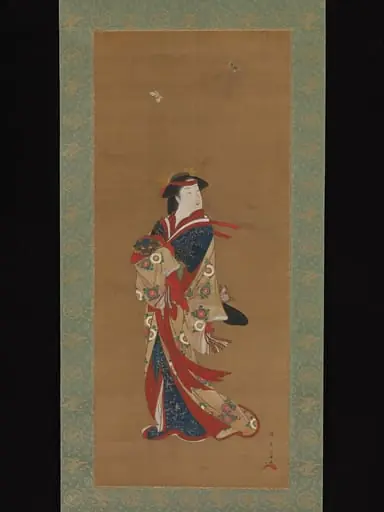
Created in 1724, *Standing Courtesan* is an ukiyo‑e painting by Baiōken Eishun, a practitioner of the Kaigetsudō school. Executed as a hanging scroll, the work presents a solitary female figure rendered in the elongated, elegant proportions that define the school’s aesthetic.
Subject & Meaning
The central figure is a woman dressed in a flowing blue kimono with red detailing, standing in profile and holding a scroll. The presence of the scroll suggests an association with literary or poetic pursuits, a common attribute ascribed to courtesans of the period, emphasizing refinement and cultural literacy.
Technique & Style
Eishun employed the full‑color painting technique typical of Kaigetsudō works, using delicate brushwork to delineate the garment’s folds and the figure’s poised posture. The background is minimal, bordered by a dark edge adorned with gold swirls, while the light tan frame frames the composition without distracting from the subject.
History & Provenance
Baiōken Eishun, also known by the name Hasegawa Eishun, was active in the early to mid‑18th century, producing both painted scrolls and woodblock illustrations. *Standing Courtesan* reflects his activity during this period, though specific ownership records prior to its inclusion in museum collections are not documented.
Context
The painting belongs to a tradition in which ukiyo‑e artists frequently portrayed courtesans as embodiments of beauty, elegance, and artistic accomplishment. The Kaigetsudō school, centered in Edo, specialized in such depictions, focusing on the graceful line and stylized form rather than narrative detail.
Legacy
Works like *Standing Courtesan* illustrate the Kaigetsudō school’s influence on later ukiyo‑e representations of feminine beauty and cultural sophistication, providing a visual reference for the interplay between visual art and the literary culture of Edo‑period Japan.
Artist & collection
Artist
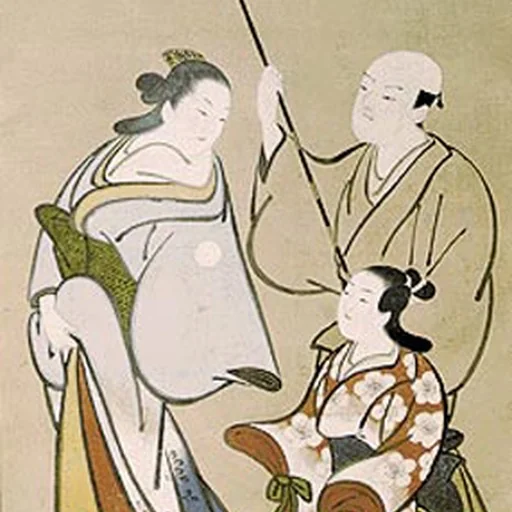
Baiōken Eishun (Japanese: 梅翁軒永春; active c. 1710–1755) was a Japanese painter and print artist of the Kaigetsudō school of ukiyo-e art. He is also alternatively known as Hasegawa Eishun 長谷川永春, Baiōken Nagaharu, Takeda…