Artwork
Springtime in Rome
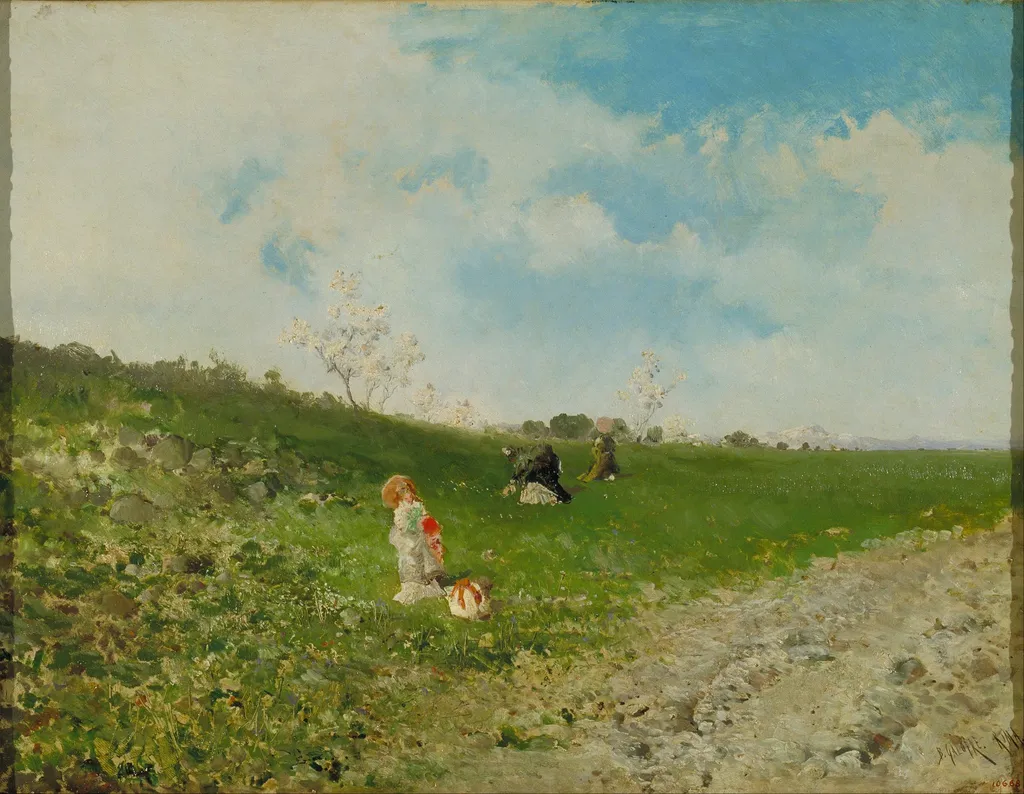
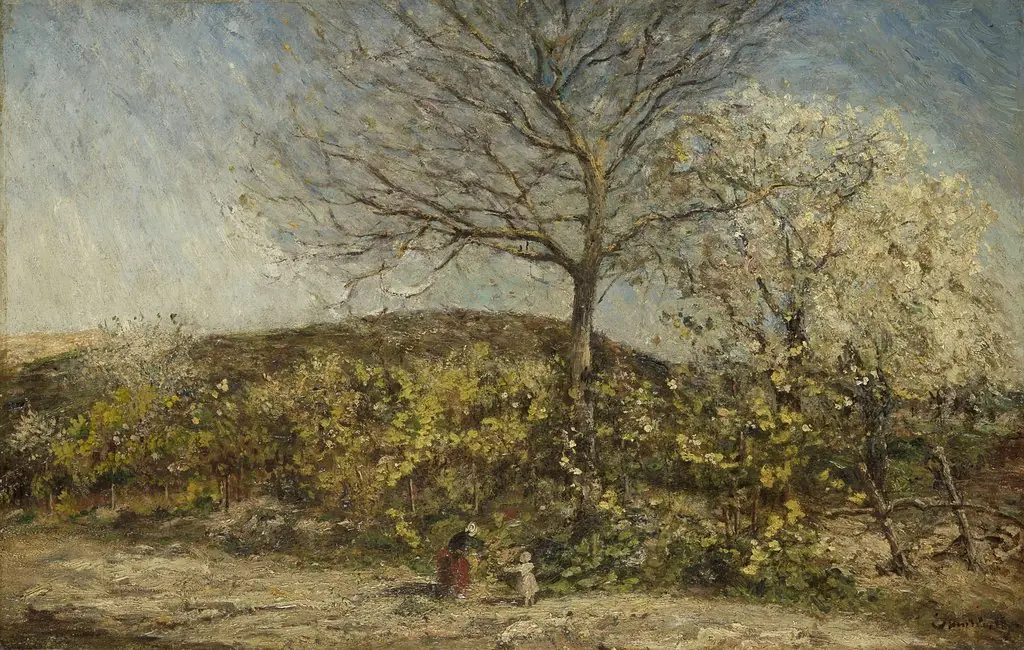
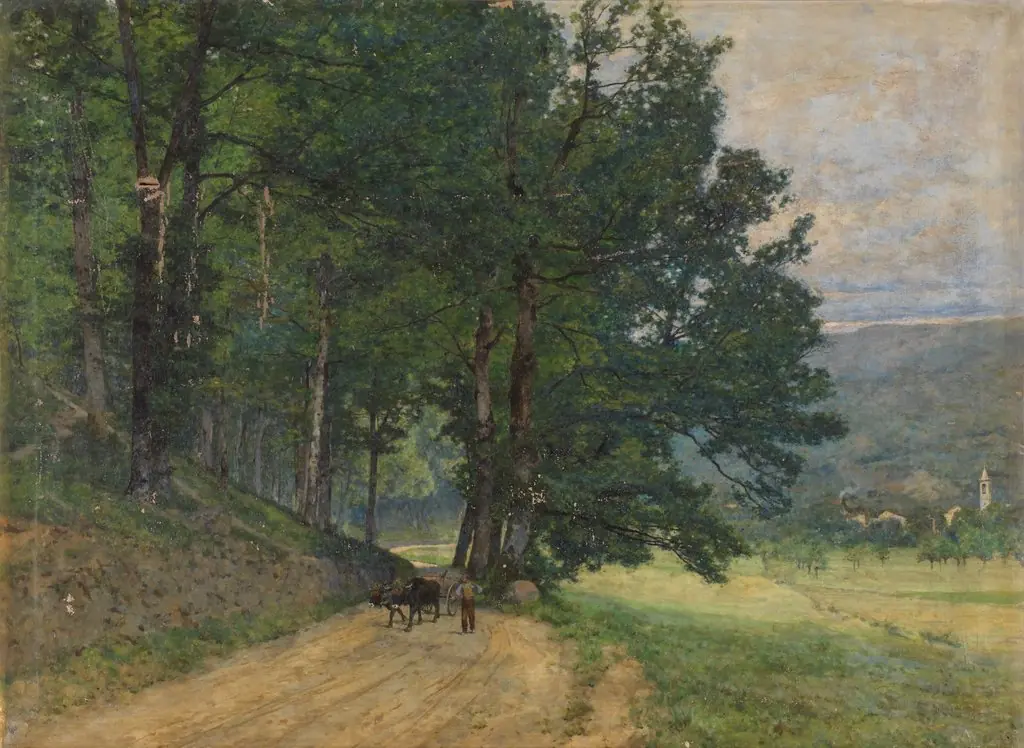
Springtime in Rome is an oil painting by the Impressionist artist Baldomero Galofre Jiménez. It dates from 1890 and is held in the collection of the Museu Nacional d'Art de Catalunya.
About this work
Overview
Painted in 1890 by Baldomero Galofre Jiménez, Springtime in Rome is an oil-on-canvas work depicting a quiet rural landscape near the city.
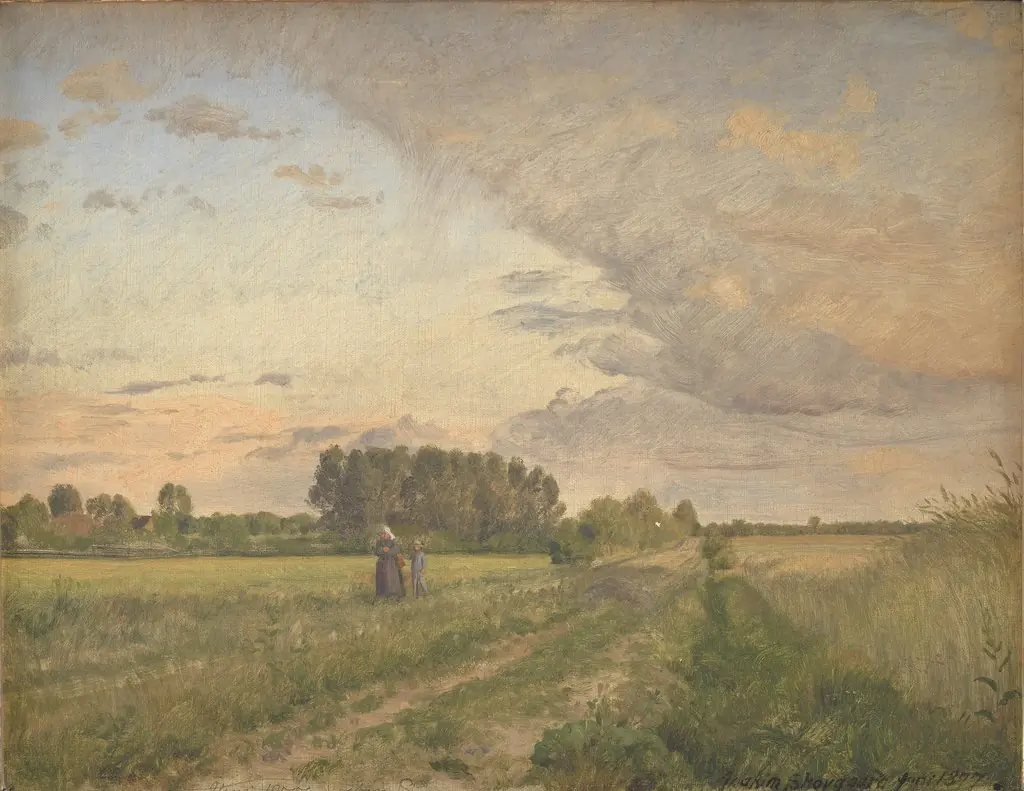
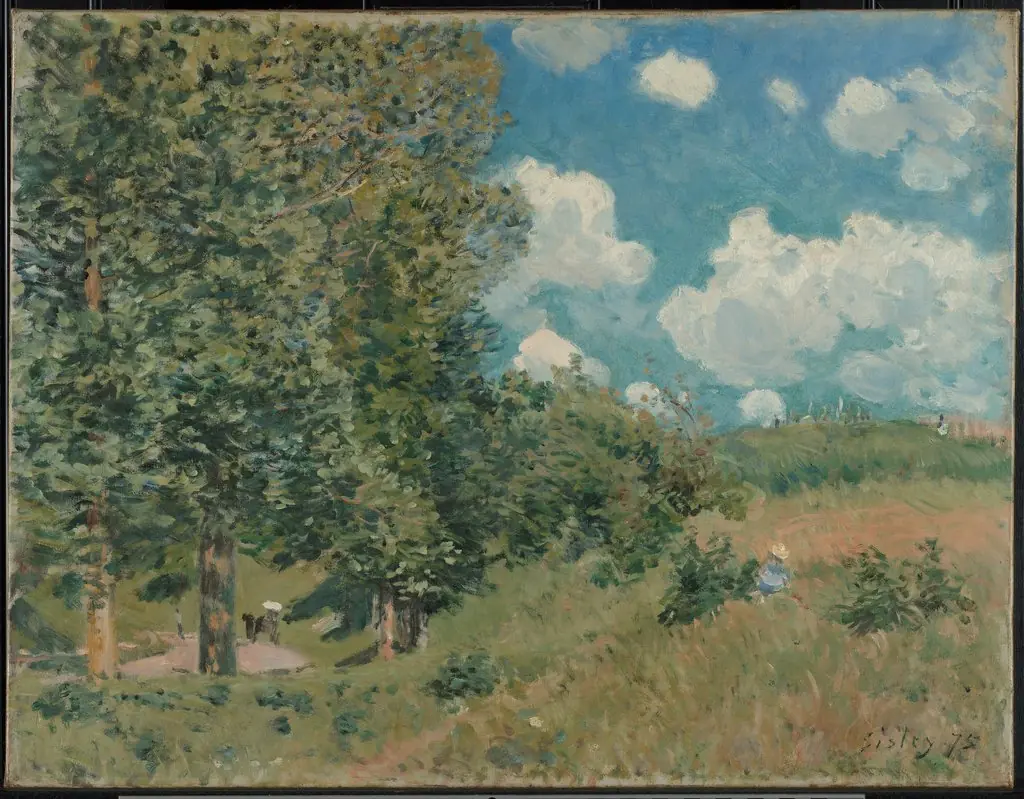
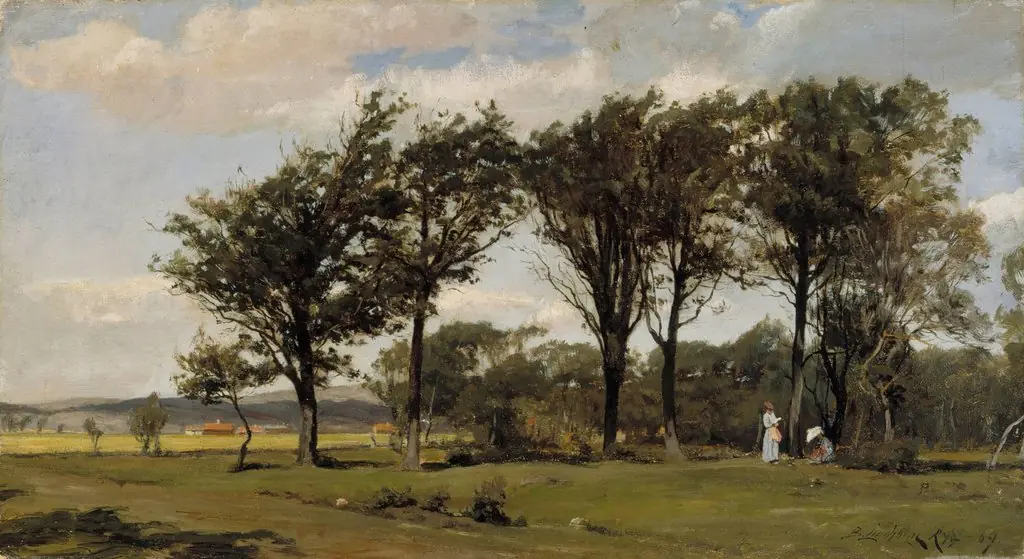
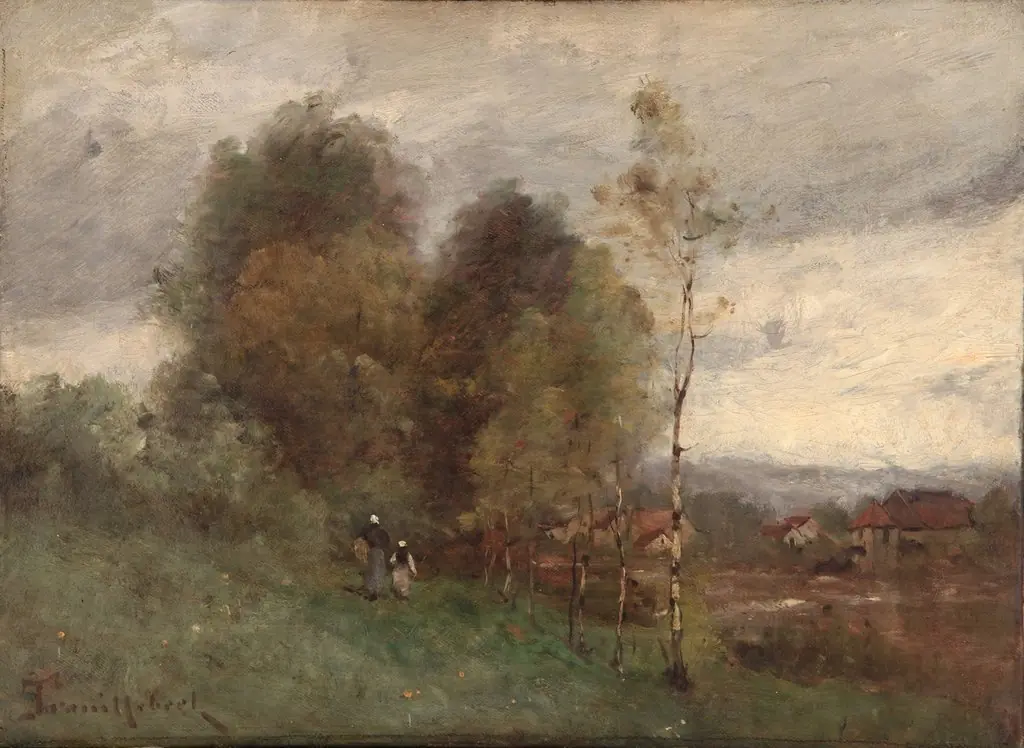
Painted in 1890 by Baldomero Galofre Jiménez, Springtime in Rome is an oil-on-canvas work depicting a quiet rural landscape near the city. It is part of the permanent collection at the Museu Nacional d'Art de Catalunya. The scene captures a moment of calm in nature, with soft atmospheric lighting and a restrained color palette that emphasizes earthy greens, pale blues, and warm browns, evoking a sense of stillness and seasonal renewal.
Subject & Meaning
The painting presents a tranquil Italian countryside, populated by small, indistinct figures scattered across the middle ground. Their presence is subtle, not narrative, suggesting quiet contemplation rather than activity. The focus lies in the environment itself—lush vegetation, rolling terrain, and a clear sky—imbuing the scene with a meditative quality. It reflects a 19th-century preference for nature as a refuge from urban life, without overt symbolism or dramatic tension.
Technique & Style
Galofre applied oil paint with visible, deliberate brushwork, building texture through layered strokes that suggest foliage, rock, and distant hills. The palette is muted yet rich, avoiding bright primaries in favor of harmonious tones. Light falls evenly, creating gentle contrasts rather than sharp chiaroscuro. The technique prioritizes atmospheric cohesion over sharp definition, aligning with plein air traditions while maintaining a composed, studio-finished appearance.
History & Provenance
Completed in 1890, the painting entered the collection of the Museu Nacional d'Art de Catalunya in the early 20th century, likely through acquisition or donation. Its presence in the museum reflects the institution’s interest in Catalan artists who engaged with broader European landscape traditions. While little is documented about its early exhibitions, its preservation suggests it was regarded as a representative example of Galofre’s mature style.
Context
Galofre painted during a period when Spanish and Catalan artists increasingly traveled to Italy, drawn by its light and classical landscapes. Springtime in Rome fits within a wider trend of naturalistic, non-dramatic scenery favored by regional academies. Unlike grand historical or religious subjects, this work embraces everyday beauty, aligning with late 19th-century shifts toward intimate, observational art rooted in personal experience rather than idealization.
Legacy
Though not widely exhibited beyond Catalan collections, the painting remains a quiet example of Galofre’s contribution to Spanish landscape painting. It illustrates how artists outside major centers like Madrid or Barcelona engaged with international aesthetics while maintaining a local sensibility. Its endurance in the museum’s holdings underscores its value as a representative work of its time, rather than as an outlier or innovation.
Own this work as a print
Artist & collection