Artwork
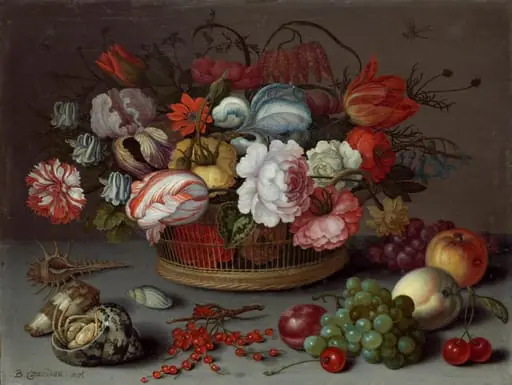
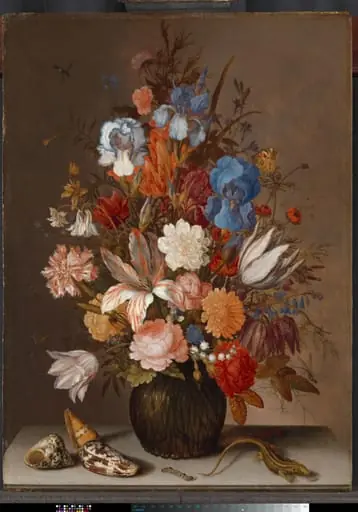
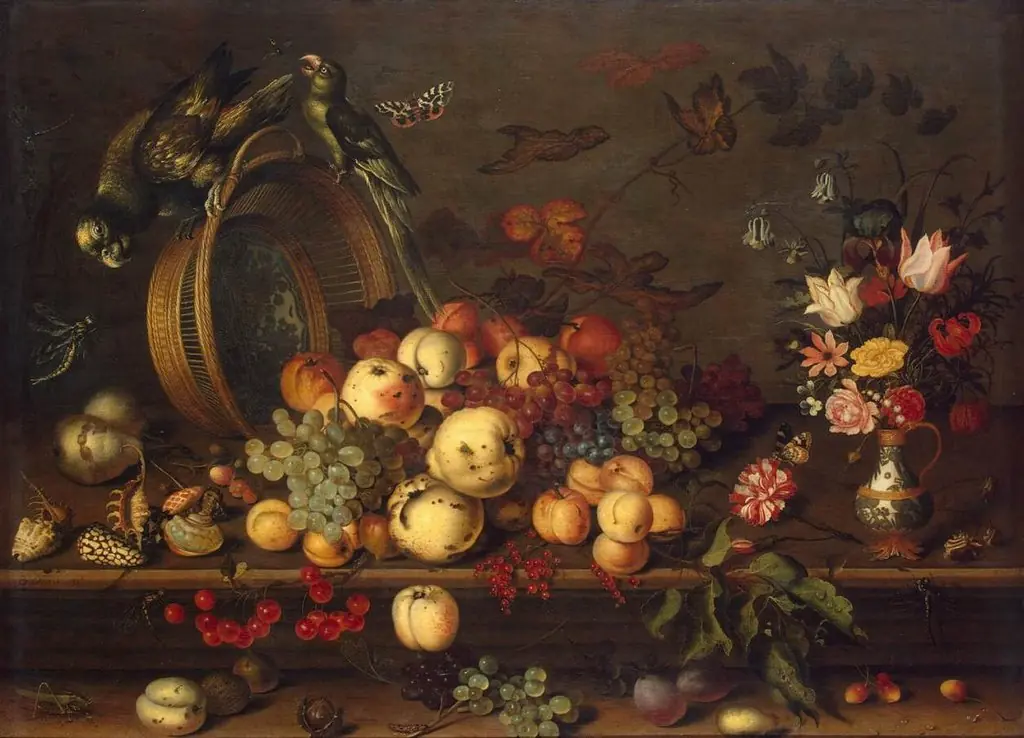
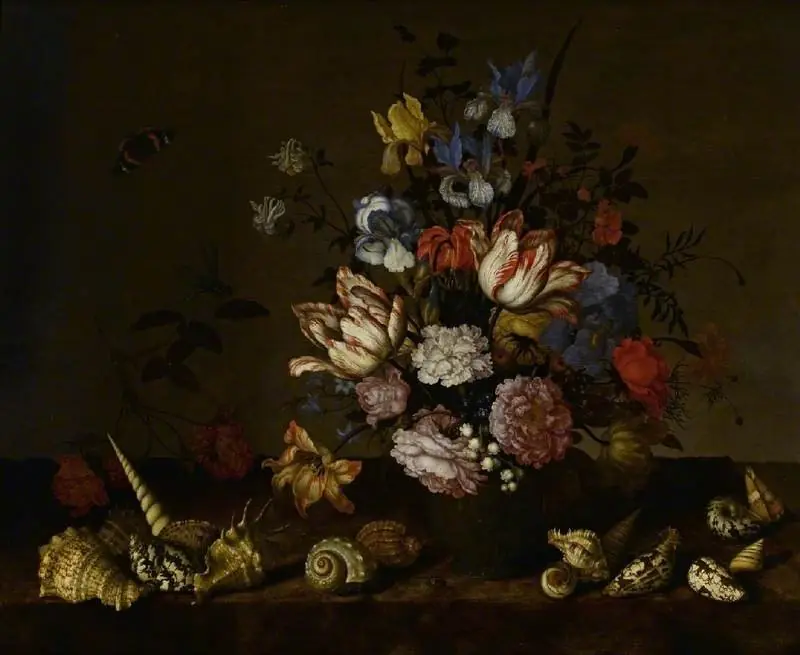
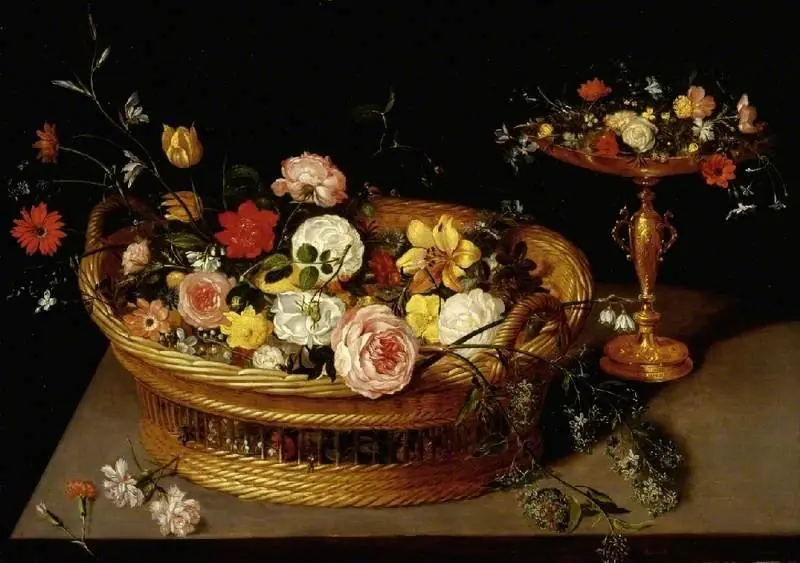
A basket of flowers with shells on a ledge
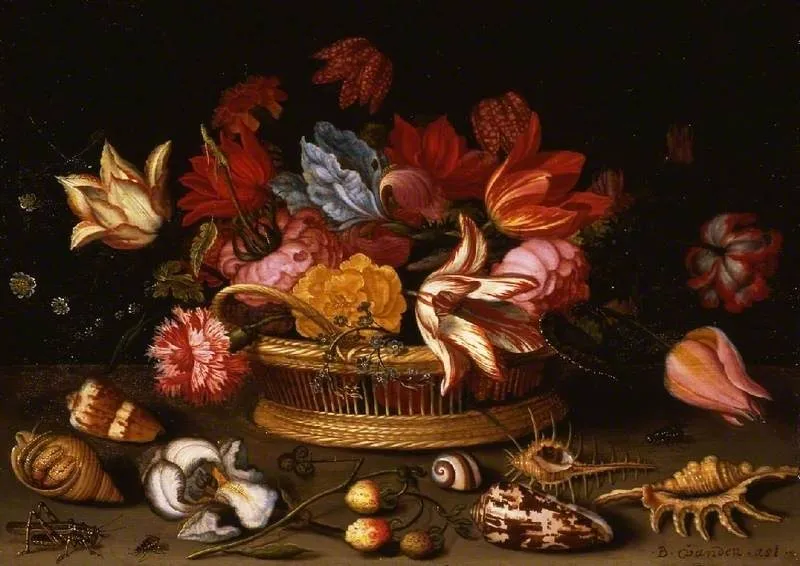
A basket of flowers with shells on a ledge is an oil painting by the Dutch Golden Age artist Balthasar van der Ast. It dates from 1640 and is held in the collection of the Fitzwilliam Museum.
About this work
Overview
Its dark background intensifies the vibrancy of the blooms and shells, emphasizing texture and form over narrative.
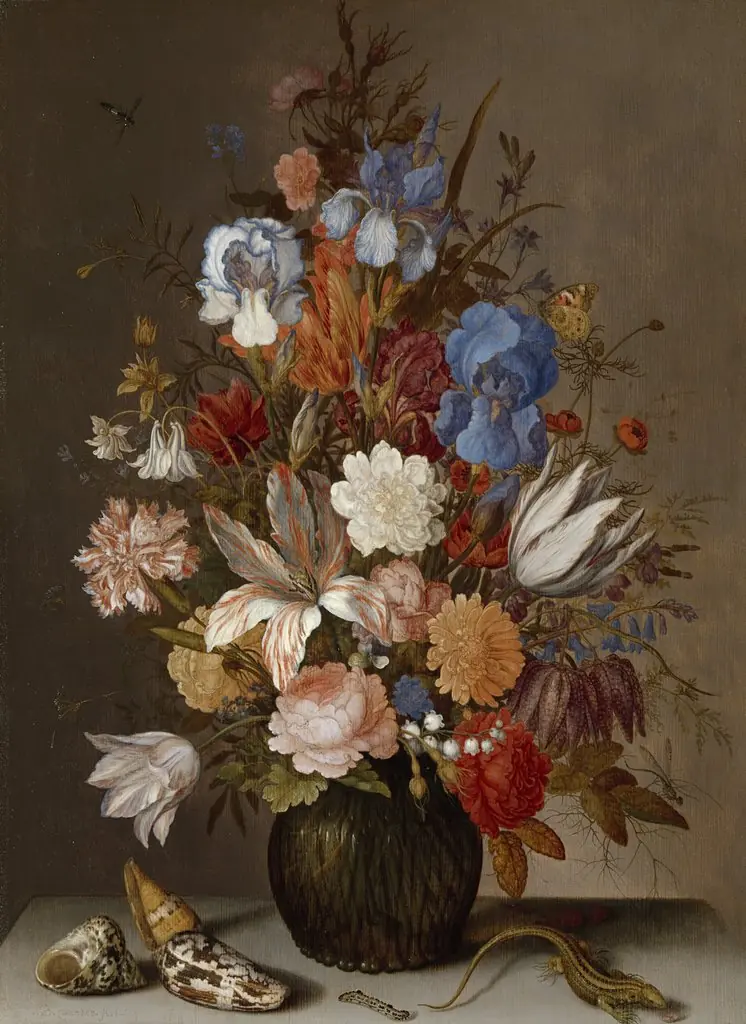
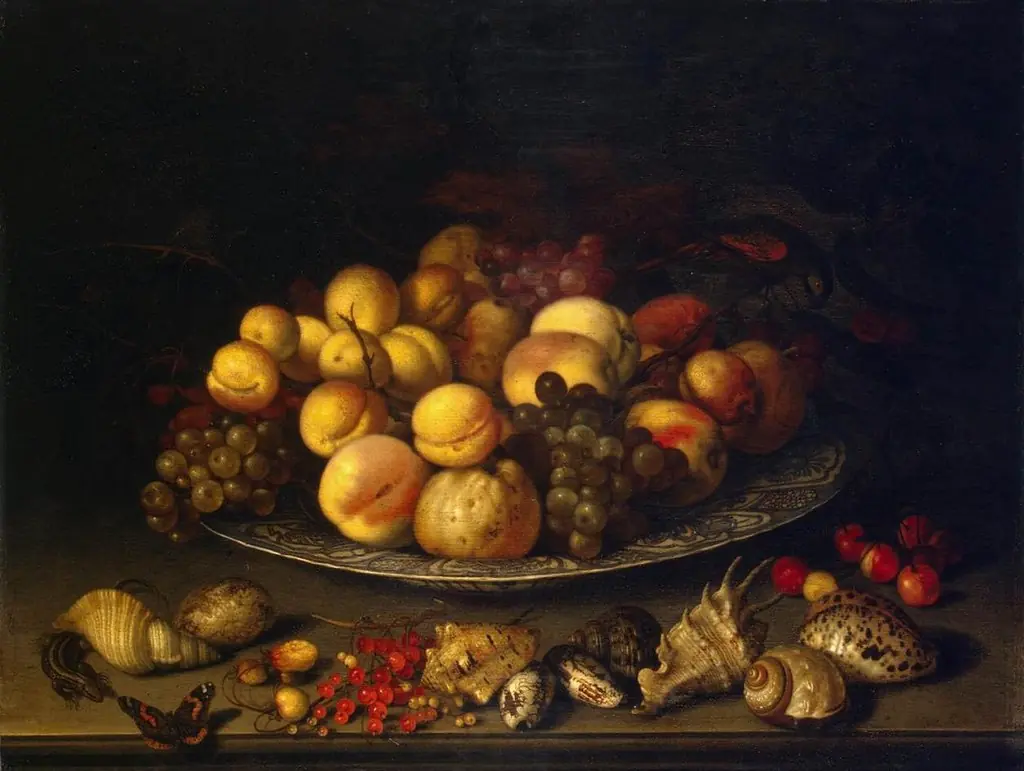
Painted in 1640 by Balthasar van der Ast, this oil-on-canvas still life presents a wicker basket brimming with flowers and a selection of marine shells arranged along a stone ledge. The composition reflects the Dutch Golden Age’s fascination with natural specimens, combining botanical and molluscan elements in a quiet, deliberate arrangement. Its dark background intensifies the vibrancy of the blooms and shells, emphasizing texture and form over narrative.
Subject & Meaning
The painting gathers seasonal flowers—predominantly red, with accents of yellow and pink—and exotic shells, symbols of both local cultivation and global trade. While not overtly allegorical, the juxtaposition of fleeting blooms and enduring shells suggests contemplation on transience and preservation. The inclusion of these objects reflects a cultural interest in natural history and the collecting habits of the period, turning domestic display into a quiet meditation on nature’s diversity.
Technique & Style
Van der Ast employed fine brushwork to render the delicate petals, wicker weave, and glossy shell surfaces with precision. The lighting is subtle and directional, modeling each element without dramatic contrast. His attention to surface variation—velvety petals, brittle shells, rough basket fibers—demonstrates a methodical approach to material realism. The composition is tightly controlled, with no extraneous elements, focusing the viewer’s attention on the interplay of color and texture.
History & Provenance
Created during van der Ast’s mature period in Delft, the painting was likely made for a private collector interested in natural curiosities. It entered the Fitzwilliam Museum’s collection in the 19th century, having passed through several private hands since its creation. Its survival in good condition reflects its enduring appeal among collectors of Dutch still life, though it was never widely exhibited until modern scholarly interest in genre painting revived attention to such works.
Context
In mid-17th century Holland, still lifes featuring flowers and shells were popular among urban elites who valued both aesthetic refinement and scientific curiosity. The Dutch East India Company’s trade networks brought exotic shells to European markets, making them coveted objects. Artists like van der Ast responded to this trend, blending horticultural knowledge with artistic skill to create works that appealed to both connoisseurs and naturalists.
Legacy
Van der Ast helped define the Dutch still life tradition by elevating shell painting to a refined subgenre. His careful arrangements influenced later artists who sought to capture nature’s detail with quiet dignity. Though less celebrated than contemporaries like Rembrandt, his work remains a key reference for understanding how everyday objects were transformed into objects of contemplation, bridging art and natural philosophy in early modern Europe.
Artist & collection

Artist
Balthasar van der Ast (Middelburg, 1593/94 – Delft, 7 March 1657) was a Dutch Golden Age painter who specialized in still lifes of flowers and fruit, as well as painting a number of remarkable shell still lifes; he is…