Artwork
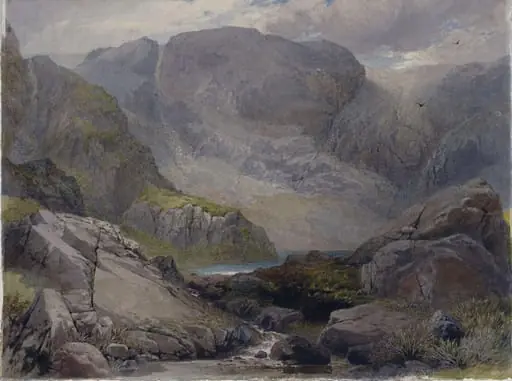
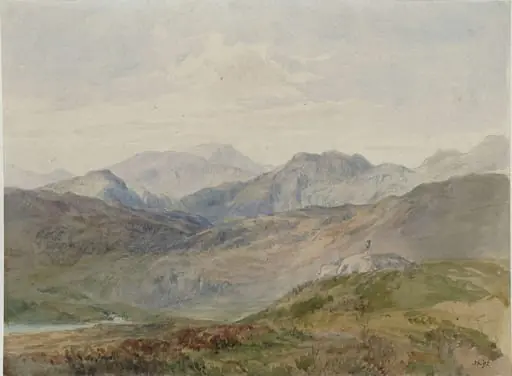
View up to Bow Fell from Eskdale
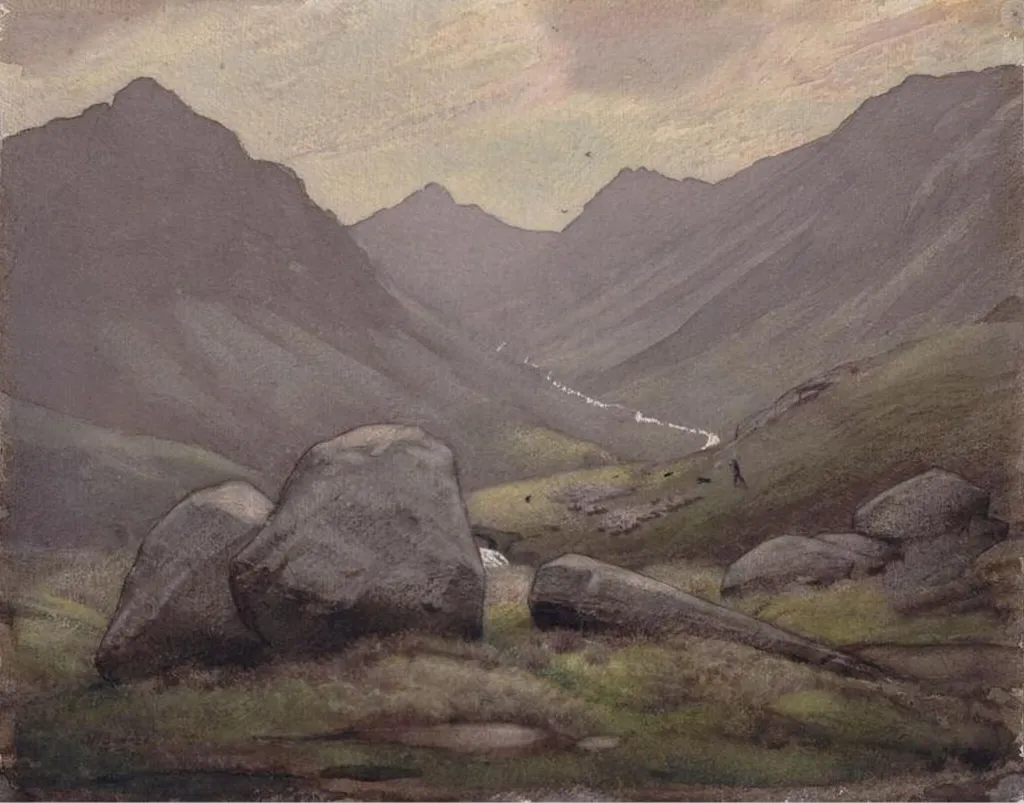
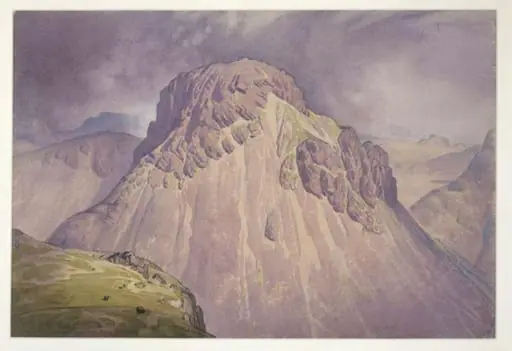
View up to Bow Fell from Eskdale is a watercolor work on paper by Delmar Harmwood Banner. It dates from 1920 and is held in the collection of the Victoria and Albert Museum.
About this work
Overview
Delmar Harmwood Banner created this watercolour in 1920, capturing a perspective from Eskdale looking upward toward Bow Fell in the Lake District.
Delmar Harmwood Banner created this watercolour in 1920, capturing a perspective from Eskdale looking upward toward Bow Fell in the Lake District. The work is signed by the artist and belongs to the Victoria and Albert Museum’s collection. Though catalogued briefly under the incorrect number P.69-1988 in study records, its identity as a distinct piece by Banner has been reaffirmed through archival review.
Subject & Meaning
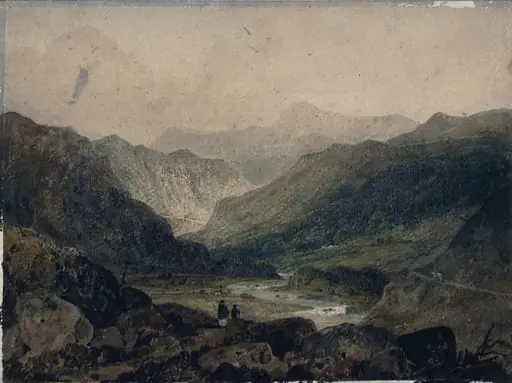
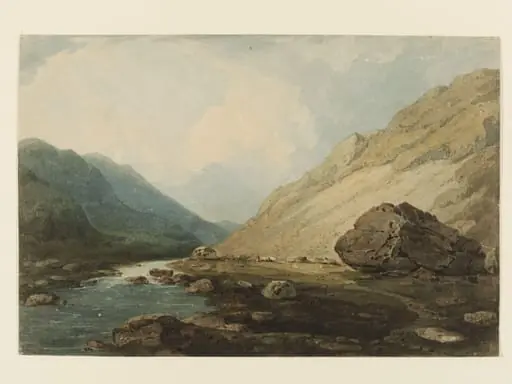
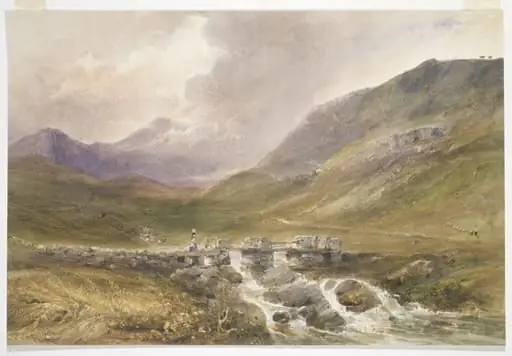
The scene presents a quiet, unidealized stretch of the English uplands, emphasizing the quiet grandeur of the fell’s slope rather than dramatic peaks. The composition invites contemplation of the landscape’s stillness, with no human figures or structures to interrupt the natural order. It reflects an observational approach common among early 20th-century topographical artists seeking to record place with restraint.
Technique & Style
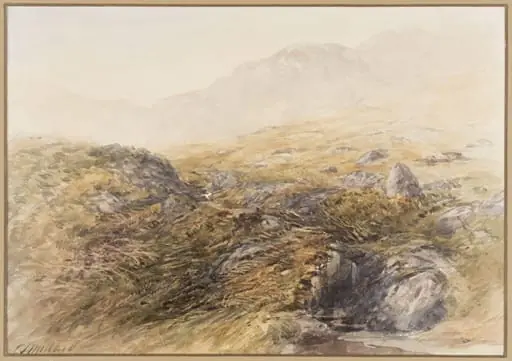
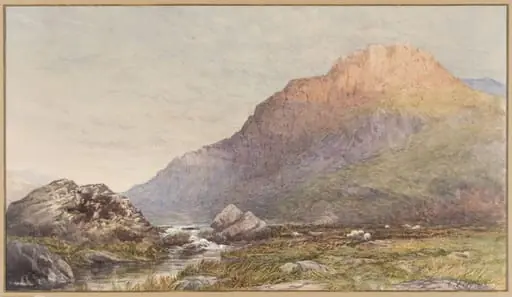
Banner employed transparent watercolour washes to build subtle tonal variations in the mountain forms, using layered greys and browns to suggest rock strata and shadow. The foreground rocks and patches of grass are rendered with loose, visible brushwork, creating texture without detail. The sky, lightly tinted, recedes gently behind the ridge, enhancing the sense of atmospheric depth without artificial contrast.
History & Provenance
The watercolour entered the Victoria and Albert Museum’s collection through documented acquisition, though its initial cataloguing was briefly misattributed a wrong inventory number. This error was later corrected during a systematic review of the museum’s study room records. No earlier ownership history beyond the artist’s hand is publicly recorded, suggesting it remained in private hands until museum acquisition.
Context
Banner worked during a period when watercolour was still widely used for topographical and amateur landscape studies, particularly in northern England. His work aligns with a tradition of regional observation rather than romanticized scenery, reflecting the influence of local artistic circles and the enduring appeal of the Lake District as a subject for quiet, personal study.
Legacy
Though not widely exhibited or reproduced, Banner’s watercolour contributes to a broader archive of early 20th-century British landscape studies. Its preservation in a major museum underscores the value placed on modest, observational works that document place with sincerity. It remains a quiet example of a practice once common among artists who recorded the English countryside with care rather than spectacle.
Artist & collection
Artist
Delmar Banner carried a tiny sketchbook everywhere and sketched the Lake District hills while his tea went cold.