Artwork
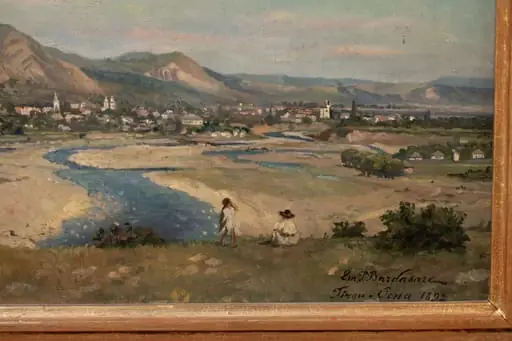
Burdujenii cu Suceava și Munții Bucovinei
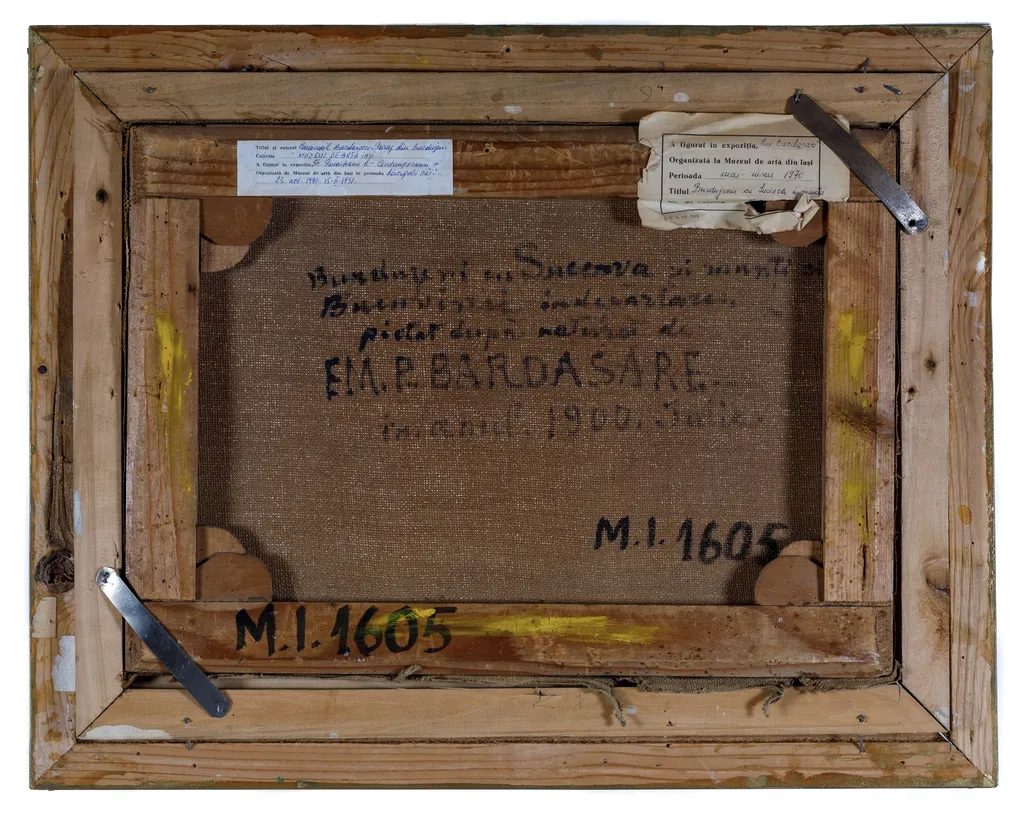
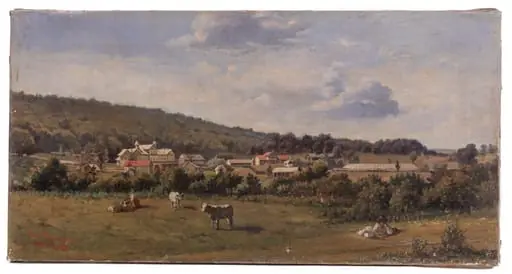
Burdujenii cu Suceava și Munții Bucovinei is an unspecified painting by Bardasare P. Emanoil. It dates from 1892 and is held in the collection of the Moldova National Museum Complex. Created around 1892 by Bardasare P.
About this work
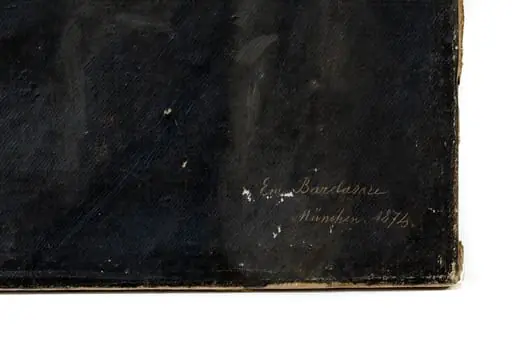
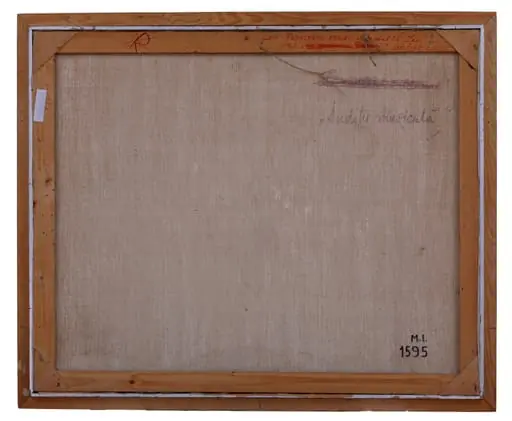
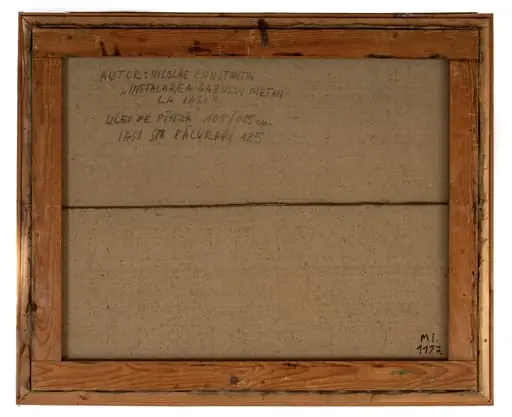
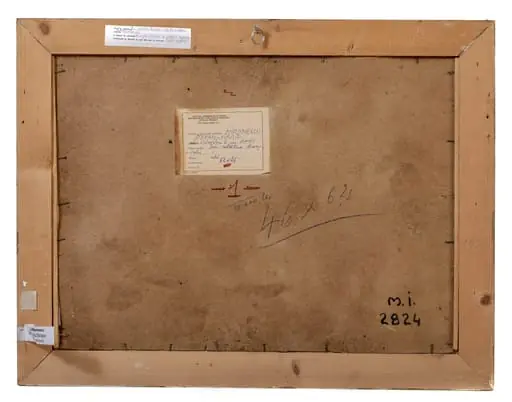
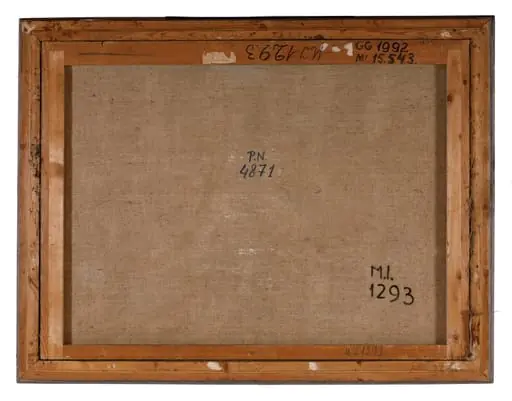
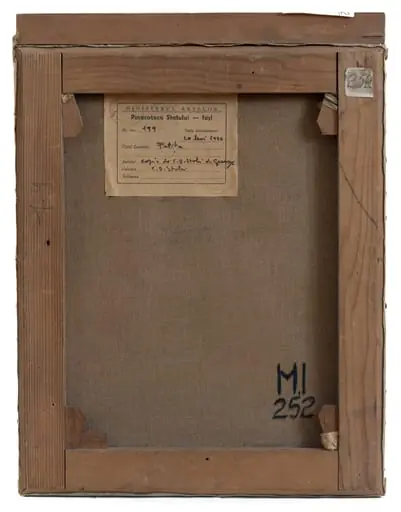
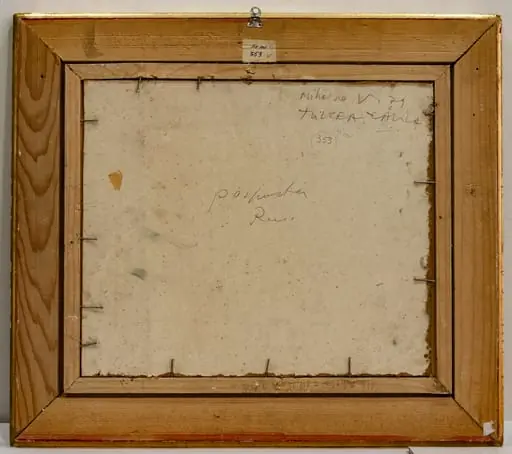
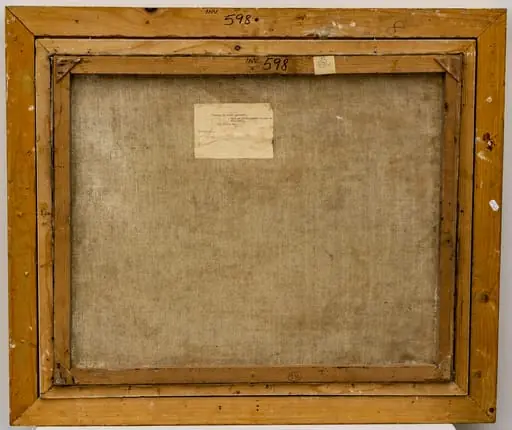
The canvas is covered in a mesh screen, and you can barely make out faded paint marks and some handwritten text in black ink.
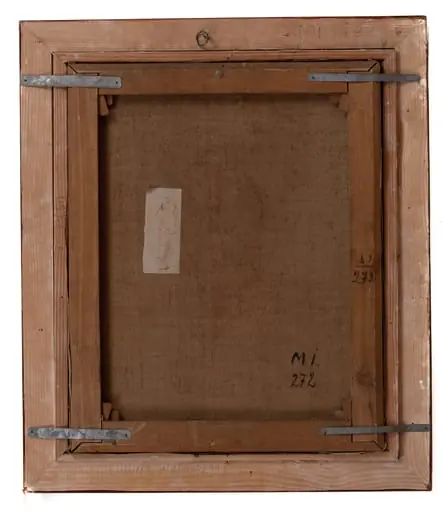
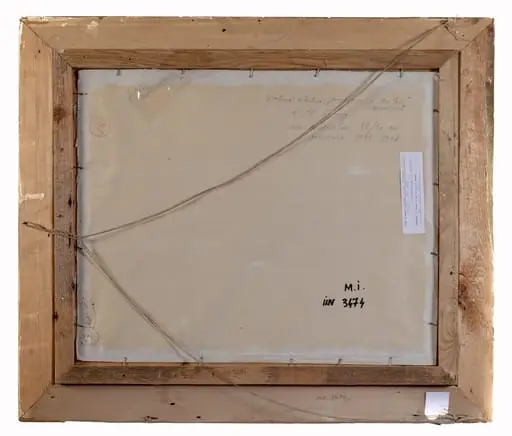
This is a weathered wooden frame with a stretched canvas inside. The canvas is covered in a mesh screen, and you can barely make out faded paint marks and some handwritten text in black ink. The frame has labels and numbers written on it, like "M.I.1605," and looks like it’s been stored for a long time.
The handwritten words on the canvas might be the painting’s title, but it’s hard to read. The frame has signs of wear, like tape and a tool stuck inside, suggesting it’s been handled or repaired.
Next, check out the Museum of Ethnography to see more works like this.
Overview
Created around 1892 by Bardasare P. Emanoil, the work titled *Burdujenii cu Suceava și Munții Bucovinei* consists of a canvas mounted within a weathered wooden frame. The piece is currently in a state of considerable wear, showing signs of long‑term storage and handling.
Subject & Meaning
The faint, partially legible handwritten script on the canvas appears to convey the work’s title, linking the image to the region of Suceava and the Bucovina mountains. Although the visual content is obscured, the textual reference suggests a focus on local landscape or cultural motifs associated with that area.
Technique & Style
The canvas is covered with a mesh screen, a technique sometimes employed to reinforce fragile surfaces. Only remnants of pigment are visible, indicating that the original coloration has largely faded. The use of black ink for the handwritten elements points to a utilitarian approach rather than a decorative one.
History & Provenance
Labels affixed to the frame, including the catalog number “M.I.1605,” hint at an institutional inventory, likely from a museum collection. Additional markings such as tape and a lodged tool imply that the piece has undergone repairs or conservation attempts over time.
Context
The artwork belongs to a period in the late 19th century when Romanian artists often documented regional identities through landscape and genre scenes. Its material condition reflects typical challenges faced by works on canvas that have been stored in less controlled environments.
Artist & collection
Artist
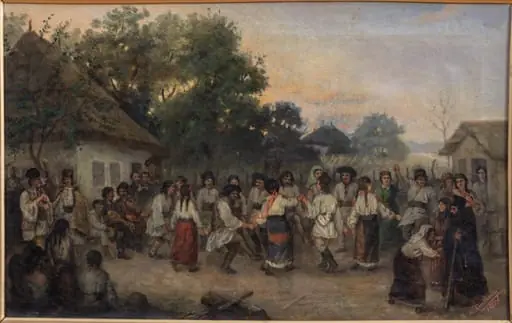
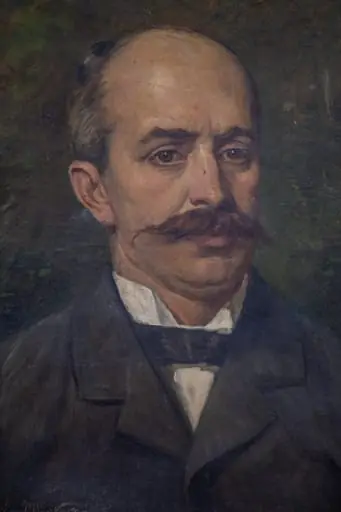
Bardasare P. Emanoil painted rural scenes and portraits in late 19th-century Romania. His brush traced village life in works like Burdujenii cu Suceava și Munții Bucovinei and Hora de la Țuțora, while his etchings…