Artwork
Untitled
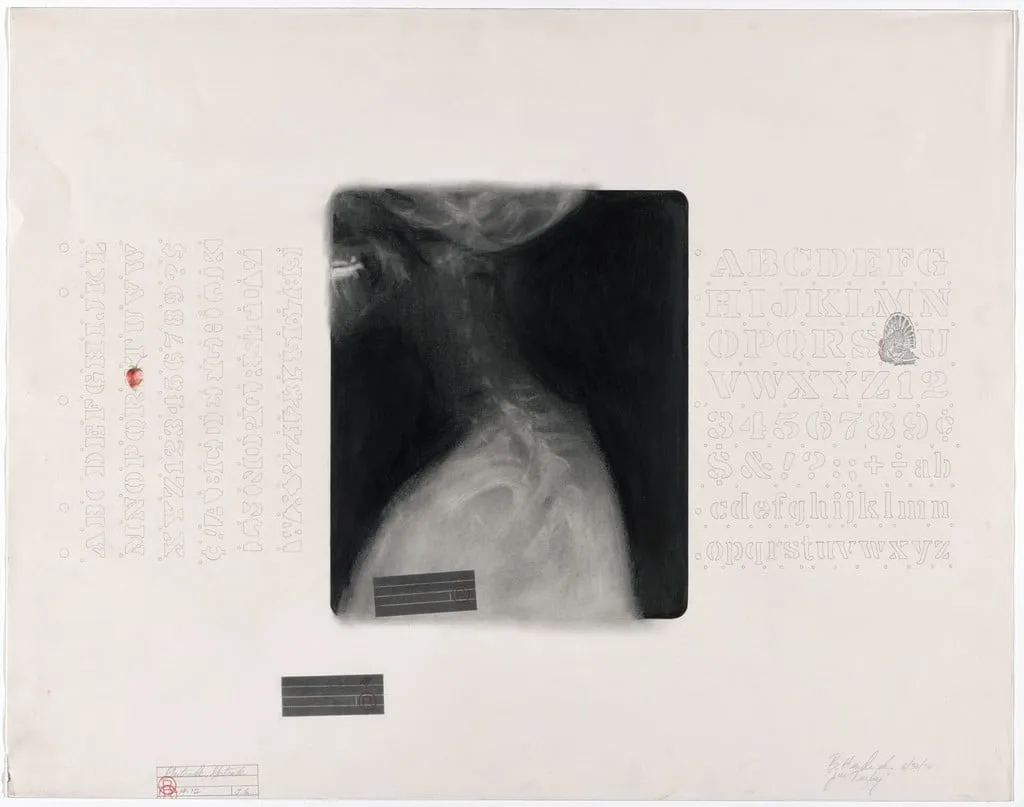
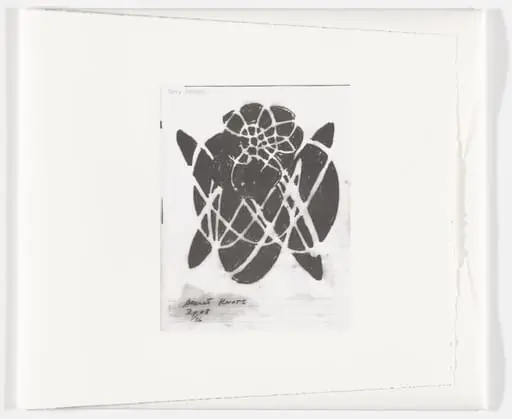
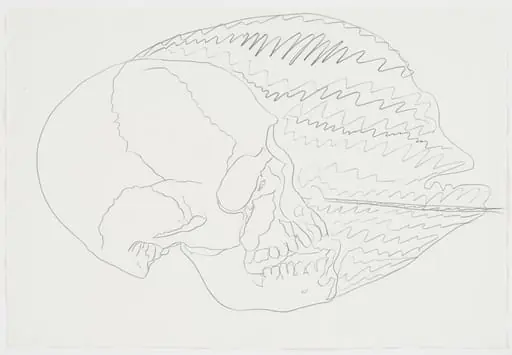
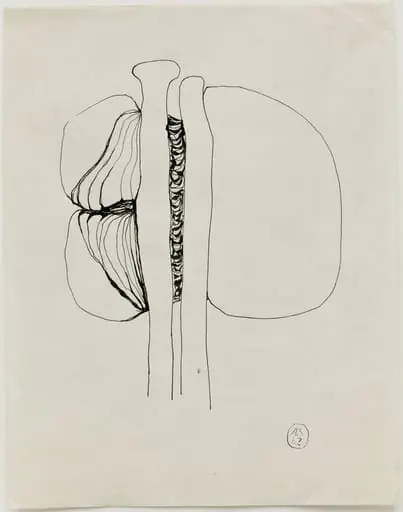
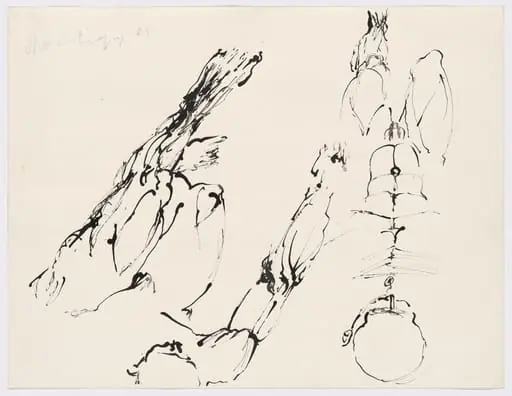
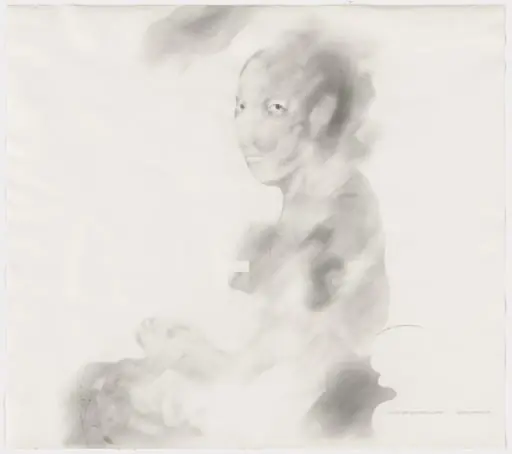
Untitled is a graphite drawing by Barkley L. Hendricks. It dates from 1974 and is held in the collection of the Museum of Modern Art. Created in 1974, this drawing by Barkley L.
About this work
Overview
Though Hendricks is best known for painted portraits of Black subjects, this work departs from that practice, embracing the intimacy and immediacy of drawing.
Created in 1974, this drawing by Barkley L. Hendricks combines graphite, pencil, colored pencil, and stamped ink on paper. Though Hendricks is best known for painted portraits of Black subjects, this work departs from that practice, embracing the intimacy and immediacy of drawing. It resides in The Museum of Modern Art’s collection as an example of his experimental approach to representation beyond traditional portraiture.
Subject & Meaning
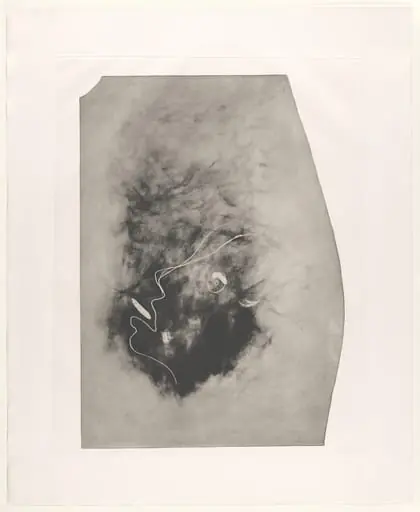
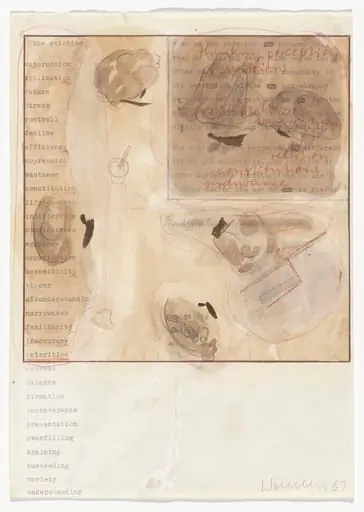
The image resembles a medical radiograph of the upper torso, with faint outlines of ribs and a central spine rendered in monochrome. Yet it is not an X-ray but a hand-drawn simulation. Surrounding the figure are fragmented typewriter-like characters arranged in chaotic rows, suggesting data, code, or fragmented thought. The red dot in the corner and handwritten marginalia imply a private, provisional act—perhaps a meditation on visibility, measurement, or the body as information.
Technique & Style
Hendricks layered graphite and pencil to build tonal depth, mimicking the grain of photographic film. Stamped ink forms repetitive, mechanical patterns, contrasting with the organic lines of the skeletal form. Colored pencil adds minimal but deliberate accents, notably the small red dot. The composition feels deliberately unfinished: smudged edges, ruler stamps, and handwritten notes evoke the aesthetic of a working sketch, blurring the line between study and finished piece.
History & Provenance
The work entered The Museum of Modern Art’s collection as part of a broader recognition of Hendricks’s multidisciplinary practice. While not exhibited as frequently as his paintings, this drawing reflects his interest in the margins of representation—how identity and form can be suggested rather than declared. Its acquisition underscores the museum’s commitment to documenting the breadth of his conceptual inquiries beyond the canvas.
Context
In the mid-1970s, Hendricks was engaging with questions of how Black subjects were seen and recorded in visual culture. This drawing responds to the clinical gaze of medical imaging and the impersonal systems of documentation—typewriters, stamps, grids—that sought to classify bodies. By hand-drawing these elements, he subverted their authority, replacing cold precision with human uncertainty and tactile presence.
Legacy
This drawing exemplifies Hendricks’s quiet rebellion against fixed categories in art. It resists easy interpretation, inviting viewers to consider how the body is rendered, measured, and interpreted—not just visually but culturally. Its inclusion in major collections has helped expand the understanding of Black artistic practice as conceptually rigorous, formally inventive, and resistant to singular narratives.
Artist & collection
Artist
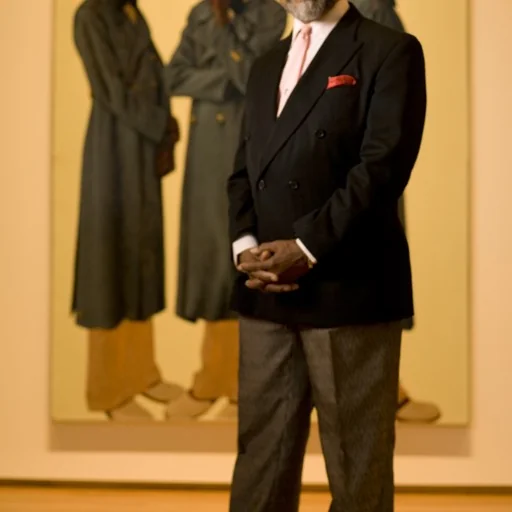
Barkley L. Hendricks (April 16, 1945 – April 18, 2017) was a contemporary American painter who made pioneering contributions to Black portraiture and conceptualism. While he worked in a variety of media and genres…