Artwork
Untitled
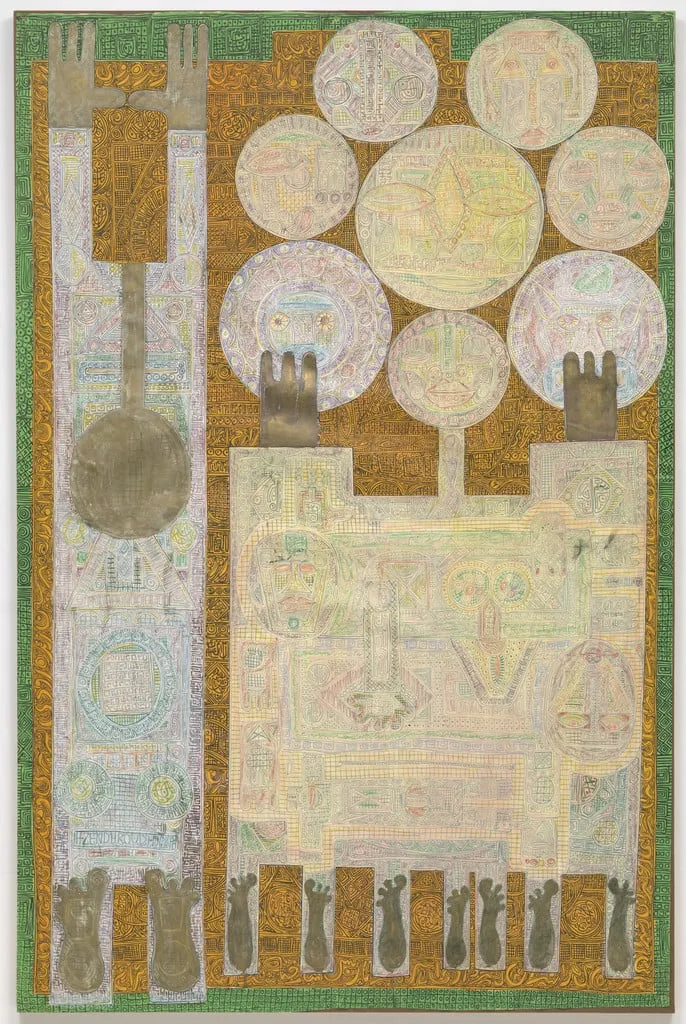
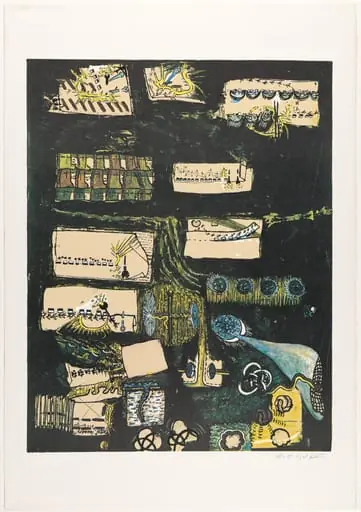
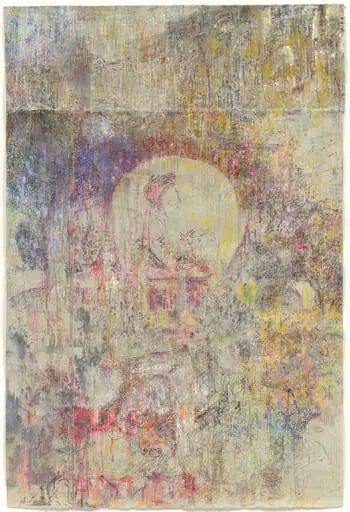
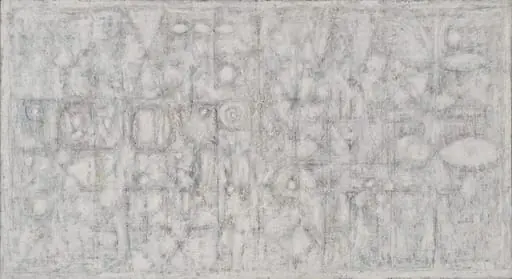
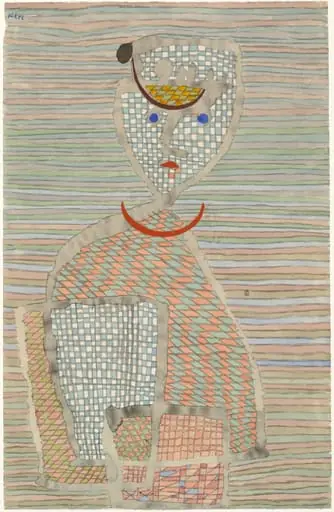
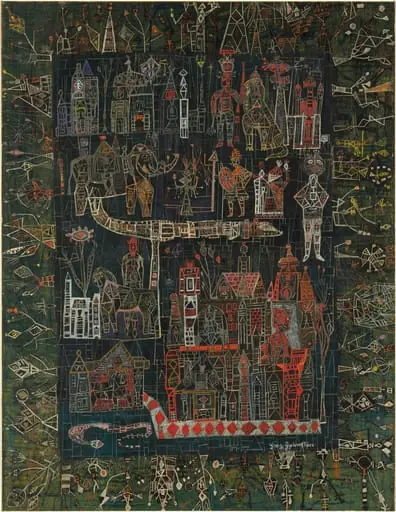
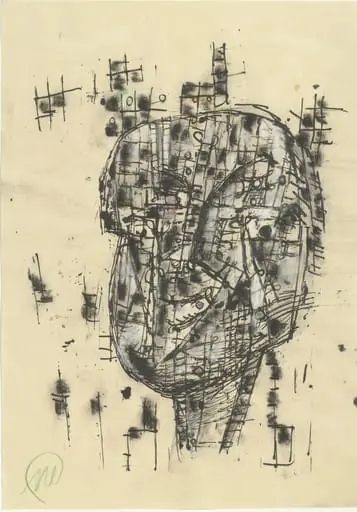
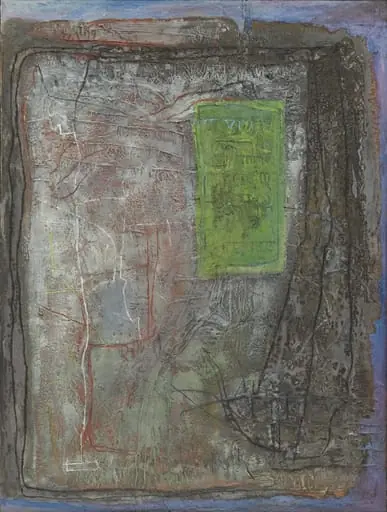
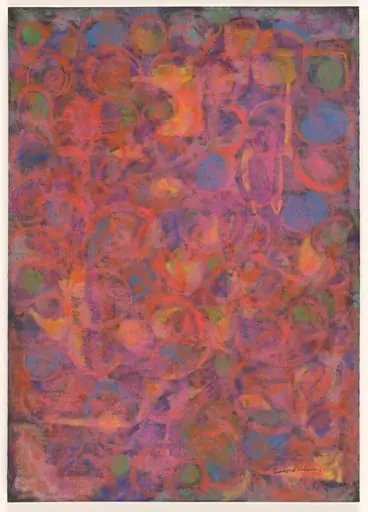
Untitled is a crayon drawing by Charles Hossein Zenderoudi. It dates from 1962 and is held in the collection of the Museum of Modern Art.
About this work
Overview
Created in 1962, this drawing by Charles Hossein Zenderoudi combines felt-tip pen, colored ink, crayon, and metallic paint on paper mounted to board.
Created in 1962, this drawing by Charles Hossein Zenderoudi combines felt-tip pen, colored ink, crayon, and metallic paint on paper mounted to board. It reflects his early experimentation with materials and forms, bridging Persian visual motifs with the language of postwar abstraction. The work is part of a broader effort to redefine Iranian modernism through personal, symbolic imagery rather than Western models.
Subject & Meaning
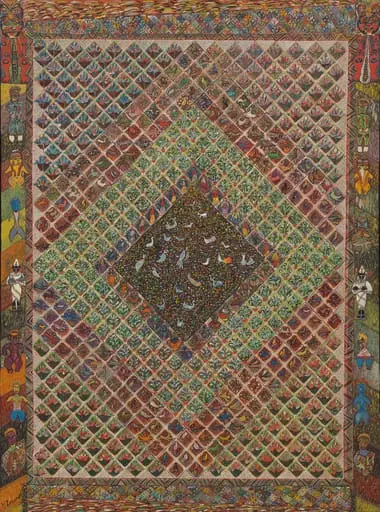
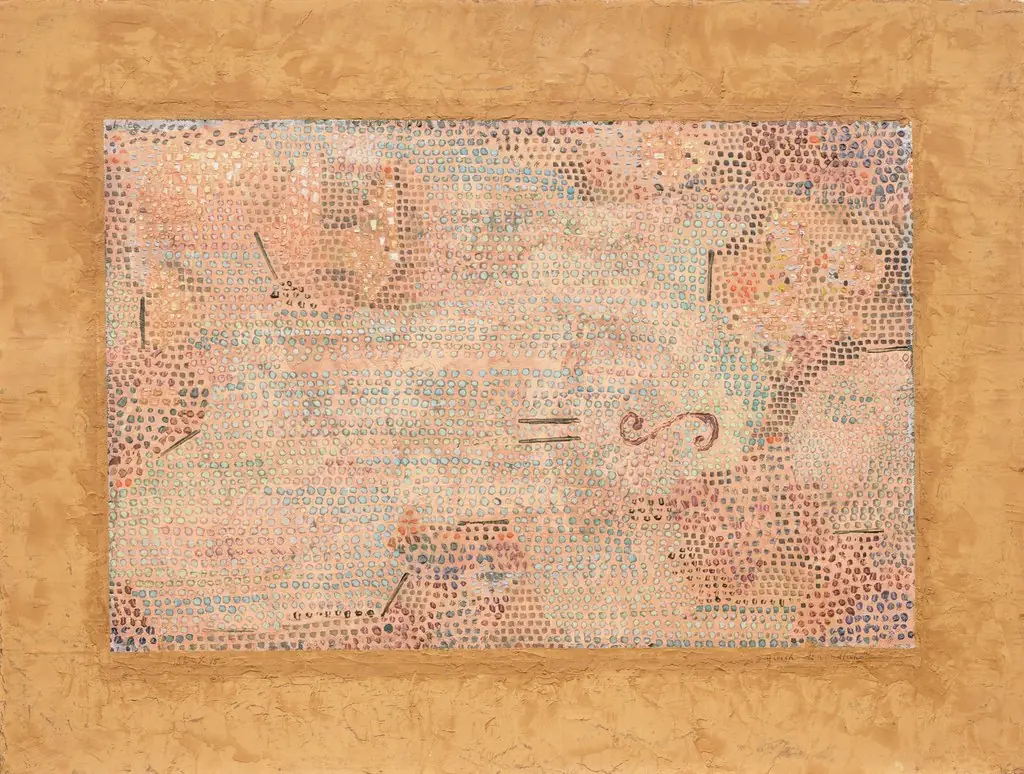
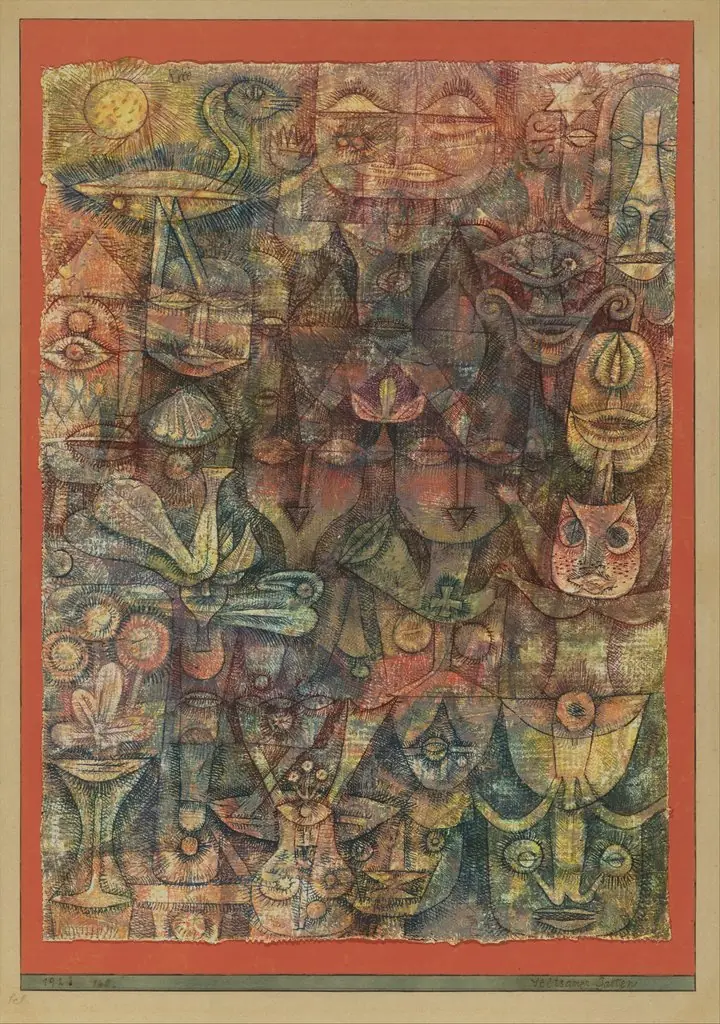
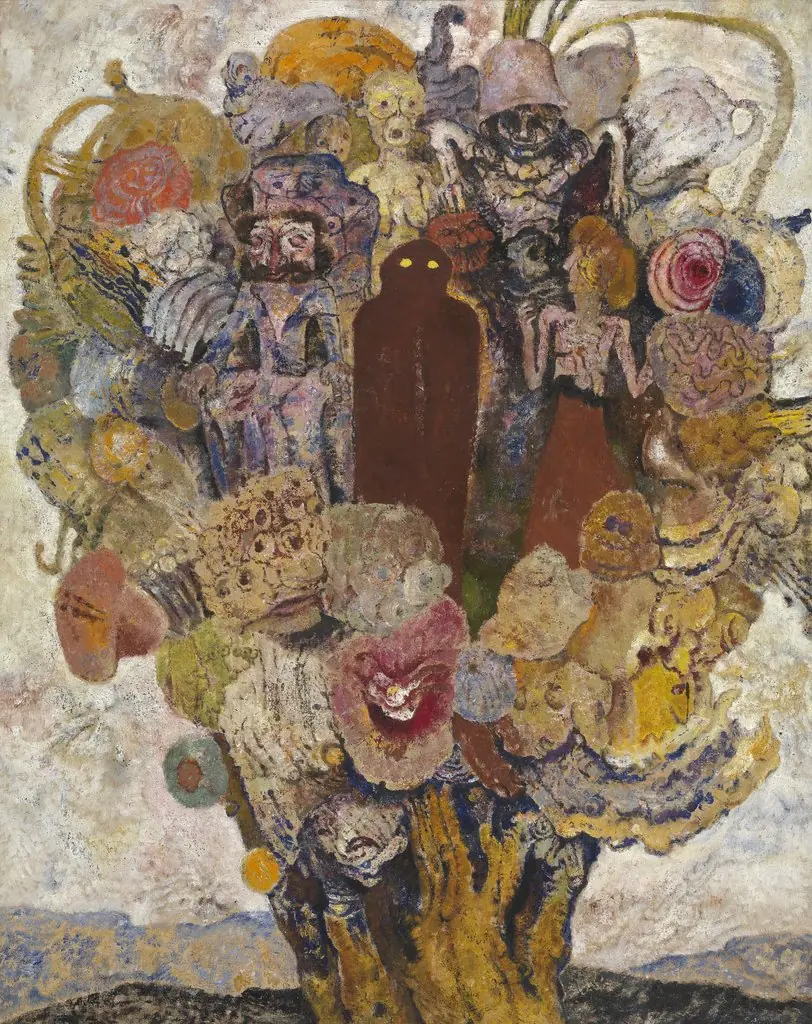
The composition features enigmatic figures: a slender form holding a circular object, rows of glowing hands, and floating faces with indistinct features. These elements evoke spiritual or ritualistic imagery drawn from Shia iconography and folk traditions, yet they resist literal interpretation. The glowing effects suggest inner light or divine presence, aligning with mystical themes in Persian culture while remaining open to personal resonance.
Technique & Style
Zenderoudi layered felt-tip lines, crayon textures, and metallic paint to create a tactile, luminous surface. The use of shimmering pigments enhances the ethereal quality of hands and faces, while the woven-like borders frame the scene like a sacred textile. His gestural marks blend calligraphic rhythm with abstract patterning, rejecting strict representation in favor of symbolic suggestion and material richness.
History & Provenance
Made during Zenderoudi’s formative years in Tehran, this work predates his move to Paris and later New York. It belongs to the Saqqakhaneh movement, which emerged in the early 1960s as Iranian artists reinterpreted religious and folk art forms through modernist lenses. The piece reflects a pivotal moment when local visual heritage was being consciously reimagined as a foundation for contemporary expression.
Context
In early 1960s Iran, artists sought to break from Western-dominated modernism by engaging with indigenous visual languages. Zenderoudi’s work responded to this cultural shift, drawing from Shia devotional art, coffee-house illustrations, and calligraphic traditions. His integration of these elements into abstract compositions challenged both academic norms and colonial artistic hierarchies in post-revolutionary Iran.
Legacy
This drawing exemplifies Zenderoudi’s enduring contribution to Iranian modern art: the fusion of sacred symbolism with experimental form. His approach influenced a generation of artists who saw tradition not as a constraint but as a living vocabulary. Though less known internationally than his peers, his work remains a touchstone for those exploring non-Western modernisms rooted in spiritual and cultural memory.
Artist & collection
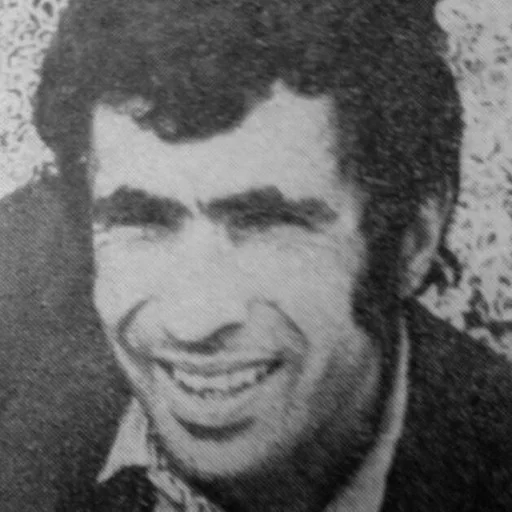
Artist
Charles Hossein Zenderoudi (Persian: (شارل) حسین زندهرودی; born 11 March 1937) is an Iranian painter, calligrapher and sculptor, known as a pioneer of Iranian modern art and as one of the earliest artists to…