Artwork
A Temple of Victory
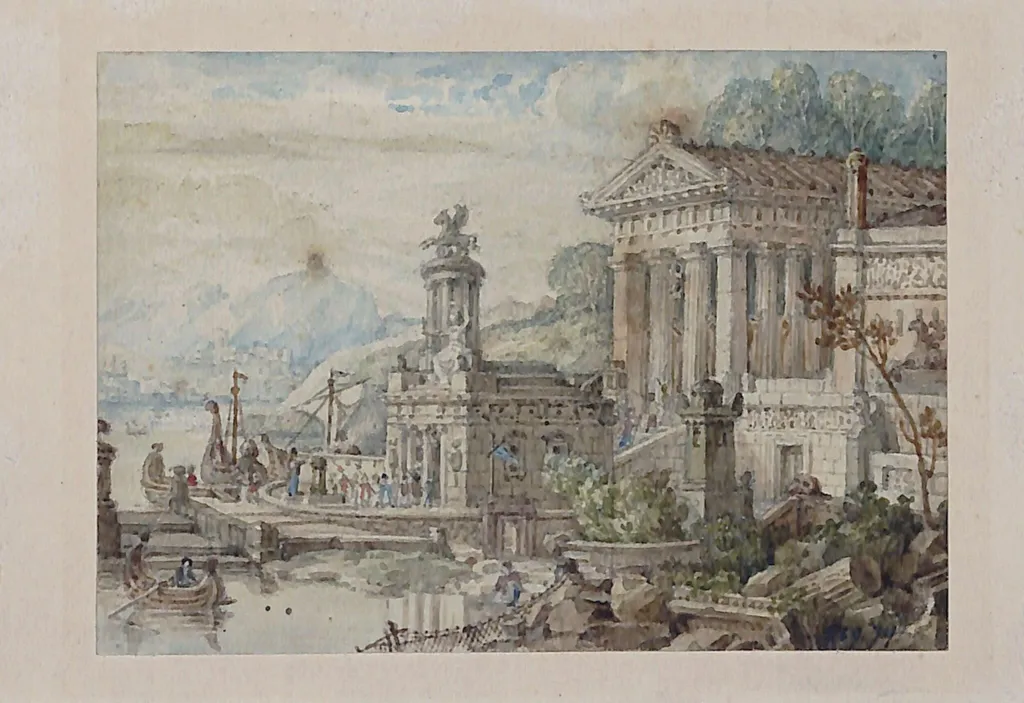
A Temple of Victory is a watercolor work on paper by the Romanticist artist Joseph Michael Gandy. It dates from 1800 and is held in the collection of the Victoria and Albert Museum.
About this work
Overview
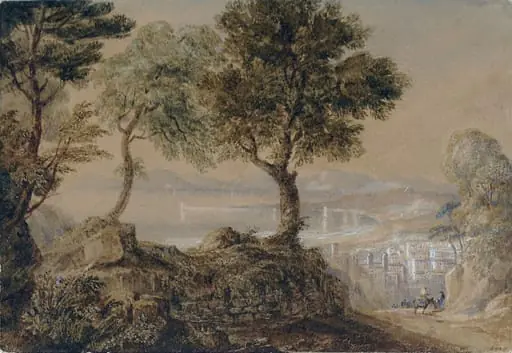
Joseph Michael Gandy’s watercolour, dated 1800, depicts an imagined classical temple perched on a gentle slope. The structure, rendered in stark white, features a colonnade and an elevated tower, while a terraced landscape below hosts strolling figures and a few small boats on a calm waterway. A pale sky with soft clouds completes the tranquil, slightly idealised setting.
Subject & Meaning
The composition presents an architectural fantasy that merges the grandeur of ancient temples with a serene natural environment. By placing human activity on the terrace and vessels on the water, Gandy juxtaposes the permanence of stone with the transience of everyday life, suggesting a harmonious relationship between civilization and the surrounding landscape.
Technique & Style
Executed with fluid, sketch‑like brushwork, the watercolour relies on suggestion rather than precise detailing. The loose strokes convey the massing of the temple and the atmospheric qualities of sky and water, a method typical of early‑19th‑century British watercolours that favoured rapid, expressive rendering over meticulous finish.
History & Provenance
Created at the turn of the nineteenth century, the work entered the collection of the Victoria and Albert Museum, where it remains on display. Its acquisition reflects the museum’s interest in documenting the period’s architectural imagination and the broader Romantic fascination with idealised historic forms.
Artist & collection
Artist
Joseph Michael Gandy loved to draw grand buildings. He was really into ancient ruins. Check out his "A Temple of Victory" - it's like a peek into his imagination. You can see how his ideas might have been inspired by…

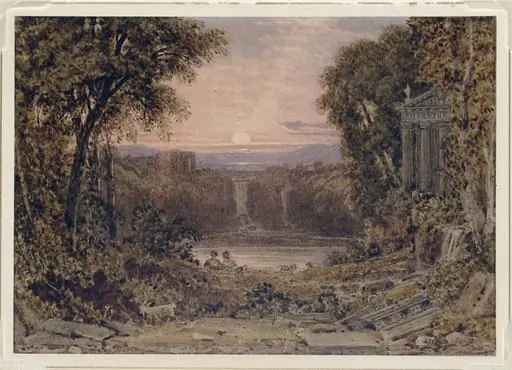 Tivoli - Sunset
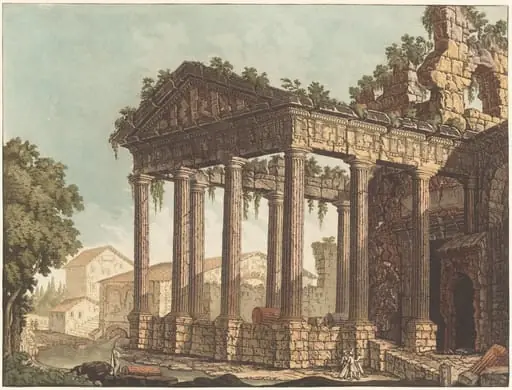 The Temple of Hercules at Cori
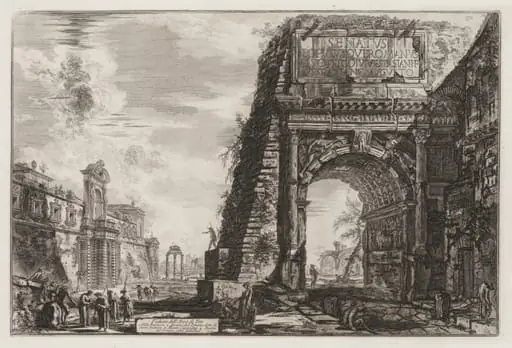 Views of Rome: The Arch or Titus
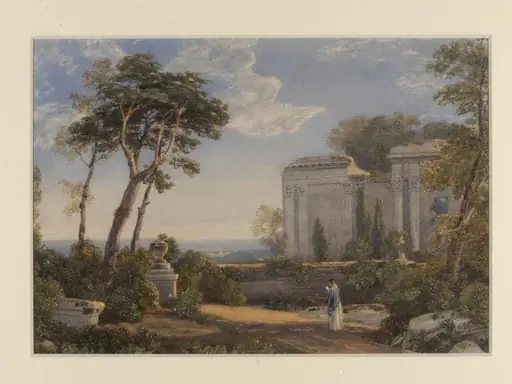 Ruins: A Classical Composition
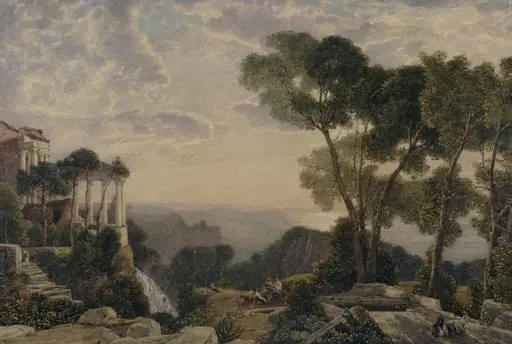 Landscape: A classical composition
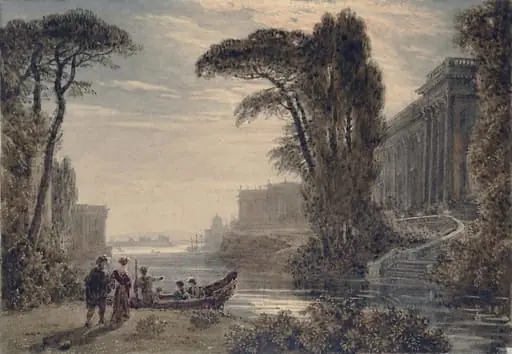 A Classical Composition
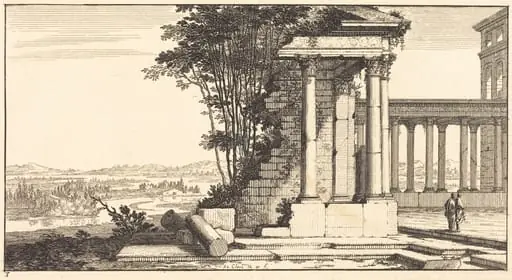 Landscape with Classical Ruins
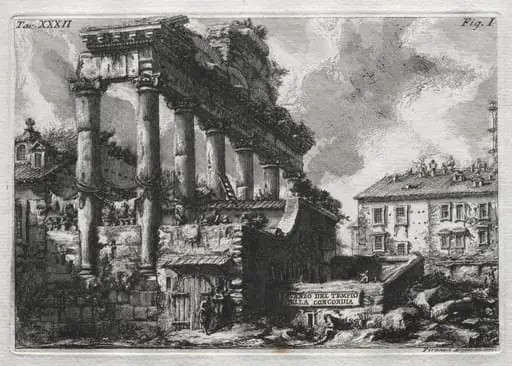 Avanco del Tempio della Concordia
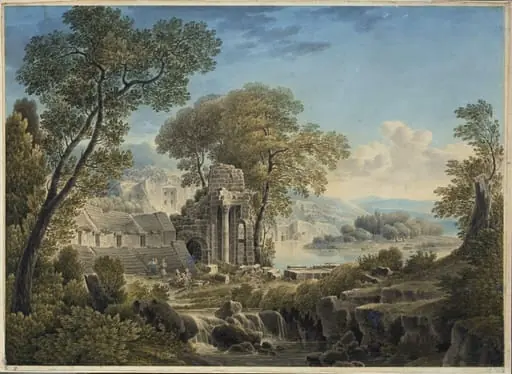 Theatre of Myra, now Demre, in Lycia
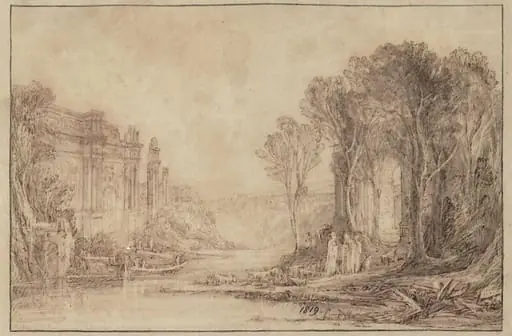 River scene
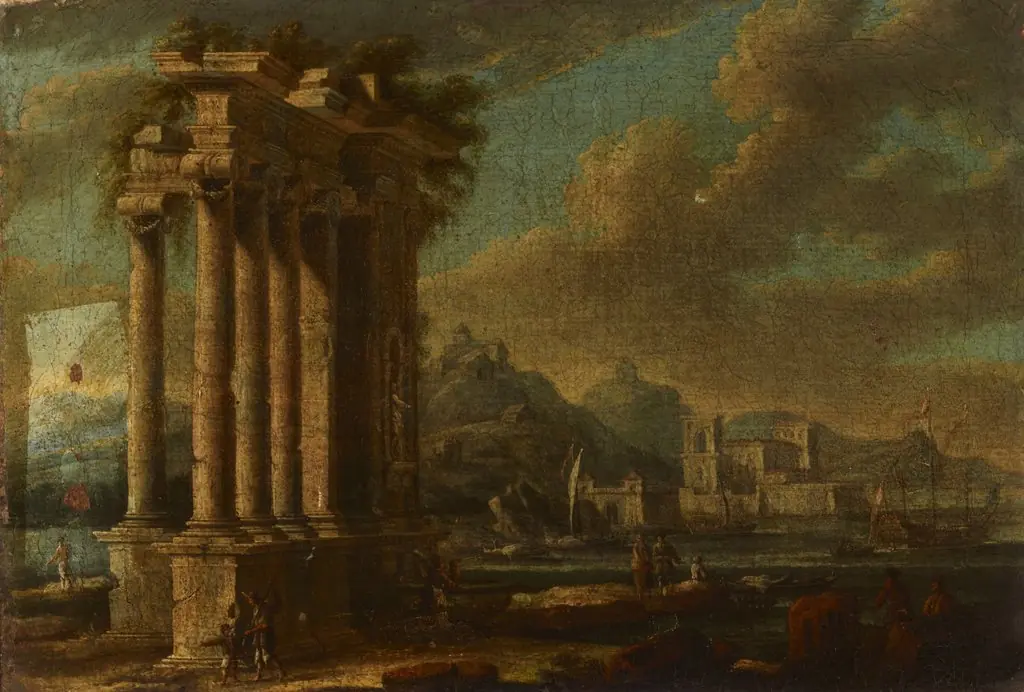 Maritime Landscape with Ruins
 Bay of Spezia