Artwork
Study of Jove and Three Goddesses
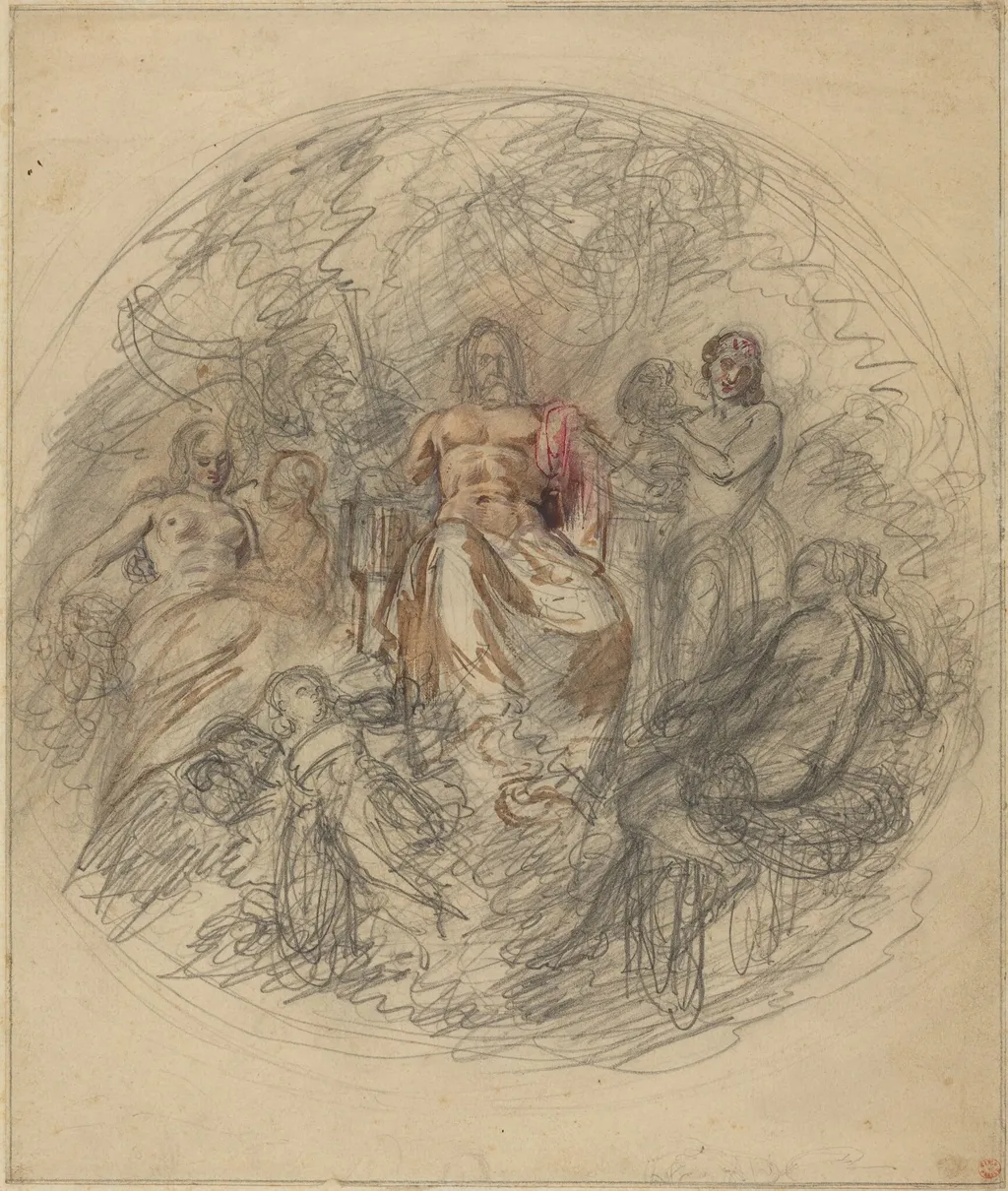
Study of Jove and Three Goddesses is a graphite drawing by the Romanticist artist Lorenzo Bartolini. It dates from 1814 and is held in the collection of the National Gallery of Art.
About this work
Overview
This drawing by Lorenzo Bartolini, dated 1814, depicts a mythological scene rendered in graphite and wash on wove paper. Executed as a preparatory study, it captures the artist’s exploration of composition and form before committing to a final work. The medium’s fluidity allows for both precision and spontaneity in the depiction of figures.
Subject & Meaning
The drawing portrays Jupiter (Jove) alongside three goddesses, a theme drawn from classical mythology.
The drawing portrays Jupiter (Jove) alongside three goddesses, a theme drawn from classical mythology. Such groupings often symbolize divine authority, beauty, or the interplay of power and grace. Bartolini’s arrangement suggests a moment of interaction, though the exact narrative—whether judgment, counsel, or another episode—remains open to interpretation within the conventions of neoclassical allegory.
Technique & Style
Bartolini employs graphite for linear definition, reinforced by brown and red washes to model volume and suggest depth. The technique reflects the academic practice of combining precise draftsmanship with tonal gradations, a method favored for studies intended to refine anatomical accuracy and spatial relationships. The style aligns with early 19th-century neoclassicism, emphasizing clarity and idealized form.
History & Provenance
Created in 1814, the drawing likely originated as part of Bartolini’s preparatory work for a larger project, though its connection to a finished piece remains undocumented. Its early ownership history is unclear, but as a study, it may have circulated among artists or collectors interested in the creative process rather than completed works. Its current status as an independent drawing suggests a later valuation of such preparatory materials.
Context
The work emerges from a period when neoclassicism dominated European art, reflecting a revival of interest in classical antiquity. Bartolini, trained in Florence and Paris, engaged with this movement, producing drawings that balanced technical rigor with expressive potential. Such studies served both as exercises in composition and as demonstrations of an artist’s skill in rendering the human form, a cornerstone of academic training.
Artist & collection

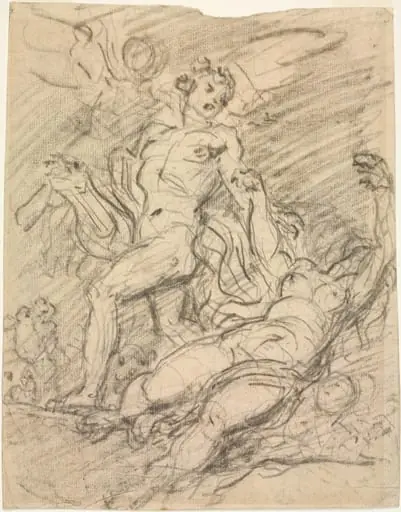 Orpheus and Eurydice (recto)
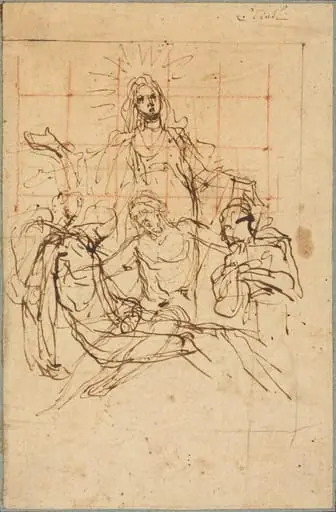 The Pietà (recto)
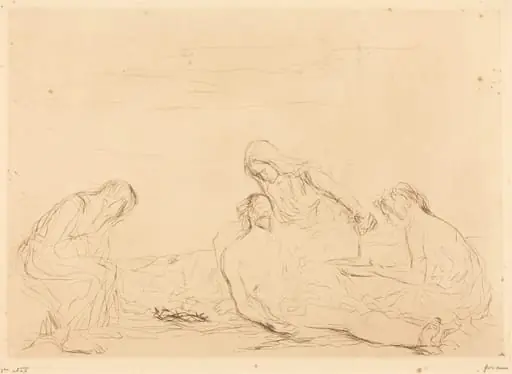 Pietà (3e planche) (Pietà) (third plate)
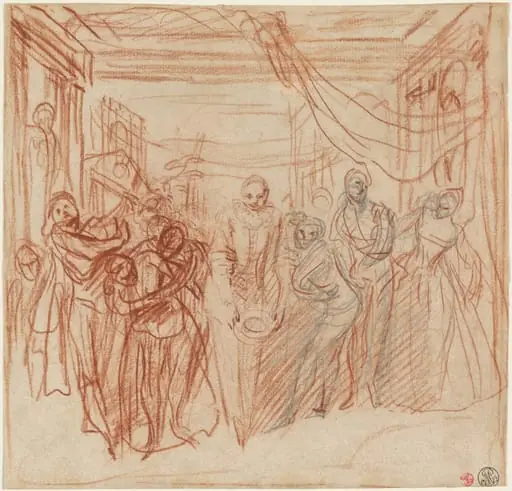 Italian Comedians Taking Their Bows
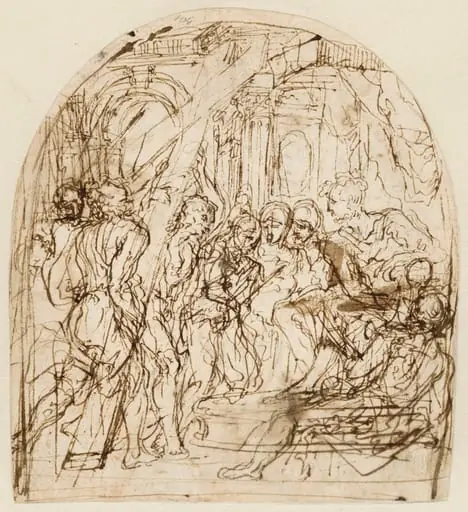 Christ Carrying the Cross
![Los and His Spectre [verso], by William Blake](https://artifactworldgallery.com/img/william-blake--los-and-his-spectre-verso--615ad7f82d334e5f-w320.webp) Los and His Spectre [verso]
Los and His Spectre [verso]![Figure Studies [recto], by Giovanni Battista Cipriani](https://artifactworldgallery.com/img/giovanni-battista-cipriani--figure-studies-recto--32b47b1a71716a78-w320.webp) Figure Studies [recto]
Figure Studies [recto]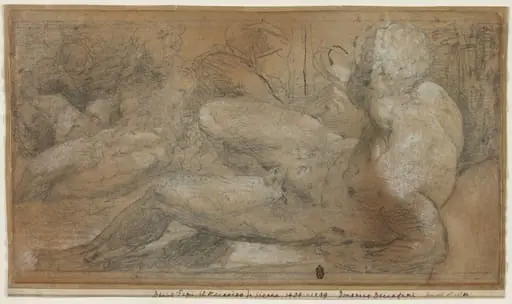 Three Male Nudes
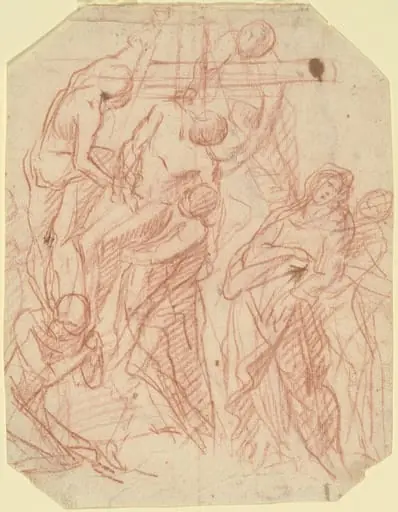 The Descent from the Cross (recto)
![Sheet of Studies, including Warrior with Child [recto and verso], by John Flaxman](https://artifactworldgallery.com/img/john-flaxman--sheet-of-studies-including-warrior-with-child-recto-and-vers--5c5dd1ec083169b5-w320.webp) Sheet of Studies, including Warrior with Child [recto and verso]
Sheet of Studies, including Warrior with Child [recto and verso]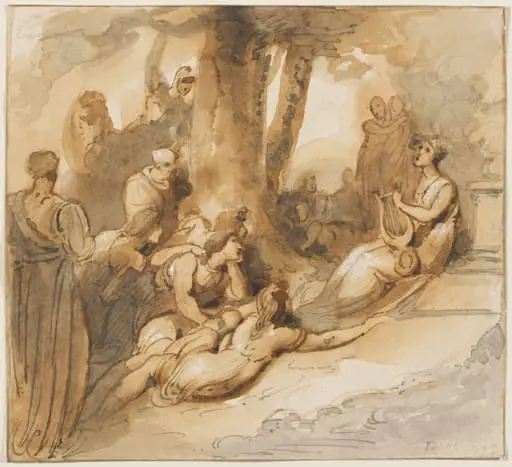 Untitled
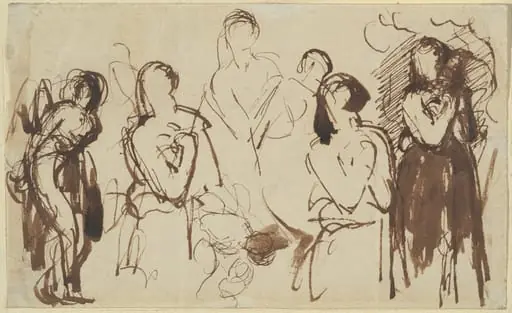 Studies for Joan of Arc