Artwork
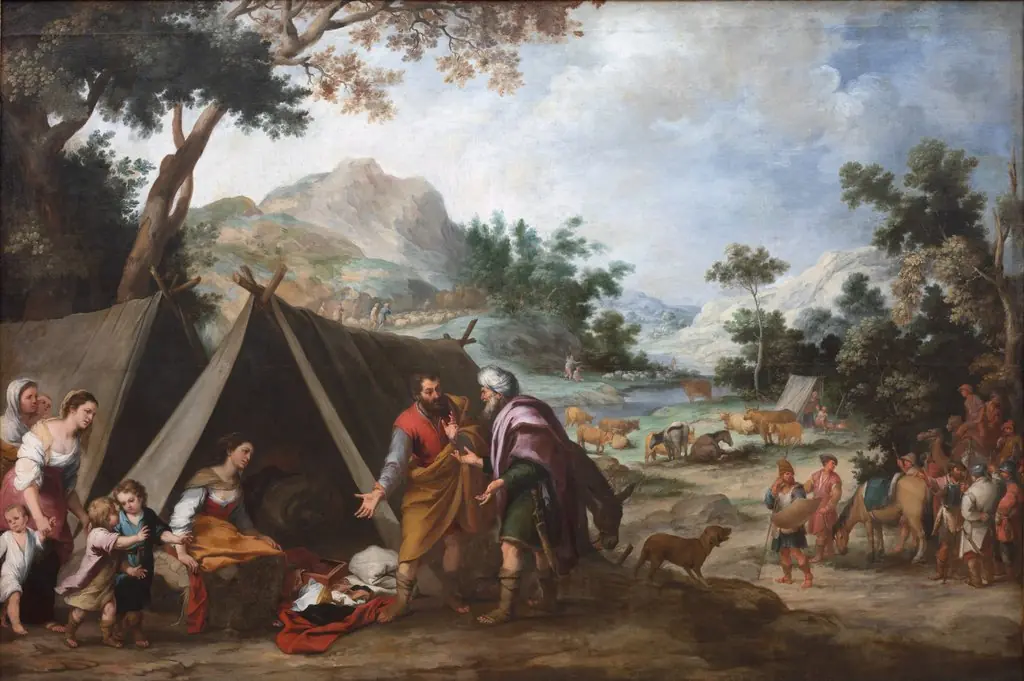
Abraham Receiving the Three Angels
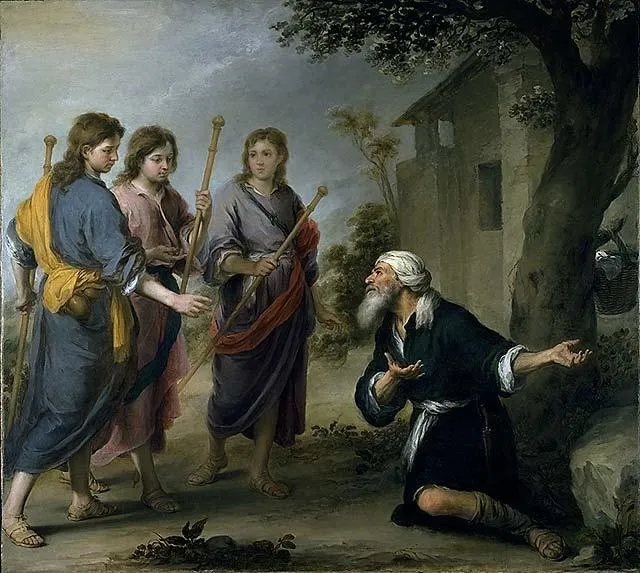
Abraham Receiving the Three Angels is an oil painting by the Early Baroque Italian artist Bartolomé Esteban Murillo. It dates from 1670 and is held in the collection of the National Gallery of Canada.
About this work
Overview
Acquired by the National Gallery of Canada in 1948, the painting was among those taken from Seville by French troops in 1810 during the Napoleonic occupation.
Painted between 1670 and 1674, Abraham Receiving the Three Angels is an oil on canvas work by Spanish Baroque artist Bartolomé Esteban Murillo. Commissioned for the Hermandad de la Caridad in Seville, it was one of eight religious scenes intended to illustrate charitable acts. Acquired by the National Gallery of Canada in 1948, the painting was among those taken from Seville by French troops in 1810 during the Napoleonic occupation.
Subject & Meaning
The scene illustrates Genesis 18, in which the patriarch Abraham welcomes three strangers who are later revealed as divine messengers. Abraham, depicted with a white beard and humble posture, kneels in reverence as the figures stand before him. Their presence, though human in form, carries spiritual weight, emphasizing hospitality as a sacred duty. The composition underscores humility before the divine, aligning with the brotherhood’s mission of compassion.
Technique & Style
Murillo employs soft modeling and subtle chiaroscuro to define forms without harsh contrasts. The figures are rendered with gentle transitions between light and shadow, enhancing their humanity while maintaining a sense of solemnity. Textures of fabric and skin are delicately suggested, and the background recedes with atmospheric perspective, focusing attention on the interaction between Abraham and the visitors.
History & Provenance
Created for Seville’s Hermandad de la Caridad, the painting was seized by Napoleon’s forces in 1810 during the Peninsular War. It entered the French royal collection before eventually being dispersed. After passing through private hands, it was purchased by the National Gallery of Canada in 1948. Four of the original eight commissions remain in Seville; the others are now in Washington, London, and St. Petersburg.
Context
The Hermandad de la Caridad, a charitable confraternity to which Murillo belonged, commissioned the series to visually reinforce its religious and social duties, particularly the act of clothing the naked. Murillo’s depictions of biblical charity were meant to inspire devotion and civic responsibility among Seville’s populace, blending spiritual narrative with contemporary moral values.
Legacy
Though less widely known than Murillo’s later devotional works, this painting exemplifies his early mastery in combining emotional restraint with narrative clarity. Its displacement during the Napoleonic era reflects broader patterns of cultural looting in early 19th-century Europe. Today, it stands as a key example of Spanish Baroque religious painting outside Spain.
Artist & collection
Artist
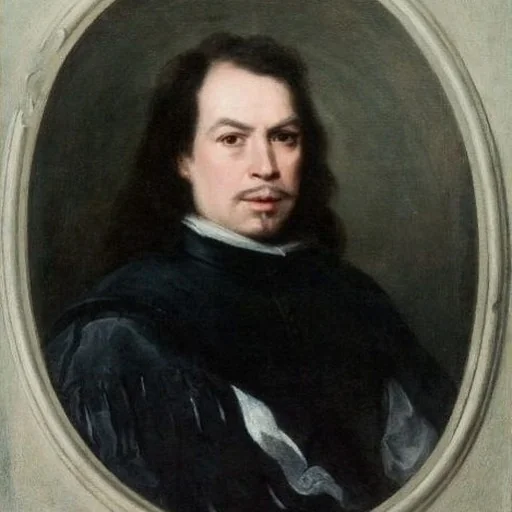
Bartolomé Esteban Murillo ( mure-IL-oh, m(y)uu-REE-oh, Spanish: ; late December 1617, baptised 1 January 1618 – 3 April 1682) was a Spanish Baroque painter.

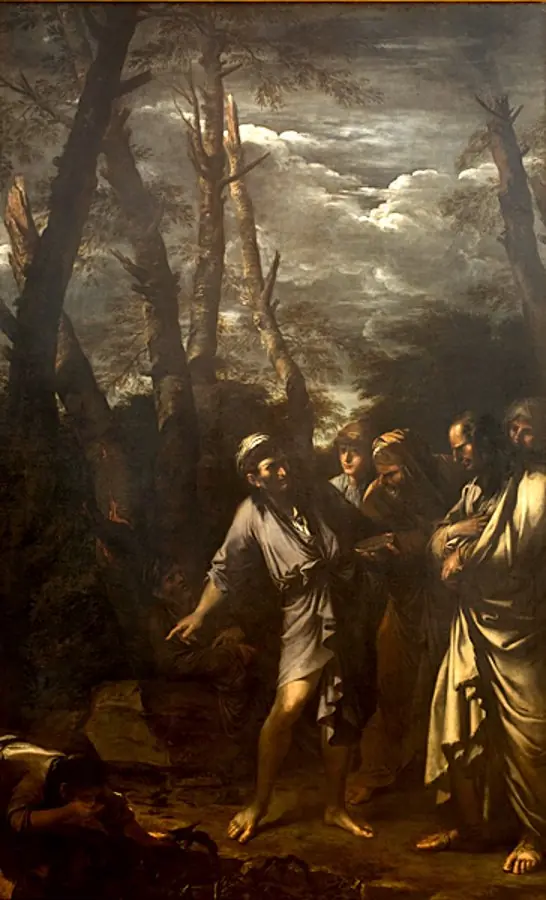 Diogenes Throwing away his Drinking Cup
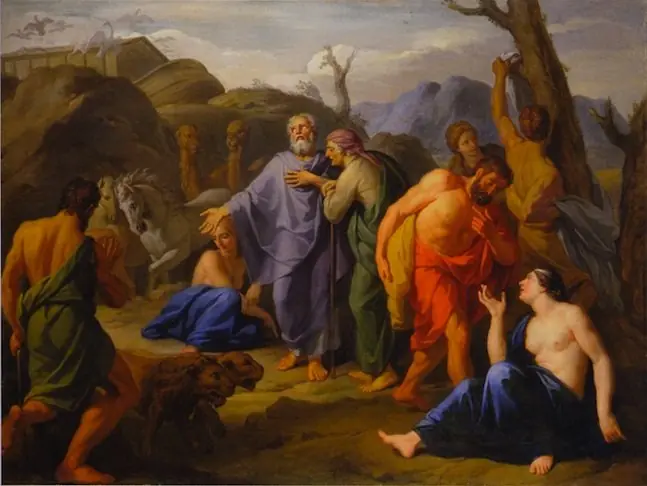 Noé rendant grâce à Dieu d'avoir échappé au déluge
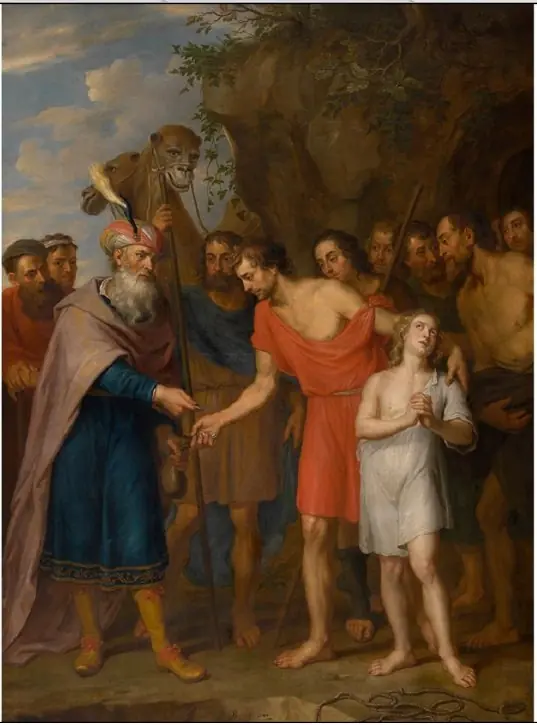 Joseph Sold by his Brothers
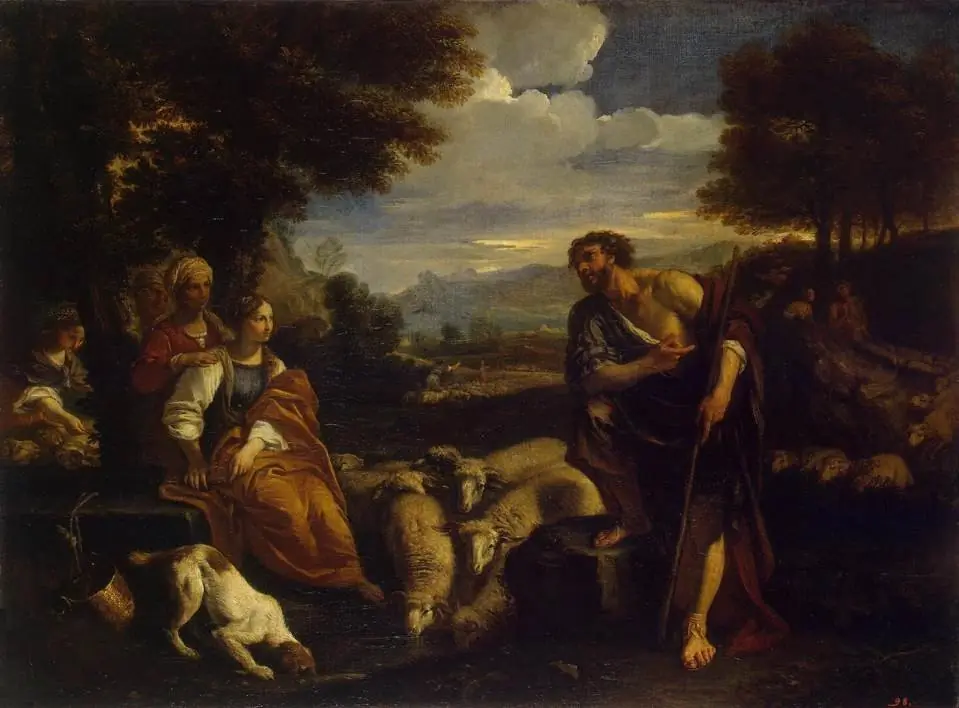 Jacob Meeting Rachel
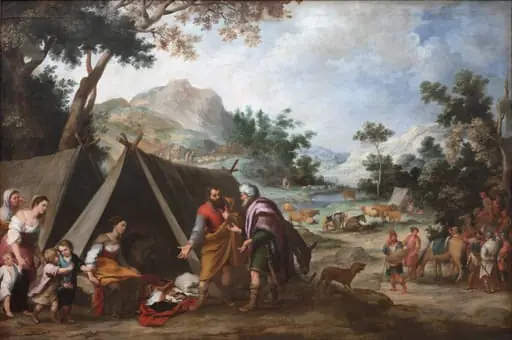 Laban Searching for His Stolen Household Gods
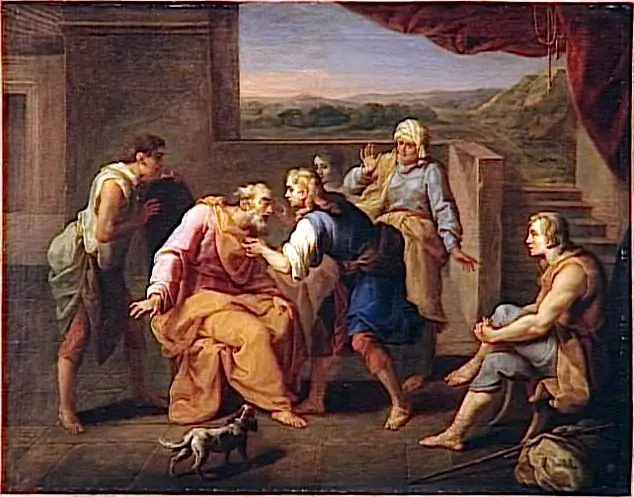 Return of Jephthae
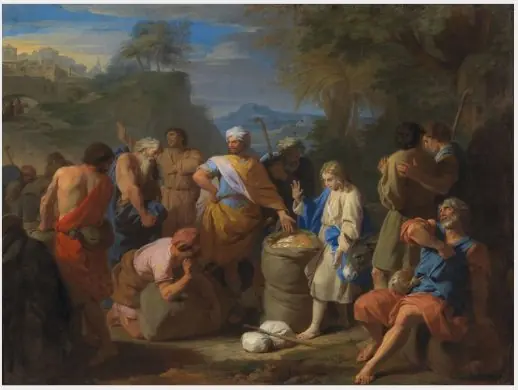 The Finding of Joseph's Cup in Benjamin's Sack
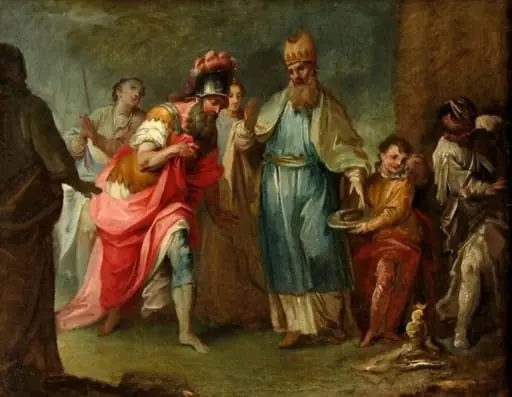 Saul uns rege de către Samuel
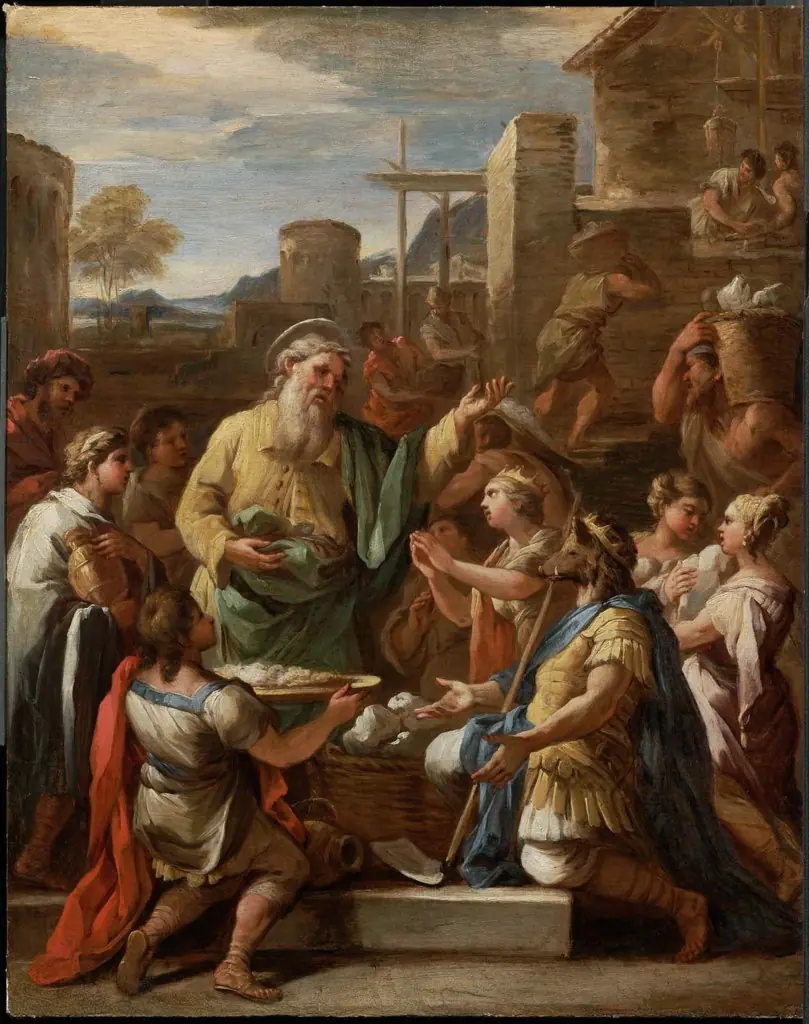 King Tiridates before Saint Gregory the Armenian