Artwork
The Flight into Egypt
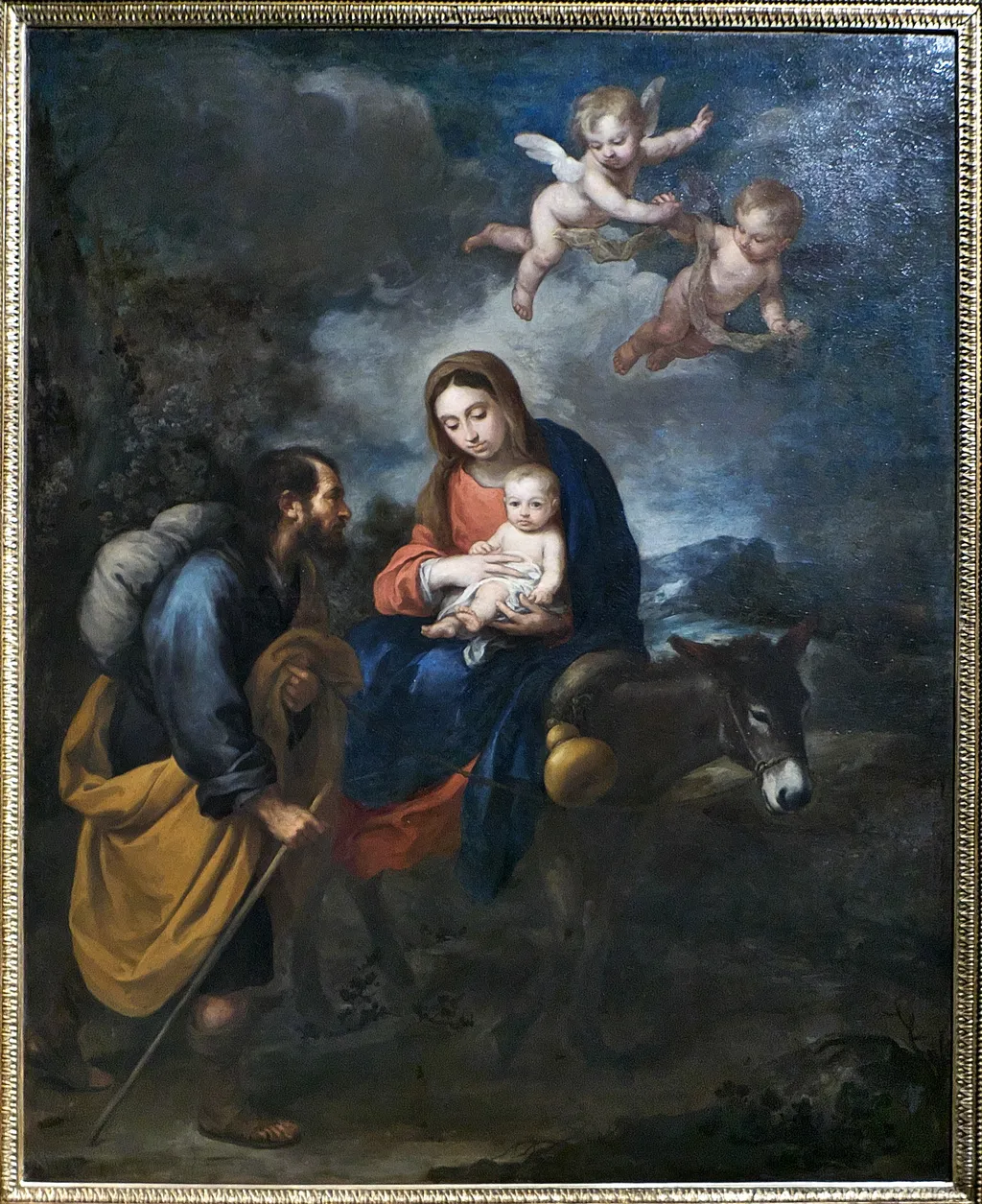
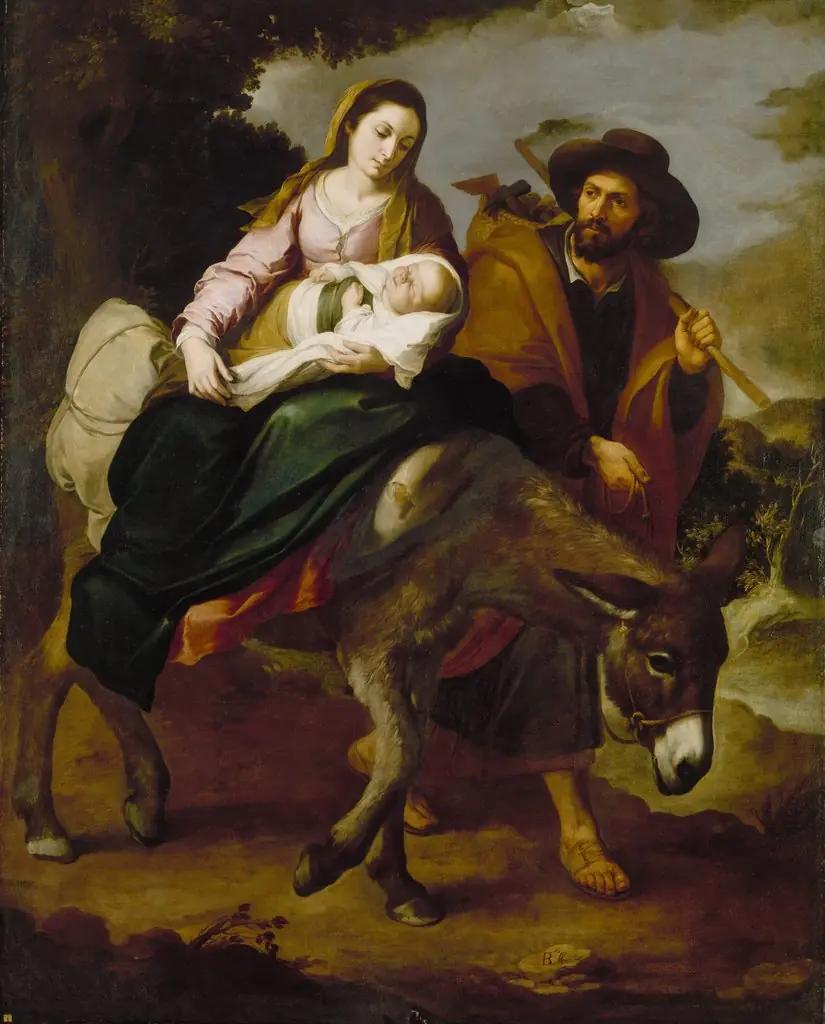
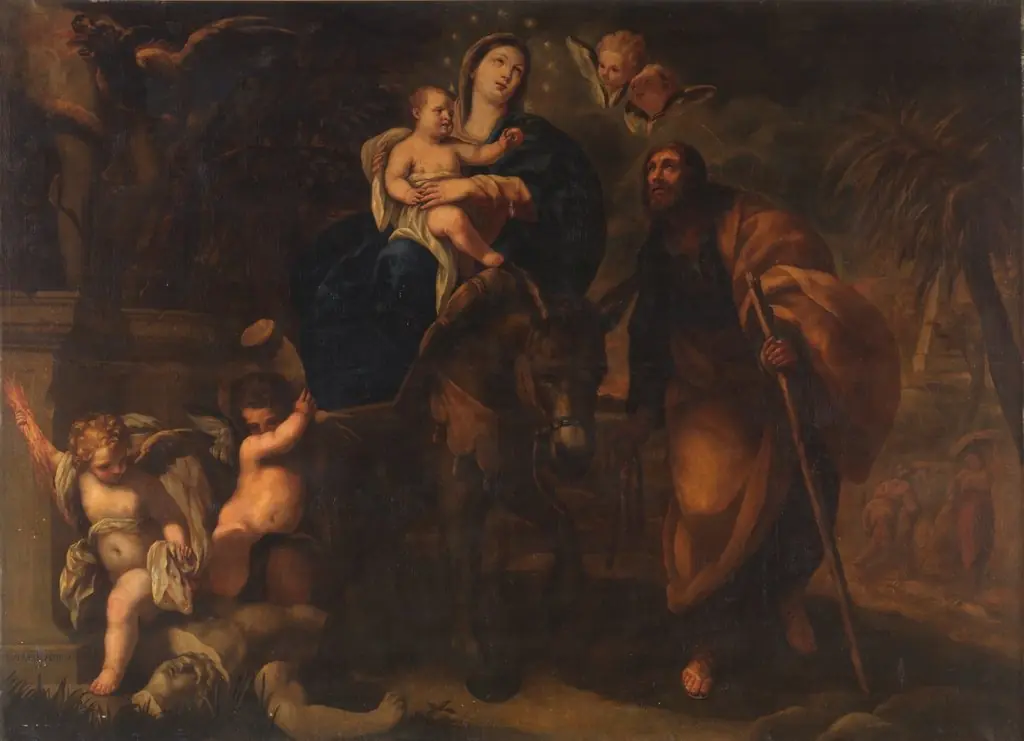
The Flight into Egypt is an oil painting by the Early Baroque Italian artist Bartolomé Esteban Murillo. It dates from 1669 and is held in the collection of the Museum of Fine Arts, Budapest.
About this work
Overview
The Flight into Egypt is a 1669 oil painting by Spanish Baroque artist Bartolomé Esteban Murillo, depicting a pivotal religious scene. The work is characterized by its early Baroque Italian influences and is part of the Museum of Fine Arts, Budapest's collection.
Subject & Meaning
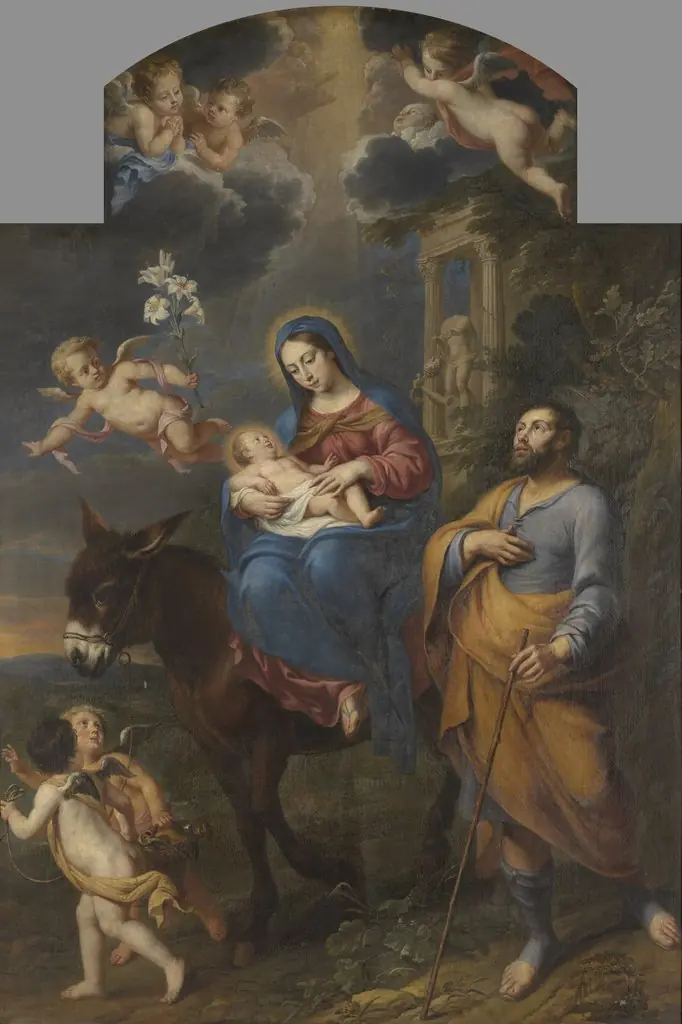
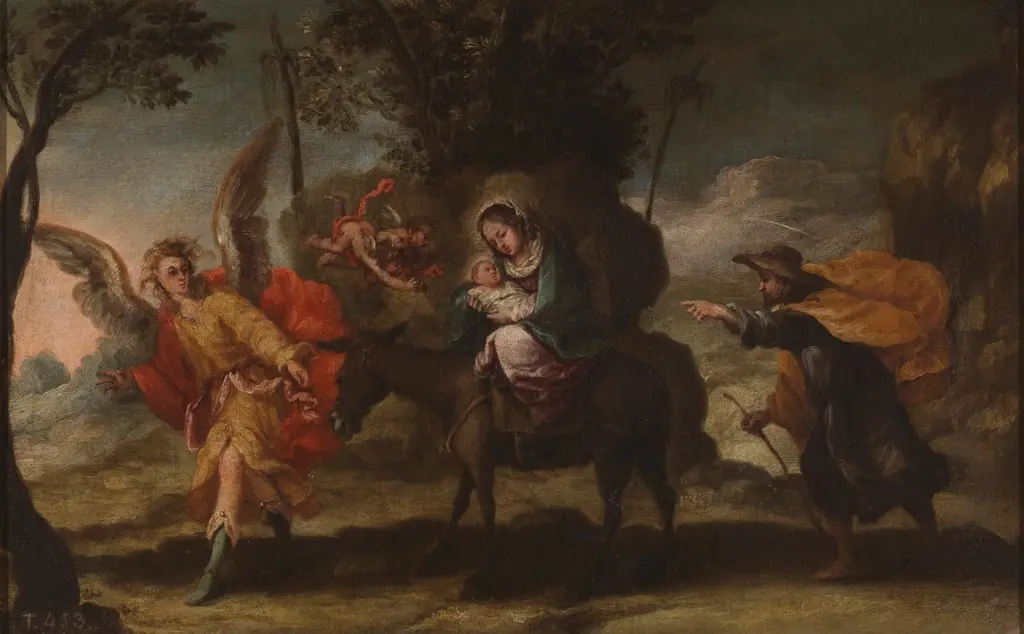
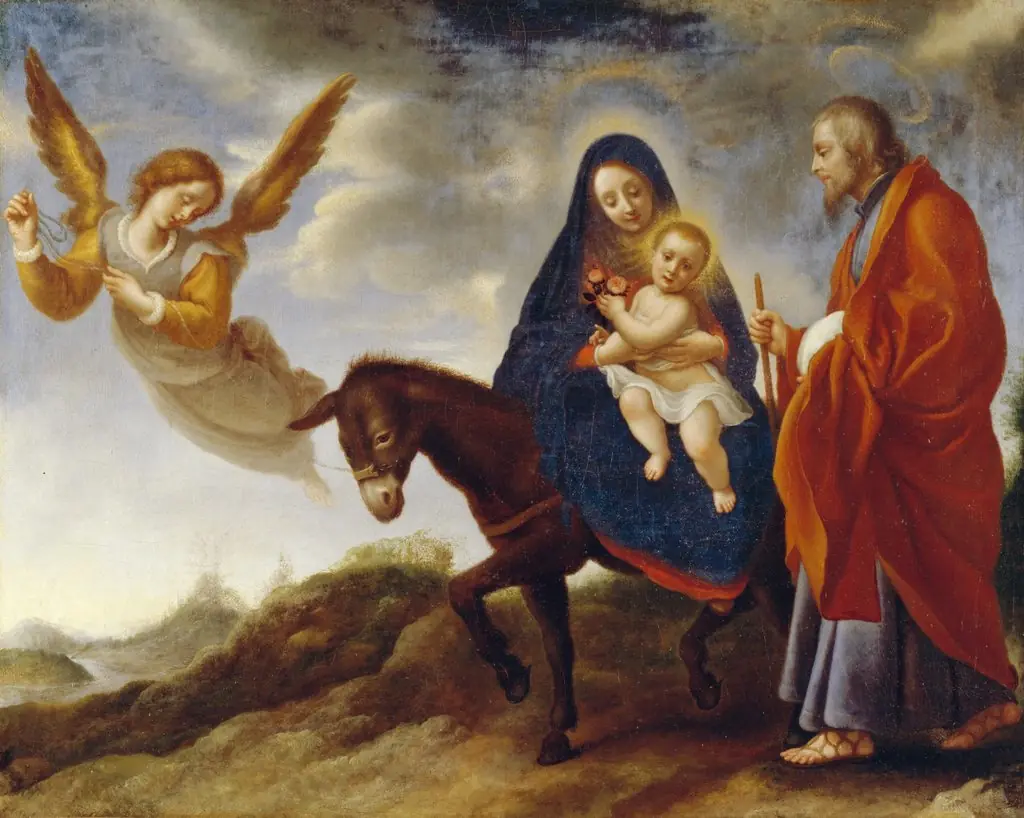
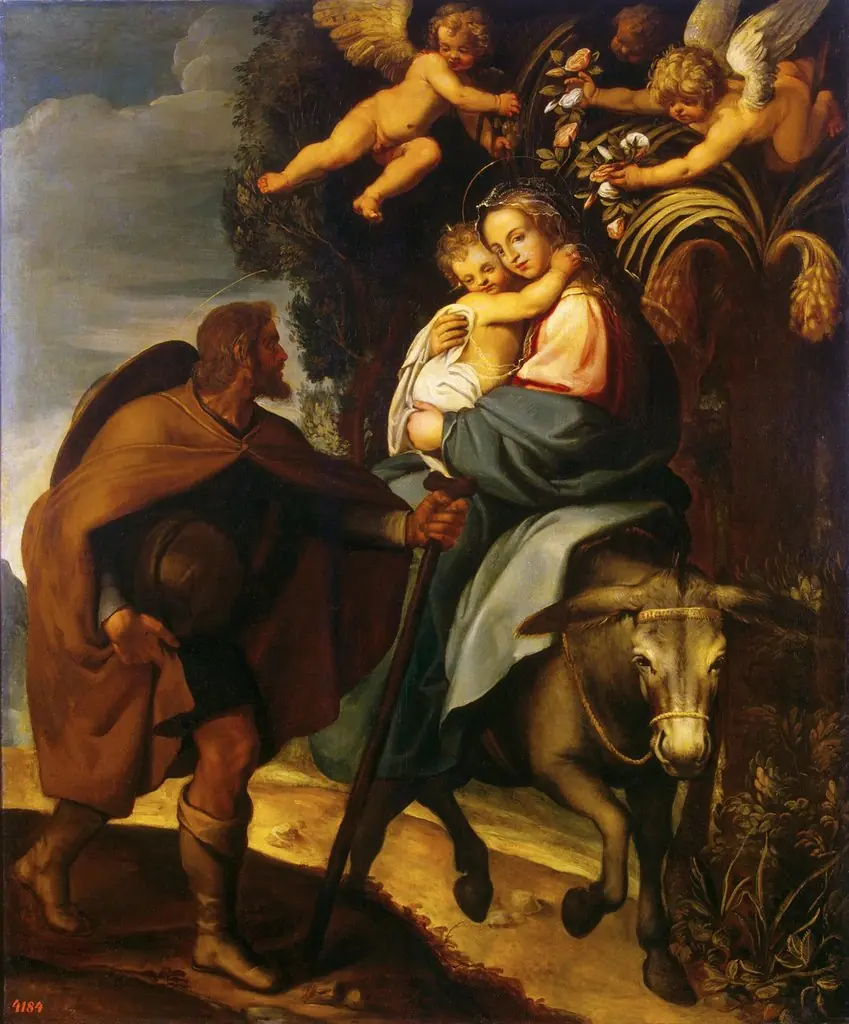
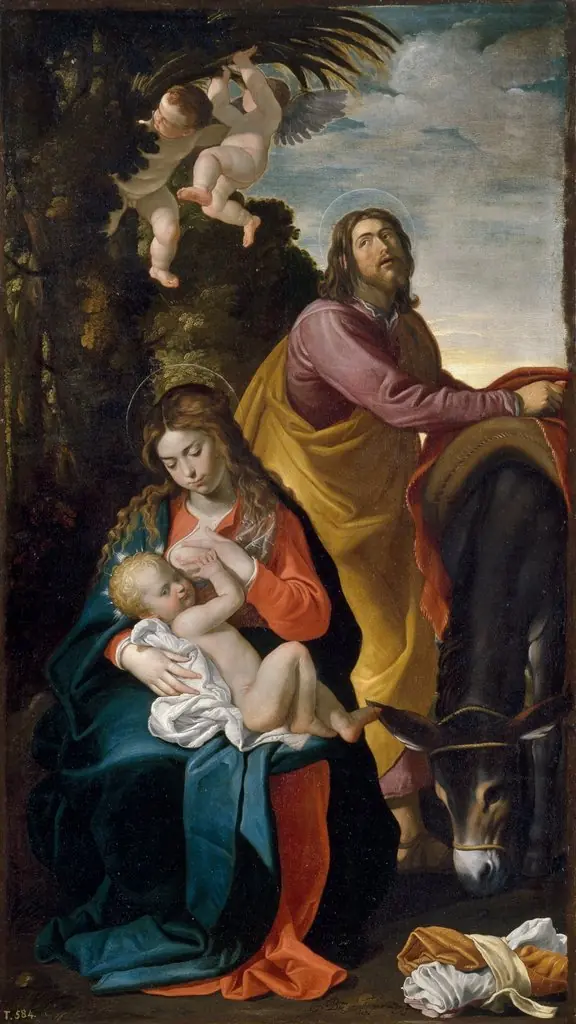
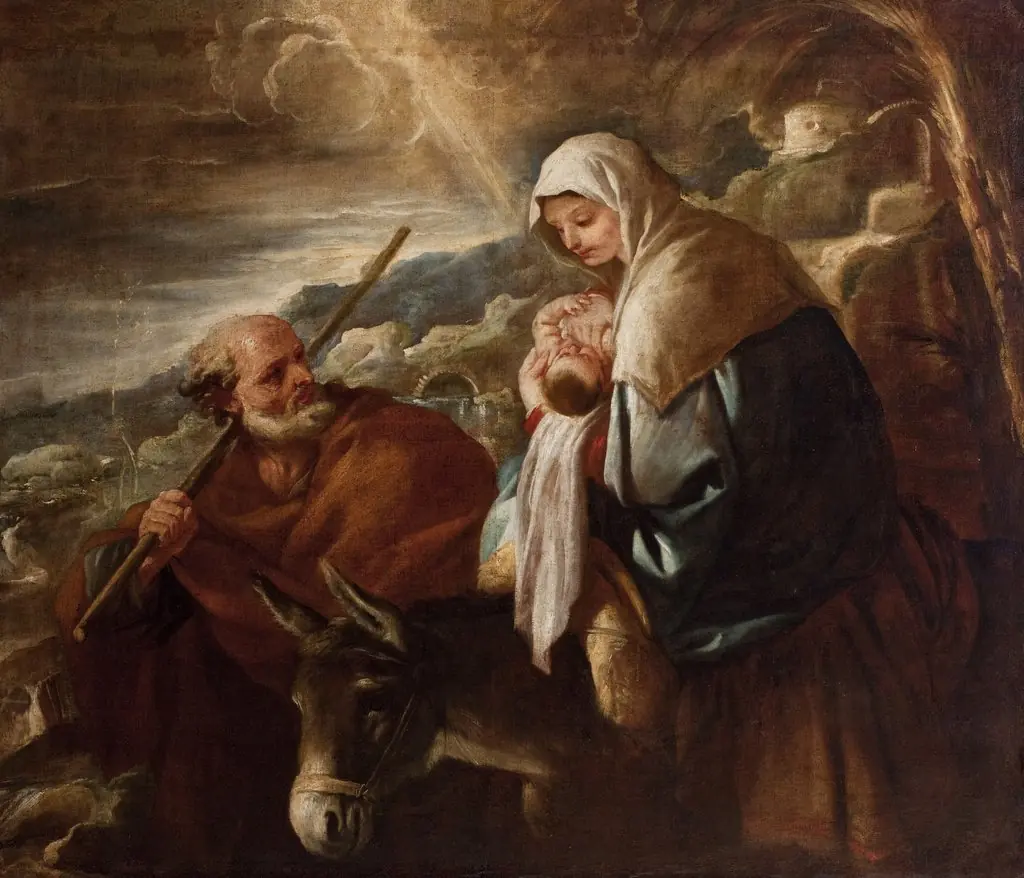
The painting illustrates the biblical narrative of the Holy Family's escape to Egypt. Composed of Mary, Joseph, and the infant Jesus, accompanied by a donkey, the scene conveys a sense of gentle urgency. Two hovering cherubs, one holding a ribbon, add a divine layer to the otherwise earthly, familial moment.
Technique & Style
Murillo employs oil paint to craft a visually appealing contrast between the vibrant red of Mary's dress and the subdued blues and browns of Joseph's robe and the donkey. This chromatic choice highlights the central figures against the softer, countryside backdrop.
History & Provenance
Created in 1669, The Flight into Egypt is a product of Murillo's prolific career, which spanned religious themes and everyday life scenes. The painting is now part of the permanent collection at the Museum of Fine Arts in Budapest.
Context
While influenced by early Baroque Italian movements, the painting reflects Murillo's Spanish Baroque roots. His ability to balance religious narratives with intimate, humanizing details was characteristic of his style.
Legacy
As part of Murillo's religious oeuvre, The Flight into Egypt contributes to the artist's reputation for capturing both the sacred and the mundane with sensitivity. It remains a notable example of 17th-century European religious art.
Artist & collection
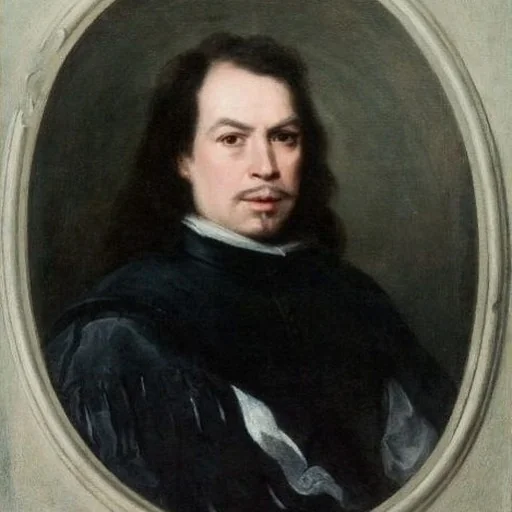
Artist
Bartolomé Esteban Murillo ( mure-IL-oh, m(y)uu-REE-oh, Spanish: ; late December 1617, baptised 1 January 1618 – 3 April 1682) was a Spanish Baroque painter.