Artwork
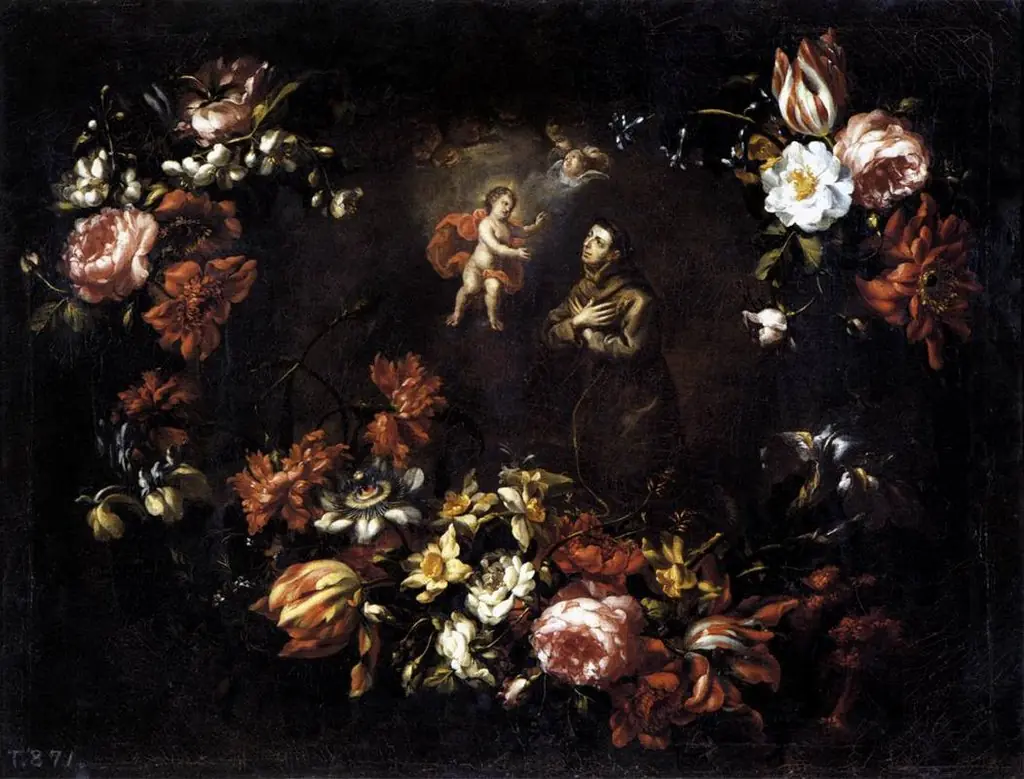
Garland of Flowers with Saint Camillus de Lellis
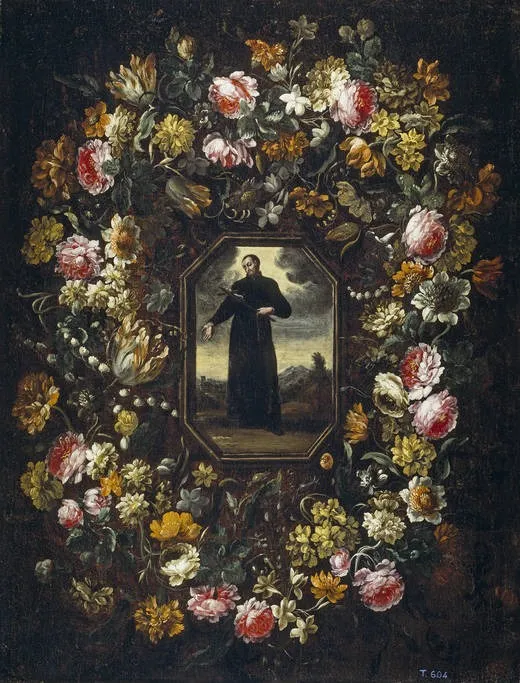
Garland of Flowers with Saint Camillus de Lellis is an oil painting by the Early Baroque Italian artist Bartolomé Pérez. It dates from 1650 and is held in the collection of the Museo del Prado.
About this work
Overview
Garland of Flowers with Saint Camillus de Lellis is an oil painting created by Spanish Baroque artist Bartolomé Pérez around 1650. The work combines a floral arrangement with a central portrait, characteristic of early Baroque Italian religious themes.
Subject & Meaning
The painting centers on Saint Camillus de Lellis, depicted in dark robes with clasped hands, conveying a sense of serenity and contemplation. The surrounding floral garland, vibrant and diverse, symbolically frames the saint within a natural, harmonious context.
Technique & Style
Pérez employs oil paint to achieve contrasting effects: the dark background accentuates the colorful, intricately arranged flowers and the subject's robes, while the saint's serious expression is rendered in nuanced detail.
History & Provenance
Created circa 1650 by Bartolomé Pérez, a painter to the king and contributor to the Buen Retiro theater's scenography, the painting is now part of the Museo del Prado's collection.
Context
Though Pérez is known for floral still lifes, this work reflects his capability in religious subjects, blending the naturalism of Baroque with the solemnity of religious portraiture.
Legacy
As part of the Prado's collection, *Garland of Flowers with Saint Camillus de Lellis* contributes to the museum's Baroque holdings, offering insight into Pérez's versatility beyond still-life painting.
Artist & collection
Artist
Bartolomé Pérez de la Dehesa (1634 – 16 January 1693) was a Spanish painter of the Baroque period.

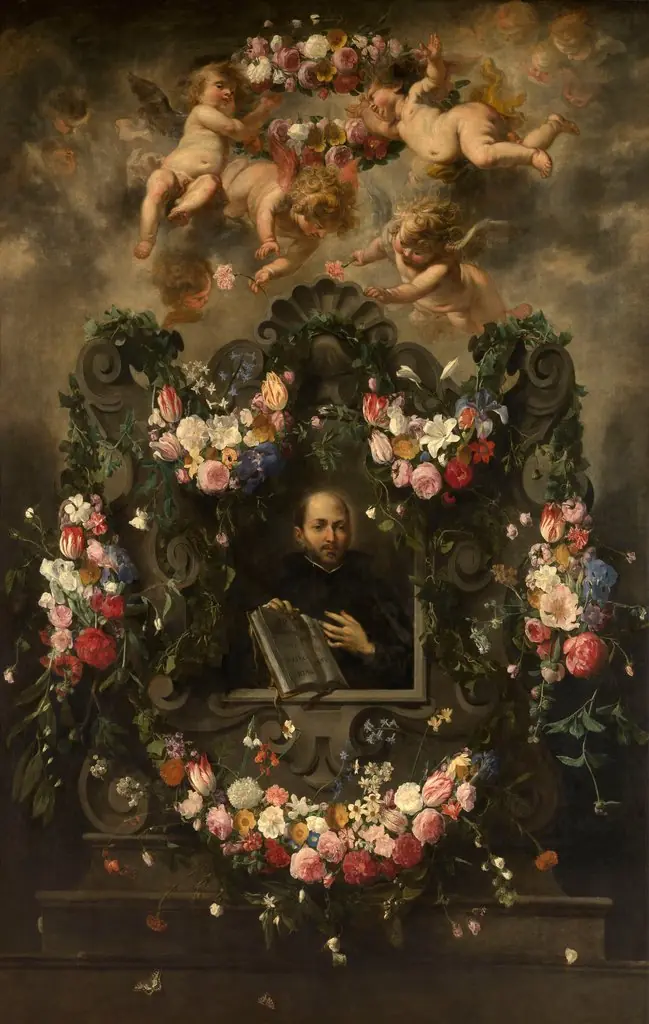 Saint Ignatius Surrounded by a Garland of Flowers
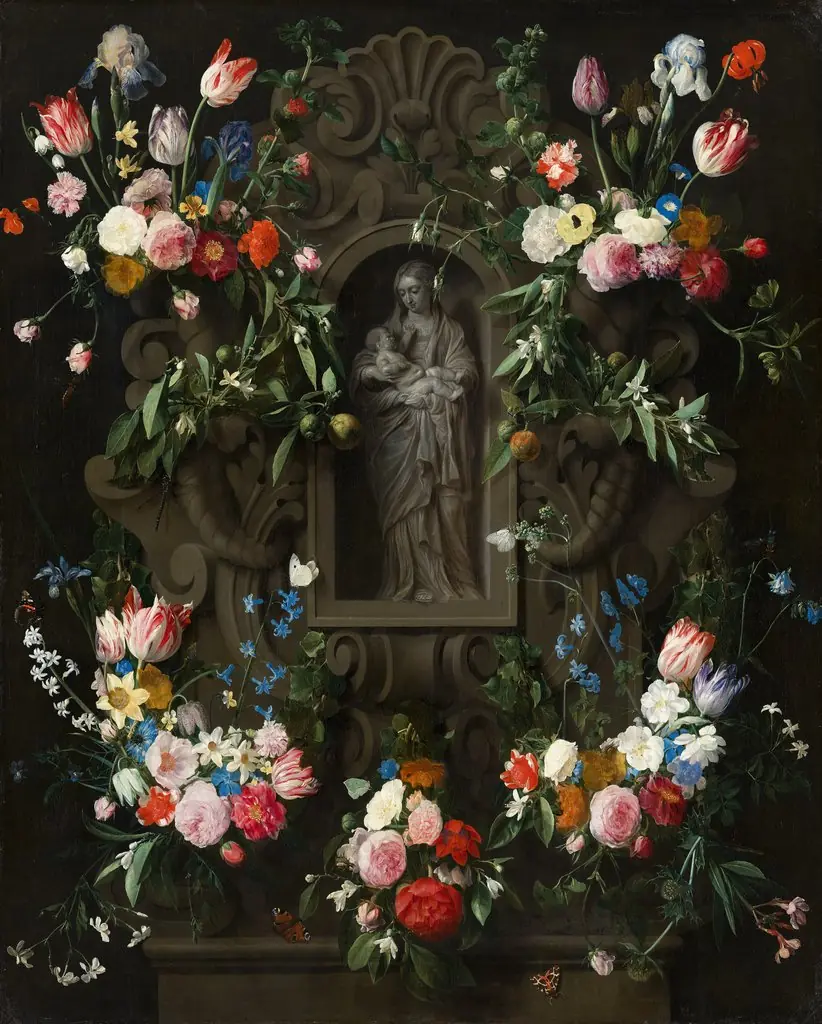 Garland of Flowers surrounding a Sculpture of the Virgin Mary
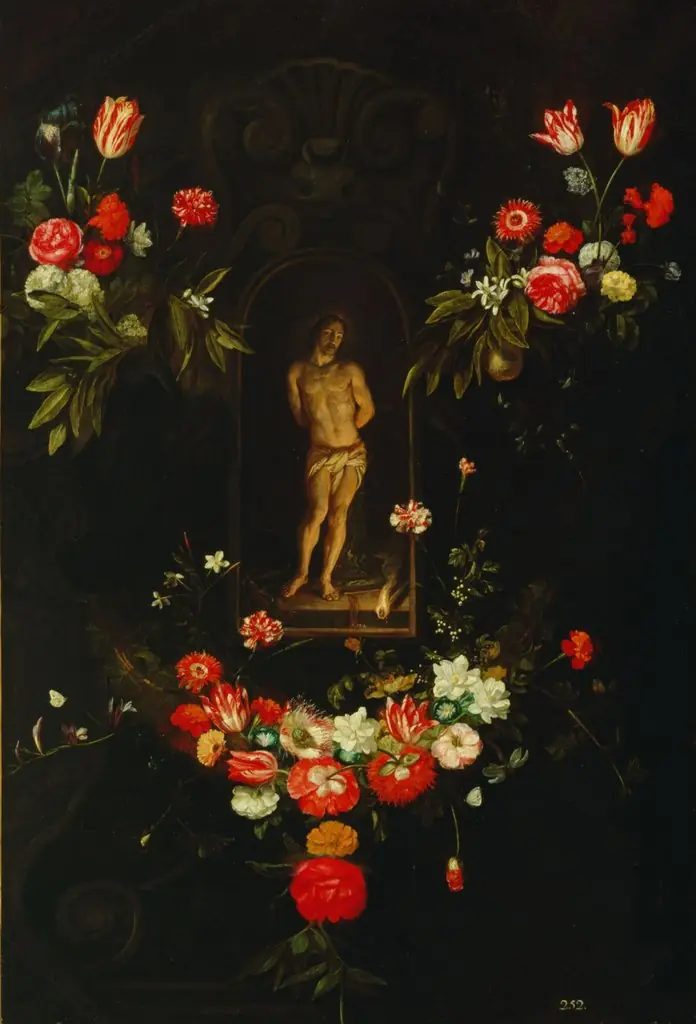 Christ at the column, in a garland of flowers
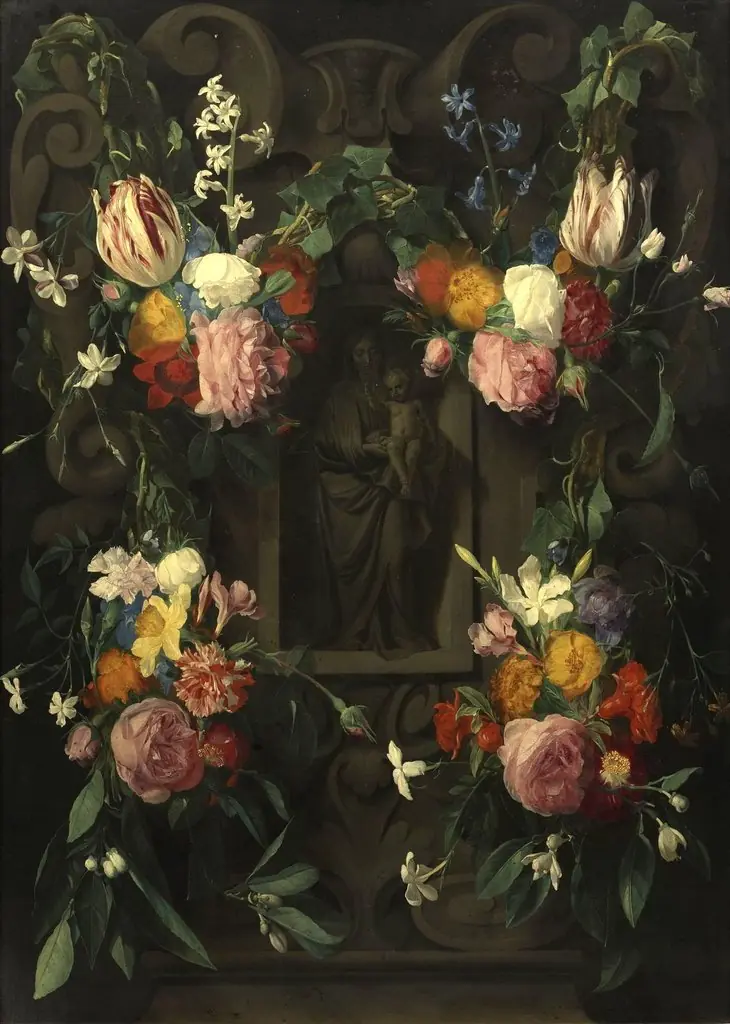 Flower Garland with the Virgin and Child
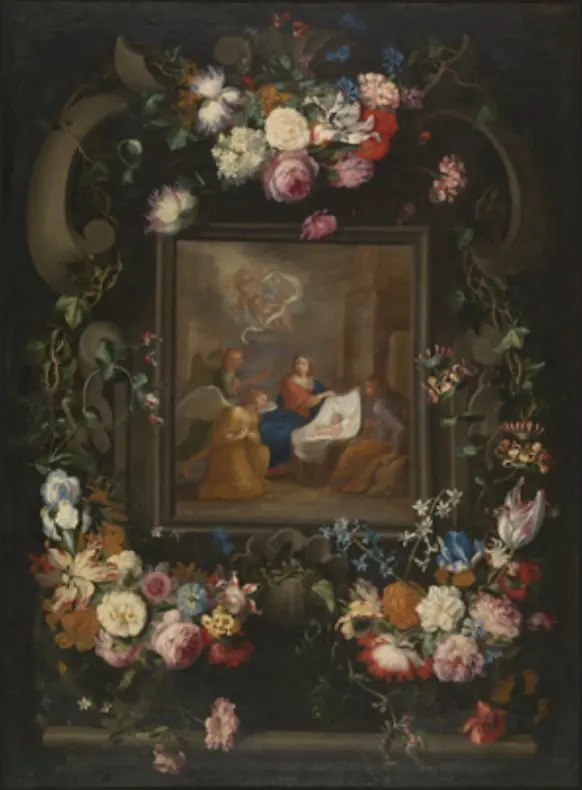 Garland of flowers around a scene of the birth of Christ
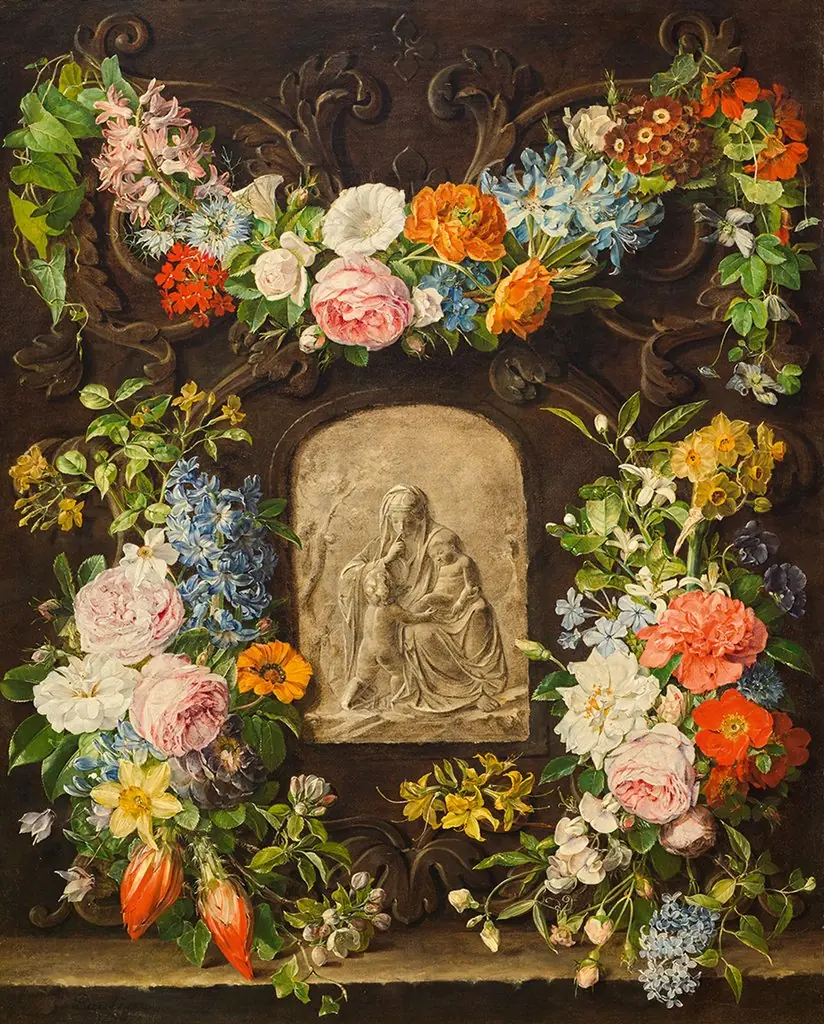 Flower garland with a relief of a Madonna
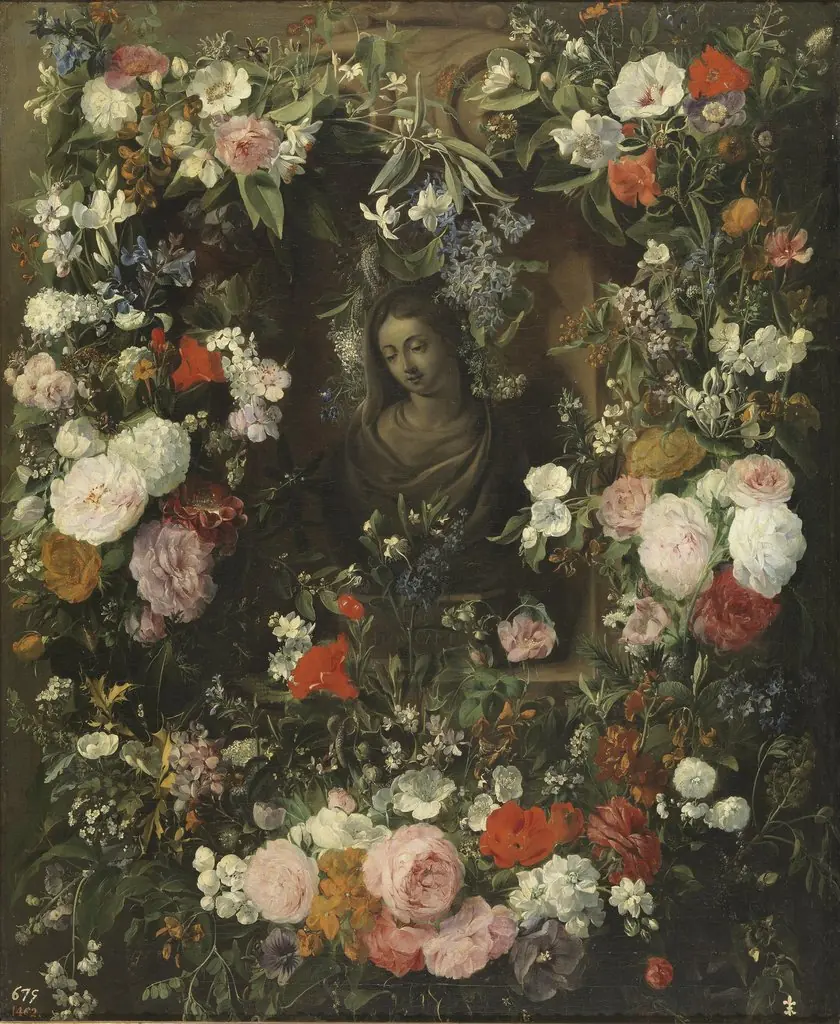 Garland surrounding the Virgin Mary
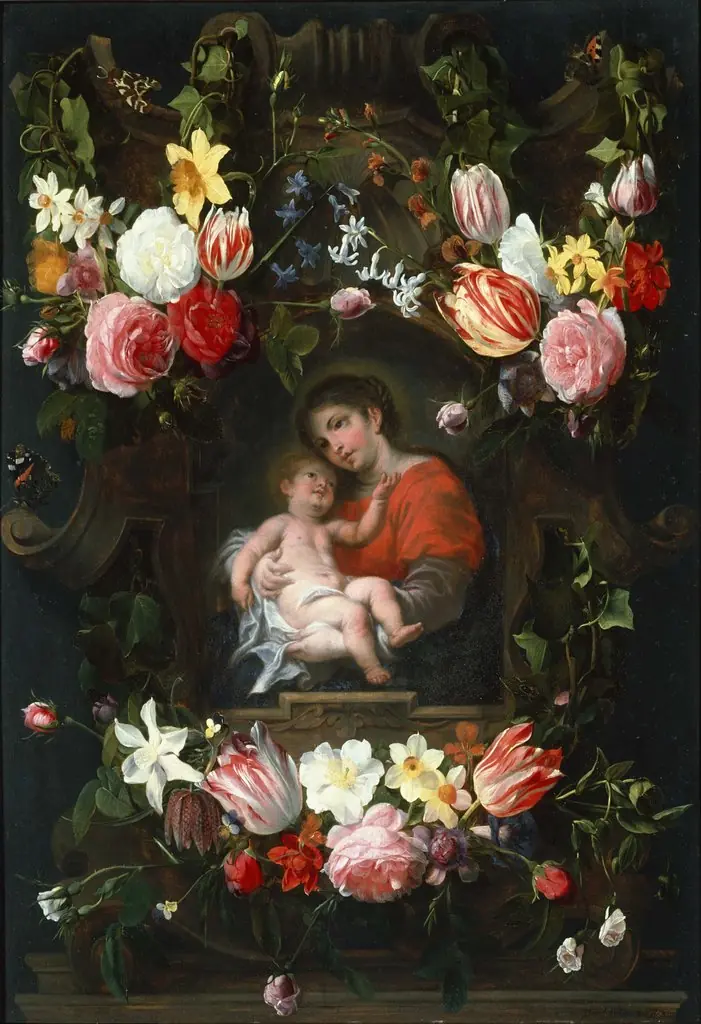 Garland of Flowers with Madonna and Child
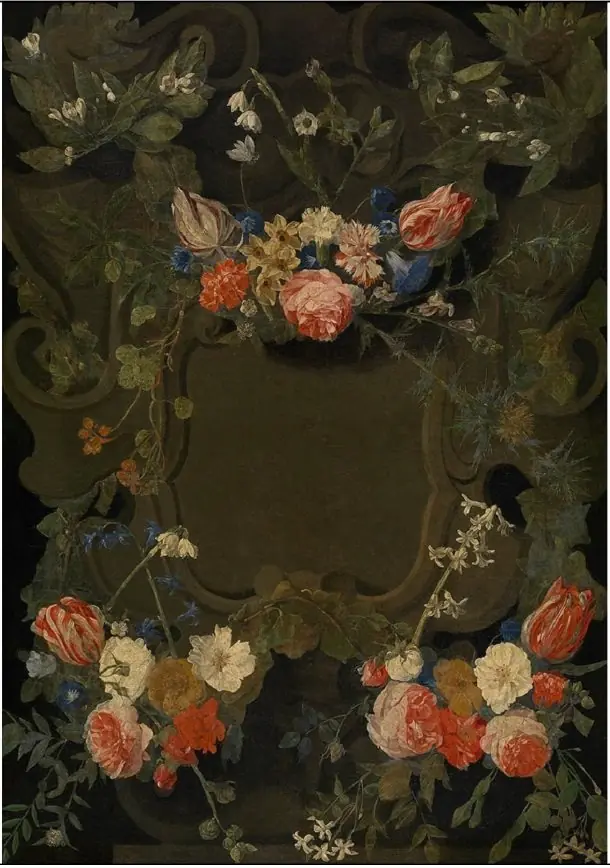 Flower garland
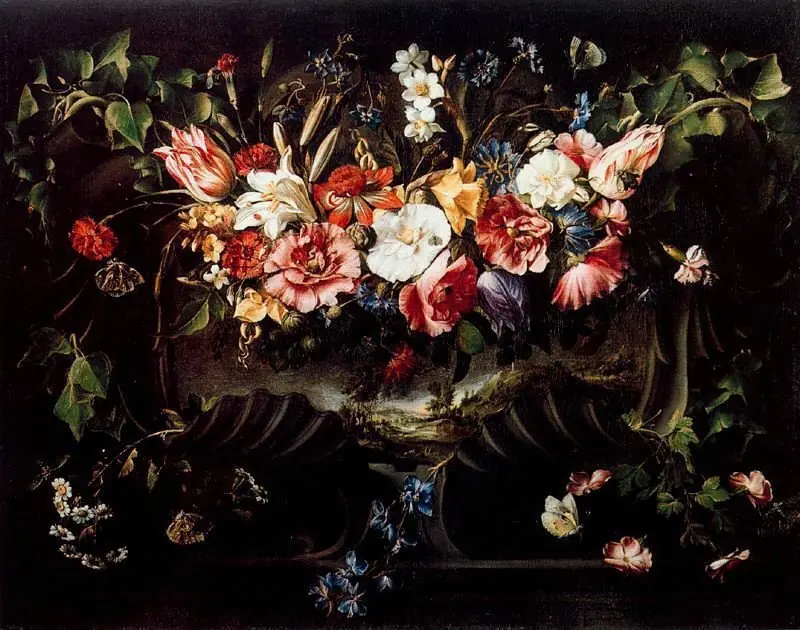 Garland of Flowers with a Landscape
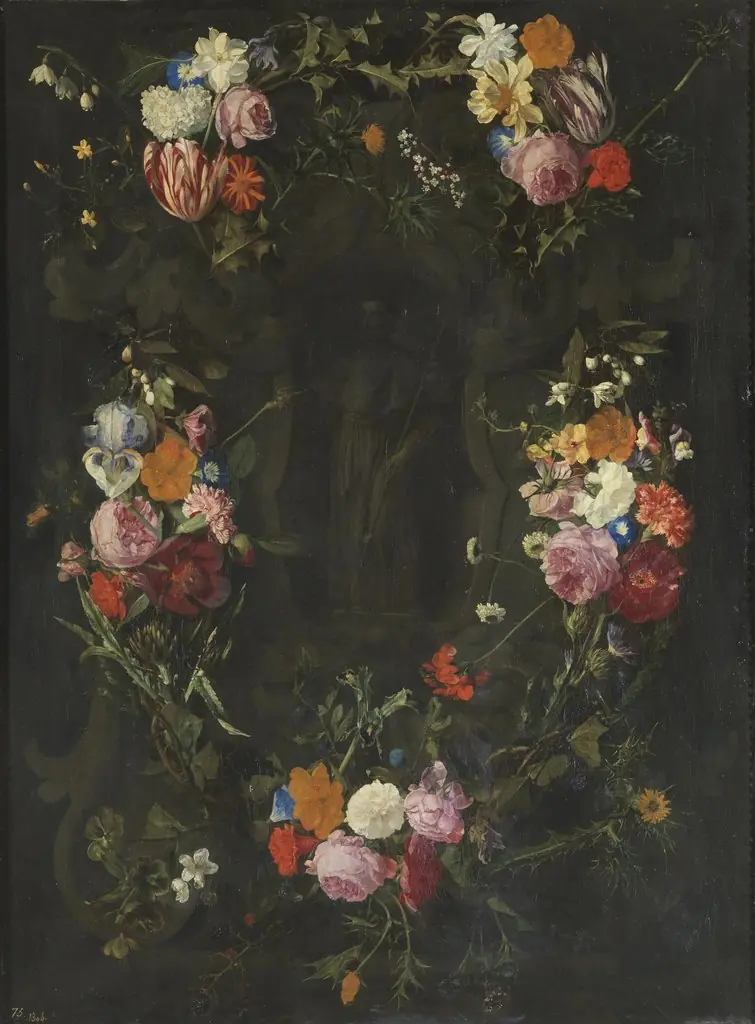 Saint Francis Xavier in a Garland