Artwork
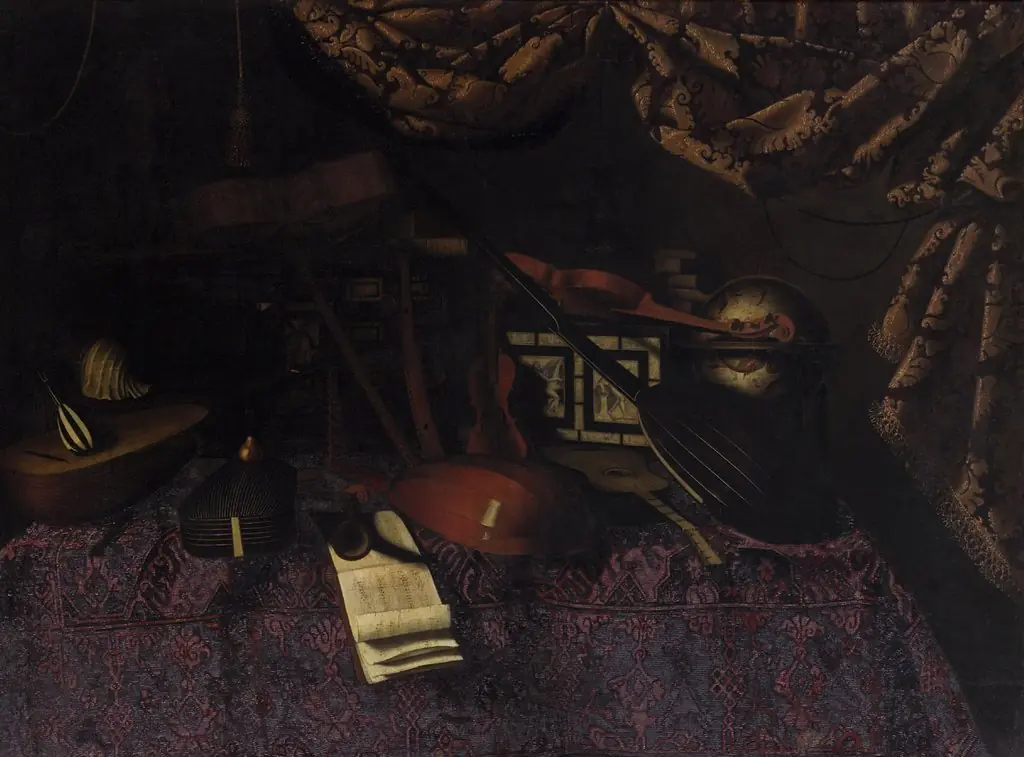
Stilleben mit Musikinstrumenten, Globus und einem Teller mit Gebäck
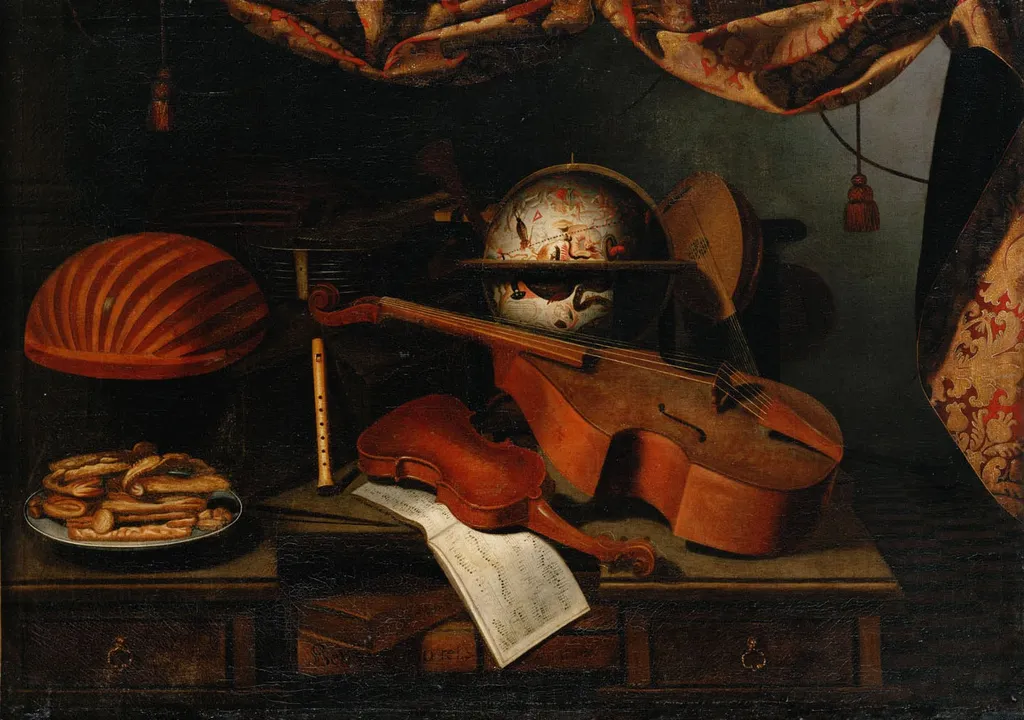
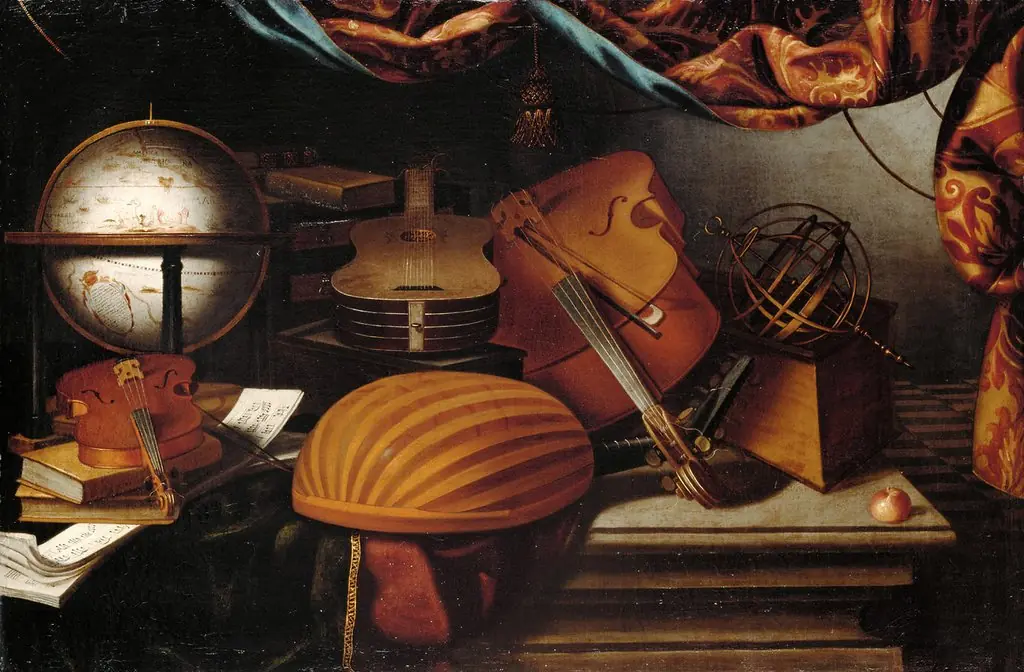
Stilleben mit Musikinstrumenten, Globus und einem Teller mit Gebäck is an unspecified painting by Bartolomeo Bettera. It dates from 1629 and is held in the collection of the Kunsthistorisches Museum.
About this work
Overview
The composition avoids theatricality, favoring restrained arrangement and subtle spatial depth.
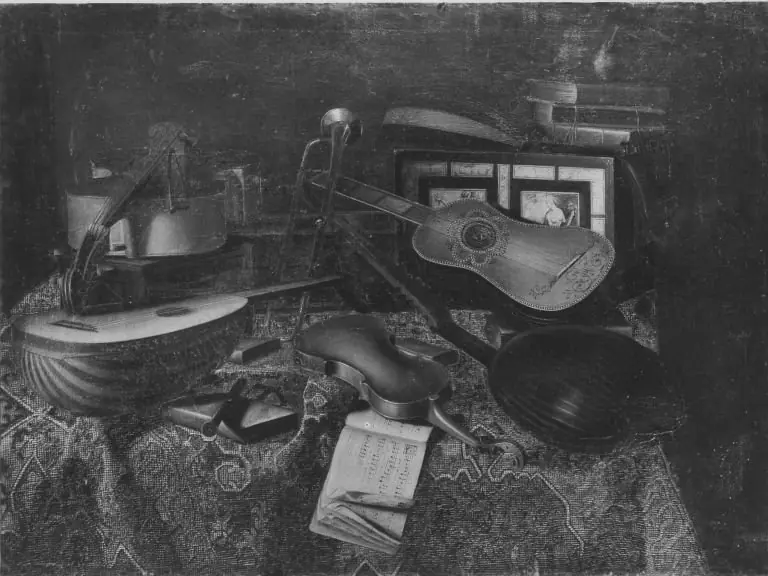
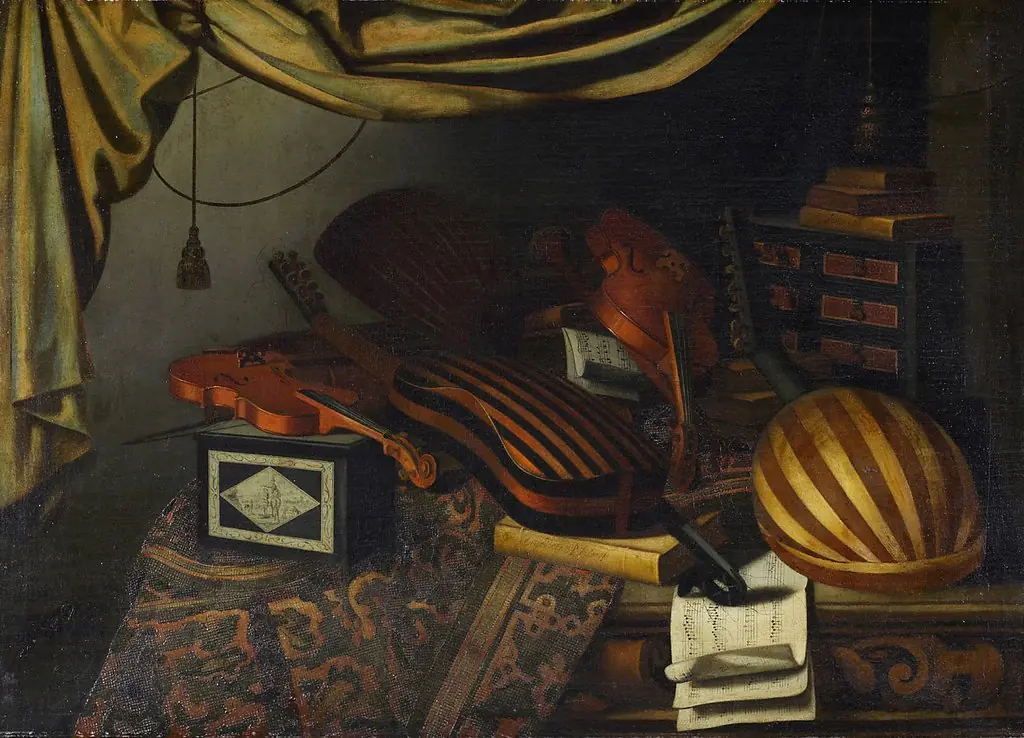
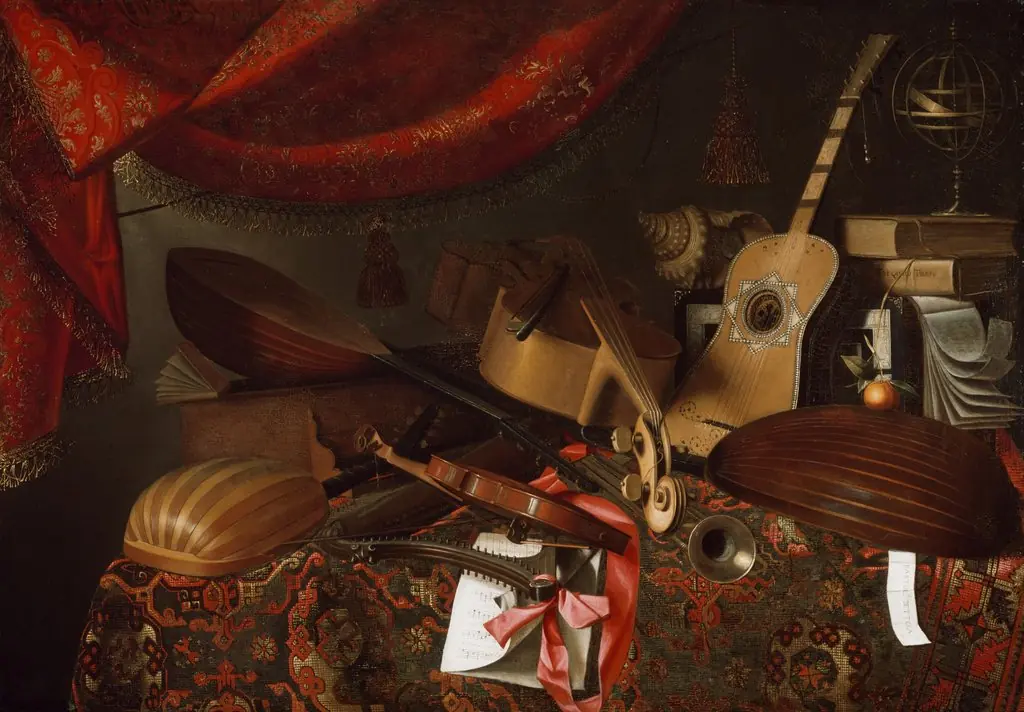
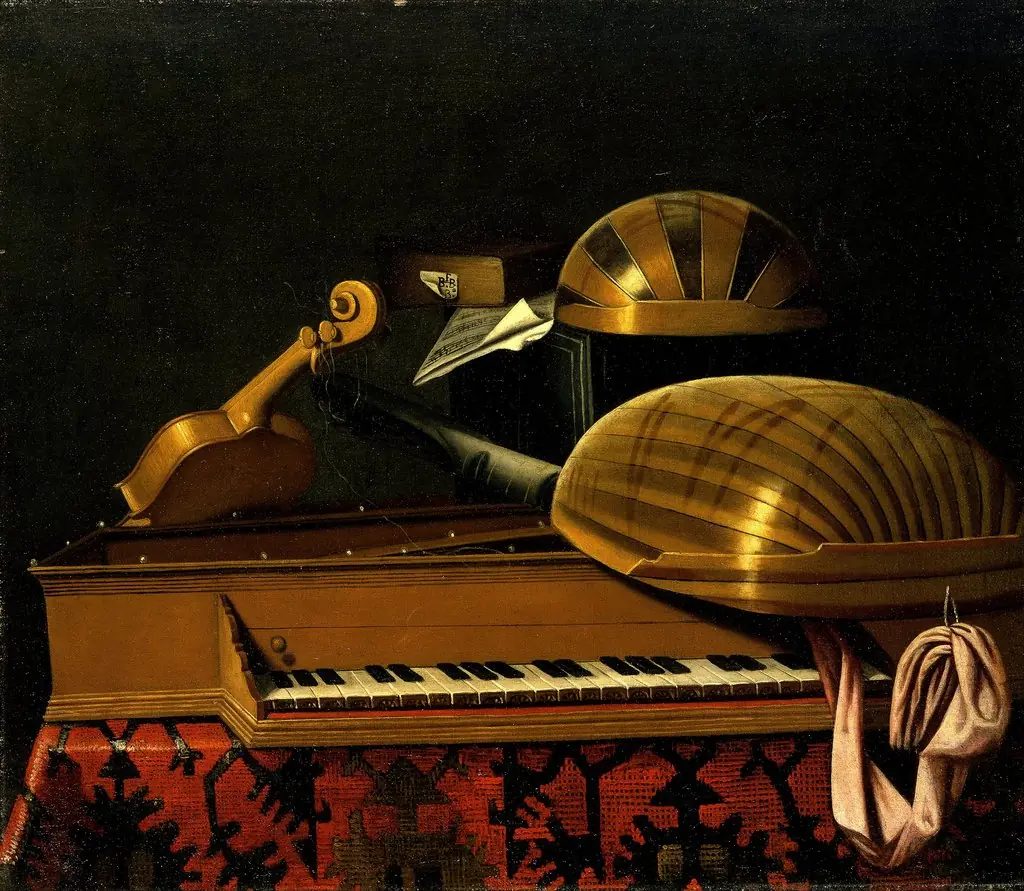
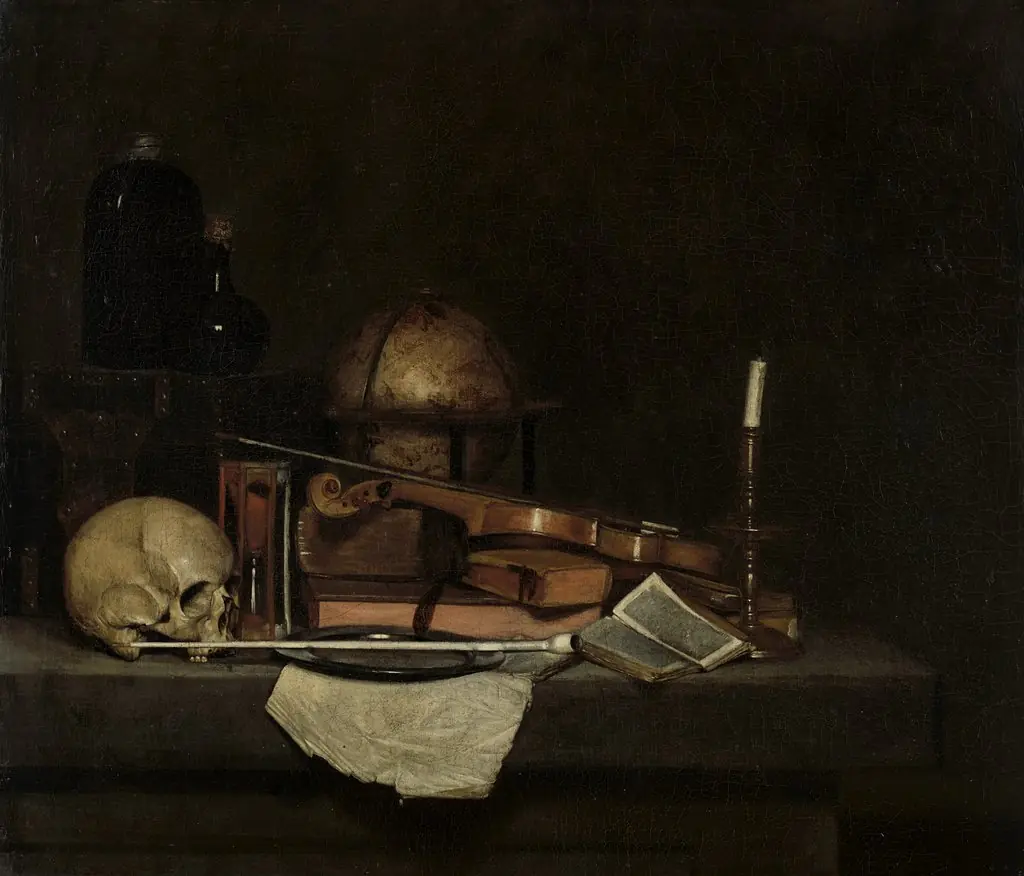
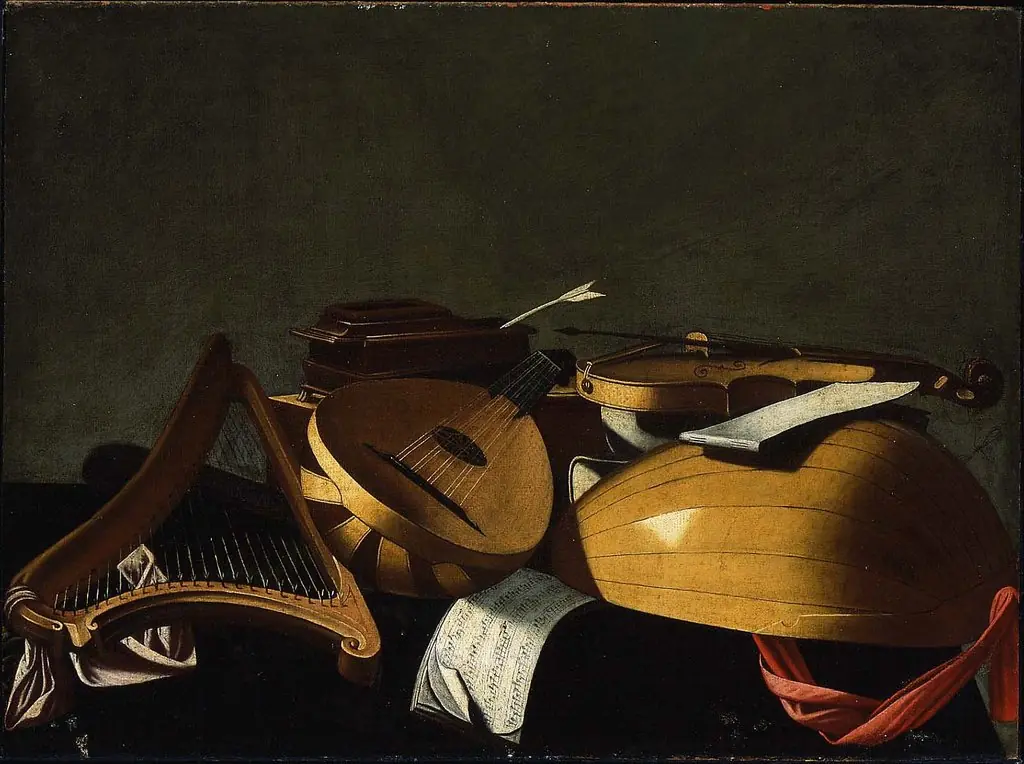
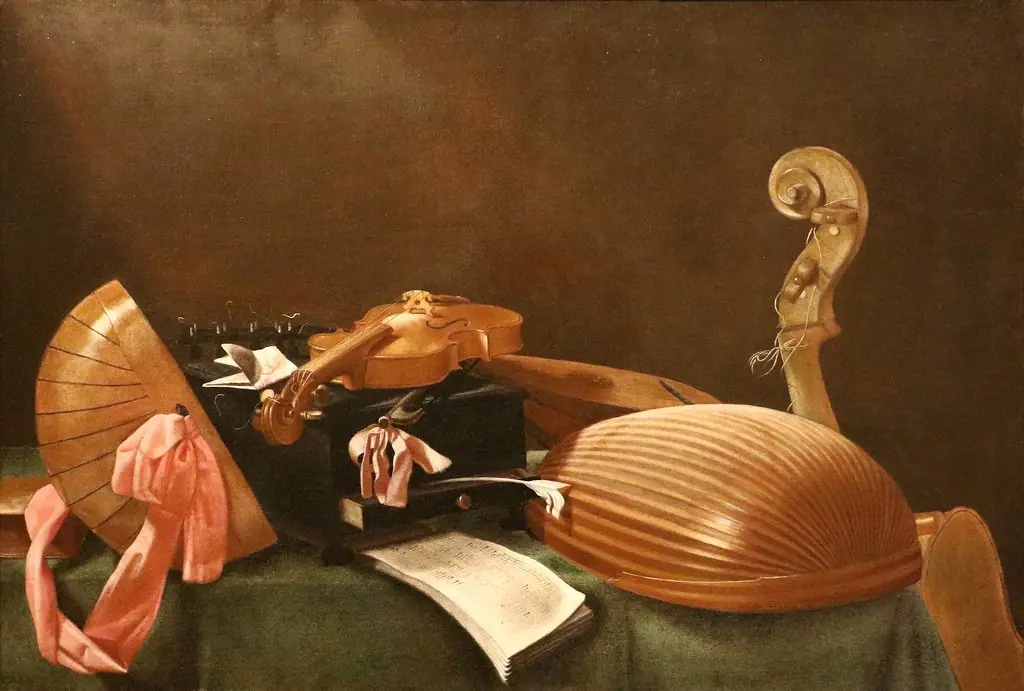
Painted around 1629 by Bartolomeo Bettera, this still life presents a quiet assembly of objects on a wooden surface: a plate of baked goods, a globe, a violin, and a sheet of music. The composition avoids theatricality, favoring restrained arrangement and subtle spatial depth. Bettera, active in northern Italy during the mid-17th century, focused on domestic and intellectual paraphernalia, often blending everyday items with symbols of learning and art.
Subject & Meaning
The objects—bread, a musical instrument, a globe, and sheet music—suggest a contemplative space where leisure, knowledge, and sustenance intersect. The globe implies global awareness, while the violin and music denote cultural refinement. The bread, humble and unadorned, grounds the scene in material reality. Together, they form a quiet meditation on the balance between earthly needs and intellectual pursuits, common in northern Italian still life of the period.
Technique & Style
Bettera rendered textures with careful attention: the grain of the violin’s wood, the intricate cartography on the globe, and the crumbly surface of the bread are all delicately distinguished. Colors remain subdued—ochres, browns, and muted greens—enhancing the painting’s somber tone. Light falls evenly, avoiding dramatic contrasts, allowing each object to be studied with quiet clarity. The brushwork is precise but unobtrusive, prioritizing observation over embellishment.
History & Provenance
The painting entered the collection of the Kunsthistorisches Museum in Vienna, where it remains today. Its early history is undocumented, but its style aligns with other works by Bettera and his contemporaries in Lombardy. It was likely commissioned by a private patron interested in scholarly still lifes, a genre popular among educated collectors in northern Italy during the early 17th century.
Context
Bettera worked alongside artists like Evaristo Baschenis, who similarly depicted musical instruments in domestic settings. These paintings reflected a broader cultural interest in the intersection of music, science, and daily life. Unlike grand historical or religious works, such still lifes appealed to private viewers seeking quiet reflection, mirroring the intellectual currents of post-Reformation Italy where contemplation and material culture coexisted.
Legacy
Bettera’s work contributed to the development of the Italian still-life tradition, particularly in its emphasis on intellectual objects. Though less widely known than his contemporaries, his paintings offer insight into the private tastes of 17th-century Italian collectors. His restrained compositions influenced later artists who sought to elevate everyday objects through careful observation rather than ornamentation.
Artist & collection
Artist
Bartolomeo Bettera (Bergamo, 1639 - Milan, after 1688) was an Italian painter, mainly depicting still lifes with musical instruments.