Artwork
St John the Evangelist
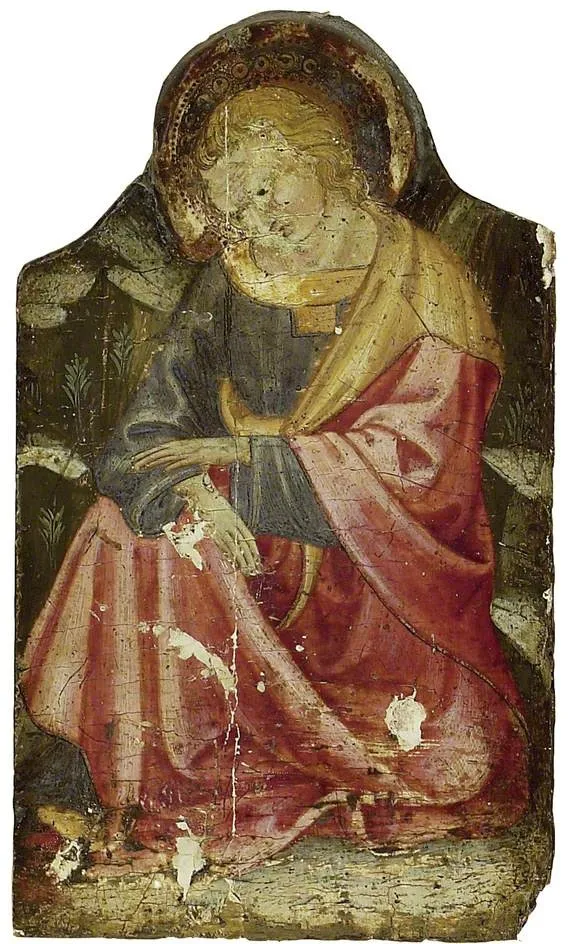
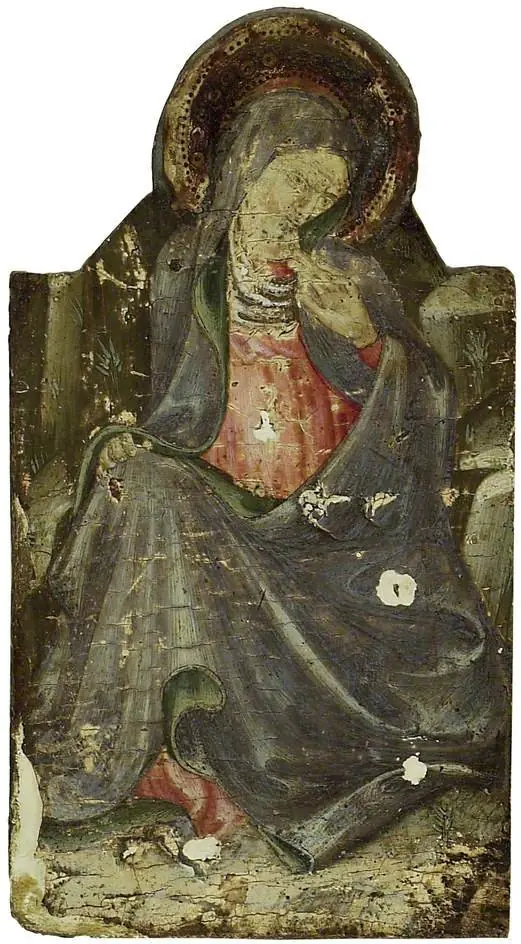
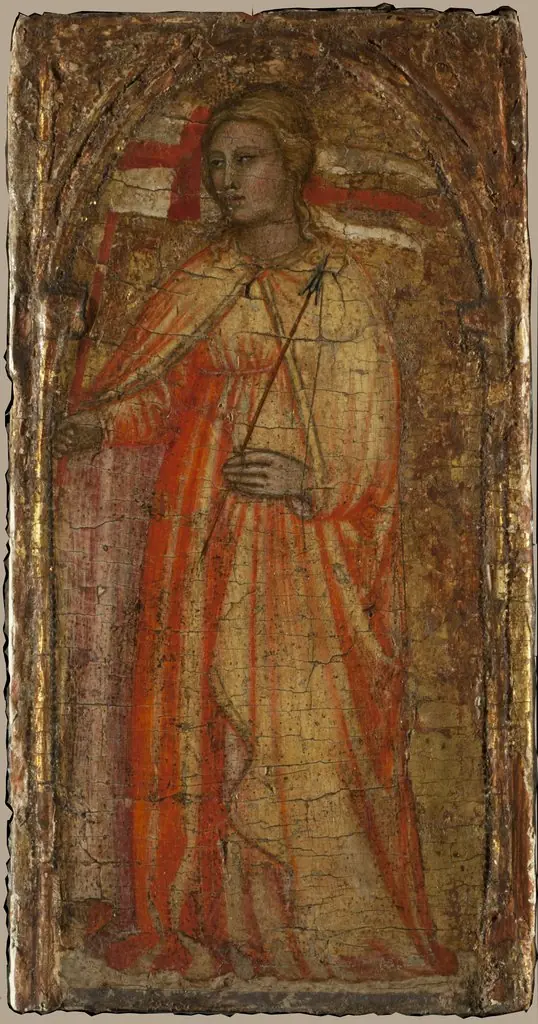
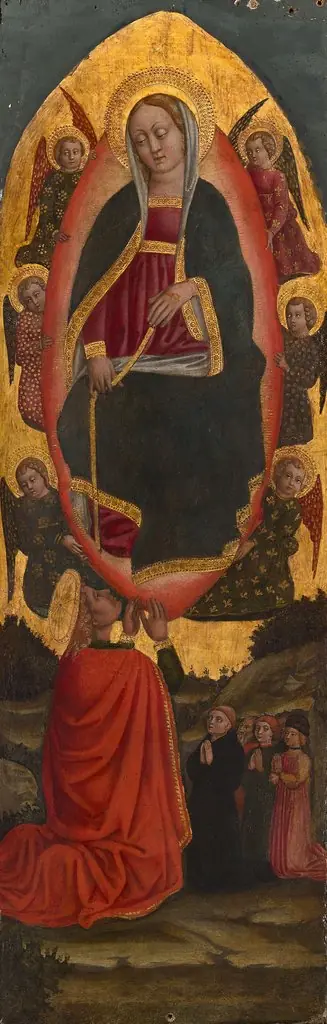
St John the Evangelist is an unspecified painting by the Early Renaissance artist Bartolomeo di Fruosino. It dates from 1413 and is held in the collection of the Ashmolean Museum.
About this work
Overview
Bartolomeo di Fruosino, a Florentine artist active in the early 15th century, painted the panel known as St John the Evangelist around 1413. The work exemplifies the early Renaissance’s shift toward more naturalistic representation and is presently conserved in the Ashmolean Museum, Oxford.
Subject & Meaning
The composition presents a solitary saint, identified by his halo and traditional attributes, seated with his head inclined and hands joined in prayer. The dark robe and red cloak, draped over the left shoulder, convey a solemn, contemplative mood appropriate to the figure’s devotional role.
Technique & Style
Executed in tempera on panel, the painting employs a restrained chiaroscuro that models the saint’s form against a muted, shadowy backdrop. Subtle foliage hints at a spatial setting, while the careful handling of light emphasizes the halo and the folds of the garments.
History & Provenance
Bartolomeo di Fruosino spent his career working in Florence, producing religious panels, illuminated manuscripts, and decorative cassone pieces. This particular panel entered the Ashmolean collection in the 20th century, where it remains a representative example of his oeuvre.
Context
Created during a period when Florentine artists were exploring more lifelike figures and spatial depth, the work reflects contemporary devotional practices that favored intimate, meditative images of saints for private contemplation.
Artist & collection
Artist
Bartolomeo di Fruosino (1366 or 1369 – 7 December 1441) was an Italian Renaissance painter and illuminator of the Florentine School.