Artwork
The Virgin
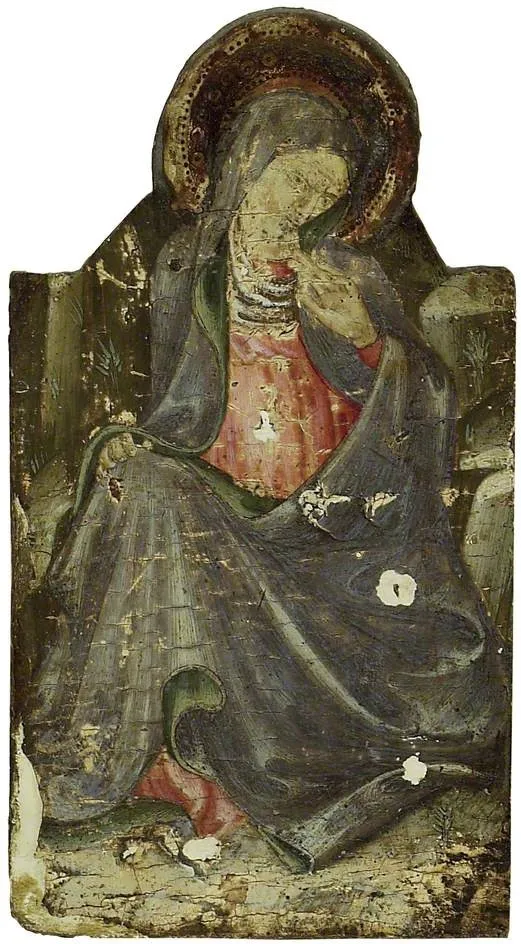
The Virgin is an unspecified painting by Bartolomeo di Fruosino. It dates from 1413 and is held in the collection of the Ashmolean Museum.
About this work
Overview
Painted around 1413 by Bartolomeo di Fruosino, a Florentine artist active in the early Renaissance, this work is a devotional panel depicting the Virgin.
Painted around 1413 by Bartolomeo di Fruosino, a Florentine artist active in the early Renaissance, this work is a devotional panel depicting the Virgin. Executed in tempera on wood, it reflects the modest scale and intimate character typical of private religious imagery in early 15th-century Florence. The painting resides in the Ashmolean Museum’s collection, where it serves as an example of transitional styles between late Gothic and early Renaissance conventions.
Subject & Meaning
The figure is likely the Virgin Mary, portrayed in a moment of quiet contemplation rather than narrative action. Her halo and solemn posture suggest spiritual reflection, common in devotional images meant for personal prayer. The absence of other figures or symbolic elements narrows the focus to her inner state, aligning with a growing trend in Florentine piety that emphasized individual devotion over grand theological scenes.
Technique & Style
The painting employs a restrained palette and simplified forms, with strong outlines defining the figure against a dark, nearly monochromatic background. Subtle contrasts in light suggest a single source, possibly a window, casting soft illumination on the Virgin’s face and hands. The surface shows signs of age—cracking and pigment loss—yet the deliberate flatness and minimal modeling reflect an intentional stylistic choice, rooted in earlier Gothic traditions rather than emerging naturalism.
History & Provenance
Created for private devotion, the panel likely originated in a domestic setting, possibly as part of a devotional altarpiece or household shrine. Its survival through centuries is notable, given the fragility of tempera on wood. It entered the Ashmolean Museum’s collection through documented acquisitions in the 19th century, though its earlier ownership remains undocumented beyond its Florentine origin.
Context
In early 15th-century Florence, religious imagery was commonly commissioned for home use, especially by wealthy merchant families. Artists like Bartolomeo worked across both sacred and secular domains, producing items such as birth trays and marriage chests alongside devotional panels. This work exemplifies the blurred boundary between public liturgical art and private spiritual practice during the period’s artistic evolution.
Legacy
Though not widely known today, the painting contributes to understanding the diversity of early Renaissance production beyond major masters. Its simplicity and focus on quiet devotion highlight how religious sentiment was expressed in modest, everyday contexts. It stands as a quiet testament to the role of small-scale art in shaping personal faith during a time of broader artistic transformation.
Artist & collection
Artist
Bartolomeo di Fruosino (1366 or 1369 – 7 December 1441) was an Italian Renaissance painter and illuminator of the Florentine School.

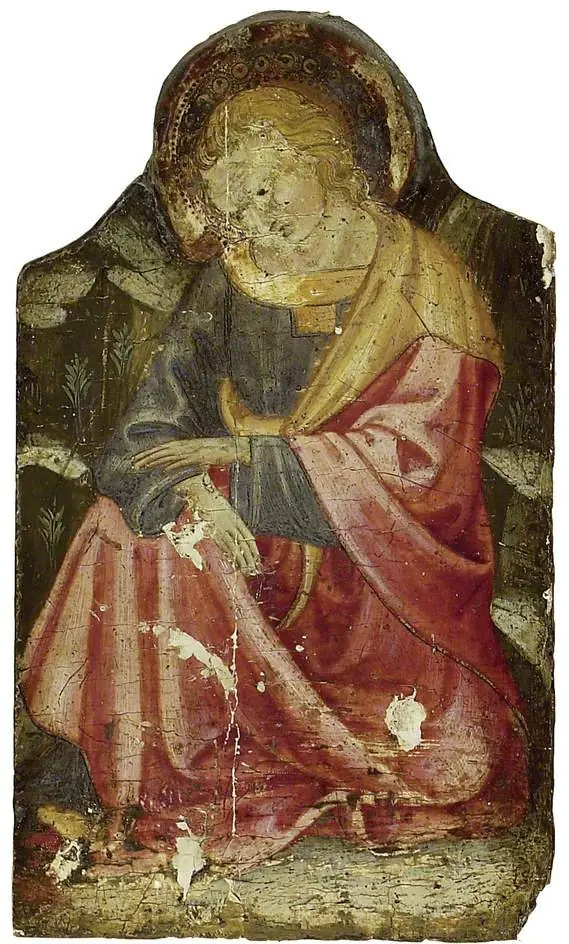 St John the Evangelist
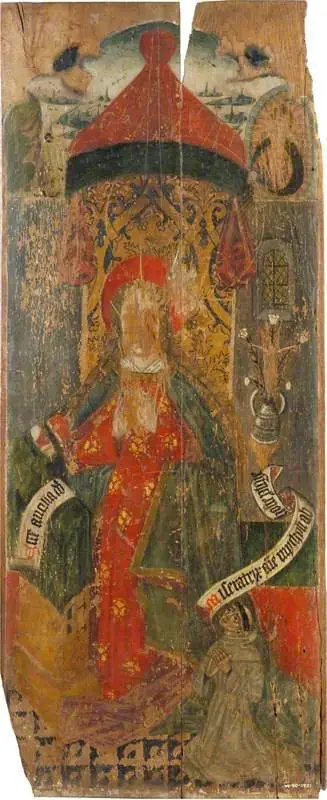 The Annunciation
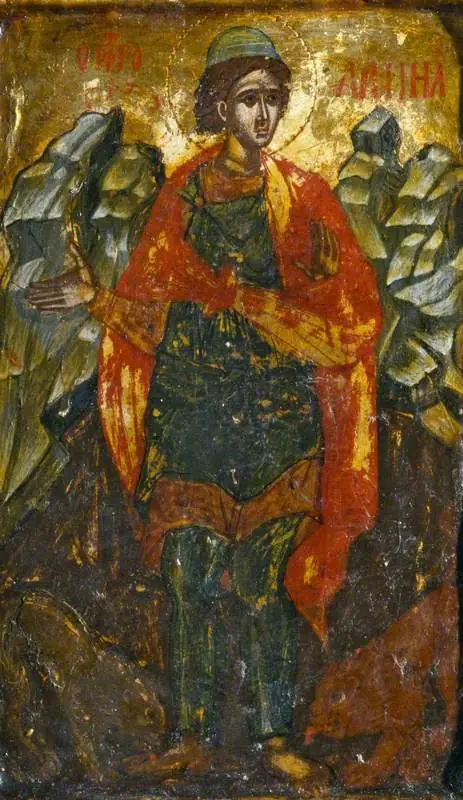 Daniel in the Lion's Den (one side of a two-sided panel)
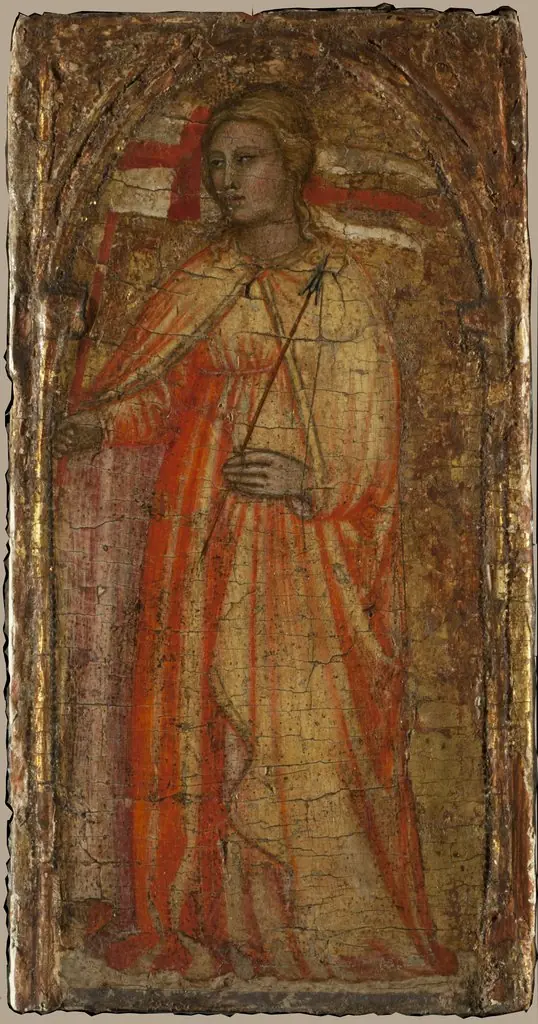 Saint Ursula
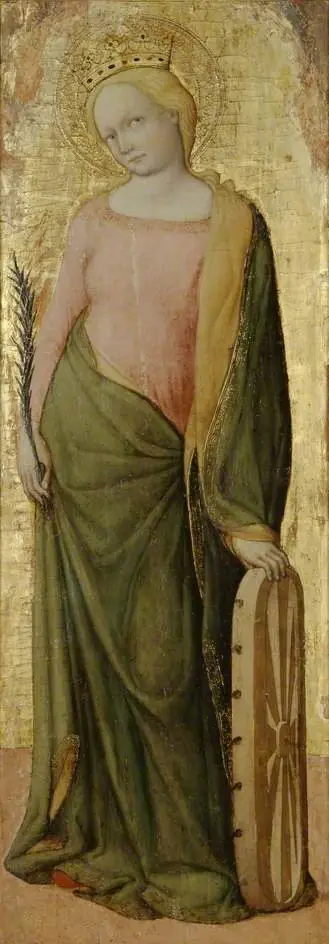 St Catherine of Alexandria
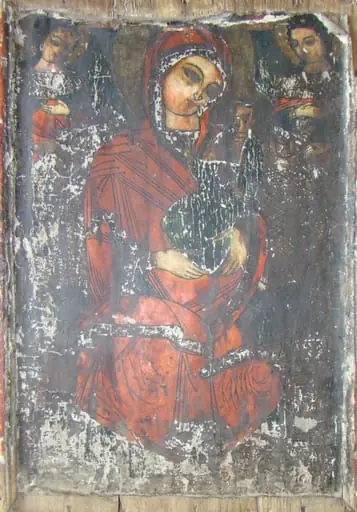 Maica Domnului cu Pruncul
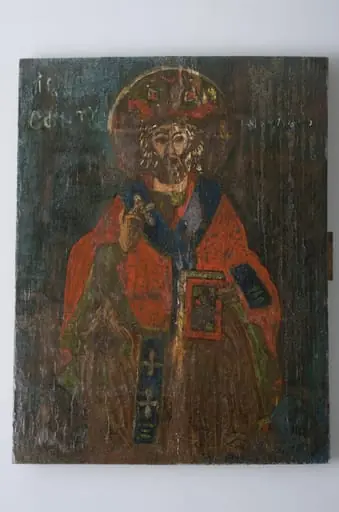 Icoana este pictată pe lemn, reprezentându-l pe Sfântul Nicolae cu veșminte arhierești (felon roșu, omofor albastru și mitră pe cap), ținând Evanghelia închisă cu mâna stângă și binecuvântând cu mâna dreaptă. Cromatică: roșu, albastru, verde, maro închis.
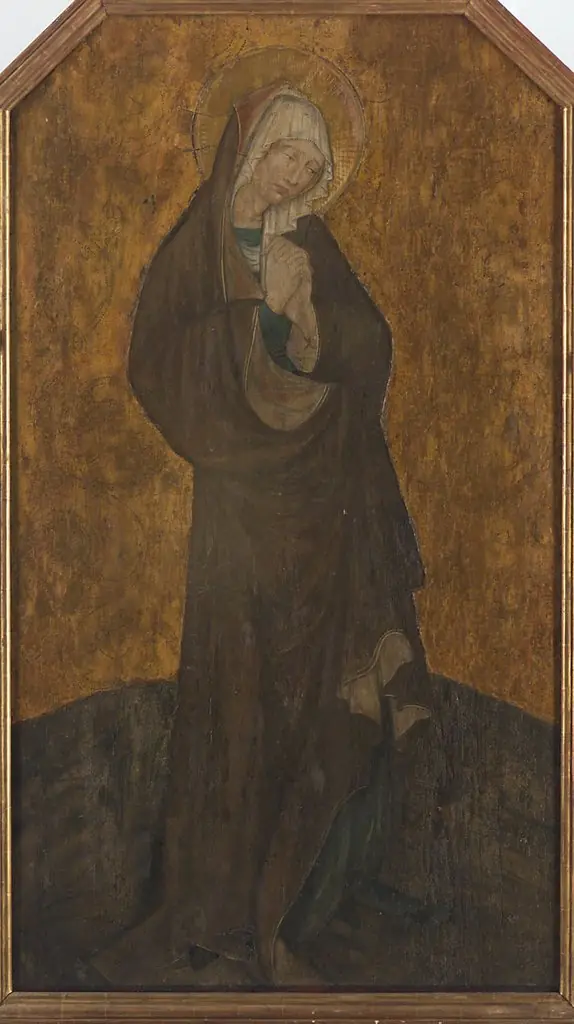 Our Lady of Sorrows
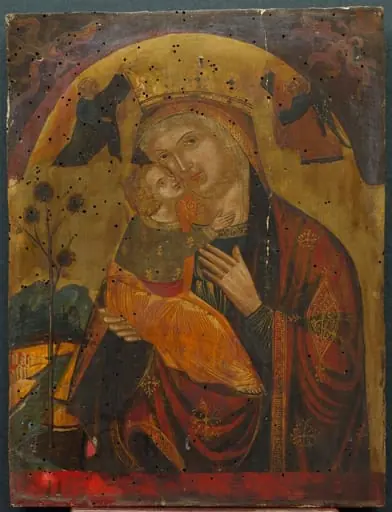 Virgin and Child
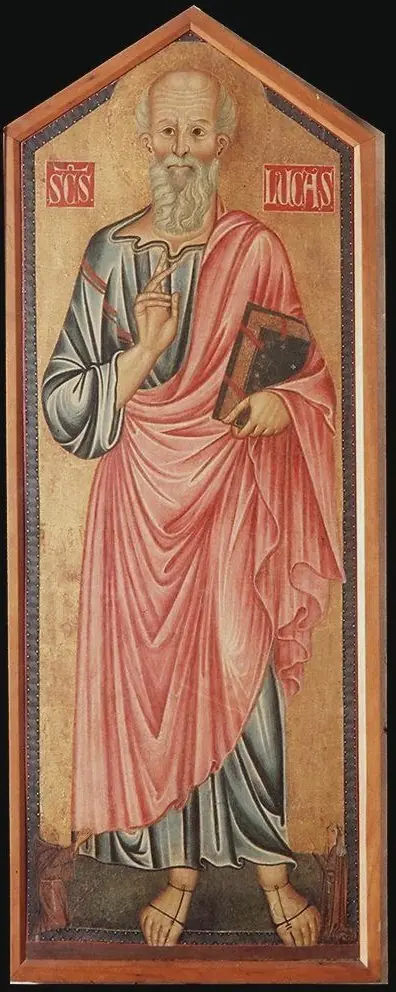 Saint Luke
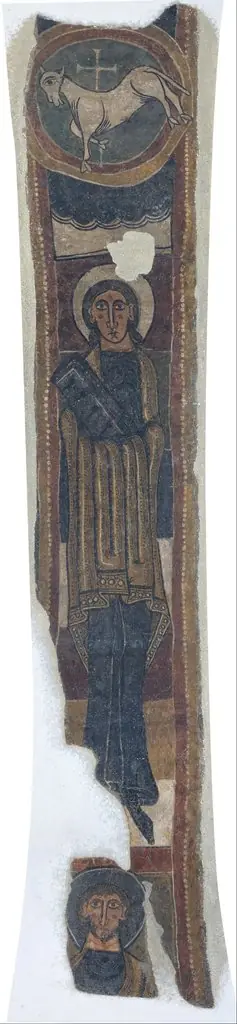 Lamb of God and saints from Santa Maria de Taüll
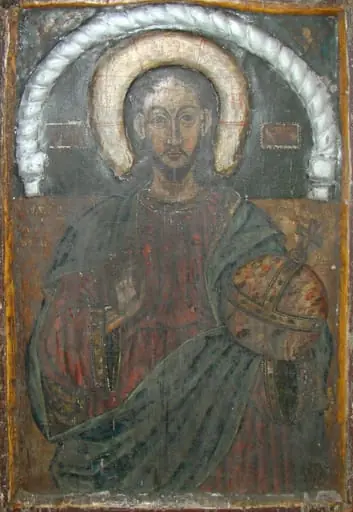 Isus Hristos Pantocrator