Artwork
Saint Francis of Assisi
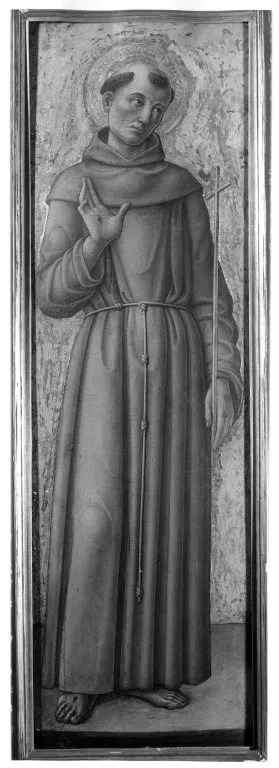
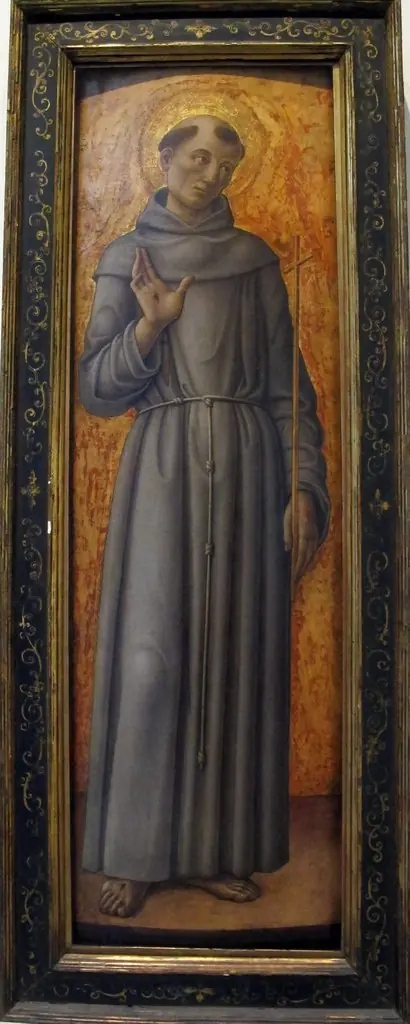
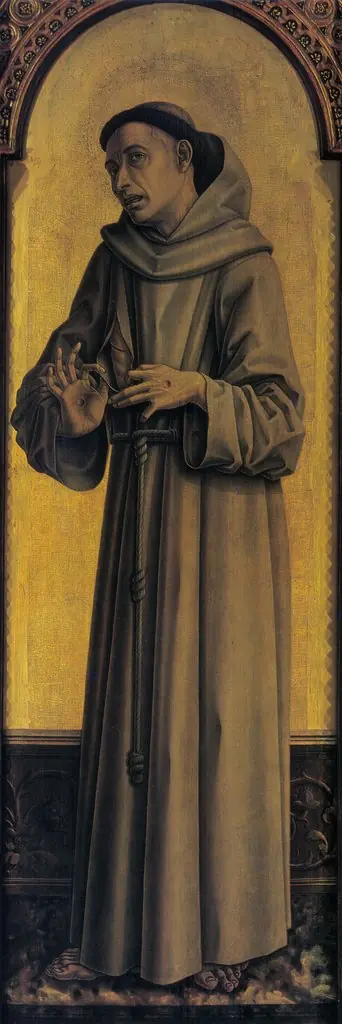
Saint Francis of Assisi is an unspecified painting by the Early Renaissance artist Bartolomeo Vivarini. It dates from 1460 and is held in the collection of the Brooklyn Museum.
About this work
Overview
Created in 1460, this panel by Bartolomeo Vivarini presents the figure of Saint Francis of Assisi. Executed during the early Renaissance, the work exemplifies the period’s turn toward naturalistic representation within devotional imagery. The painting is part of the permanent collection of the Brooklyn Museum, where it is displayed among other 15th‑century Italian religious works.
Subject & Meaning
The central figure is Saint Francis, identifiable by his simple brown habit, a rope cinched at the waist, and the modest staff he holds in his right hand. A luminous halo crowns his head, signalling sanctity. The composition invites contemplation of the saint’s humility and spiritual devotion, core themes in Franciscan iconography.
Technique & Style
The use of a clear, defined halo and restrained color palette reflects the transitional aesthetics between Gothic stylization and emerging Renaissance realism.
Vivarini employs tempera on panel, rendering the saint’s robes with delicate brushwork that suggests the texture of coarse fabric. The background is rendered in a muted, light‑toned ground, providing a subtle atmospheric setting without distracting detail. The use of a clear, defined halo and restrained color palette reflects the transitional aesthetics between Gothic stylization and emerging Renaissance realism.
History & Provenance
Bartolomeo Vivarini, active between 1450 and 1499, produced a number of ecclesiastical commissions throughout Venice and its environs. This particular depiction of Saint Francis entered the Brooklyn Museum’s collection in the 20th century, though the exact acquisition path remains documented in the museum’s accession records.
Artist & collection
Artist
Bartolomeo or Bartolommeo Vivarini (c. 1432 – c. 1499) was an Italian Renaissance painter, known to have worked from 1450 to 1499.