Artwork
Saint James the Great
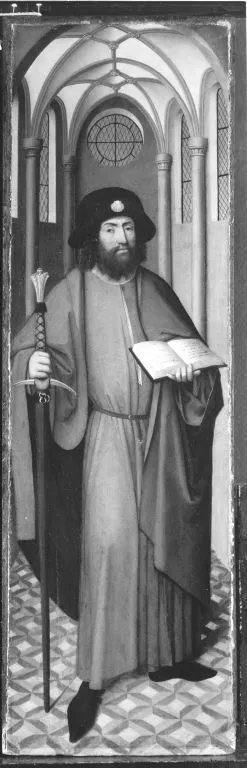
Saint James the Great is an oil painting by the Northern Renaissance artist Master of the Lyversberger Passion. It dates from 1464 and is held in the collection of the Bavarian State Painting Collections.
About this work
Overview
Created in 1464, this oil painting depicts Saint James the Great and is attributed to the anonymous figure known as the Master of the Lyversberger Passion. The work is part of the collection of the Alte Pinakothek in Munich, where it is displayed among other late‑medieval religious pieces.
Subject & Meaning
The central figure is a bearded man dressed in a long robe and a distinctive hat, standing within the threshold of a church. He holds a book, symbolising the apostle’s teachings, and a staff crowned with a cross, an emblem of pilgrimage and martyrdom associated with Saint James.
Technique & Style
The composition relies on pronounced chiaroscuro, with stark light falling on the saint’s face and hands against a darker interior. This contrast emphasizes his sanctity and draws the viewer’s eye to the key attributes. Architectural elements such as pointed arches and a circular, sunburst‑patterned window frame the scene, reflecting Gothic influences.
History & Provenance
The painting has remained in the Germanic region since its creation, eventually entering the holdings of the Alte Pinakothek. Its attribution to the Master of the Lyversberger Passion stems from stylistic analysis linking it to other works produced in the same workshop during the mid‑15th century.
Artist & collection
Artist
Master of the Lyversberger Passion
This artist painted religious scenes on wood panels in the mid-1400s, using oil paint to layer rich colors and fine details.

 Saint Nicolas
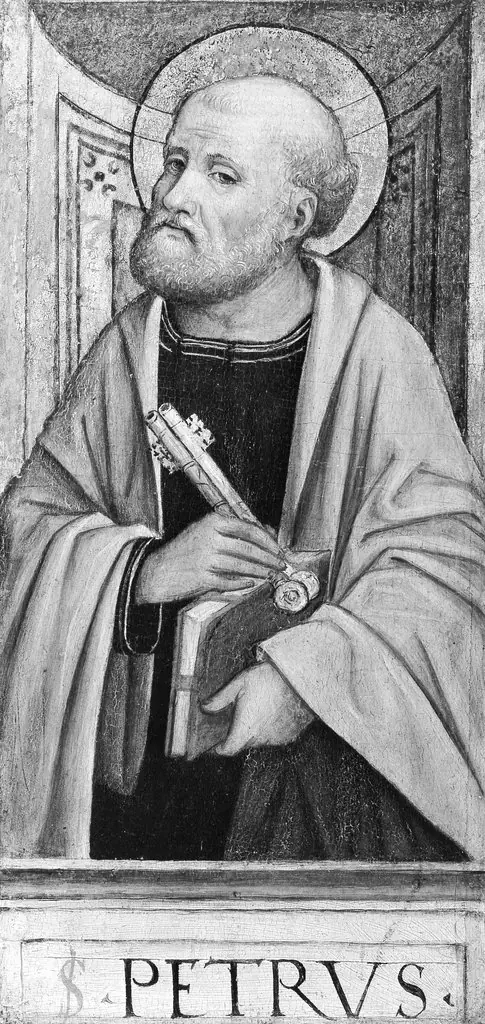 The Twelve Apostles: Saints Bartholomew, Andrew, Matthew, James the Greater, Thaddeus, Philip, James the Lesser, Simon, Peter, Paul, Thomas, and John
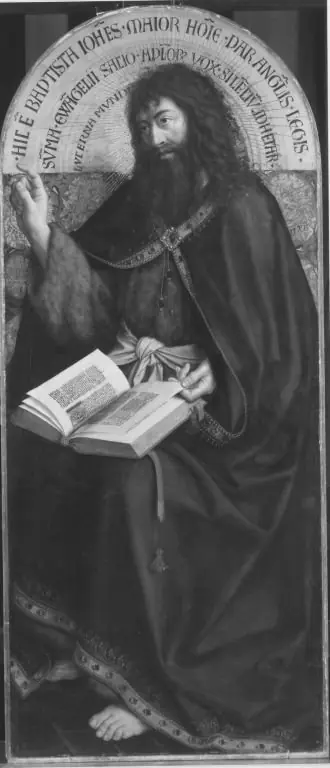 Saint John the Baptist (after The Ghent Altarpiece)
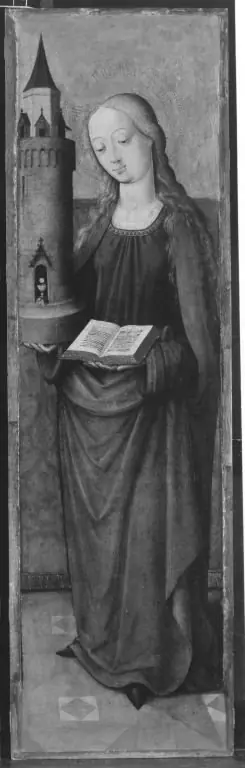 Heilige Barbara
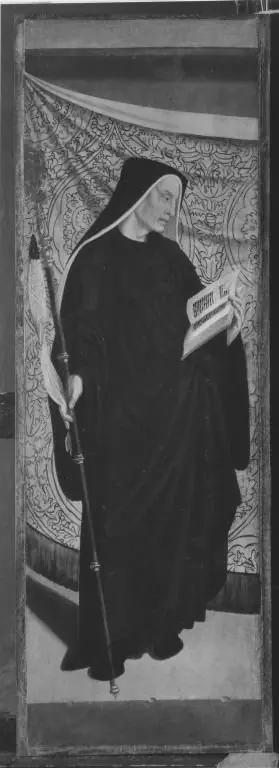 Rinck-Altar II: Hl. Benedikt
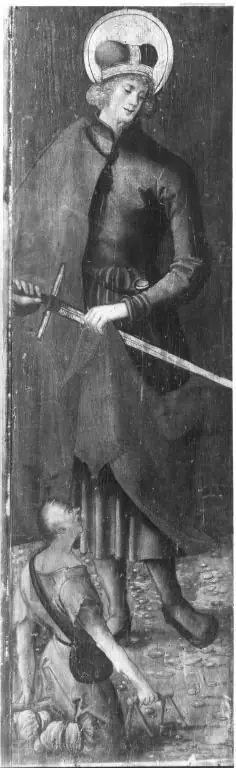 Der hl. Martin Rückseite: Hl. Stephanus(?)
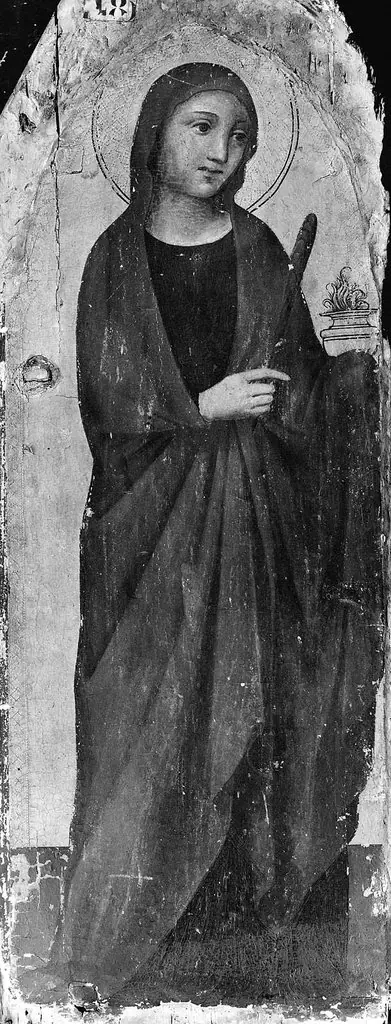 Saint Lucy
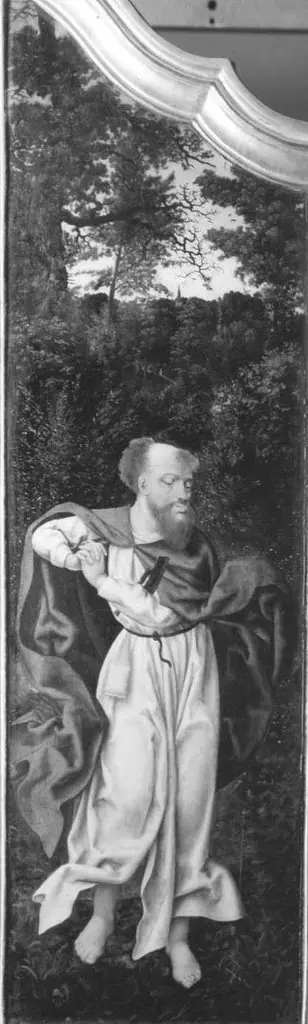 Lamentation triptych: St. Matthew On reverse: Maria of the Annunciation
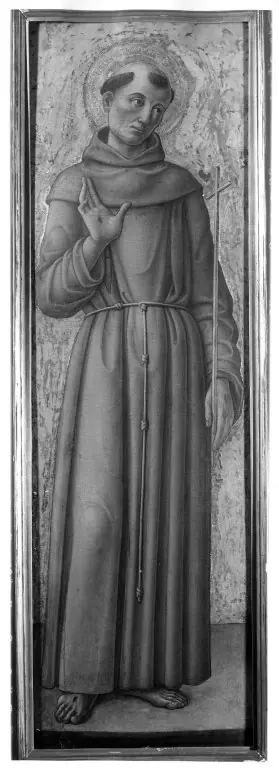 Saint Francis of Assisi