Artwork
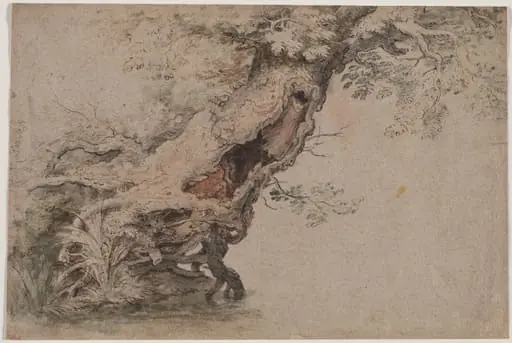
Bare Tree [verso]
![Bare Tree [verso], by Fra Bartolommeo, ink, 1494](https://artifactworldgallery.com/img/fra-bartolommeo--bare-tree-verso--691ffa617da1e8ff-w1024.webp)
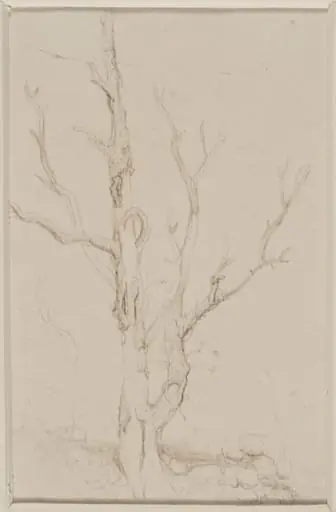
Bare Tree [verso] is an ink drawing by the Renaissance artist Fra Bartolommeo. It dates from 1494 and is held in the collection of the National Gallery of Art.
About this work
Overview
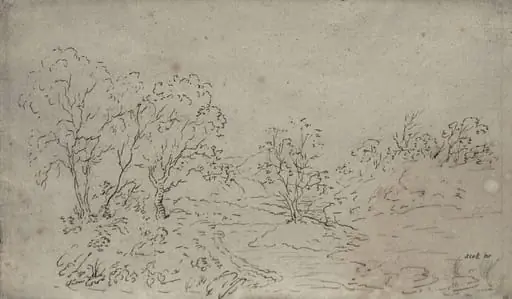
Bare Tree [verso] is a pen-and-brown-ink drawing on laid paper attributed to Fra Bartolommeo and dated to 1494. The work presents a solitary, leafless tree rendered in fine, controlled lines against a slightly yellowed surface, characteristic of the paper’s age. Its compact composition and restrained medium place it within the artist’s broader practice of observational studies.
Subject & Meaning
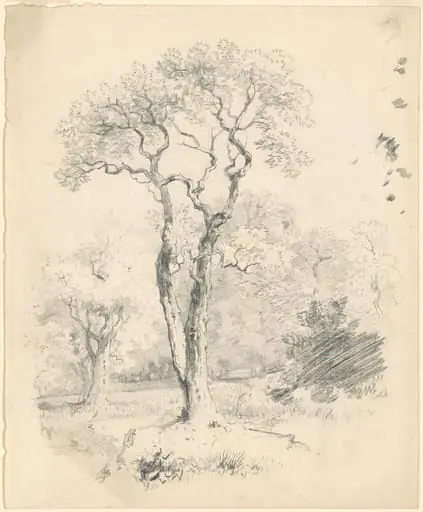
The drawing depicts a single, stripped tree whose twisted branches and bifurcating trunk convey a naturalistic study of form rather than allegorical content. By isolating the tree, Fra Bartolommeo emphasizes the structural qualities of wood, inviting contemplation of growth, decay, and the underlying geometry of nature.
Technique & Style
Executed with pen and brown ink, the image relies on precise, linear marks without any hatching or tonal shading. The thin strokes delineate the bark, branches, and split trunk, creating a sense of depth through line density alone. This approach reflects Renaissance artists’ interest in direct observation and the use of drawing as a tool for anatomical and botanical investigation.
History & Provenance
Created in the late 15th century, the drawing is part of Fra Bartolomme's corpus of preparatory studies. Its survival on laid paper, now showing a modest yellowing, suggests it has been kept in a collection that valued such sketches for their instructional and documentary value. The work’s provenance prior to modern museum acquisition remains undocumented.
Context
During the Renaissance, artists frequently produced monochrome studies to record natural forms, employing pen and ink for their immediacy and precision. Fra Bartolomme, primarily known for religious compositions, also engaged in these empirical exercises, aligning his practice with contemporary interests in scientific observation and the study of the natural world.
Own this work as a print
Artist & collection


![Head of a Child [recto], by Fra Bartolommeo](https://artifactworldgallery.com/img/fra-bartolommeo--head-of-a-child-recto--1638395277970f70-w320.webp)
![Two Friars on a Hillside [recto], by Fra Bartolommeo](https://artifactworldgallery.com/img/fra-bartolommeo--two-friars-on-a-hillside-recto--2787c4dd74d9545f-w320.webp)
![The Angel of the Annunciation [recto], by Fra Bartolommeo](https://artifactworldgallery.com/img/fra-bartolommeo--the-angel-of-the-annunciation-recto--89fd8c8dbaea2c77-w320.webp)
![A Monk [verso], by Fra Bartolommeo](https://artifactworldgallery.com/img/fra-bartolommeo--a-monk-verso--c24fd88b1d97b14b-w320.webp)