Artwork
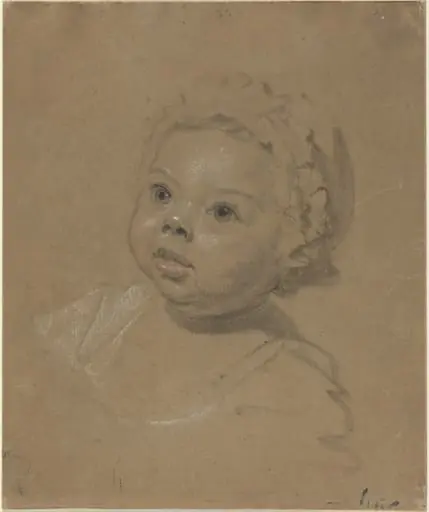
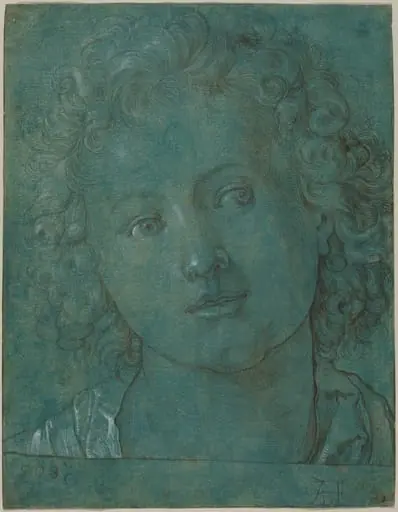
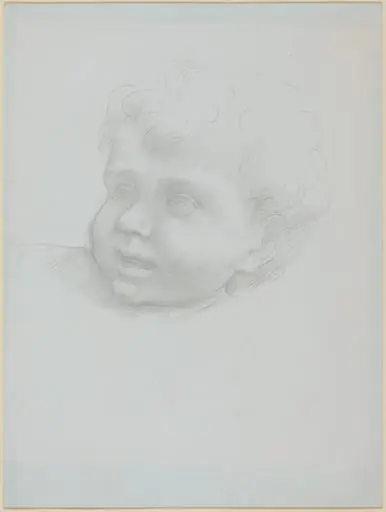
Head of a Child [recto]
![Head of a Child [recto], by Fra Bartolommeo, silver, 1490](https://artifactworldgallery.com/img/fra-bartolommeo--head-of-a-child-recto--1638395277970f70-w1024.webp)
Head of a Child [recto] is a silver drawing by the Renaissance artist Fra Bartolommeo. It dates from 1490 and is held in the collection of the National Gallery of Art.
About this work
Overview
Created around 1490, this drawing by Fra Bartolommeo depicts a child’s head rendered in silverpoint with selective white highlights on a yellow-brown prepared paper. The medium’s precision and subtle tonal range reflect the artist’s early engagement with delicate draftsmanship, characteristic of Florentine studio practices of the period.
Subject & Meaning
The subject is a young child, portrayed with quiet intimacy and minimal idealization. The focus on a simple, unadorned head suggests a study of form and expression rather than a portrait with narrative intent. It reveals the artist’s interest in capturing naturalistic features, possibly as preparation for larger religious compositions.
Technique & Style
Silverpoint, a meticulous technique requiring a prepared ground, allows for fine, restrained lines. White heightening accentuates contours and light areas, enhancing volume without bold contrasts. The handling is restrained and observational, emphasizing structure over emotion, aligning with the disciplined approach of late 15th-century Florentine draftsmen.
History & Provenance
The drawing is documented as part of Fra Bartolommeo’s early oeuvre, likely produced during his formative years in Florence before his association with the Dominican convent of San Marco. Its survival suggests it was preserved within the artist’s circle or collected by contemporaries who valued preparatory studies.
Context
In the 1490s, Florentine artists increasingly turned to direct observation and refined drawing as foundational to painting. Silverpoint, though declining in popularity, remained a tool for serious study. This work reflects the transition from Gothic precision to Renaissance naturalism, influenced by Ghirlandaio and early Leonardo da Vinci.
Legacy
Though not widely exhibited, the drawing exemplifies the pedagogical role of preparatory studies in Renaissance workshops. It contributes to understanding how Fra Bartolommeo developed his later, more monumental figures through careful, incremental observation of human form.
Artist & collection


![Two Friars on a Hillside [recto], by Fra Bartolommeo](https://artifactworldgallery.com/img/fra-bartolommeo--two-friars-on-a-hillside-recto--2787c4dd74d9545f-w320.webp)
![Bare Tree [verso], by Fra Bartolommeo](https://artifactworldgallery.com/img/fra-bartolommeo--bare-tree-verso--691ffa617da1e8ff-w320.webp)
![The Angel of the Annunciation [recto], by Fra Bartolommeo](https://artifactworldgallery.com/img/fra-bartolommeo--the-angel-of-the-annunciation-recto--89fd8c8dbaea2c77-w320.webp)
![A Monk [verso], by Fra Bartolommeo](https://artifactworldgallery.com/img/fra-bartolommeo--a-monk-verso--c24fd88b1d97b14b-w320.webp)